AbuAli G, Chaisaklert W, Stelloo E, Pazarentzos E, Hwang M-S, Qize D, Harding S V, Al-Rubaish A, Alzahrani A J, Al-Ali A, Sanders T A B, Aboagye E O, Grimm S
Division of Experimental Medicine, Imperial College London, Hammersmith Campus, London, UK.
Diabetes & Nutritional Sciences Division, King's College London, London, UK.
Oncogene. 2015 Mar 26;34(13):1718-28. doi: 10.1038/onc.2014.93. Epub 2014 Apr 28.
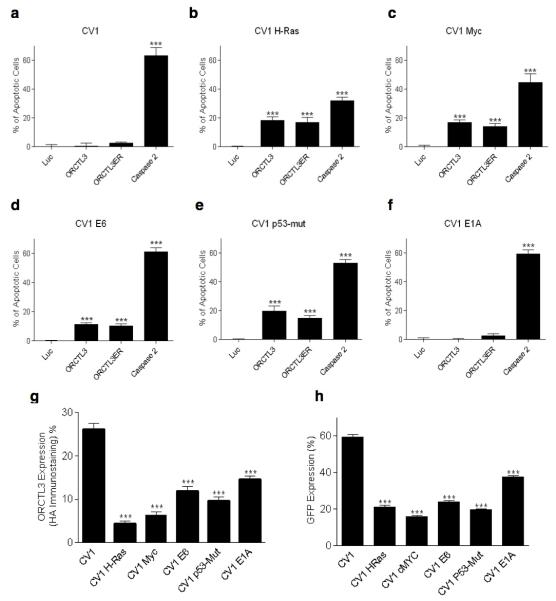
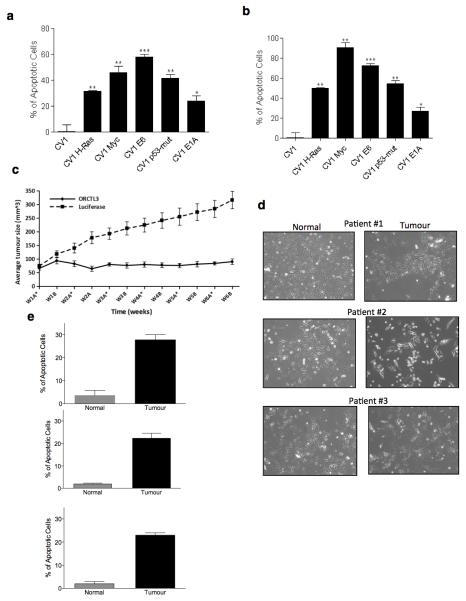
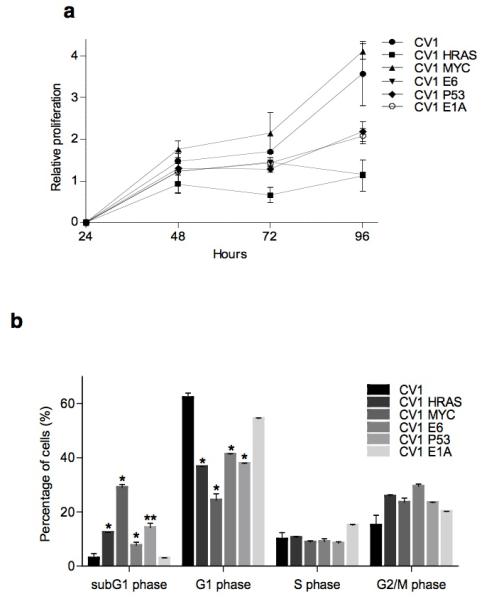
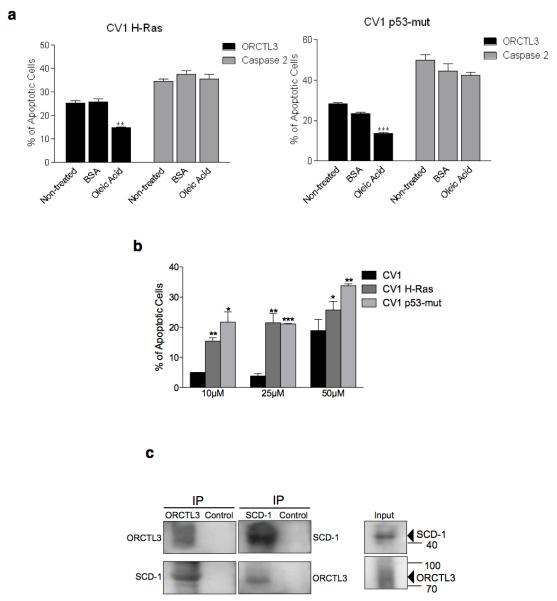
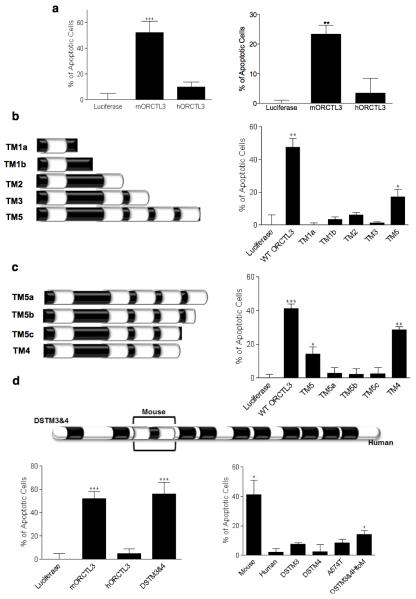
ORCTL3 is a member of a group of genes, the so-called anticancer genes, that cause tumour-specific cell death. We show that this activity is triggered in isogenic renal cells upon their transformation independently of the cells' proliferation status. For its cell death effect ORCTL3 targets the enzyme stearoyl-CoA desaturase-1 (SCD1) in fatty acid metabolism. This is caused by transmembrane domains 3 and 4, which are more efficacious in vitro than a low molecular weight drug against SCD1, and critically depend on their expression level. SCD1 is found upregulated upon renal cell transformation indicating that its activity, while not impacting proliferation, represents a critical bottleneck for tumourigenesis. An adenovirus expressing ORCTL3 leads to growth inhibition of renal tumours in vivo and to substantial destruction of patients' kidney tumour cells ex vivo. Our results indicate fatty acid metabolism as a target for tumour-specific apoptosis in renal tumours and suggest ORCTL3 as a means to accomplish this.
ORCTL3是一组基因(即所谓的抗癌基因)的成员,这些基因可导致肿瘤特异性细胞死亡。我们发现,在同基因肾细胞发生转化时,这种活性会被触发,且与细胞的增殖状态无关。就其细胞死亡效应而言,ORCTL3靶向脂肪酸代谢中的硬脂酰辅酶A去饱和酶-1(SCD1)。这是由跨膜结构域3和4引起的,它们在体外比一种针对SCD1的低分子量药物更有效,并且严重依赖于它们的表达水平。在肾细胞转化后发现SCD1上调,这表明其活性虽然不影响增殖,但却是肿瘤发生的关键瓶颈。表达ORCTL3的腺病毒在体内可导致肾肿瘤生长受到抑制,在体外可导致患者肾肿瘤细胞大量破坏。我们的结果表明脂肪酸代谢是肾肿瘤中肿瘤特异性凋亡的一个靶点,并提示ORCTL3是实现这一目标的一种手段。