Faculty of Medicine, Imperial College London, Du Cane Rd, London, UK.
Department of Medicine, Faculty of Medicine, Imperial College London, Du Cane Rd, London, UK.
Cell Commun Signal. 2023 Oct 20;21(1):295. doi: 10.1186/s12964-023-01300-3.
When ectopically overexpressed, anticancer genes, such as TRAIL, PAR4 and ORCTL3, specifically destroy tumour cells without harming untransformed cells. Anticancer genes can not only serve as powerful tumour specific therapy tools but studying their mode of action can reveal mechanisms underlying the neoplastic transformation, sustenance and spread.
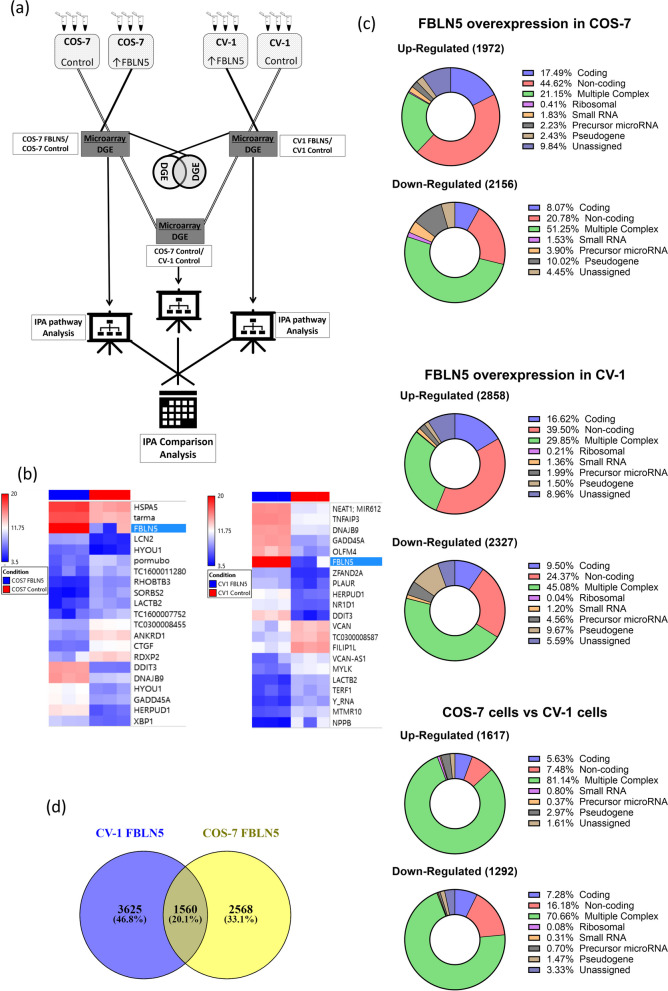
Anticancer gene discovery is normally accidental. Here we describe a systematic, gain of function, forward genetic screen in mammalian cells to isolate novel anticancer genes of human origin. Continuing with over 30,000 transcripts from our previous study, 377 cell death inducing genes were subjected to screening. FBLN5 was chosen, as a proof of principle, for mechanistic gene expression profiling, comparison pathways analyses and functional studies.
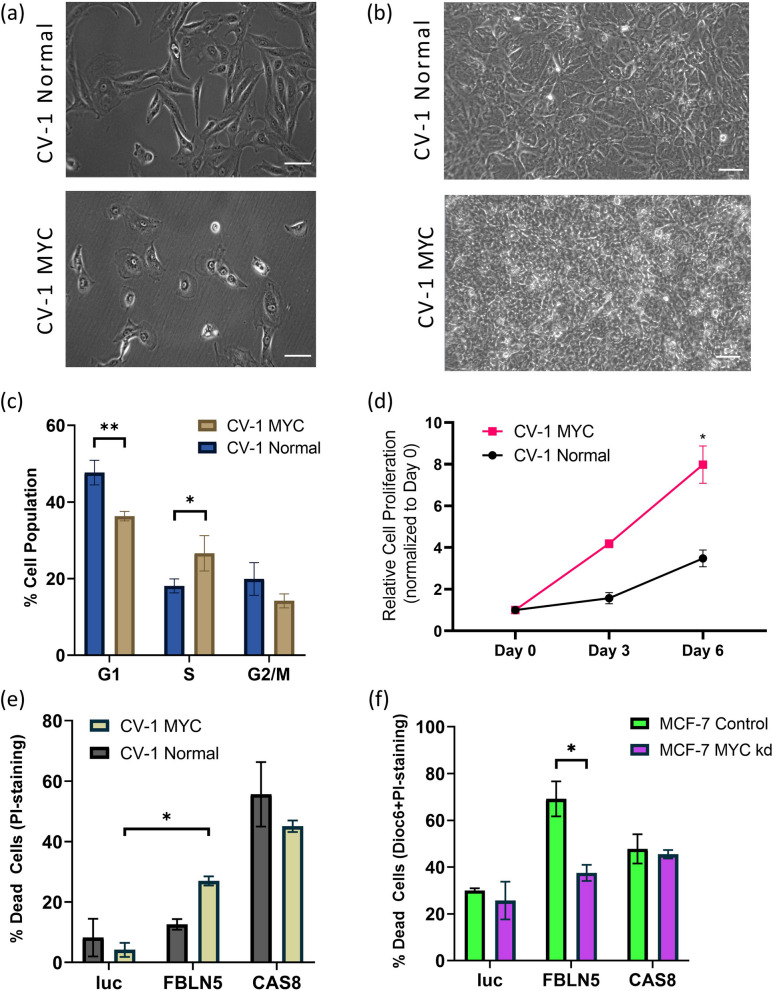
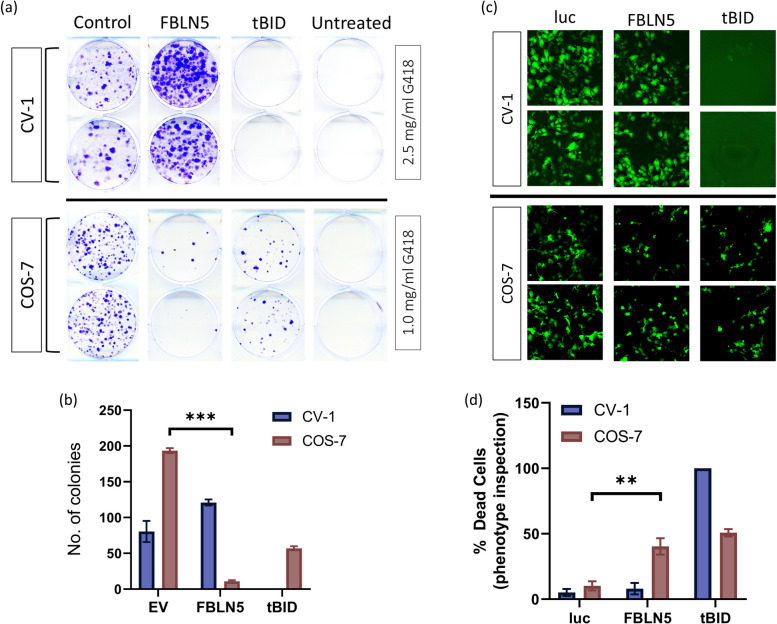
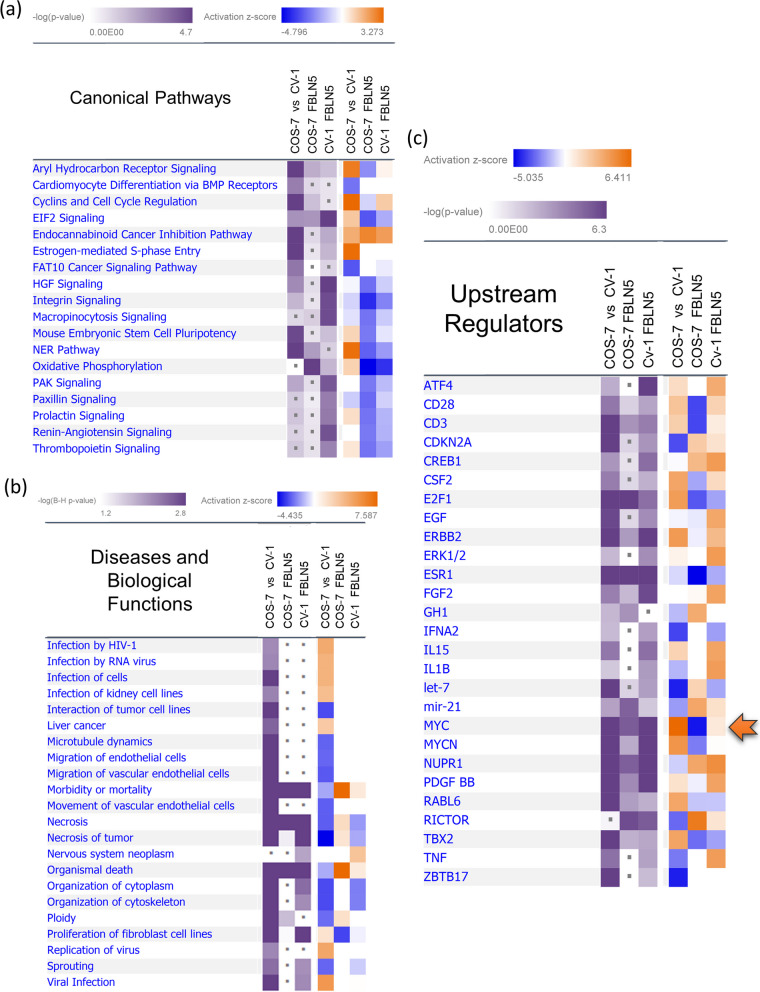
Sixteen novel anticancer genes were isolated; these included non-coding RNAs, protein-coding genes and novel transcripts, such as ZNF436-AS1, SMLR1, TMEFF2, LINC01529, HYAL2, NEIL2, FBLN5, YPEL4 and PHKA2-processed transcript. FBLN5 selectively caused inhibition of MYC in COS-7 (transformed) cells but not in CV-1 (normal) cells. MYC was identified as synthetic lethality partner of FBLN5 where MYC transformed CV-1 cells experienced cell death upon FBLN5 transfection, whereas FBLN5 lost cell death induction in MCF-7 cells upon MYC knockdown.
Sixteen novel anticancer genes are present in human genome including FBLN5. MYC is a synthetic lethality partner of FBLN5. Video Abstract.
当抗癌基因(如 TRAIL、PAR4 和 ORCTL3)在异位过表达时,它们能够特异性地杀死肿瘤细胞而不伤害未转化的细胞。抗癌基因不仅可以作为强大的肿瘤特异性治疗工具,而且研究它们的作用机制可以揭示肿瘤转化、维持和扩散的机制。
抗癌基因的发现通常是偶然的。在这里,我们描述了一种在哺乳动物细胞中进行的系统的、正向遗传筛选,以分离具有人类起源的新型抗癌基因。在我们之前的研究中,继续使用超过 30000 个转录本,对 377 个诱导细胞死亡的基因进行了筛选。选择 FBLN5 作为原理证明,进行机制基因表达谱分析、比较通路分析和功能研究。
分离出了 16 个新型抗癌基因;这些基因包括非编码 RNA、蛋白质编码基因和新型转录本,如 ZNF436-AS1、SMLR1、TMEFF2、LINC01529、HYAL2、NEIL2、FBLN5、YPEL4 和 PHKA2 加工转录本。FBLN5 选择性地抑制 COS-7(转化)细胞中的 MYC,但不抑制 CV-1(正常)细胞中的 MYC。MYC 被鉴定为 FBLN5 的合成致死性伙伴,其中 MYC 转化的 CV-1 细胞在 FBLN5 转染后经历细胞死亡,而 MCF-7 细胞中 MYC 的敲低导致 FBLN5 丧失细胞死亡诱导作用。
人类基因组中存在 16 个新型抗癌基因,包括 FBLN5。MYC 是 FBLN5 的合成致死性伙伴。视频摘要。