Department of Anatomy, Embryology and Physiology, Academic Medical Center, University of Amsterdam, Meibergdreef 15, 1105AZ Amsterdam, The Netherlands.
Developmental Biochemistry, Biocenter and Comprehensive Heart Failure Center, University of Wuerzburg, Am Hubland, D-97074 Wuerzburg, Germany.
Nat Commun. 2014 Apr 28;5:3680. doi: 10.1038/ncomms4680.
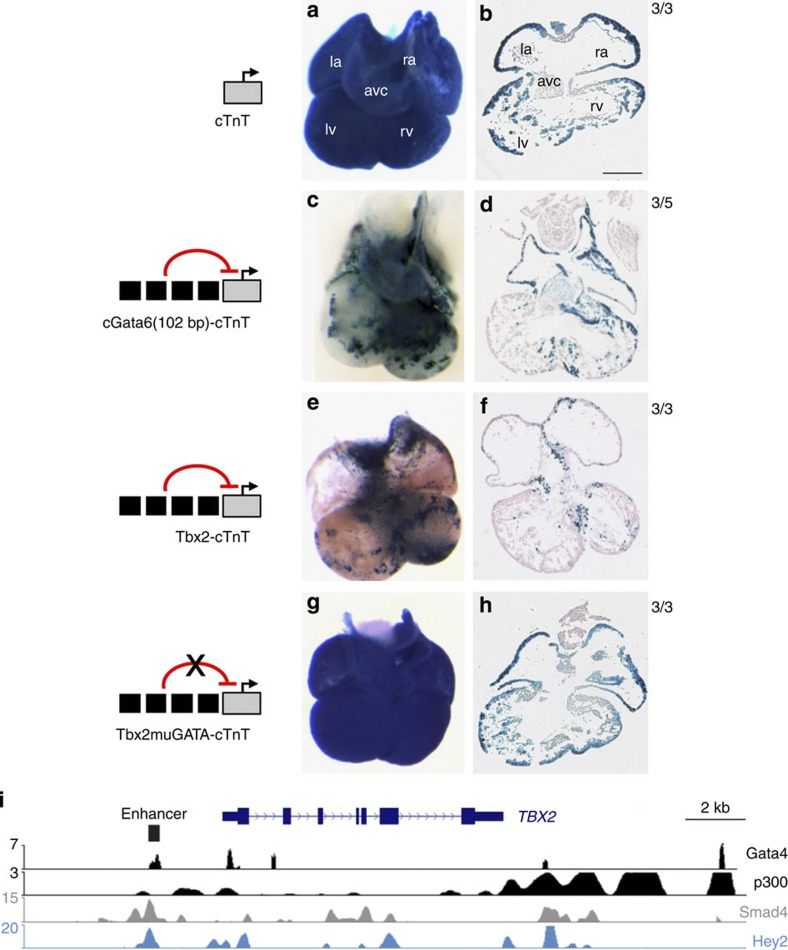
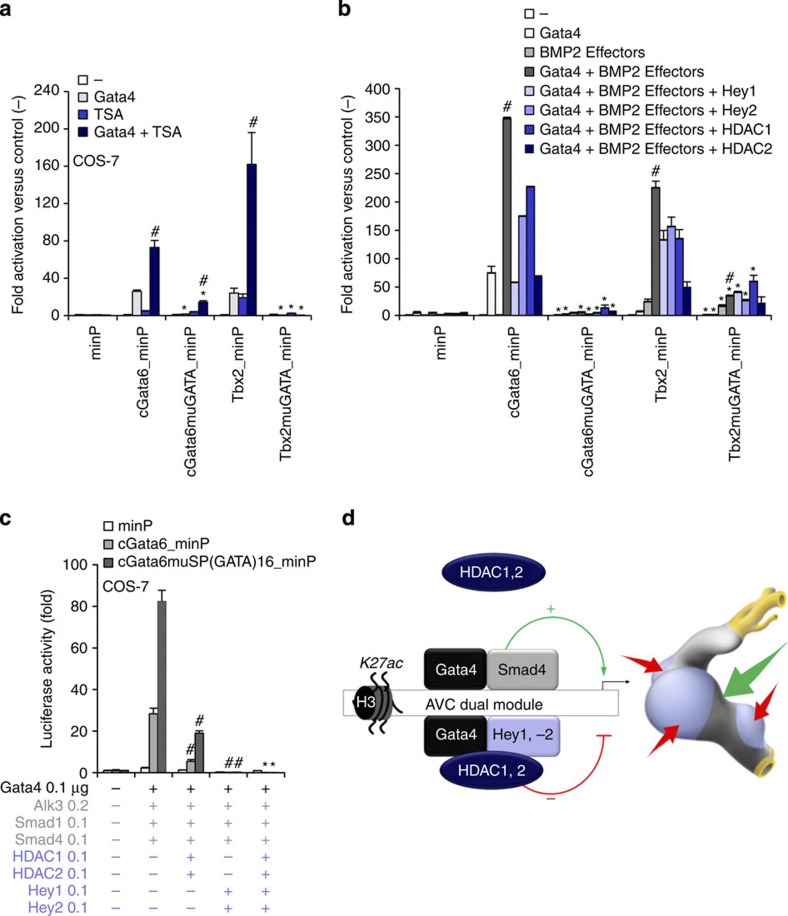
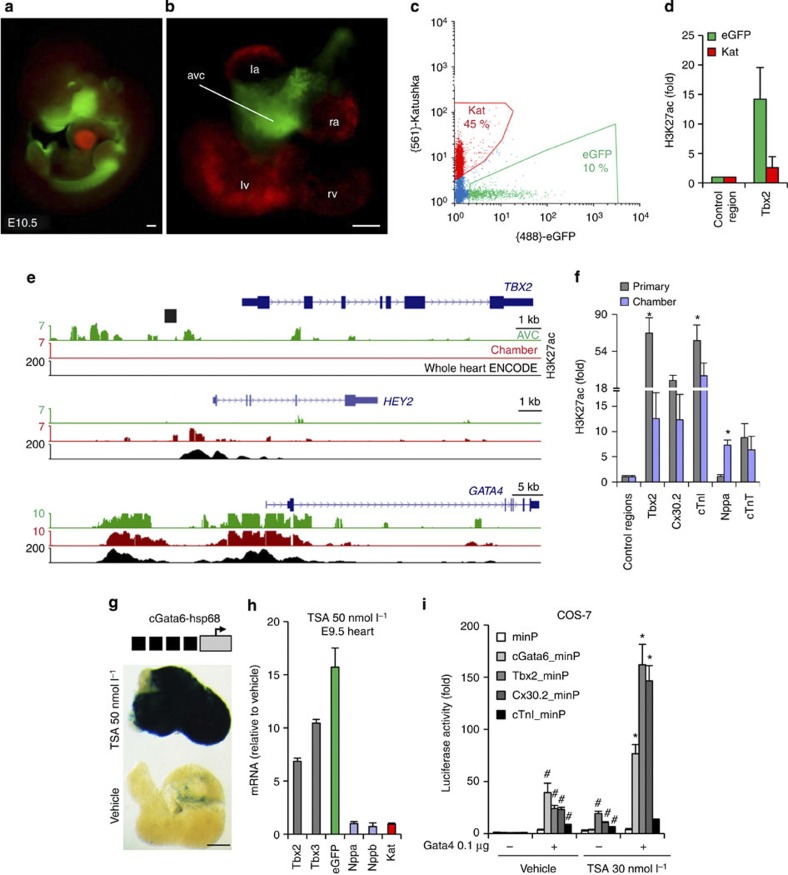
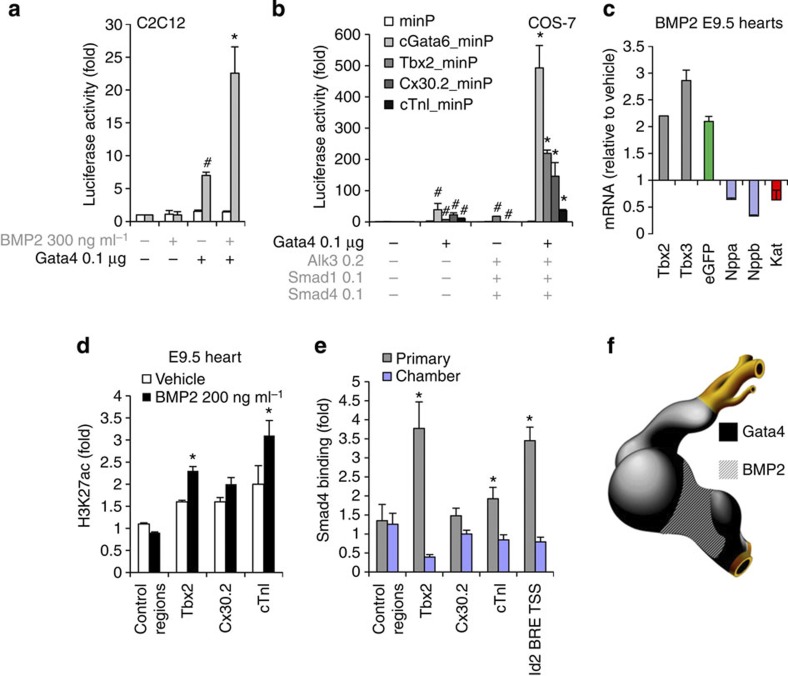
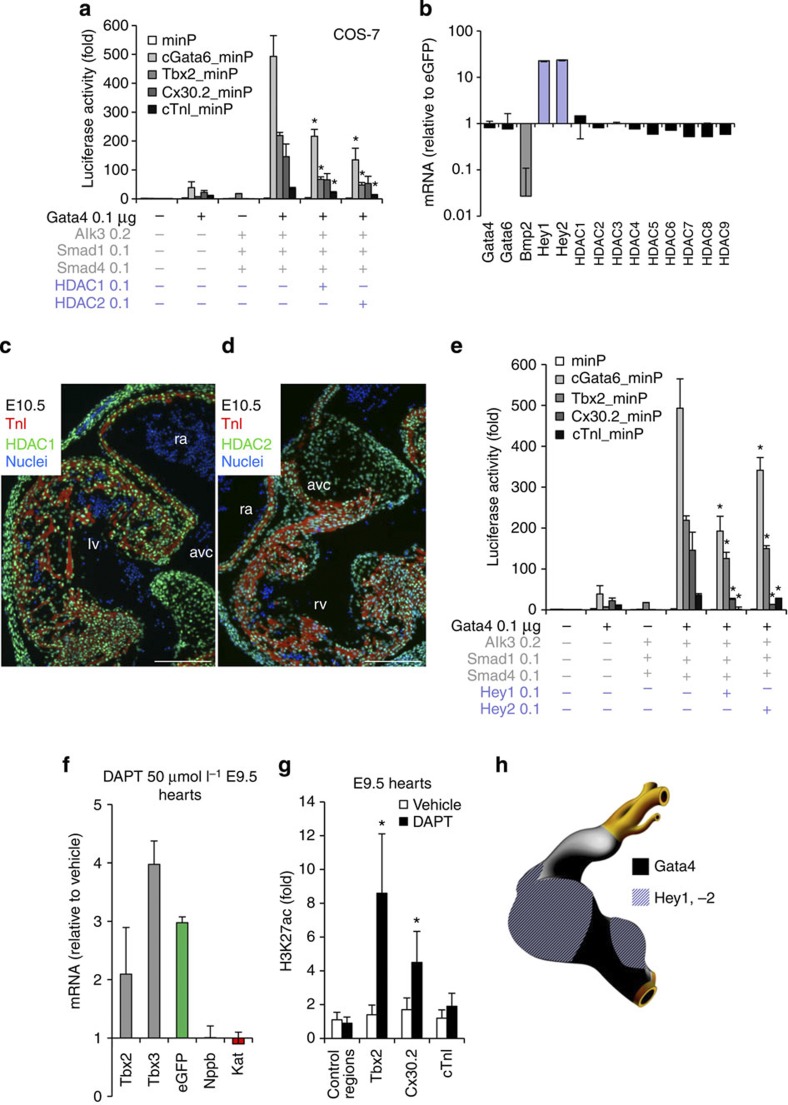
The embryonic vertebrate heart tube develops an atrioventricular canal that divides the atrial and ventricular chambers, forms atrioventricular conduction tissue and organizes valve development. Here we assess the transcriptional mechanism underlying this localized differentiation process. We show that atrioventricular canal-specific enhancers are GATA-binding site-dependent and act as switches that repress gene activity in the chambers. We find that atrioventricular canal-specific gene loci are enriched in H3K27ac, a marker of active enhancers, in atrioventricular canal tissue and depleted in H3K27ac in chamber tissue. In the atrioventricular canal, Gata4 activates the enhancers in synergy with Bmp2/Smad signalling, leading to H3K27 acetylation. In contrast, in chambers, Gata4 cooperates with pan-cardiac Hdac1 and Hdac2 and chamber-specific Hey1 and Hey2, leading to H3K27 deacetylation and repression. We conclude that atrioventricular canal-specific enhancers are platforms integrating cardiac transcription factors, broadly active histone modification enzymes and localized co-factors to drive atrioventricular canal-specific gene activity.
胚胎脊椎动物的心脏管发育出房室管,它将心房和心室分开,形成房室传导组织,并组织瓣膜发育。在这里,我们评估了这个局部分化过程背后的转录机制。我们表明,房室管特异性增强子依赖 GATA 结合位点,作为开关,抑制腔室中的基因活性。我们发现,房室管特异性基因座在房室管组织中富含 H3K27ac,这是活性增强子的标志物,而在腔室组织中则缺乏 H3K27ac。在房室管中,Gata4 与 Bmp2/Smad 信号协同激活增强子,导致 H3K27 乙酰化。相比之下,在腔室中,Gata4 与全心脏 Hdac1 和 Hdac2 以及腔室特异性 Hey1 和 Hey2 合作,导致 H3K27 去乙酰化和抑制。我们得出结论,房室管特异性增强子是整合心脏转录因子、广泛活跃的组蛋白修饰酶和局部共因子的平台,以驱动房室管特异性基因活性。