Feier F H, Miura I K, Fonseca E A, Porta G, Pugliese R, Porta A, Schwartz I V D, Margutti A V B, Camelo J S, Yamaguchi S N, Taveira A T, Candido H, Benavides M, Danesi V, Guimaraes T, Kondo M, Chapchap P, Neto J Seda
Departamento de Hepatologia e Transplante Hepático, Hospital Sírio-Libanês, São Paulo, SP, Brasil.
Departamento de Genética, Universidade Federal do Rio Grande do Sul, Porto Alegre, RS, Brasil.
Braz J Med Biol Res. 2014 Jun;47(6):522-6. doi: 10.1590/1414-431x20143830. Epub 2014 Apr 25.
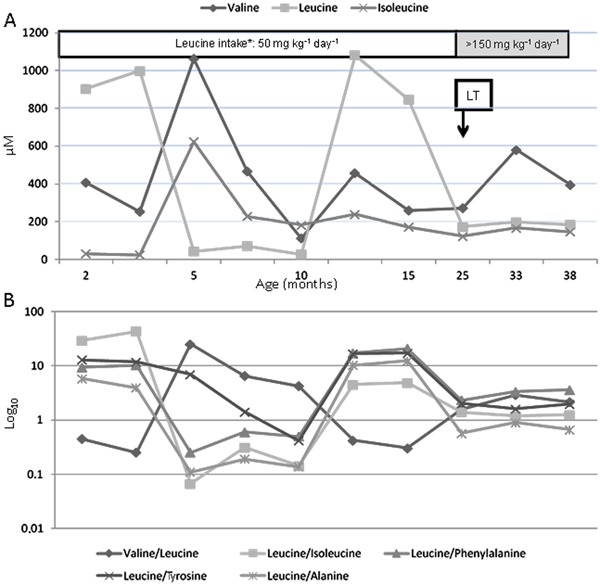
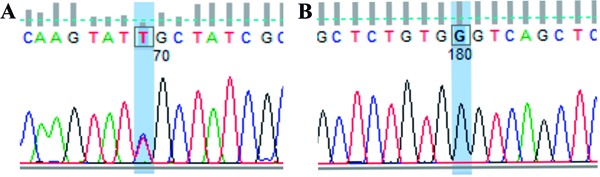
Maple syrup urine disease (MSUD) is an autosomal recessive disease associated with high levels of branched-chain amino acids. Children with MSUD can present severe neurological damage, but liver transplantation (LT) allows the patient to resume a normal diet and avoid further neurological damage. The use of living related donors has been controversial because parents are obligatory heterozygotes. We report a case of a 2-year-old child with MSUD who underwent a living donor LT. The donor was the patient's mother, and his liver was then used as a domino graft. The postoperative course was uneventful in all three subjects. DNA analysis performed after the transplantation (sequencing of the coding regions of BCKDHA, BCKDHB, and DBT genes) showed that the MSUD patient was heterozygous for a pathogenic mutation in the BCKDHB gene. This mutation was not found in his mother, who is an obligatory carrier for MSUD according to the family history and, as expected, presented both normal clinical phenotype and levels of branched-chain amino acids. In conclusion, our data suggest that the use of a related donor in LT for MSUD was effective, and the liver of the MSUD patient was successfully used in domino transplantation. Routine donor genotyping may not be feasible, because the test is not widely available, and, most importantly, the disease is associated with both the presence of allelic and locus heterogeneity. Further studies with this population of patients are required to expand the use of related donors in MSUD.
枫糖尿症(MSUD)是一种常染色体隐性疾病,与高水平的支链氨基酸有关。患有MSUD的儿童可能会出现严重的神经损伤,但肝移植(LT)可使患者恢复正常饮食并避免进一步的神经损伤。使用活体亲属供体一直存在争议,因为父母是 obligatory heterozygotes。我们报告了一例2岁患有MSUD的儿童接受活体供体肝移植的病例。供体是患者的母亲,其肝脏随后用作多米诺骨牌移植物。所有三名受试者的术后过程均顺利。移植后进行的DNA分析(BCKDHA、BCKDHB和DBT基因编码区测序)显示,MSUD患者在BCKDHB基因中存在致病突变的杂合子。在他母亲身上未发现这种突变,根据家族病史,他母亲是MSUD的 obligatory carrier,并且正如预期的那样,表现出正常的临床表型和支链氨基酸水平。总之,我们的数据表明,在MSUD的肝移植中使用亲属供体是有效的,并且MSUD患者的肝脏成功用于多米诺骨牌移植。常规供体基因分型可能不可行,因为该检测方法尚未广泛应用,而且,最重要的是,该疾病与等位基因和基因座异质性的存在有关。需要对这一患者群体进行进一步研究,以扩大亲属供体在MSUD中的应用。