Yamamoto Shinya, Seto Elaine S
Department of Molecular and Human Genetics, Baylor College of Medicine, One Baylor Plaza, Houston,TX77030, USA.
Exp Anim. 2014;63(2):107-19. doi: 10.1538/expanim.63.107.
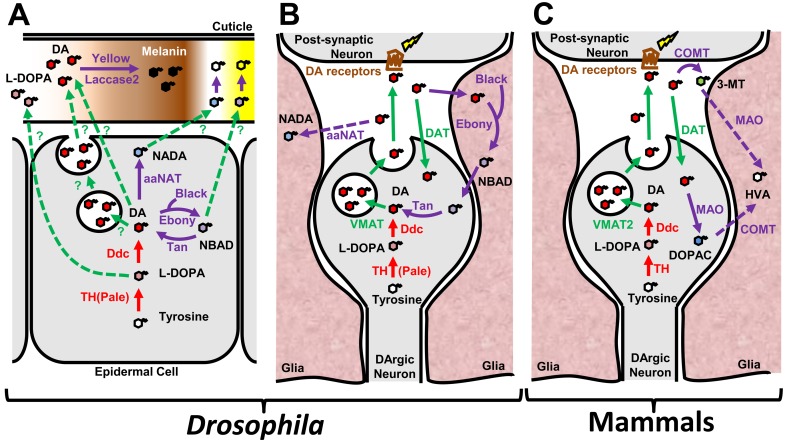
Changes in dopamine (DA) signaling have been implicated in a number of human neurologic and psychiatric disorders. Similarly, defects in DA signaling in the fruit fly, Drosophila melanogaster, have also been associated with several behavioral defects. As most genes involved in DA synthesis, transport, secretion, and signaling are conserved between species, Drosophila is a powerful genetic model organism to study the regulation of DA signaling in vivo. In this review, we will provide an overview of the genes and drugs that regulate DA biology in Drosophila. Furthermore, we will discuss the behavioral paradigms that are regulated by DA signaling in flies. By analyzing the genes and neuronal circuits that govern such behaviors using sophisticated genetic, pharmacologic, electrophysiologic, and imaging approaches in Drosophila, we will likely gain a better understanding about how this neuromodulator regulates motor tasks and cognition in humans.
多巴胺(DA)信号的变化与多种人类神经和精神疾病有关。同样,果蝇(黑腹果蝇)中DA信号的缺陷也与一些行为缺陷有关。由于参与DA合成、运输、分泌和信号传导的大多数基因在物种间是保守的,果蝇是研究体内DA信号调节的强大遗传模式生物。在这篇综述中,我们将概述调节果蝇DA生物学的基因和药物。此外,我们将讨论果蝇中由DA信号调节的行为范式。通过在果蝇中使用复杂的遗传、药理学、电生理学和成像方法分析控制此类行为的基因和神经回路,我们可能会更好地理解这种神经调节剂如何调节人类的运动任务和认知。