Beth Israel Deaconess Medical Center and Harvard Medical School, 330 Brookline Avenue, Boston, Massachusetts 02215, USA.
1] Beth Israel Deaconess Medical Center and Harvard Medical School, 330 Brookline Avenue, Boston, Massachusetts 02215, USA [2] Temple University, 1801 North Broad Street, Philadelphia, Pennsylvania 19122, USA (G.C.); Brandeis University, 415 South Street, Waltham, Massachusetts 02453, USA (B.H.); University of Massachusetts Medical School, 55 Lake Avenue North, Worcester, Massachusetts 01655, USA (A.K.).
Nature. 2014 Jun 26;510(7506):556-9. doi: 10.1038/nature13295. Epub 2014 Apr 28.
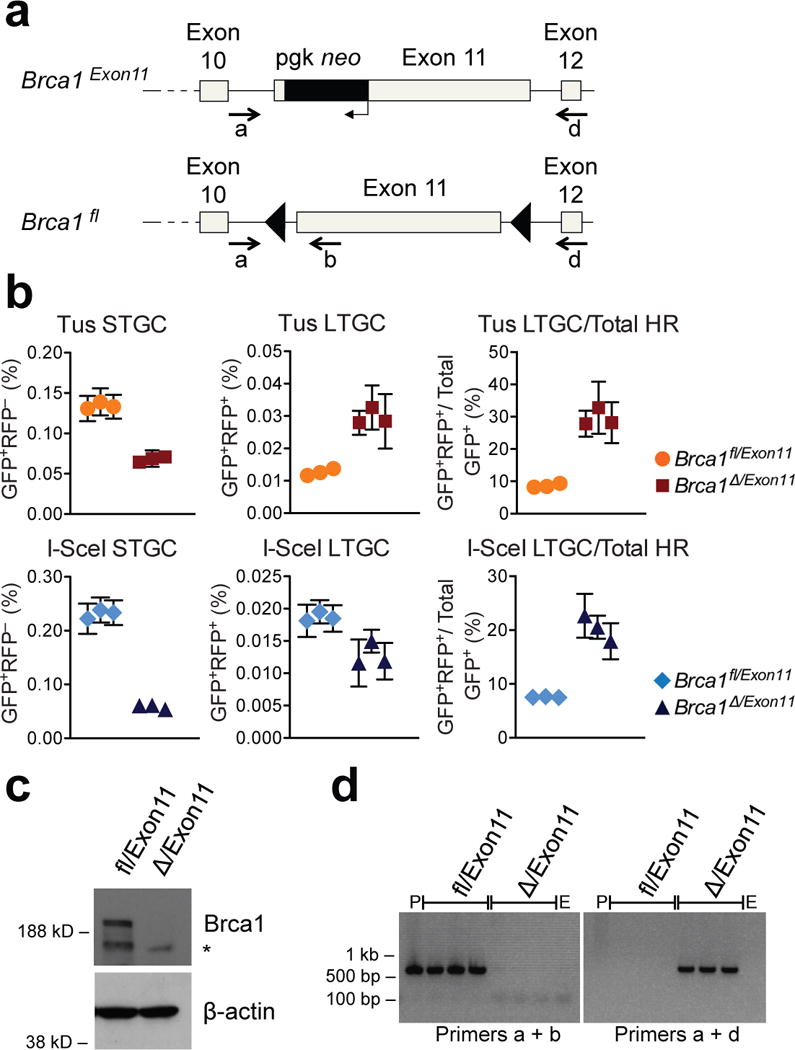
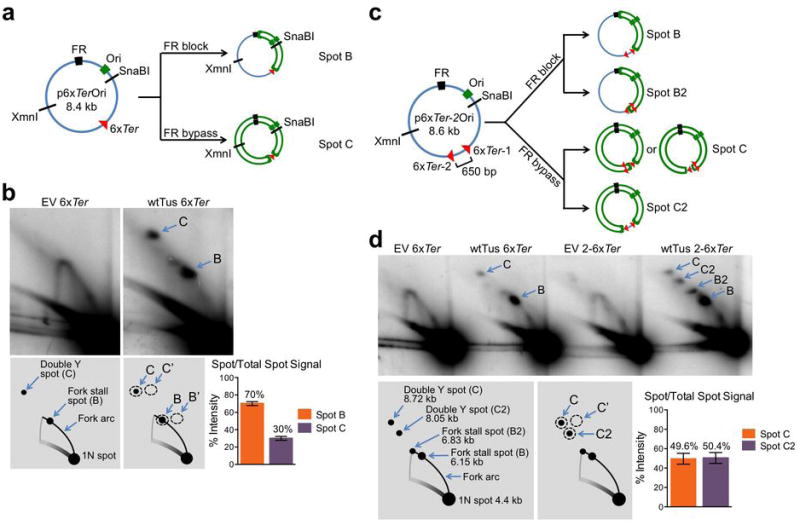
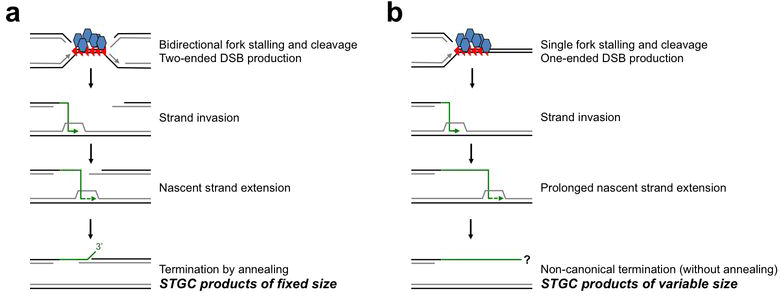
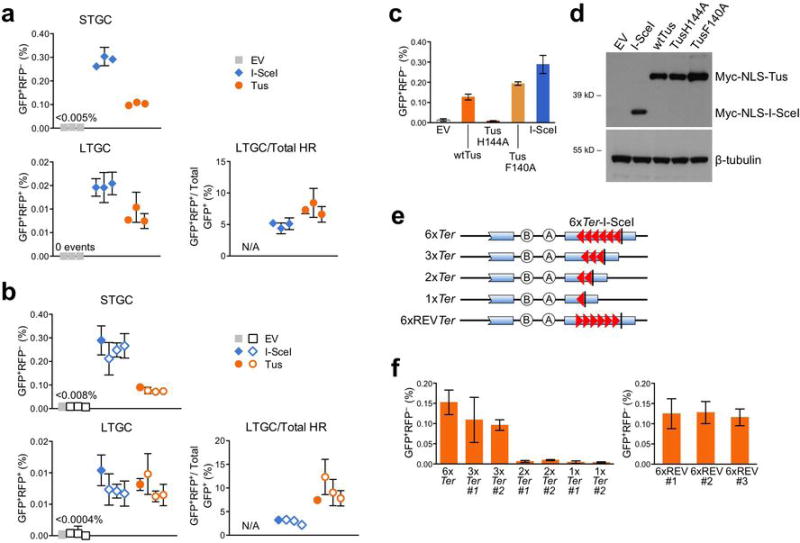
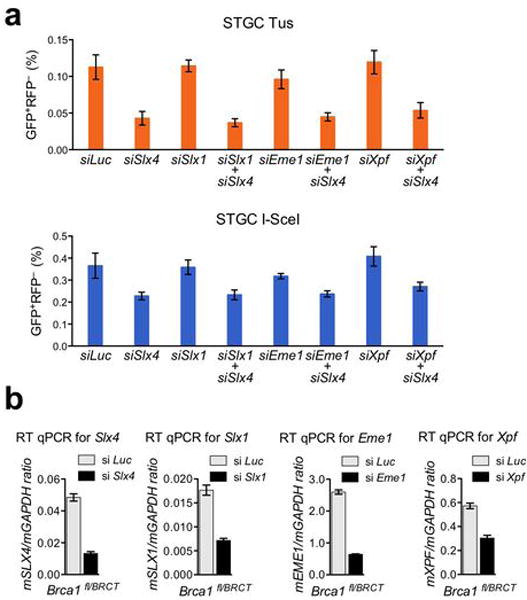
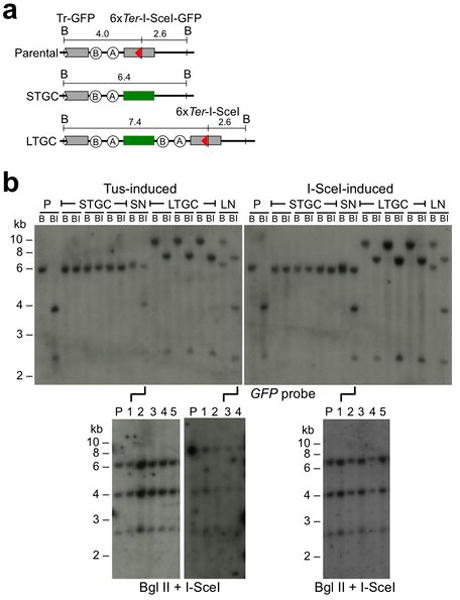
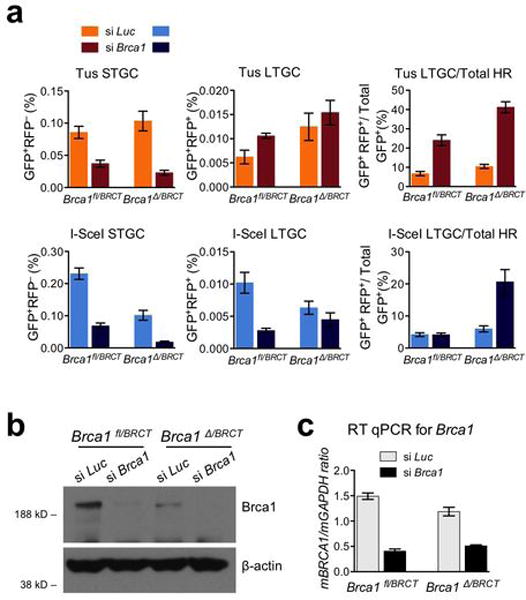
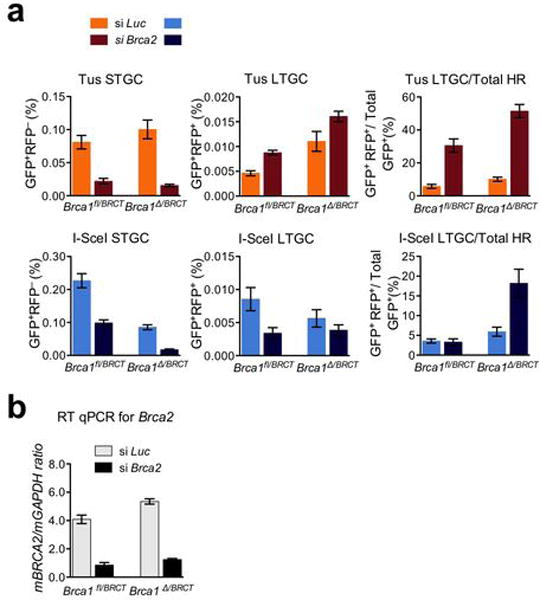
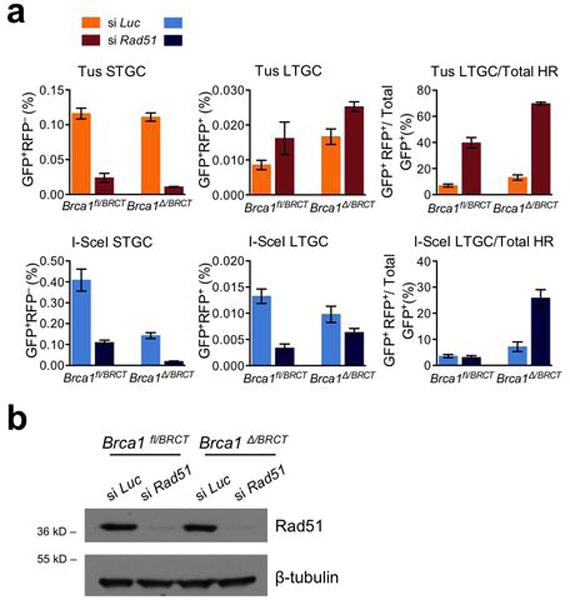
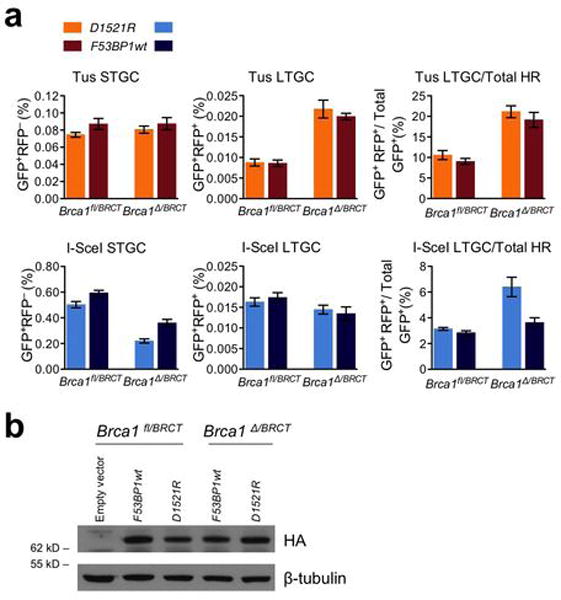
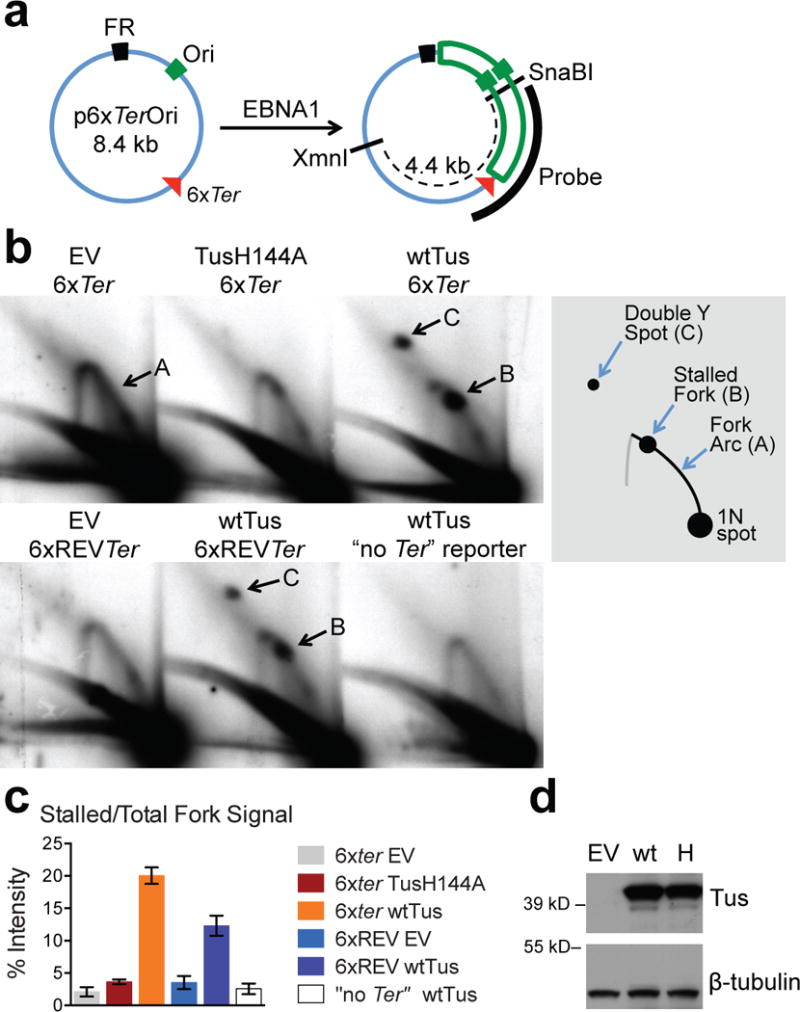
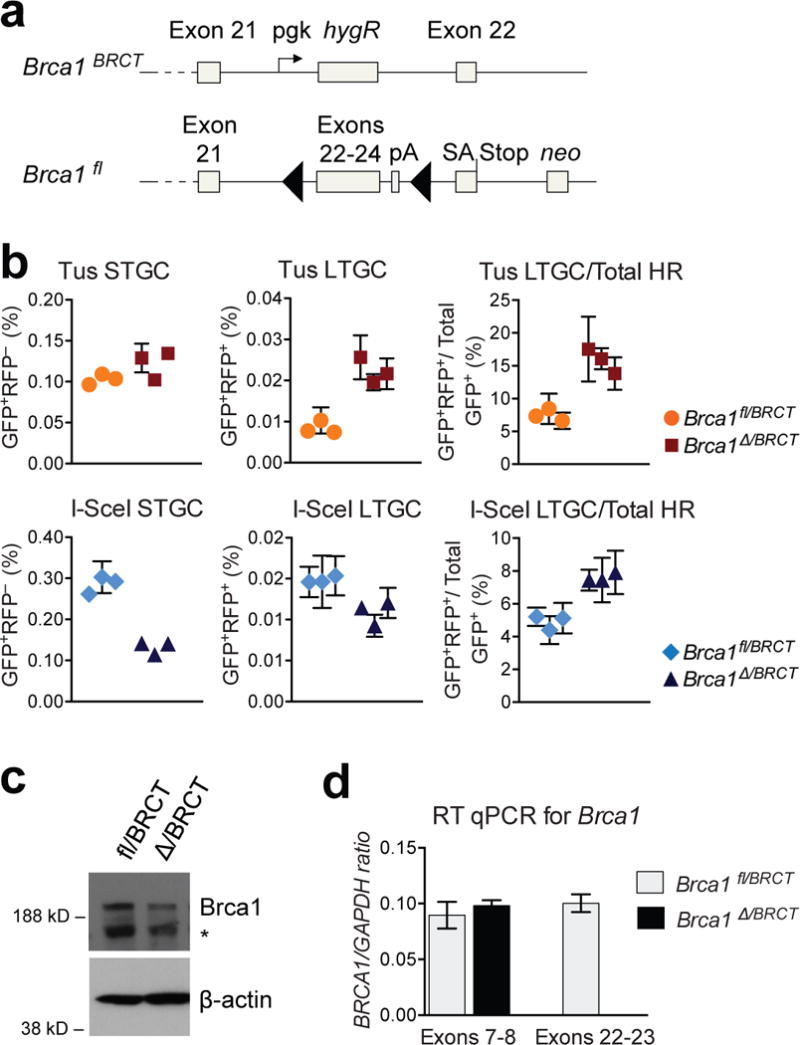
Replication fork stalling can promote genomic instability, predisposing to cancer and other diseases. Stalled replication forks may be processed by sister chromatid recombination (SCR), generating error-free or error-prone homologous recombination (HR) outcomes. In mammalian cells, a long-standing hypothesis proposes that the major hereditary breast/ovarian cancer predisposition gene products, BRCA1 and BRCA2, control HR/SCR at stalled replication forks. Although BRCA1 and BRCA2 affect replication fork processing, direct evidence that BRCA gene products regulate homologous recombination at stalled chromosomal replication forks is lacking, due to a dearth of tools for studying this process. Here we report that the Escherichia coli Tus/Ter complex can be engineered to induce site-specific replication fork stalling and chromosomal HR/SCR in mouse cells. Tus/Ter-induced homologous recombination entails processing of bidirectionally arrested forks. We find that the Brca1 carboxy (C)-terminal tandem BRCT repeat and regions of Brca1 encoded by exon 11-two Brca1 elements implicated in tumour suppression-control Tus/Ter-induced homologous recombination. Inactivation of either Brca1 or Brca2 increases the absolute frequency of 'long-tract' gene conversions at Tus/Ter-stalled forks, an outcome not observed in response to a site-specific endonuclease-mediated chromosomal double-strand break. Therefore, homologous recombination at stalled forks is regulated differently from homologous recombination at double-strand breaks arising independently of a replication fork. We propose that aberrant long-tract homologous recombination at stalled replication forks contributes to genomic instability and breast/ovarian cancer predisposition in BRCA mutant cells.
复制叉停滞会促进基因组不稳定,从而导致癌症和其他疾病。停滞的复制叉可能通过姐妹染色单体重组(SCR)进行处理,产生无差错或易错同源重组(HR)的结果。在哺乳动物细胞中,一个长期存在的假设是,主要的遗传性乳腺癌/卵巢癌易感性基因产物 BRCA1 和 BRCA2 控制停滞复制叉处的 HR/SCR。尽管 BRCA1 和 BRCA2 影响复制叉加工,但由于缺乏研究该过程的工具,缺乏 BRCA 基因产物调节停滞染色体复制叉处同源重组的直接证据。在这里,我们报告说,可以对大肠杆菌 Tus/Ter 复合物进行工程改造,以在小鼠细胞中诱导定点复制叉停滞和染色体 HR/SCR。 Tus/Ter 诱导的同源重组需要处理双向停滞的叉。我们发现,Brca1 羧基(C)末端串联 BRCT 重复和 Brca1 由外显子 11 编码的区域-两个涉及肿瘤抑制的 Brca1 元件-控制 Tus/Ter 诱导的同源重组。Brca1 或 Brca2 的失活会增加 Tus/Ter 停滞叉处“长片段”基因转换的绝对频率,这是在响应定点内切酶介导的染色体双链断裂时观察不到的结果。因此,停滞叉处的同源重组与独立于复制叉的双链断裂处的同源重组的调控方式不同。我们提出,停滞复制叉处异常的长片段同源重组导致 BRCA 突变细胞的基因组不稳定和乳腺癌/卵巢癌易感性。