Kwan Jason C, Tianero Ma Diarey B, Donia Mohamed S, Wyche Thomas P, Bugni Tim S, Schmidt Eric W
Department of Medicinal Chemistry, University of Utah, Salt Lake City, Utah, United States of America.
Pharmaceutical Sciences Division, University of Wisconsin-Madison, Madison, Wisconsin, United States of America.
PLoS One. 2014 May 2;9(5):e95850. doi: 10.1371/journal.pone.0095850. eCollection 2014.
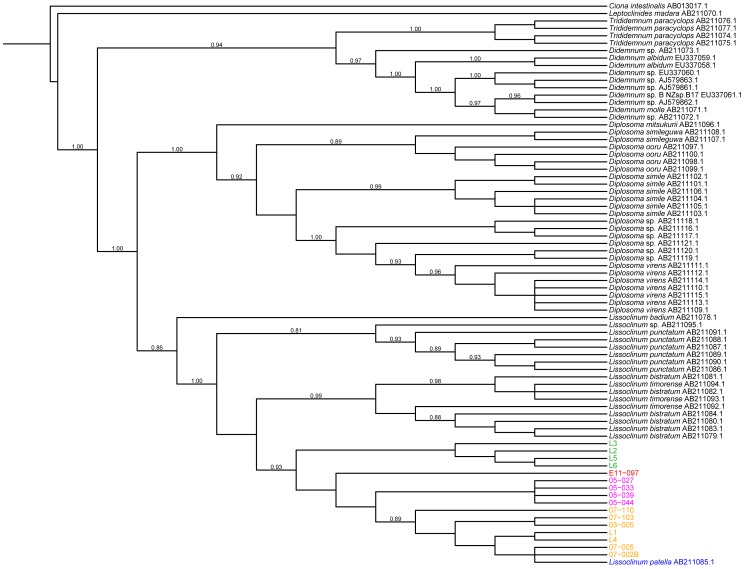
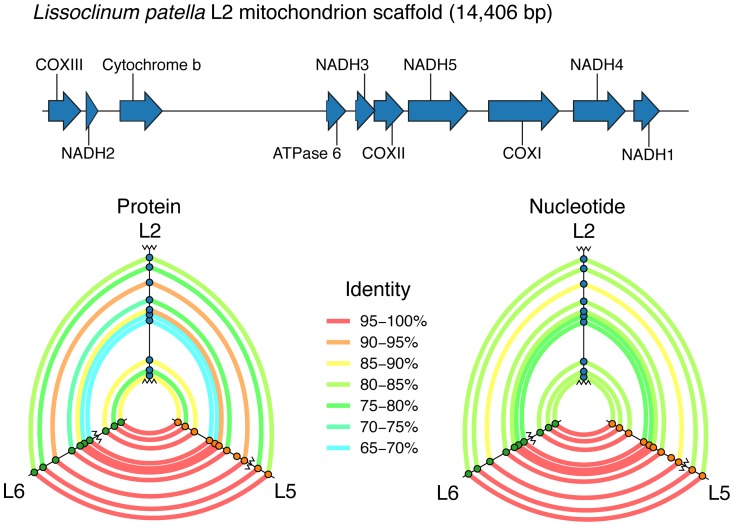
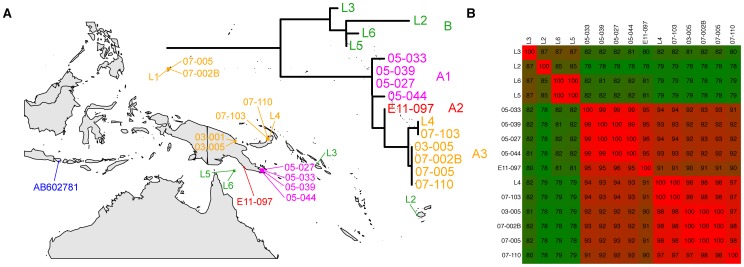
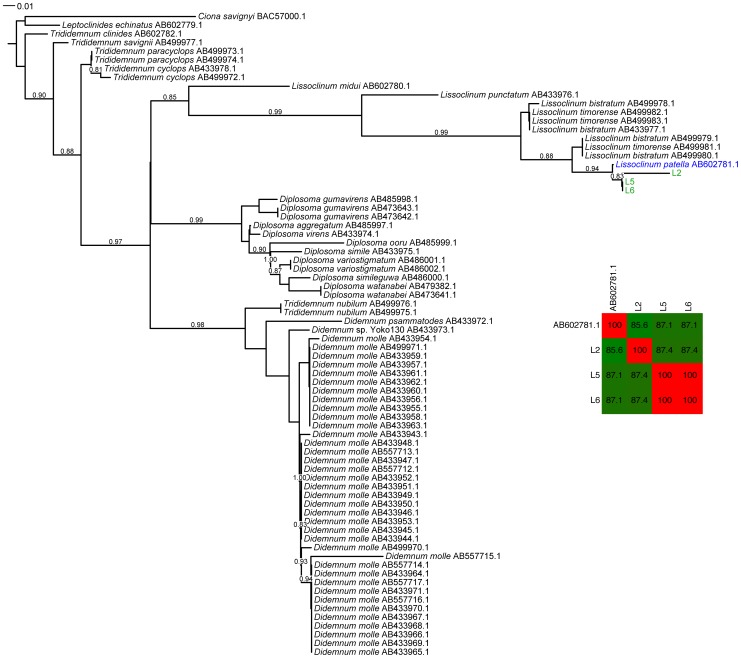
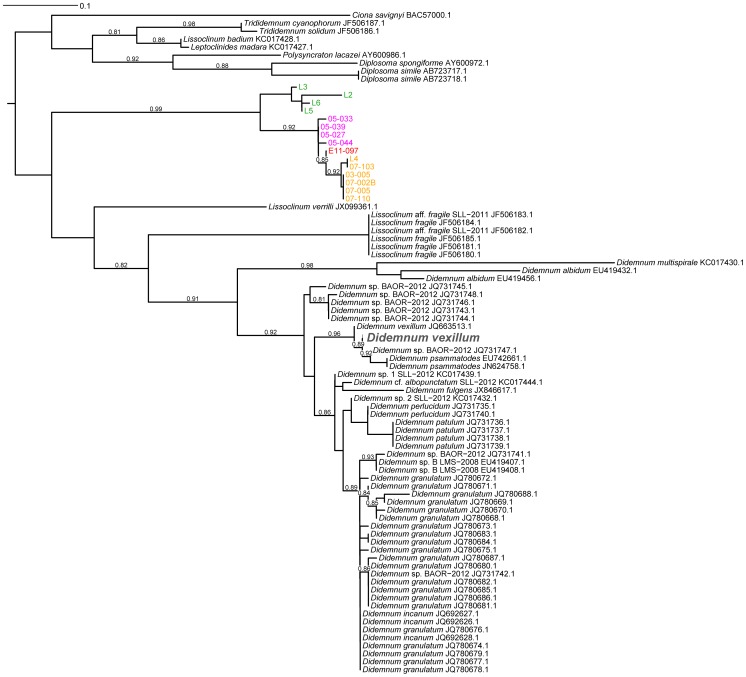
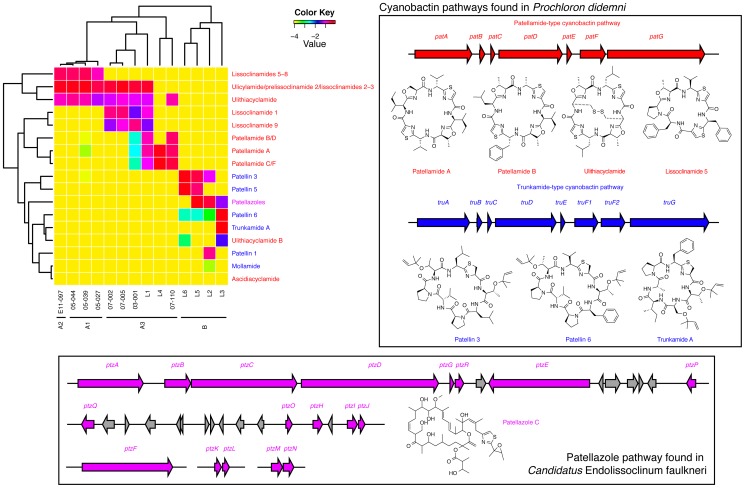
Natural products (secondary metabolites) found in marine invertebrates are often thought to be produced by resident symbiotic bacteria, and these products appear to play a major role in the symbiotic interaction of bacteria and their hosts. In these animals, there is extensive variation, both in chemistry and in the symbiotic bacteria that produce them. Here, we sought to answer the question of what factors underlie chemical variation in the ocean. As a model, we investigated the colonial tunicate Lissoclinum patella because of its rich and varied chemistry and its broad geographic range. We sequenced mitochondrial cytochrome c oxidase 1 (COXI) genes, and found that animals classified as L. patella fall into three phylogenetic groups that may encompass several cryptic species. The presence of individual natural products followed the phylogenetic relationship of the host animals, even though the compounds are produced by symbiotic bacteria that do not follow host phylogeny. In sum, we show that cryptic populations of animals underlie the observed chemical diversity, suggesting that the host controls selection for particular secondary metabolite pathways. These results imply novel approaches to obtain chemical diversity from the oceans, and also demonstrate that the diversity of marine natural products may be greatly impacted by cryptic local extinctions.
海洋无脊椎动物中发现的天然产物(次生代谢产物)通常被认为是由共生细菌产生的,而且这些产物似乎在细菌与其宿主的共生相互作用中发挥着重要作用。在这些动物中,无论是化学组成还是产生这些化学物质的共生细菌都存在广泛的差异。在这里,我们试图回答海洋中化学变化的潜在因素是什么这一问题。作为一个模型,我们研究了群体被囊动物扁脑珊瑚,因为它具有丰富多样的化学组成以及广泛的地理分布范围。我们对线粒体细胞色素c氧化酶1(COXI)基因进行了测序,发现被归类为扁脑珊瑚的动物分为三个系统发育群体,可能包含几个隐存种。尽管这些化合物是由不遵循宿主系统发育的共生细菌产生的,但单个天然产物的存在遵循宿主动物的系统发育关系。总之,我们表明动物的隐存种群是观察到的化学多样性的基础,这表明宿主控制着对特定次生代谢产物途径的选择。这些结果意味着从海洋中获取化学多样性的新方法,同时也表明海洋天然产物的多样性可能会受到隐存局部灭绝的极大影响。