Laboratory of Cellular and Molecular Cytogenetics, Department of Botany, University of Delhi, Delhi 110007, India.
AoB Plants. 2014 Feb 13;6(0). doi: 10.1093/aobpla/plt056. Print 2014.
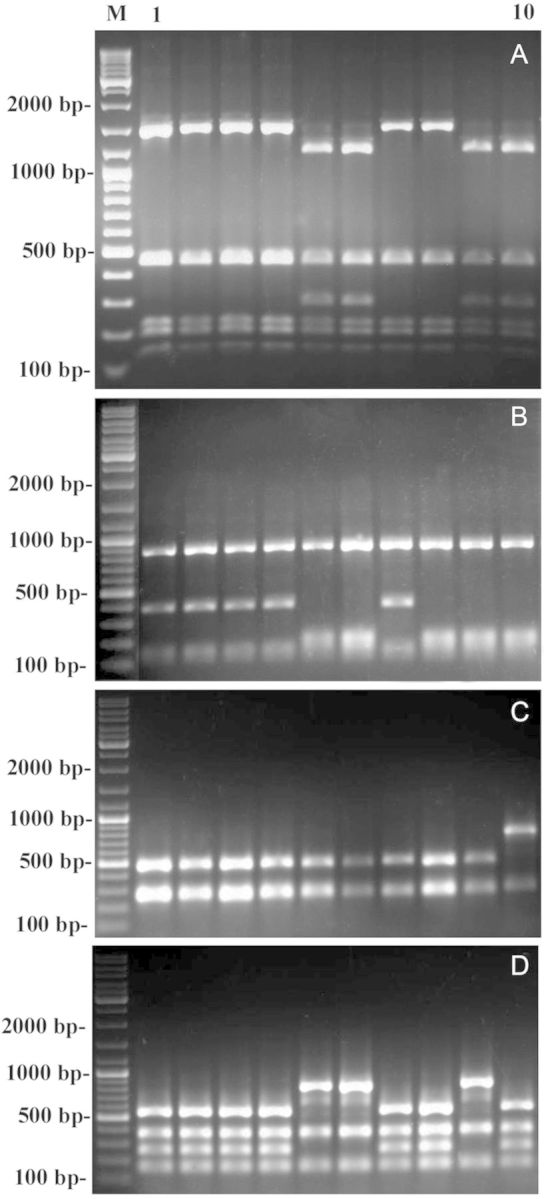
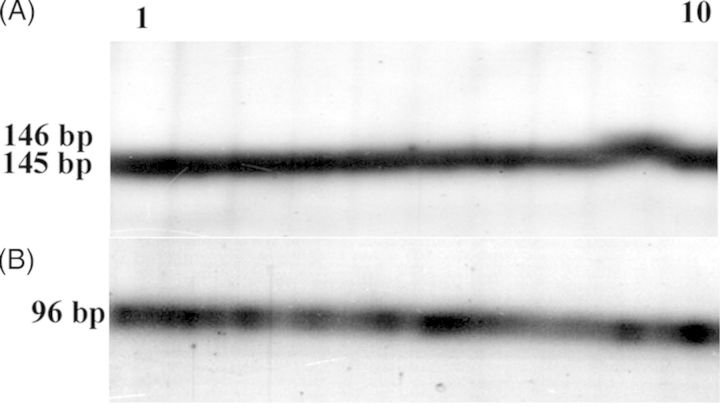
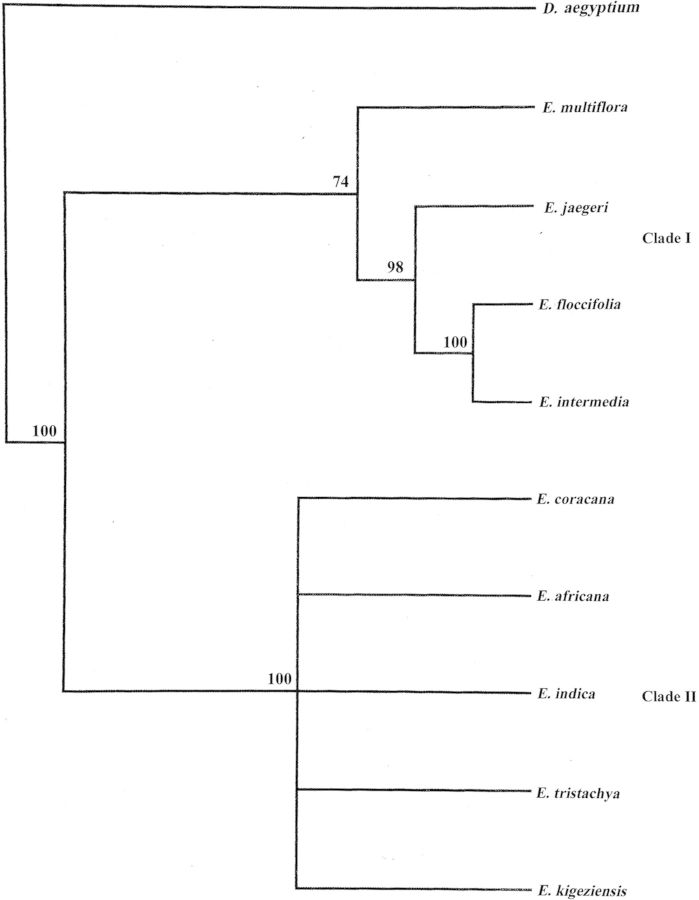
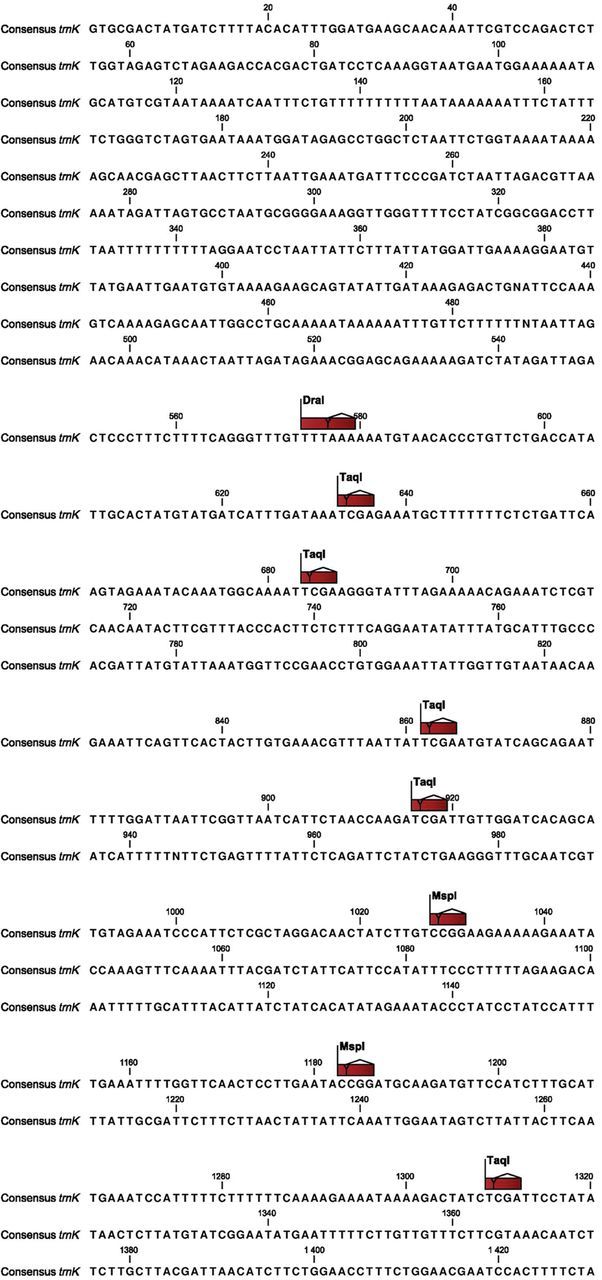
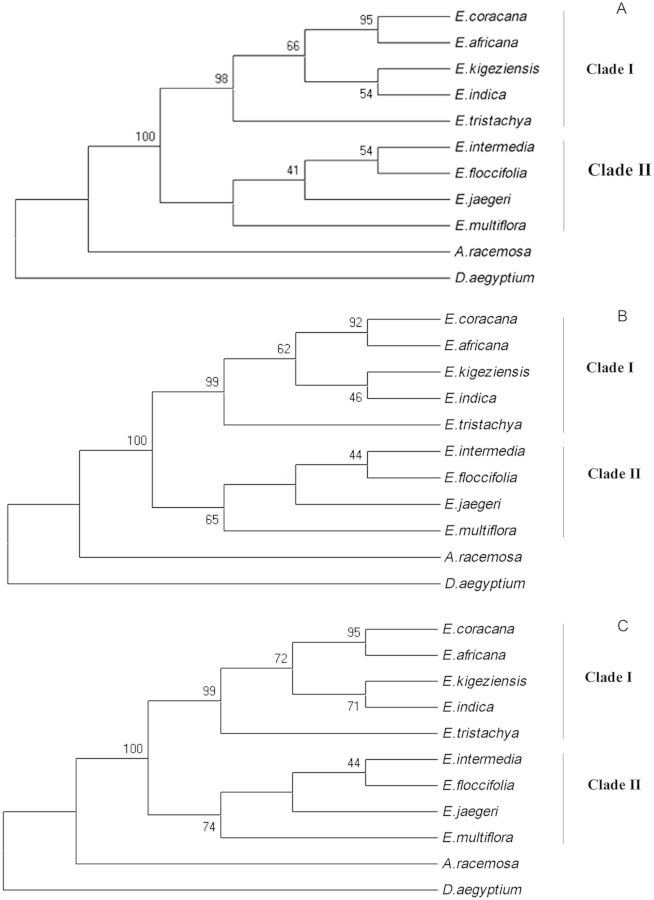
Assessment of phylogenetic relationships is an important component of any successful crop improvement programme, as wild relatives of the crop species often carry agronomically beneficial traits. Since its domestication in East Africa, Eleusine coracana (2n = 4x = 36), a species belonging to the genus Eleusine (x = 8, 9, 10), has held a prominent place in the semi-arid regions of India, Nepal and Africa. The patterns of variation between the cultivated and wild species reported so far and the interpretations based upon them have been considered primarily in terms of nuclear events. We analysed, for the first time, the phylogenetic relationship between finger millet (E. coracana) and its wild relatives by species-specific chloroplast deoxyribonucleic acid (cpDNA) polymerase chain reaction-restriction fragment length polymorphism (PCR-RFLP) and chloroplast simple sequence repeat (cpSSR) markers/sequences. Restriction fragment length polymorphism of the seven amplified chloroplast genes/intergenic spacers (trnK, psbD, psaA, trnH-trnK, trnL-trnF, 16S and trnS-psbC), nucleotide sequencing of the chloroplast trnK gene and chloroplast microsatellite polymorphism were analysed in all nine known species of Eleusine. The RFLP of all seven amplified chloroplast genes/intergenic spacers and trnK gene sequences in the diploid (2n = 16, 18, 20) and allotetraploid (2n = 36, 38) species resulted in well-resolved phylogenetic trees with high bootstrap values. Eleusine coracana, E. africana, E. tristachya, E. indica and E. kigeziensis did not show even a single change in restriction site. Eleusine intermedia and E. floccifolia were also shown to have identical cpDNA fragment patterns. The cpDNA diversity in Eleusine multiflora was found to be more extensive than that of the other eight species. The trnK gene sequence data complemented the results obtained by PCR-RFLP. The maternal lineage of all three allotetraploid species (AABB, AADD) was the same, with E. indica being the maternal diploid progenitor species. The markers specific to certain species were also identified.
系统发育关系的评估是任何成功的作物改良计划的重要组成部分,因为作物物种的野生近缘种通常具有农艺上有益的特性。自从在东非驯化以来,珍珠粟(2n = 4x = 36),属于珍珠粟属(x = 8、9、10)的一个物种,在印度、尼泊尔和非洲的半干旱地区占有重要地位。迄今为止,报道的栽培种和野生种之间的变异模式以及基于这些模式的解释主要是基于核事件。我们首次通过物种特异性叶绿体脱氧核糖核酸(cpDNA)聚合酶链反应-限制性片段长度多态性(PCR-RFLP)和叶绿体简单重复序列(cpSSR)标记/序列分析了珍珠粟(E. coracana)与其野生近缘种之间的系统发育关系。对 7 个扩增叶绿体基因/内含子间隔区(trnK、psbD、psaA、trnH-trnK、trnL-trnF、16S 和 trnS-psbC)的 cpDNA 聚合酶链反应-限制性片段长度多态性、叶绿体 trnK 基因的核苷酸序列和叶绿体微卫星多态性进行了分析,涉及 Eleusine 属的 9 个已知种。二倍体(2n = 16、18、20)和异源四倍体(2n = 36、38)物种中所有 7 个扩增叶绿体基因/内含子间隔区和 trnK 基因序列的 RFLP 产生了具有高自举值的分辨率良好的系统发育树。珍珠粟、E. africana、E. tristachya、E. indica 和 E. kigeziensis 在限制位点上没有发生单一变化。E. intermedia 和 E. floccifolia 也具有相同的 cpDNA 片段模式。E. multiflora 的 cpDNA 多样性比其他 8 个种更为广泛。trnK 基因序列数据补充了 PCR-RFLP 获得的结果。三个异源四倍体物种(AABB、AADD)的母系相同,E. indica 是母性二倍体祖先种。还鉴定了某些种特有的标记。