Departments of Ophthalmology and Biochemistry, University at Buffalo, The State University of New York, Buffalo, NY, USA; SUNY Eye Institute, Buffalo, NY, USA.
Department of Medicine, Endocrinology and Diabetes, Harold Hamm Diabetes Center, University of Oklahoma Health Sciences Center, Oklahoma City, OK, USA.
Exp Eye Res. 2014 Aug;125:30-40. doi: 10.1016/j.exer.2014.04.015. Epub 2014 May 2.
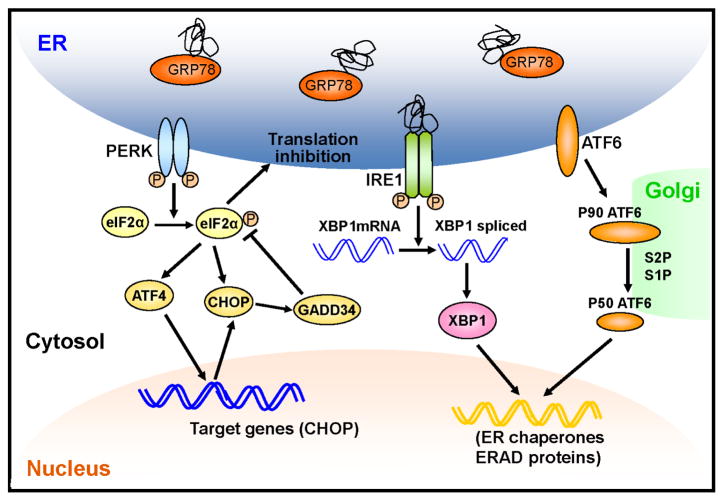
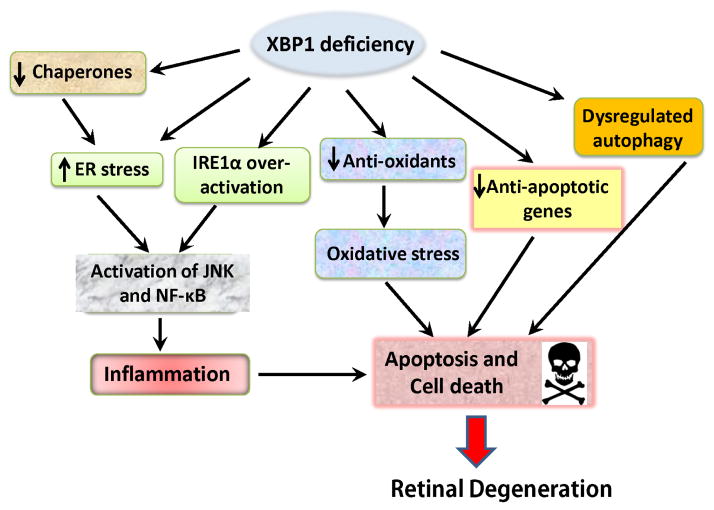
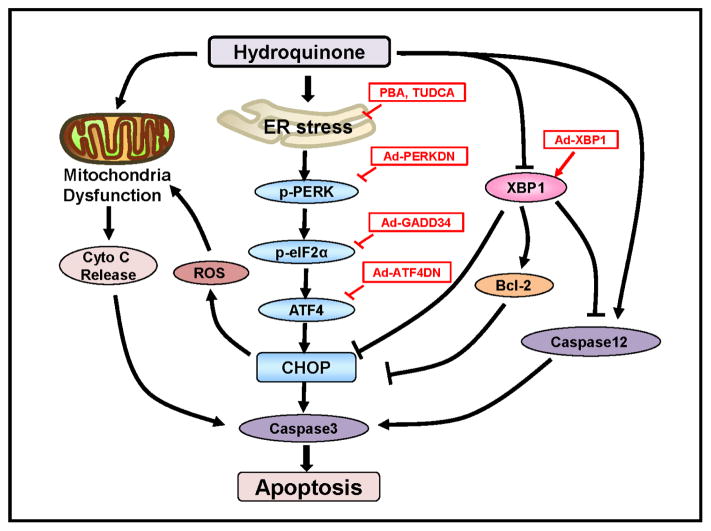
The endoplasmic reticulum (ER) is the primary intracellular organelle responsible for protein and lipid biosynthesis, protein folding and trafficking, calcium homeostasis, and several other vital processes in cell physiology. Disturbance in ER function results in ER stress and subsequent activation of the unfolded protein response (UPR). The UPR up-regulates ER chaperones, reduces protein translation, and promotes clearance of cytotoxic misfolded proteins to restore ER homeostasis. If this vital process fails, the cell will be signaled to enter apoptosis, resulting in cell death. Sustained ER stress also can trigger an inflammatory response and exacerbate oxidative stress, both of which contribute synergistically to tissue damage. Studies performed over the past decade have implicated ER stress in a broad range of human diseases, including neurodegenerative diseases, cancer, diabetes, and vascular disorders. Several of these diseases also entail retinal dysfunction and degeneration caused by injury to retinal neurons and/or to the blood vessels that supply retinal cells with nutrients, trophic and homeostatic factors, oxygen, and other essential molecules, as well as serving as a conduit for removal of waste products and potentially toxic substances from the retina. Collectively, such injuries represent the leading cause of blindness world-wide in all age groups. Herein, we summarize recent progress on the study of ER stress and UPR signaling in retinal biology and discuss the molecular mechanisms and the potential clinical applications of targeting ER stress as a new therapeutic approach to prevent and treat neuronal degeneration in the retina.
内质网(ER)是主要的细胞内细胞器,负责蛋白质和脂质的生物合成、蛋白质折叠和运输、钙稳态以及细胞生理学中的其他几个重要过程。ER 功能障碍会导致 ER 应激,随后激活未折叠蛋白反应(UPR)。UPR 上调 ER 伴侣,减少蛋白质翻译,并促进清除细胞毒性错误折叠的蛋白质,以恢复 ER 稳态。如果这个重要过程失败,细胞将被信号进入细胞凋亡,导致细胞死亡。持续的 ER 应激还会引发炎症反应和加剧氧化应激,这两者协同作用导致组织损伤。过去十年的研究表明,内质网应激与广泛的人类疾病有关,包括神经退行性疾病、癌症、糖尿病和血管疾病。这些疾病中的几种还涉及视网膜功能障碍和退化,这是由视网膜神经元和/或为视网膜细胞提供营养、营养和稳态因子、氧气和其他必需分子的血管损伤引起的,以及作为从视网膜中清除废物和潜在有毒物质的通道。总的来说,这些损伤是全球所有年龄段人群失明的主要原因。本文总结了 ER 应激和 UPR 信号在视网膜生物学中的研究进展,并讨论了靶向 ER 应激作为预防和治疗视网膜神经元变性的新治疗方法的分子机制和潜在临床应用。