
重度抑郁症患者脉络丛基因表达改变。
Altered choroid plexus gene expression in major depressive disorder.
机构信息
Molecular and Behavioral Neuroscience Institute, University of Michigan Ann Arbor, MI, USA.
Molecular and Behavioral Neuroscience Institute, University of Michigan Ann Arbor, MI, USA ; Department of Psychiatry, University of Michigan Ann Arbor, MI, USA.
出版信息
Front Hum Neurosci. 2014 Apr 22;8:238. doi: 10.3389/fnhum.2014.00238. eCollection 2014.
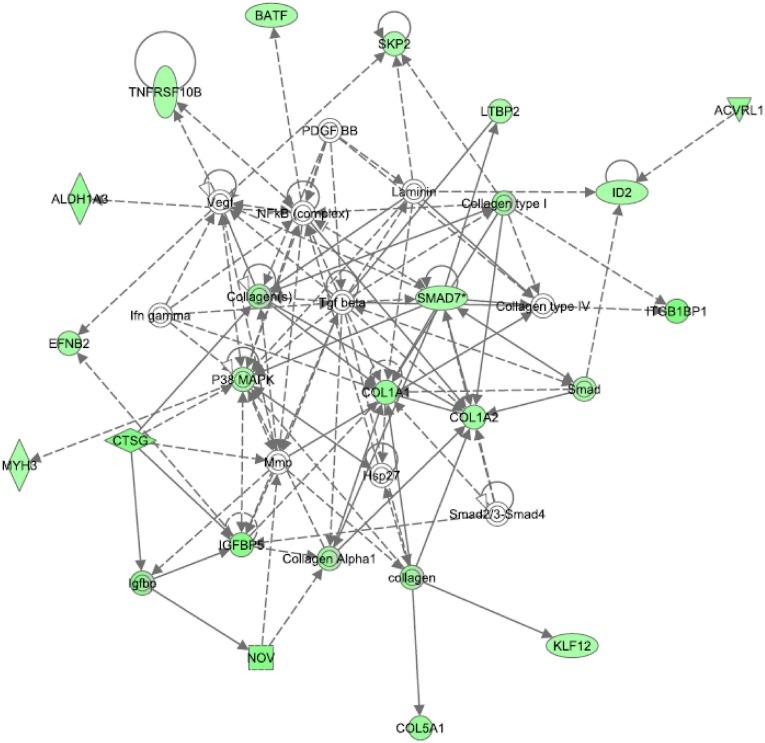
Given the emergent interest in biomarkers for mood disorders, we assessed gene expression in the choroid plexus (CP), the region that produces cerebrospinal fluid (CSF), in individuals with major depressive disorder (MDD). Genes that are expressed in the CP can be secreted into the CSF and may be potential biomarker candidates. Given that we have previously shown that fibroblast growth factor family members are differentially expressed in post-mortem brain of subjects with MDD and the CP is a known source of growth factors in the brain, we posed the question whether growth factor dysregulation would be found in the CP of subjects with MDD. We performed laser capture microscopy of the CP at the level of the hippocampus in subjects with MDD and psychiatrically normal controls. We then extracted, amplified, labeled, and hybridized the cRNA to Illumina BeadChips to assess gene expression. In controls, the most highly abundant known transcript was transthyretin. Moreover, half of the 14 most highly expressed transcripts in controls encode ribosomal proteins. Using BeadStudio software, we identified 169 transcripts differentially expressed (p < 0.05) between control and MDD samples. Using pathway analysis we noted that the top network altered in subjects with MDD included multiple members of the transforming growth factor-beta (TGFβ) pathway. Quantitative real-time PCR (qRT-PCR) confirmed downregulation of several transcripts that interact with the extracellular matrix in subjects with MDD. These results suggest that there may be an altered cytoskeleton in the CP in MDD subjects that may lead to a disrupted blood-CSF-brain barrier.
鉴于人们对情绪障碍生物标志物的浓厚兴趣,我们评估了患有重度抑郁症(MDD)个体脉络丛(CP)中的基因表达,CP 是产生脑脊液(CSF)的区域。在 CP 中表达的基因可以分泌到 CSF 中,可能是潜在的生物标志物候选物。鉴于我们之前已经表明,成纤维细胞生长因子家族成员在 MDD 患者的死后大脑中表达不同,而 CP 是大脑中生长因子的已知来源,我们提出了这样一个问题,即在 MDD 患者的 CP 中是否会发现生长因子失调。我们对 MDD 患者和精神正常对照者的海马体水平的 CP 进行了激光捕获显微镜检查。然后,我们提取、扩增、标记和杂交 cRNA 以进行 Illumina BeadChips 分析,以评估基因表达。在对照组中,最丰富的已知转录本是转甲状腺素蛋白。此外,对照组中表达最丰富的 14 个转录本中有一半编码核糖体蛋白。使用 BeadStudio 软件,我们鉴定出 169 个转录本在对照和 MDD 样本之间存在差异表达(p < 0.05)。通过通路分析,我们注意到 MDD 患者中改变最明显的网络包括转化生长因子-β(TGFβ)途径的多个成员。定量实时 PCR(qRT-PCR)证实了 MDD 患者与细胞外基质相互作用的几个转录本的下调。这些结果表明,MDD 患者的 CP 中可能存在异常的细胞骨架,这可能导致血脑屏障受损。


 Zotero 插件