Grandič Marjana, Frangež Robert
Institute for Hygiene and Pathology of Animal Nutrition, Veterinary Faculty, University of Ljubljana, Cesta v Mestni log 47, Ljubljana 1000, Slovenia.
Institute of Physiology, Pharmacology and Toxicology, Veterinary Faculty, University of Ljubljana, Gerbičeva 60, Ljubljana 1000, Slovenia.
Mar Drugs. 2014 Apr 30;12(5):2408-21. doi: 10.3390/md12052408.
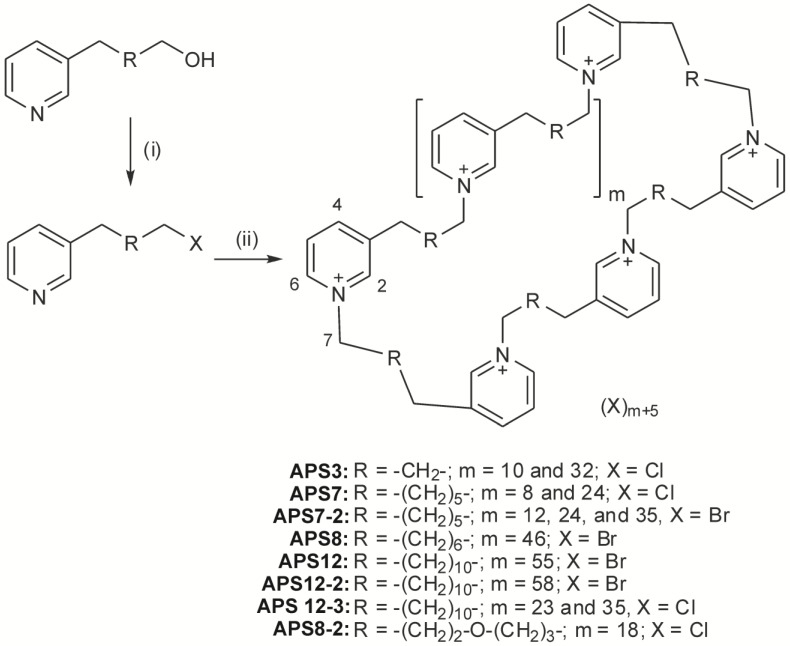
Polymeric 3-alkylpyridinium salts (poly-APS) are among the most studied natural bioactive compounds extracted from the marine sponge, Reniera sarai. They exhibit a wide range of biological activities, and the most prominent among them are the anti-acetylcholinesterase and membrane-damaging activity. Due to their membrane activity, sAPS can induce the lysis of various cells and cell lines and inhibit the growth of bacteria and fungi. Because of their bioactivity, poly-APS are possible candidates for use in the fields of medicine, pharmacy and industry. Due to the small amounts of naturally occurring poly-APS, methods for the synthesis of analogues have been developed. They differ in chemical properties, such as the degree of polymerization, the length of the alkyl chains (from three to 12 carbon atoms) and in the counter ions present in their structures. Such structurally defined analogues with different chemical properties and degrees of polymerization possess different levels of biological activity. We review the current knowledge of the biological activity and toxicity of synthetic poly-APS analogues, with particular emphasis on the mechanisms of their physiological and pharmacological effects and, in particular, the mechanisms of toxicity of two analogues, APS12-2 and APS3, in vivo and in vitro.
聚合3-烷基吡啶鎓盐(聚APS)是从海洋海绵Reniera sarai中提取的研究最多的天然生物活性化合物之一。它们具有广泛的生物活性,其中最突出的是抗乙酰胆碱酯酶和膜损伤活性。由于其膜活性,sAPS可诱导各种细胞和细胞系的裂解,并抑制细菌和真菌的生长。由于其生物活性,聚APS有可能用于医学、制药和工业领域。由于天然存在的聚APS数量很少,已开发出合成类似物的方法。它们在化学性质上有所不同,例如聚合度、烷基链的长度(从三个到十二个碳原子)以及其结构中存在的抗衡离子。这种具有不同化学性质和聚合度的结构明确的类似物具有不同水平的生物活性。我们综述了合成聚APS类似物的生物活性和毒性的当前知识,特别强调了它们的生理和药理作用机制,尤其是两种类似物APS12-2和APS3在体内和体外的毒性机制。