Torrente Marta, Guetg Adriano, Sass Jörn Oliver, Arps Lisa, Ruckstuhl Lisa, Camargo Simone M R, Verrey François
Institute of Physiology and Zurich Center of Integrative Human Physiology, University of Zurich, Zurich, Switzerland.
Division of Clinical Chemistry & Biochemistry, University Children's Hospital, Zurich, Zurich, Switzerland.
PLoS One. 2014 May 5;9(5):e96823. doi: 10.1371/journal.pone.0096823. eCollection 2014.
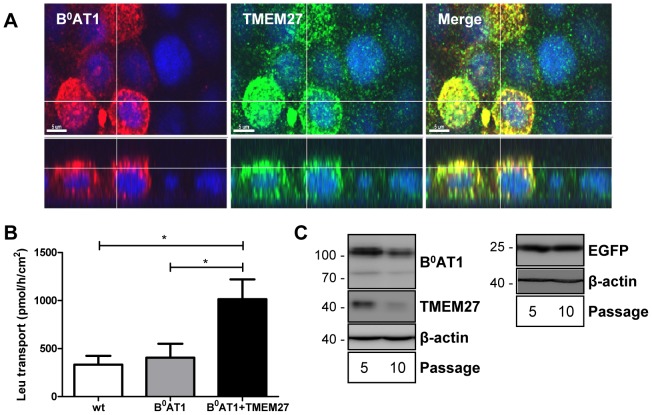
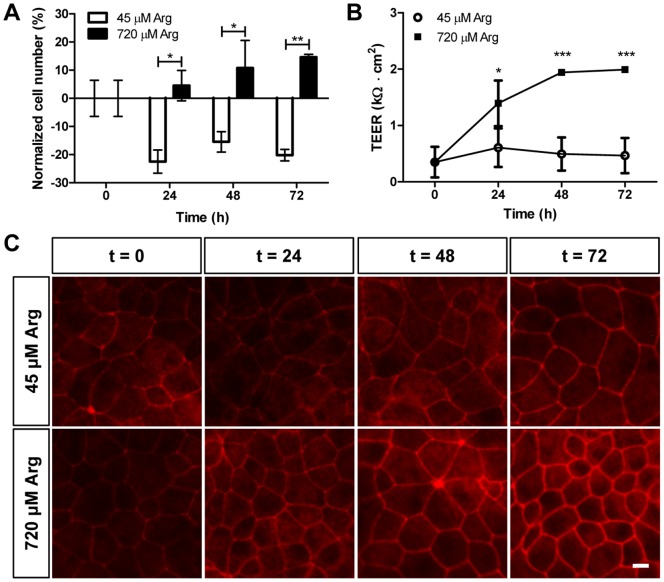
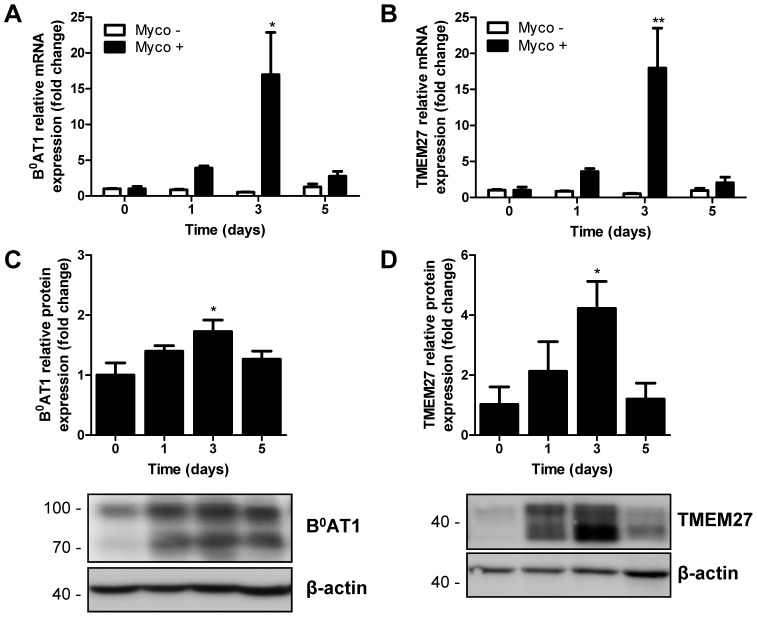
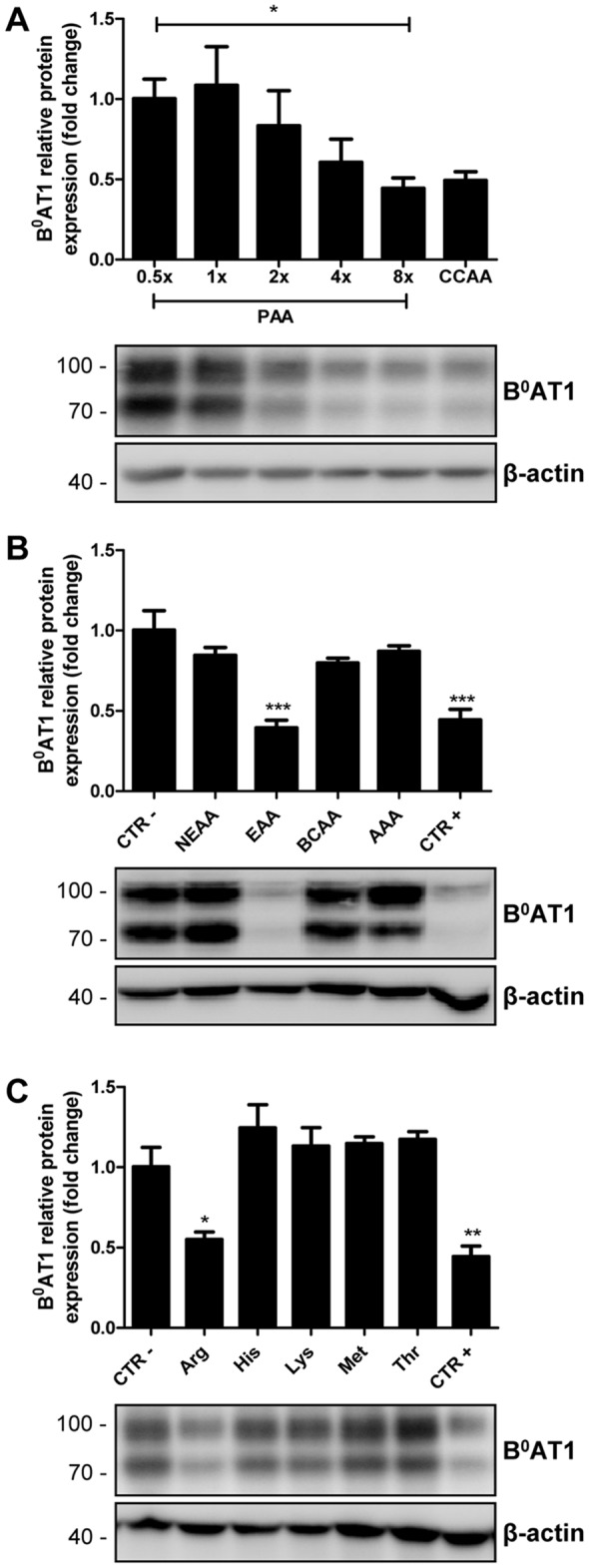
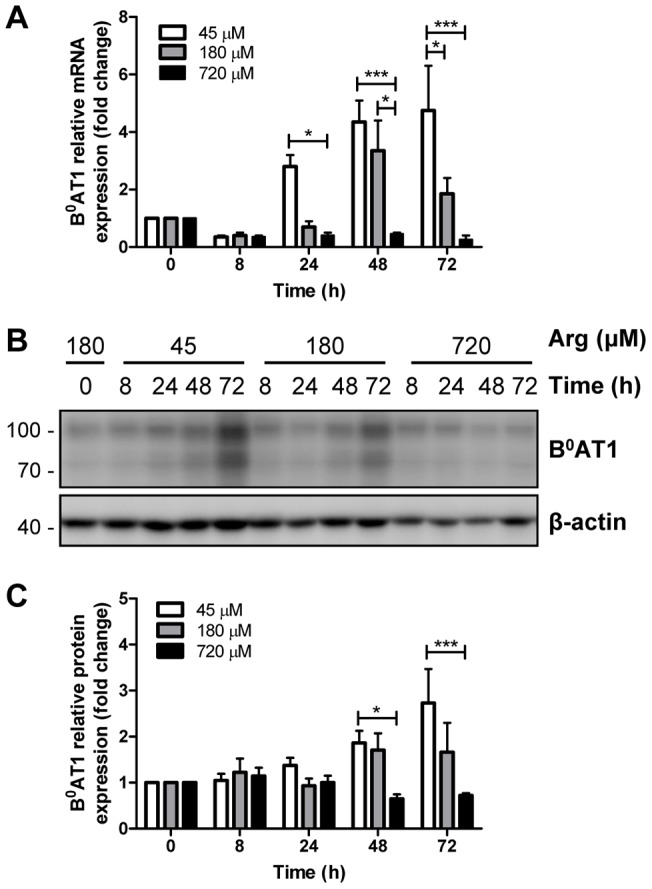
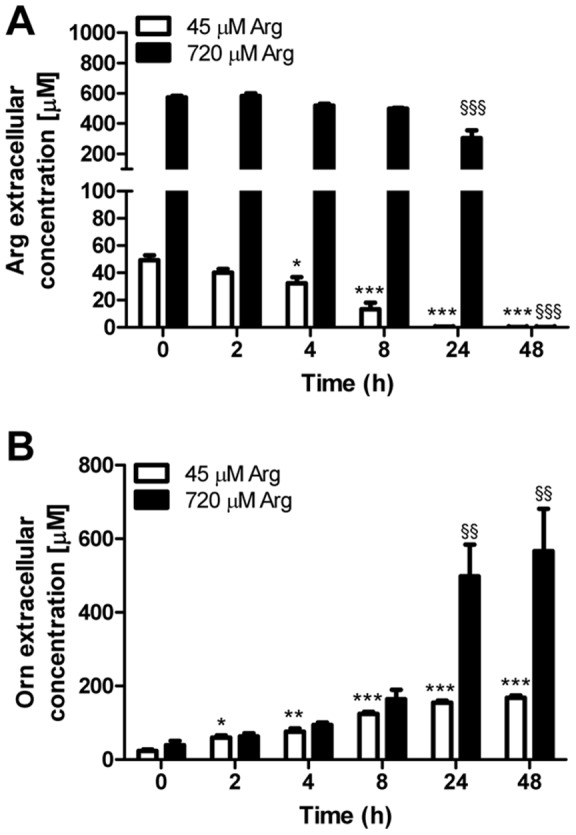
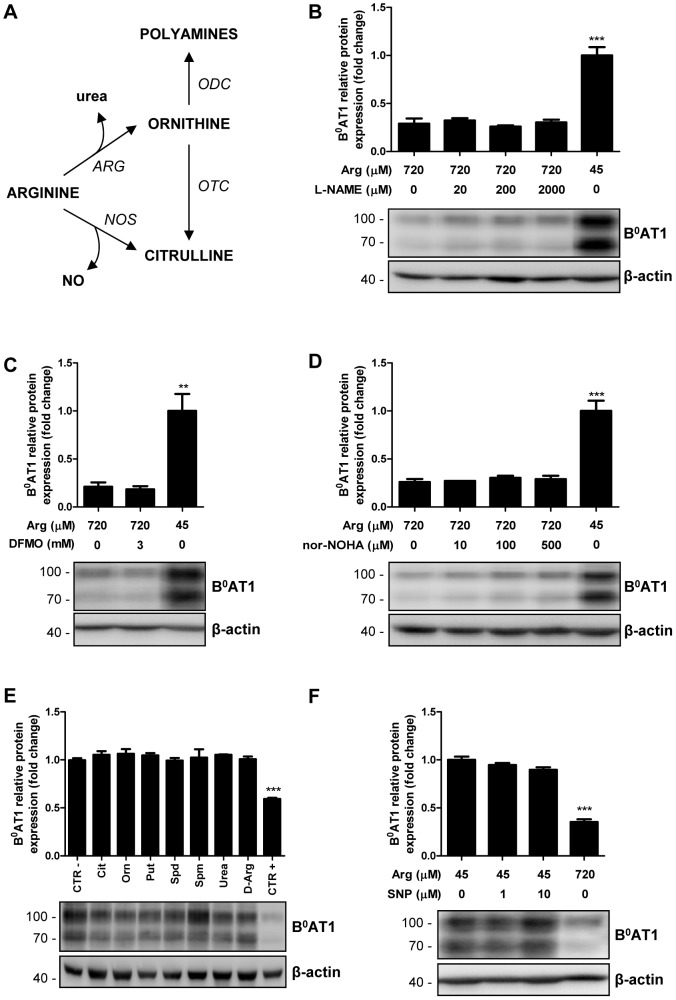
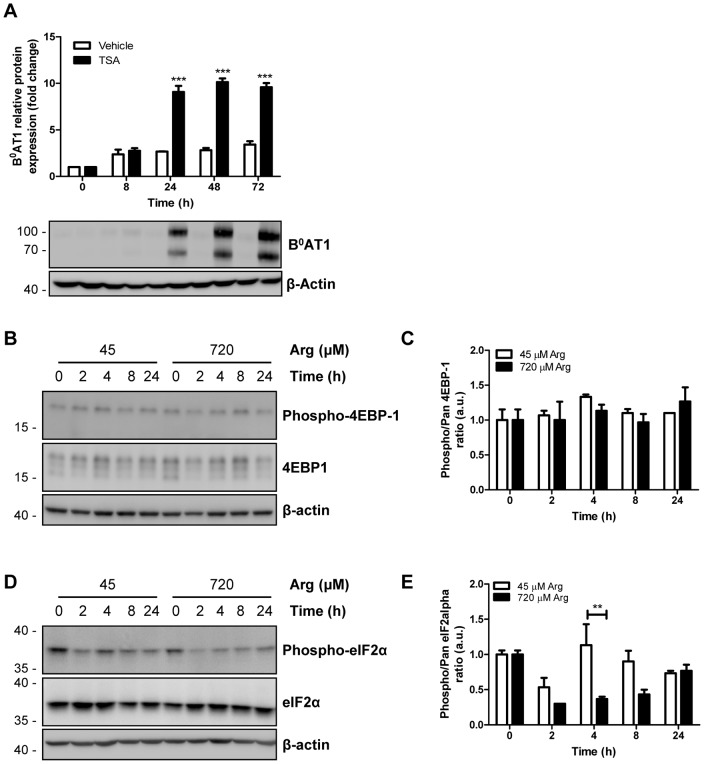
Gene expression and cell growth rely on the intracellular concentration of amino acids, which in metazoans depends on extracellular amino acid availability and transmembrane transport. To investigate the impact of extracellular amino acid concentrations on the expression of a concentrative amino acid transporter, we overexpressed the main kidney proximal tubule luminal neutral amino acid transporter B0AT1-collectrin (SLC6A19-TMEM27) in MDCK cell epithelia. Exogenously expressed proteins co-localized at the luminal membrane and mediated neutral amino acid uptake. However, the transgenes were lost over few cell culture passages. In contrast, the expression of a control transgene remained stable. To test whether this loss was due to inappropriately high amino acid uptake, freshly transduced MDCK cell lines were cultivated either with physiological amounts of amino acids or with the high concentration found in standard cell culture media. Expression of exogenous transporters was unaffected by physiological amino acid concentration in the media. Interestingly, mycoplasma infection resulted in a significant increase in transgene expression and correlated with the rapid metabolism of L-arginine. However, L-arginine metabolites were shown to play no role in transgene expression. In contrast, activation of the GCN2 pathway revealed by an increase in eIF2α phosphorylation may trigger transgene derepression. Taken together, high extracellular amino acid concentration provided by cell culture media appears to inhibit the constitutive expression of concentrative amino acid transporters whereas L-arginine depletion by mycoplasma induces the expression of transgenes possibly via stimulation of the GCN2 pathway.
基因表达和细胞生长依赖于细胞内氨基酸浓度,在多细胞动物中,这取决于细胞外氨基酸的可用性和跨膜运输。为了研究细胞外氨基酸浓度对浓缩型氨基酸转运体表达的影响,我们在MDCK细胞上皮中过表达了主要的肾近端小管腔中性氨基酸转运体B0AT1-Collectrin(SLC6A19-TMEM27)。外源表达的蛋白共定位于腔膜并介导中性氨基酸摄取。然而,转基因在少数细胞培养传代后丢失。相比之下,对照转基因的表达保持稳定。为了测试这种丢失是否是由于氨基酸摄取过高,将新鲜转导的MDCK细胞系分别用生理量的氨基酸或标准细胞培养基中发现的高浓度氨基酸培养。外源转运体的表达不受培养基中生理氨基酸浓度的影响。有趣的是,支原体感染导致转基因表达显著增加,并与L-精氨酸的快速代谢相关。然而,L-精氨酸代谢产物在转基因表达中不起作用。相反,eIF2α磷酸化增加所揭示的GCN2途径的激活可能触发转基因去抑制。综上所述,细胞培养基提供的高细胞外氨基酸浓度似乎抑制了浓缩型氨基酸转运体的组成型表达,而支原体导致的L-精氨酸消耗可能通过刺激GCN2途径诱导转基因表达。