Hanna Samer, Miskolci Veronika, Cox Dianne, Hodgson Louis
Department of Anatomy and Structural Biology, Albert Einstein College of Medicine of Yeshiva University, Bronx, New York, United States of America.
Department of Anatomy and Structural Biology, Albert Einstein College of Medicine of Yeshiva University, Bronx, New York, United States of America; Gruss-Lipper Biophotonics Center, Albert Einstein College of Medicine of Yeshiva University, Bronx, New York, United States of America.
PLoS One. 2014 May 5;9(5):e96469. doi: 10.1371/journal.pone.0096469. eCollection 2014.
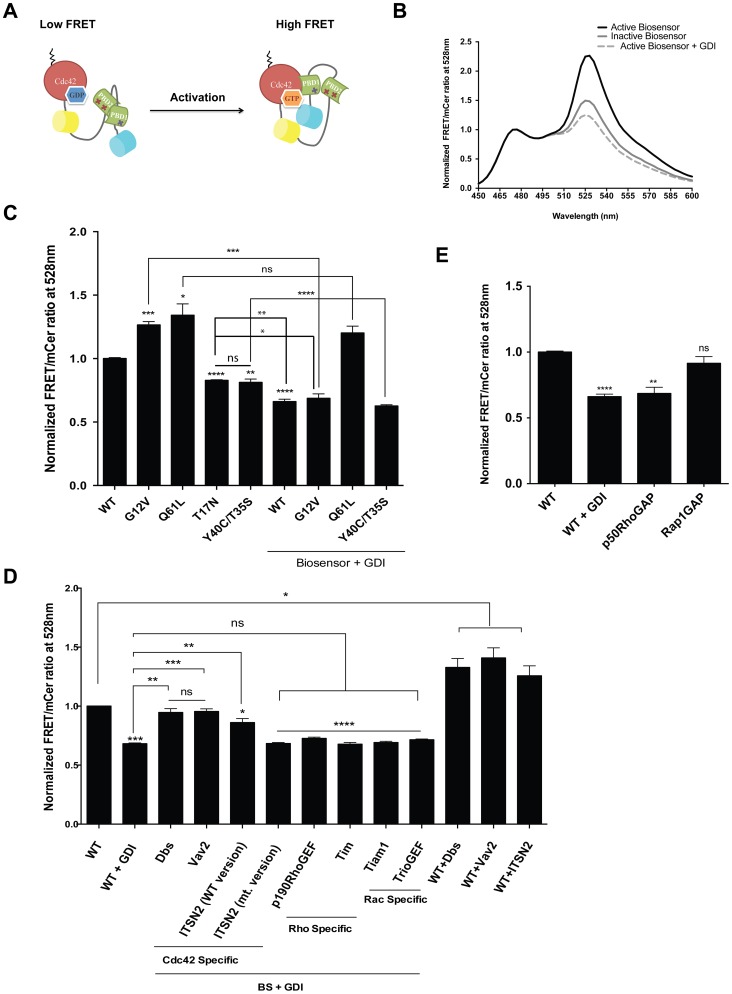
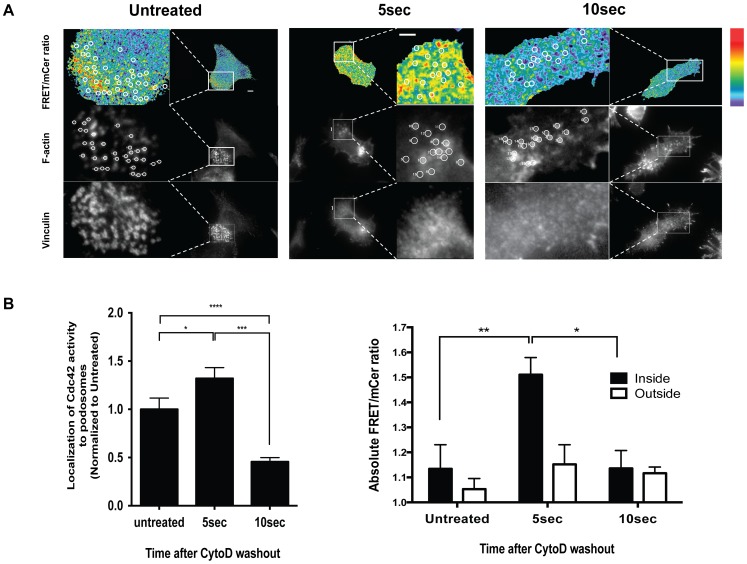
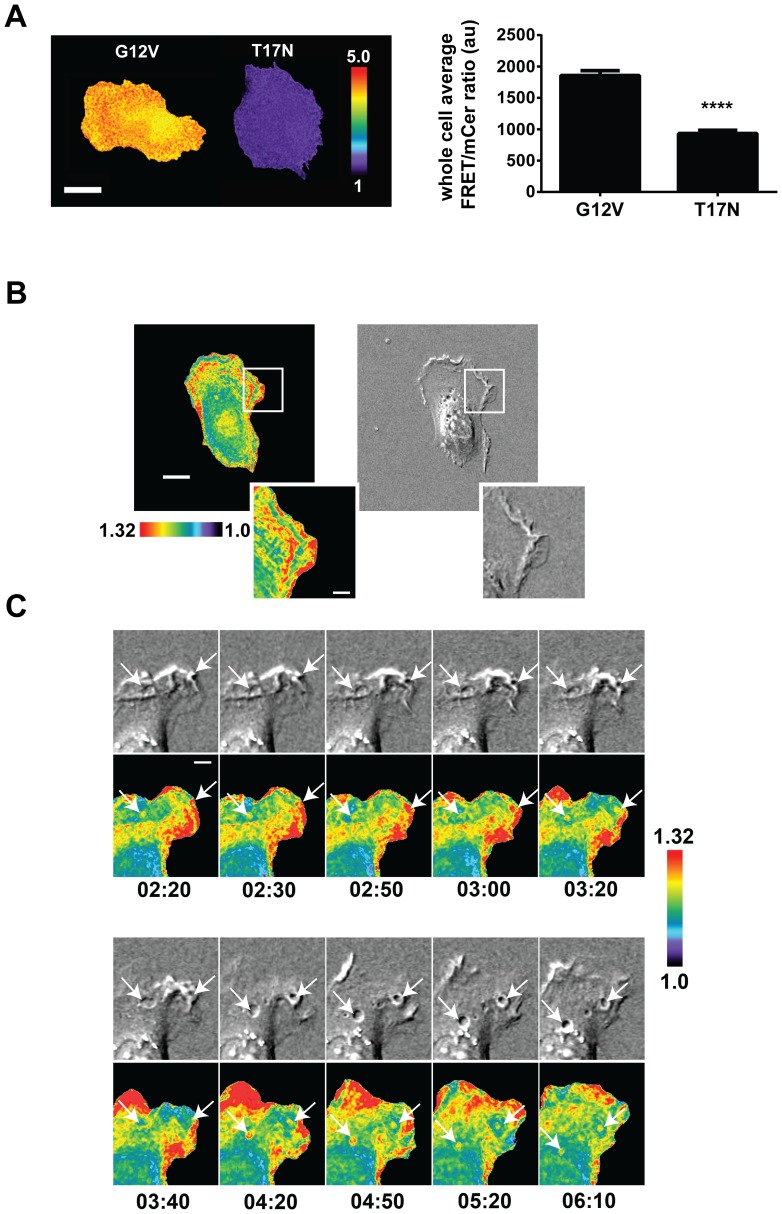
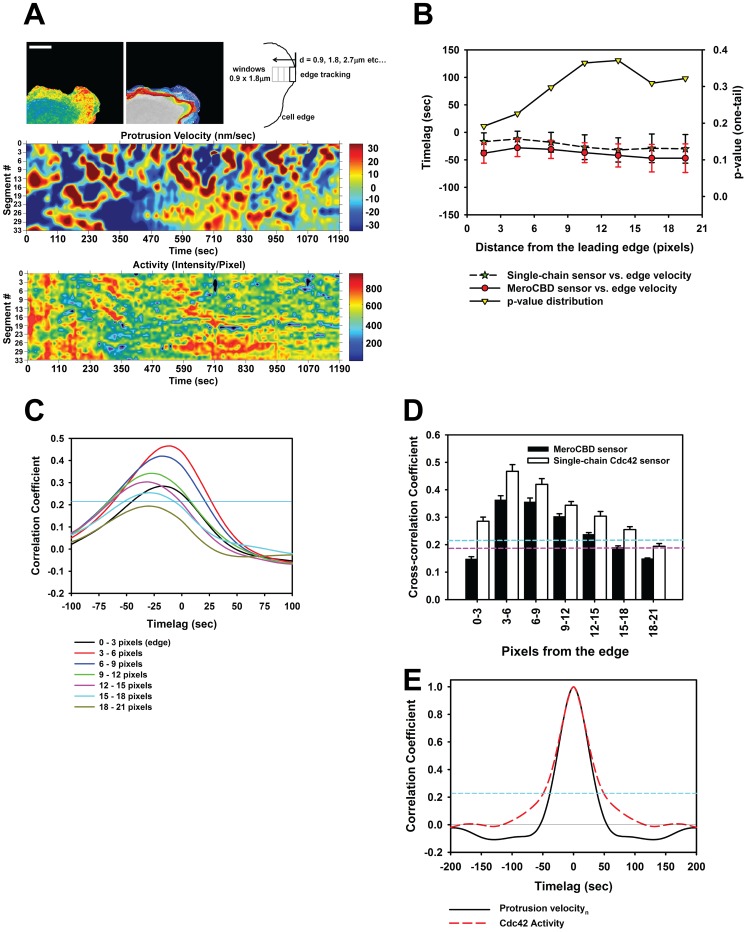
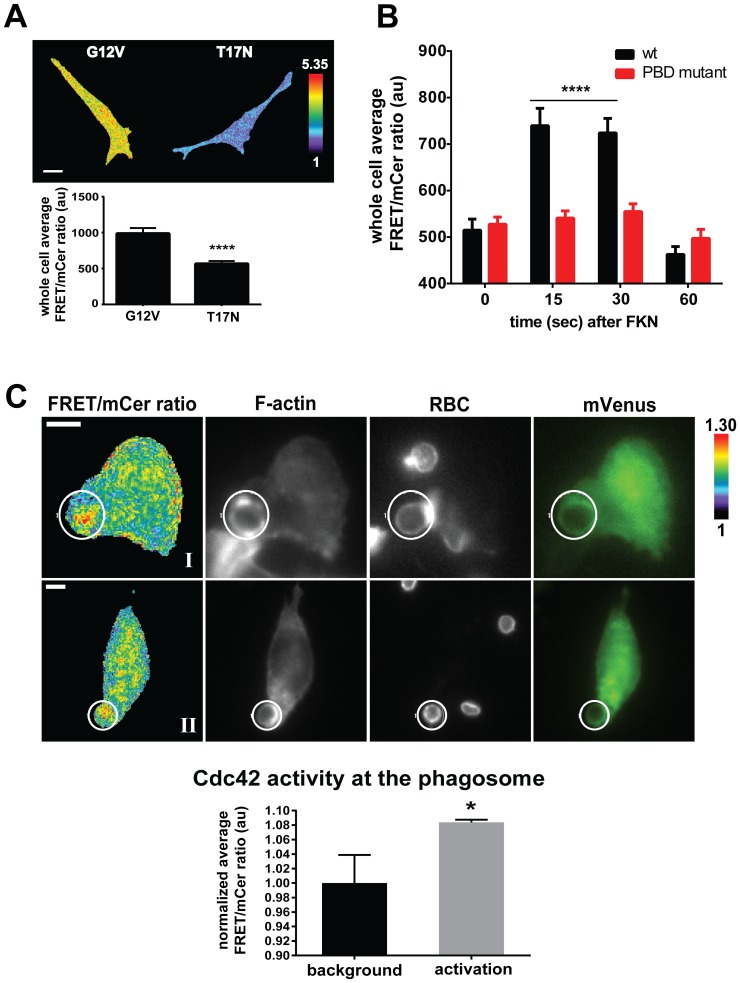
Cdc42 is critical in a myriad of cellular morphogenic processes, requiring precisely regulated activation dynamics to affect specific cellular events. To facilitate direct observations of Cdc42 activation in live cells, we developed and validated a new biosensor of Cdc42 activation. The biosensor is genetically encoded, of single-chain design and capable of correctly localizing to membrane compartments as well as interacting with its upstream regulators including the guanine nucleotide dissociation inhibitor. We characterized this new biosensor in motile mouse embryonic fibroblasts and observed robust activation dynamics at leading edge protrusions, similar to those previously observed for endogenous Cdc42 using the organic dye-based biosensor system. We then extended our validations and observations of Cdc42 activity to macrophages, and show that this new biosensor is able to detect differential activation patterns during phagocytosis and cytokine stimulation. Furthermore, we observe for the first time, a highly transient and localized activation of Cdc42 during podosome formation in macrophages, which was previously hypothesized but never directly visualized.
Cdc42在众多细胞形态发生过程中至关重要,需要精确调控的激活动力学来影响特定的细胞事件。为便于在活细胞中直接观察Cdc42的激活,我们开发并验证了一种新的Cdc42激活生物传感器。该生物传感器是基因编码的,采用单链设计,能够正确定位于膜区室,并与其上游调节因子(包括鸟嘌呤核苷酸解离抑制剂)相互作用。我们在运动的小鼠胚胎成纤维细胞中对这种新生物传感器进行了表征,并在前沿突起处观察到了强大的激活动力学,类似于先前使用基于有机染料的生物传感器系统对内源性Cdc42观察到的情况。然后,我们将对Cdc42活性的验证和观察扩展到巨噬细胞,并表明这种新生物传感器能够检测吞噬作用和细胞因子刺激期间的差异激活模式。此外,我们首次观察到巨噬细胞在足体形成过程中Cdc42的高度短暂和局部激活,这一现象此前曾被假设,但从未直接观察到。