Wang Lizhao, Feng Dan, Yan Huanhuan, Wang Zhongping, Pei Lei
Key Laboratory of Neurological Diseases of Ministry of Education, Tongji Medical College, Huazhong University of Science and Technology, Wuhan, China; CNS Pharmacology & Ion Channel Group Shanghai Chempartner, Shanghai, China.
Department of Pain Clinic, Institute of Anesthesia and Critical Care, Union Hospital, Tongji Medical College, Huazhong University of Science and Technology, Wuhan, China.
PLoS One. 2014 May 5;9(5):e96699. doi: 10.1371/journal.pone.0096699. eCollection 2014.
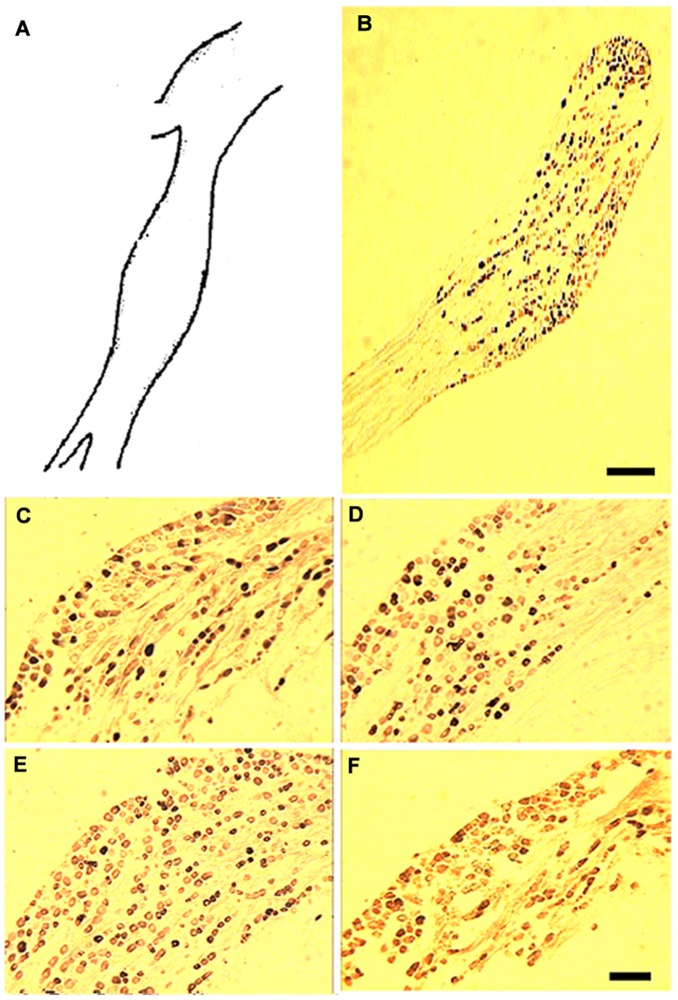
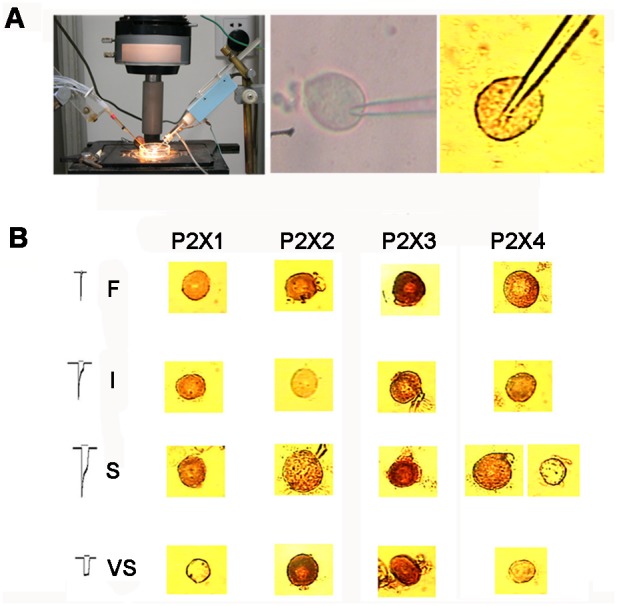
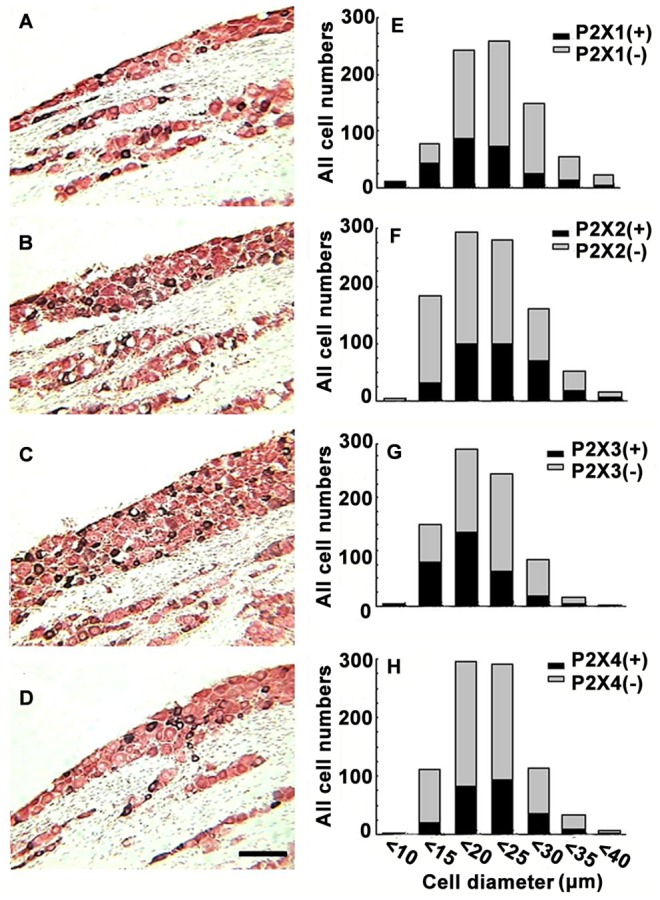
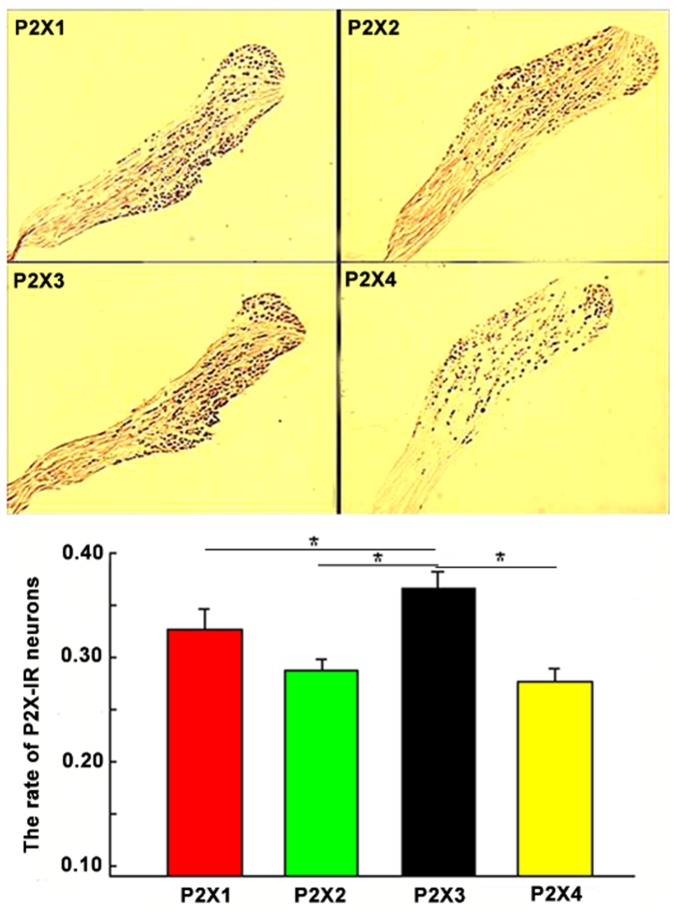
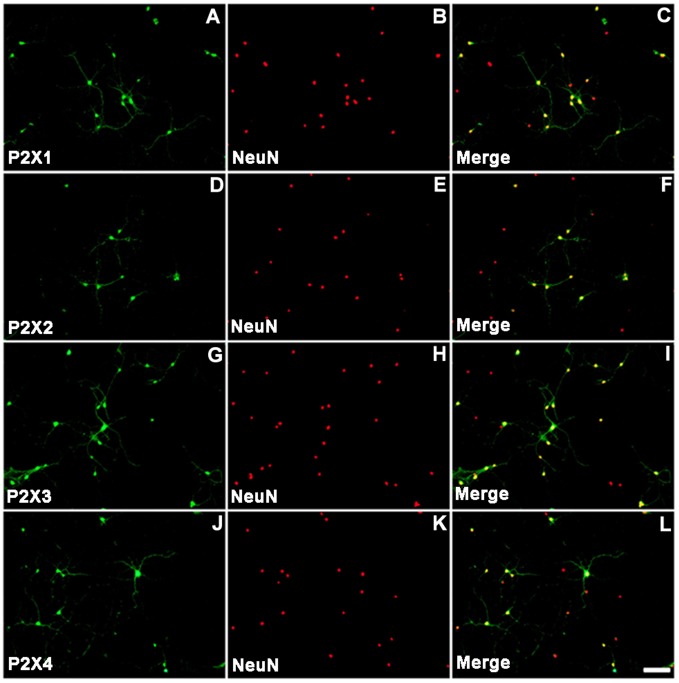
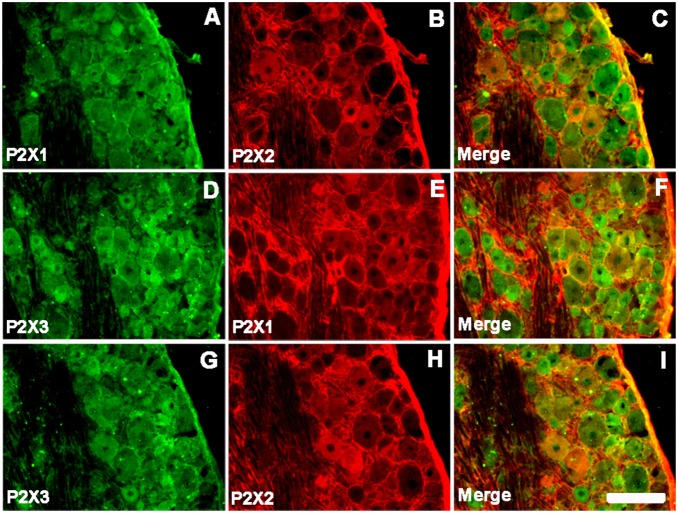
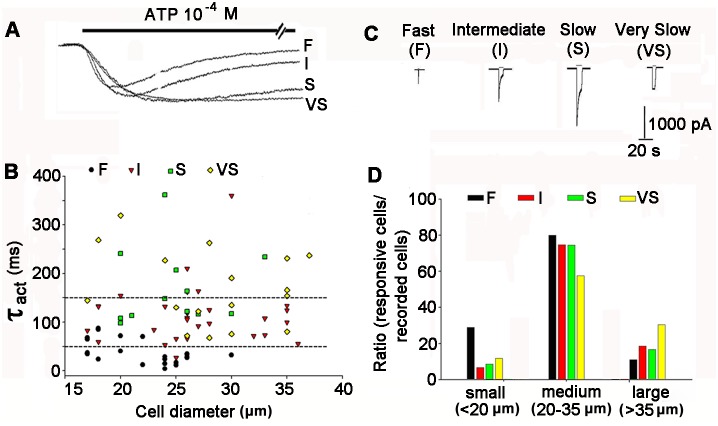
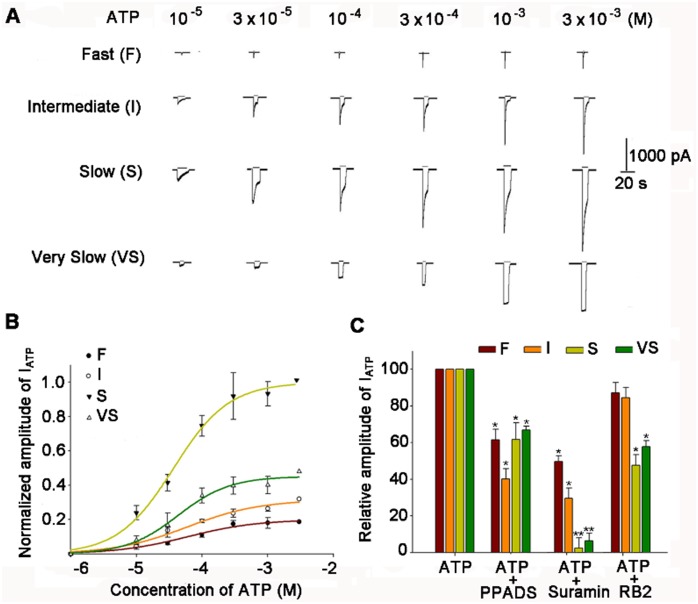
Nodose ganglion (NG) neurons are visceral primary sensory neurons. The transmission and regulation of visceral sensation is mediated mainly by the P2X purinoceptor (P2X receptor). Although the characteristics of different P2X receptor subunits in the NG have been studied previously, comprehensive analyses have not been performed. In this study, we used immunohistochemistry, immunocytochemistry, and whole cell patch clamp techniques to compare the expression and function of P2X1, P2X2, P2X3, and P2X4 receptor subunits in adult rat NG neurons. Polyclonal antibodies against the four P2X subunits labeled different subpopulations of NG neurons. P2X1 and P2X3 were expressed mainly in small-to-medium sized NG neurons, whereas P2X2 and P2X4 were located mostly in medium- and larger-sized NG neurons. Over 36% of NG neurons were P2X3 positive, which was higher than the other three P2X subunits. In addition, different types of currents were recorded from neurons expressing different P2X subunits. The fast type of ATP current was recorded from neurons containing P2X1-4 subunits, the intermediate type of current was recorded from neurons containing the P2X1, P2X3, and P2X4 subunits, the slow type was recorded from neurons expressing P2X1-3, and/or P2X4 subunits, whereas the very slow type was recorded from neurons containing the P2X2 and P2X3 subunits. These comparative results provide an anatomical verification of the different subunits in NG neurons, and offer direct support for the idea that various functional NG populations have distinct responses to ATP, which might be in part due to the different expression profiles of diverse P2X subunits.
结状神经节(NG)神经元是内脏初级感觉神经元。内脏感觉的传递和调节主要由P2X嘌呤受体(P2X受体)介导。尽管此前已对NG中不同P2X受体亚基的特性进行了研究,但尚未进行全面分析。在本研究中,我们使用免疫组织化学、免疫细胞化学和全细胞膜片钳技术,比较成年大鼠NG神经元中P2X1、P2X2、P2X3和P2X4受体亚基的表达和功能。针对这四种P2X亚基的多克隆抗体标记了不同亚群的NG神经元。P2X1和P2X3主要表达于中小型NG神经元,而P2X2和P2X4大多位于中大型NG神经元中。超过36%的NG神经元为P2X3阳性,这一比例高于其他三种P2X亚基。此外,从表达不同P2X亚基的神经元中记录到了不同类型的电流。含P2X1 - 4亚基的神经元记录到快速型ATP电流,含P2X1、P2X3和P2X4亚基的神经元记录到中间型电流,表达P2X1 - 3和/或P2X4亚基的神经元记录到缓慢型电流,而含P2X2和P2X3亚基的神经元记录到极缓慢型电流。这些比较结果为NG神经元中不同亚基提供了解剖学验证,并直接支持了不同功能的NG神经元群体对ATP有不同反应这一观点,这可能部分归因于不同P2X亚基的不同表达模式。