Zhang Tianyi, Liao Yang, Hsu Fu-Ning, Zhang Robin, Searle Jennifer S, Pei Xun, Li Xuan, Ryoo Hyung Don, Ji Jun-Yuan, Du Wei
Ben May Department for Cancer Research, The University of Chicago, Chicago, Illinois, United States of America.
Department of Molecular and Cellular Medicine, College of Medicine, Texas A&M Health Science Center, College Station, Texas, United States of America.
PLoS Genet. 2014 May 8;10(5):e1004357. doi: 10.1371/journal.pgen.1004357. eCollection 2014 May.
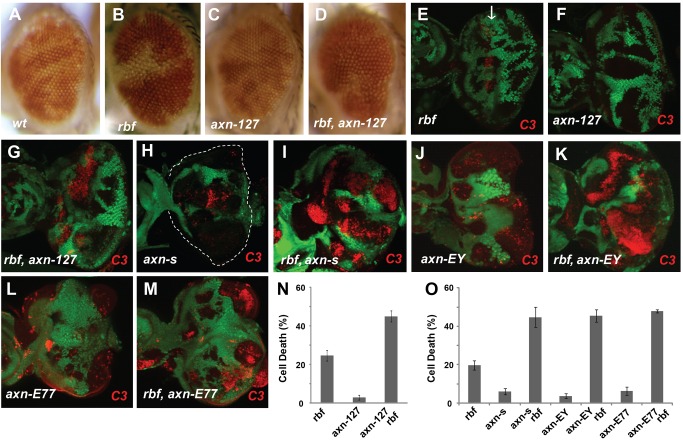
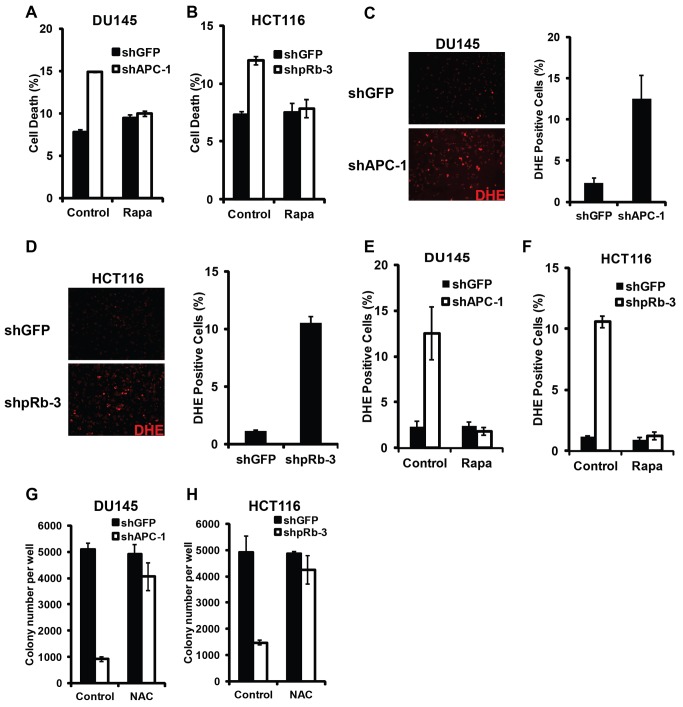
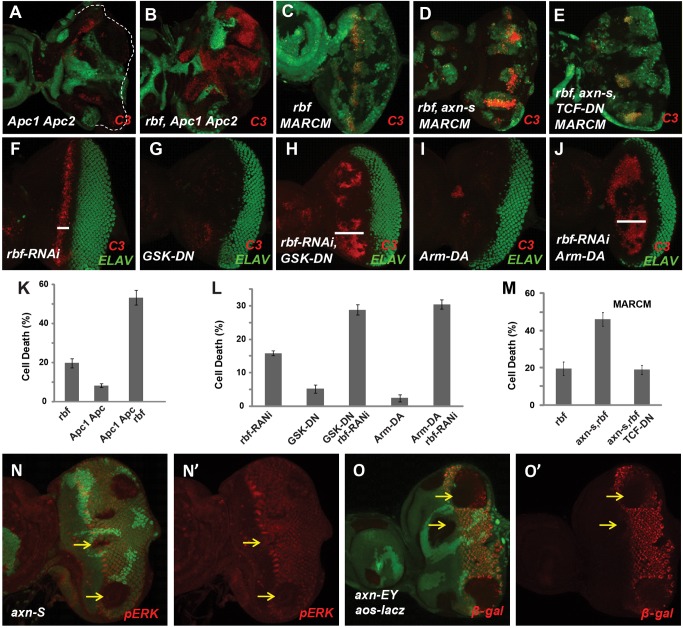
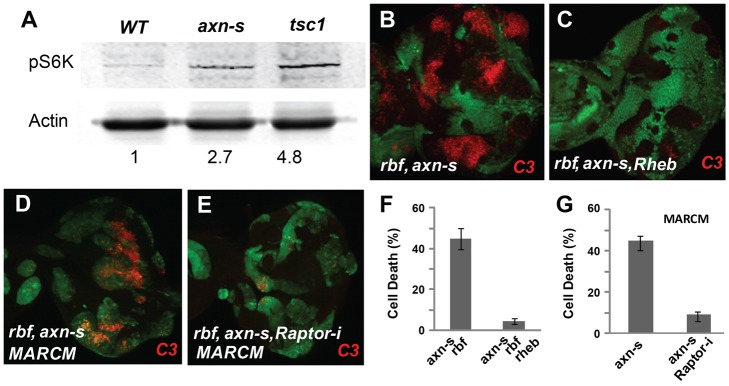
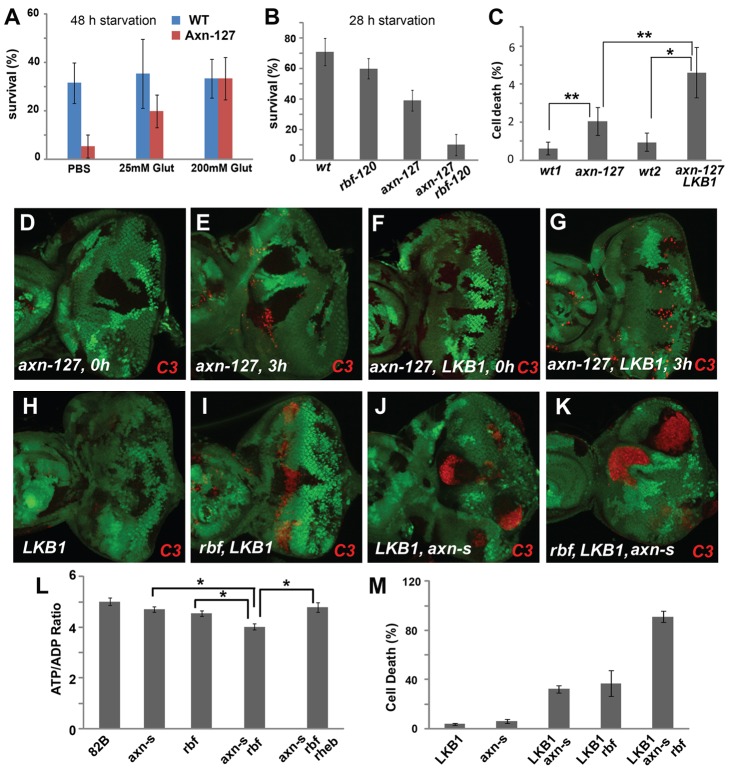
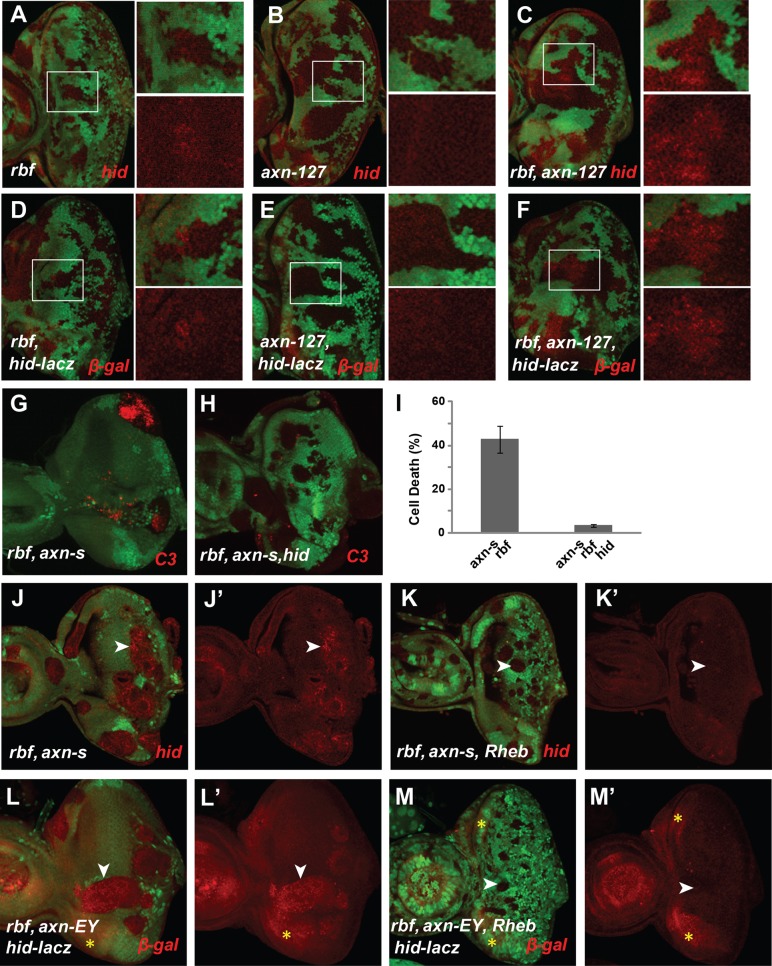
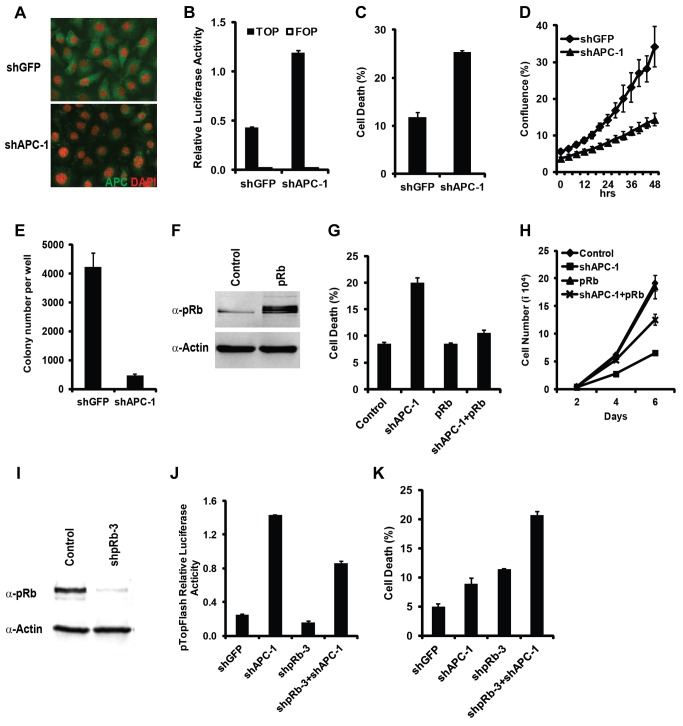
Inactivation of the Rb tumor suppressor can lead to increased cell proliferation or cell death depending on specific cellular context. Therefore, identification of the interacting pathways that modulate the effect of Rb loss will provide novel insights into the roles of Rb in cancer development and promote new therapeutic strategies. Here, we identify a novel synthetic lethal interaction between Rb inactivation and deregulated Wg/Wnt signaling through unbiased genetic screens. We show that a weak allele of axin, which deregulates Wg signaling and increases cell proliferation without obvious effects on cell fate specification, significantly alters metabolic gene expression, causes hypersensitivity to metabolic stress induced by fasting, and induces synergistic apoptosis with mutation of fly Rb ortholog, rbf. Furthermore, hyperactivation of Wg signaling by other components of the Wg pathway also induces synergistic apoptosis with rbf. We show that hyperactivated Wg signaling significantly increases TORC1 activity and induces excessive energy stress with rbf mutation. Inhibition of TORC1 activity significantly suppressed synergistic cell death induced by hyperactivated Wg signaling and rbf inactivation, which is correlated with decreased energy stress and decreased induction of apoptotic regulator expression. Finally the synthetic lethality between Rb and deregulated Wnt signaling is conserved in mammalian cells and that inactivation of Rb and APC induces synergistic cell death through a similar mechanism. These results suggest that elevated TORC1 activity and metabolic stress underpin the evolutionarily conserved synthetic lethal interaction between hyperactivated Wnt signaling and inactivated Rb tumor suppressor.
视网膜母细胞瘤(Rb)肿瘤抑制因子的失活根据特定的细胞环境可导致细胞增殖增加或细胞死亡。因此,鉴定调节Rb缺失效应的相互作用途径将为Rb在癌症发展中的作用提供新的见解,并推动新的治疗策略。在此,我们通过无偏差遗传筛选鉴定出Rb失活与失调的Wg/Wnt信号传导之间的一种新型合成致死相互作用。我们发现,轴蛋白的一个弱等位基因失调Wg信号传导并增加细胞增殖,而对细胞命运特化无明显影响,它显著改变代谢基因表达,导致对禁食诱导的代谢应激过敏,并与果蝇Rb直系同源基因rbf的突变诱导协同凋亡。此外,Wg信号通路的其他成分对Wg信号的过度激活也与rbf诱导协同凋亡。我们发现,过度激活的Wg信号传导显著增加TORC1活性,并与rbf突变一起诱导过度的能量应激。抑制TORC1活性显著抑制了由过度激活的Wg信号传导和rbf失活诱导的协同细胞死亡,这与能量应激降低和凋亡调节因子表达诱导减少相关。最后,Rb与失调的Wnt信号传导之间的合成致死性在哺乳动物细胞中是保守的,Rb和APC的失活通过类似机制诱导协同细胞死亡。这些结果表明,TORC1活性升高和代谢应激是过度激活的Wnt信号传导与失活的Rb肿瘤抑制因子之间进化保守的合成致死相互作用的基础。