Han Yu, Wang Shifeng, Zhang Zhiping, Ma Xiaohe, Li Wei, Zhang Xiaowei, Deng Jiaoyu, Wei Hongping, Li Zhaoyang, Zhang Xian-En, Cui Zongqiang
State Key Laboratory of Virology, Wuhan Institute of Virology, Chinese Academy of Sciences, Wuhan 430071, China Graduate University of Chinese Academy of Sciences, Beijing 100049, China.
State Key Laboratory of Virology, Wuhan Institute of Virology, Chinese Academy of Sciences, Wuhan 430071, China.
Nucleic Acids Res. 2014 Jul;42(13):e103. doi: 10.1093/nar/gku408. Epub 2014 May 9.
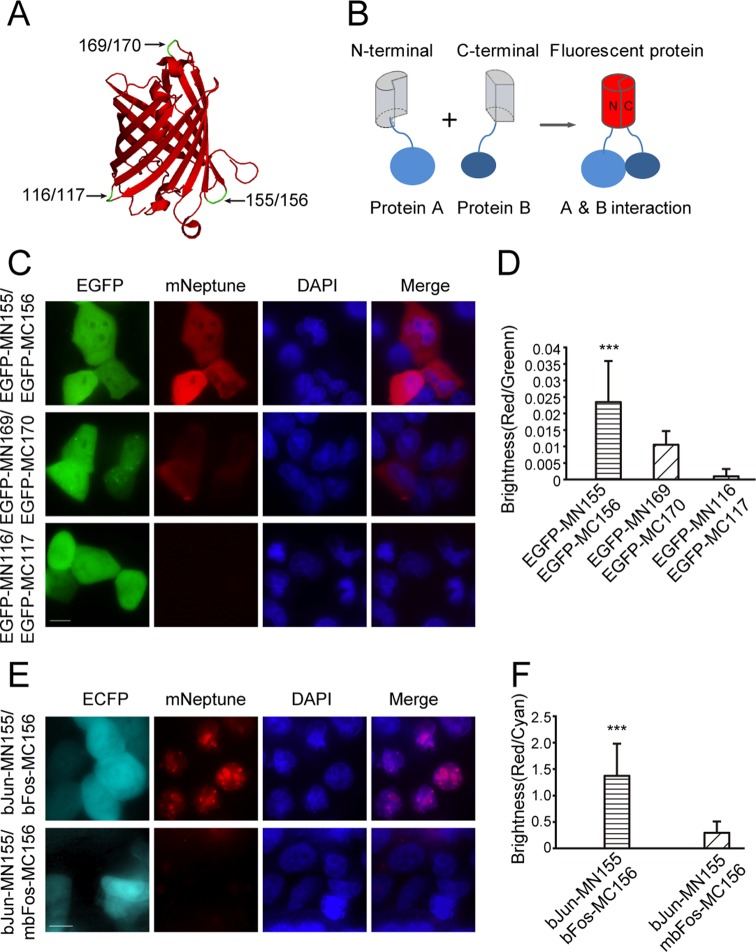
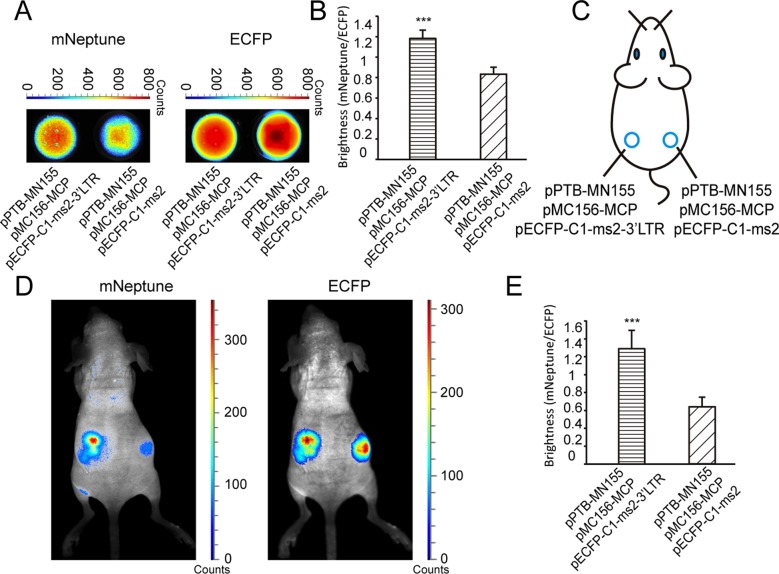
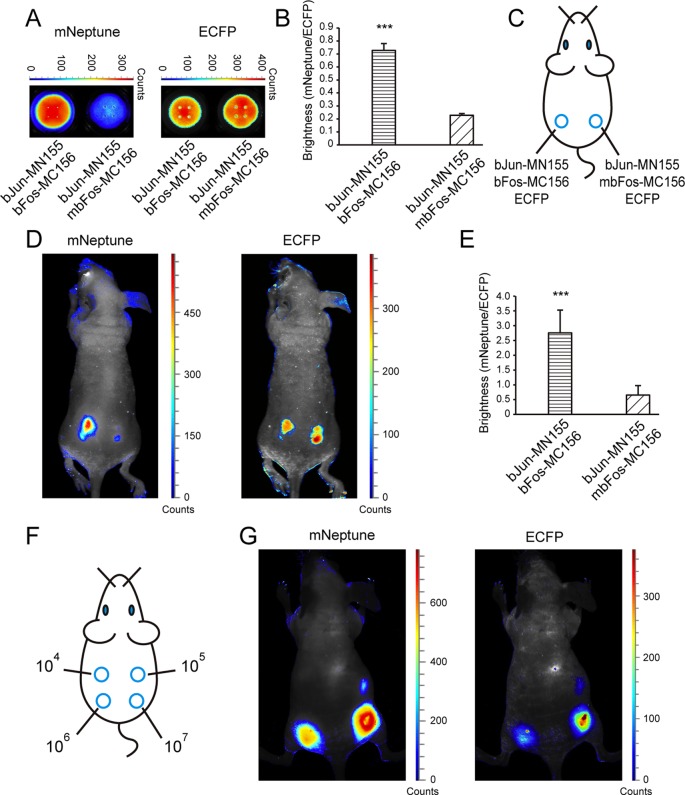
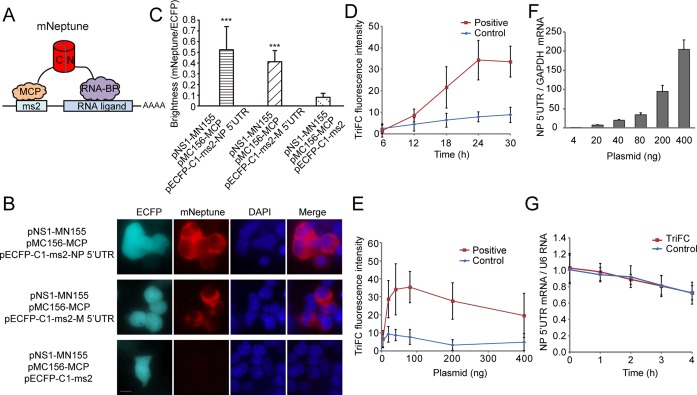
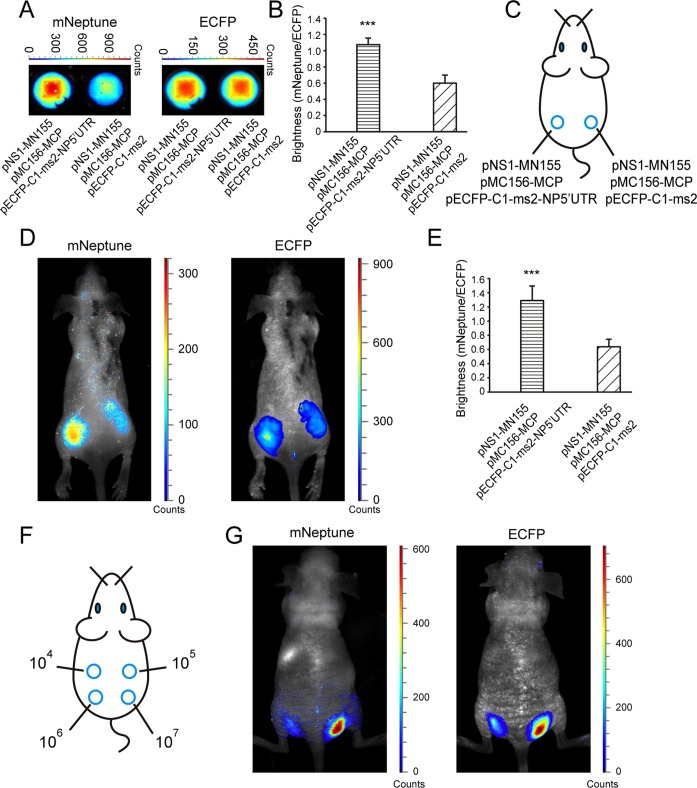
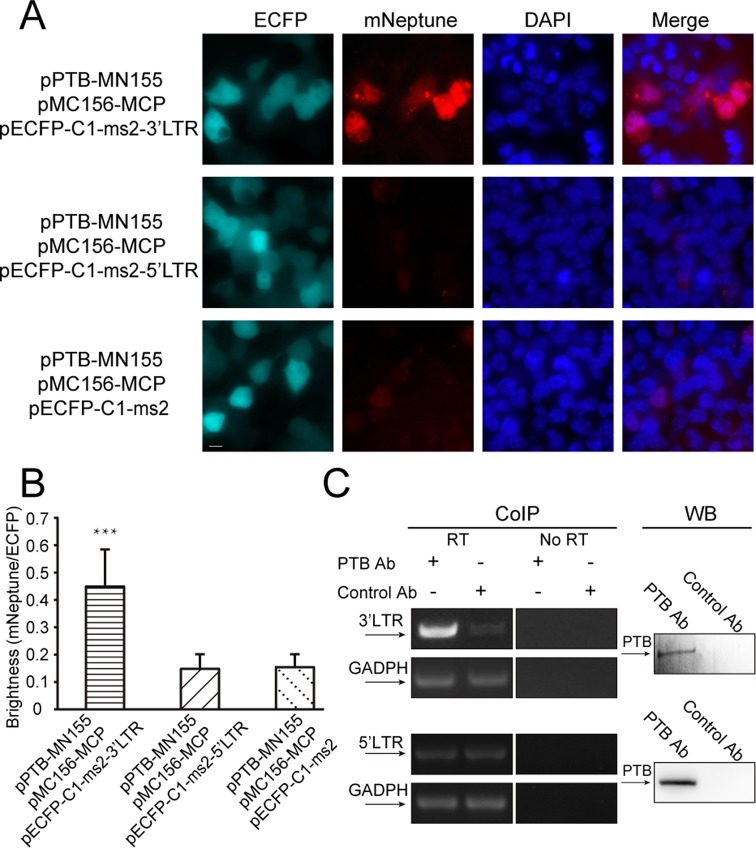
Imaging of protein-protein and RNA-protein interactions in vivo, especially in live animals, is still challenging. Here we developed far-red mNeptune-based bimolecular fluorescence complementation (BiFC) and trimolecular fluorescence complementation (TriFC) systems with excitation and emission above 600 nm in the 'tissue optical window' for imaging of protein-protein and RNA-protein interactions in live cells and mice. The far-red mNeptune BiFC was first built by selecting appropriate split mNeptune fragments, and then the mNeptune-TriFC system was built based on the mNeptune-BiFC system. The newly constructed mNeptune BiFC and TriFC systems were verified as useful tools for imaging protein-protein and mRNA-protein interactions, respectively, in live cells and mice. We then used the new mNeptune-TriFC system to investigate the interactions between human polypyrimidine-tract-binding protein (PTB) and HIV-1 mRNA elements as PTB may participate in HIV mRNA processing in HIV activation from latency. An interaction between PTB and the 3'long terminal repeat region of HIV-1 mRNAs was found and imaged in live cells and mice, implying a role for PTB in regulating HIV-1 mRNA processing. The study provides new tools for in vivo imaging of RNA-protein and protein-protein interactions, and adds new insight into the mechanism of HIV-1 mRNA processing.
对体内,尤其是活体动物体内蛋白质-蛋白质和RNA-蛋白质相互作用进行成像仍然具有挑战性。在此,我们开发了基于远红光mNeptune的双分子荧光互补(BiFC)和三分子荧光互补(TriFC)系统,其激发和发射波长在“组织光学窗口”内600nm以上,用于对活细胞和小鼠中的蛋白质-蛋白质和RNA-蛋白质相互作用进行成像。通过选择合适的mNeptune片段构建了远红光mNeptune BiFC,然后基于mNeptune BiFC系统构建了mNeptune TriFC系统。新构建的mNeptune BiFC和TriFC系统分别被证实为用于对活细胞和小鼠中蛋白质-蛋白质和mRNA-蛋白质相互作用进行成像的有用工具。然后,我们使用新的mNeptune TriFC系统研究人多嘧啶序列结合蛋白(PTB)与HIV-1 mRNA元件之间的相互作用,因为PTB可能参与HIV潜伏激活过程中的HIV mRNA加工。在活细胞和小鼠中发现并成像了PTB与HIV-1 mRNA 3'长末端重复区域之间的相互作用,这意味着PTB在调节HIV-1 mRNA加工中发挥作用。该研究为RNA-蛋白质和蛋白质-蛋白质相互作用的体内成像提供了新工具,并为HIV-1 mRNA加工机制增添了新见解。