Jain Ruchi, Kazmierczak Barbara I
Department of Internal Medicine (Infectious Diseases), Yale University School of Medicine, New Haven, Connecticut, United States of America.
Department of Internal Medicine (Infectious Diseases), Yale University School of Medicine, New Haven, Connecticut, United States of America; Department of Microbial Pathogenesis, Yale University School of Medicine, New Haven, Connecticut, United States of America.
PLoS One. 2014 May 14;9(5):e97439. doi: 10.1371/journal.pone.0097439. eCollection 2014.
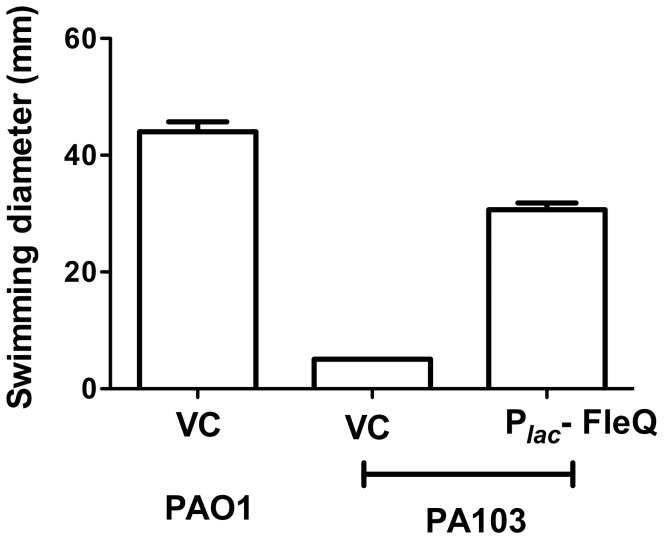
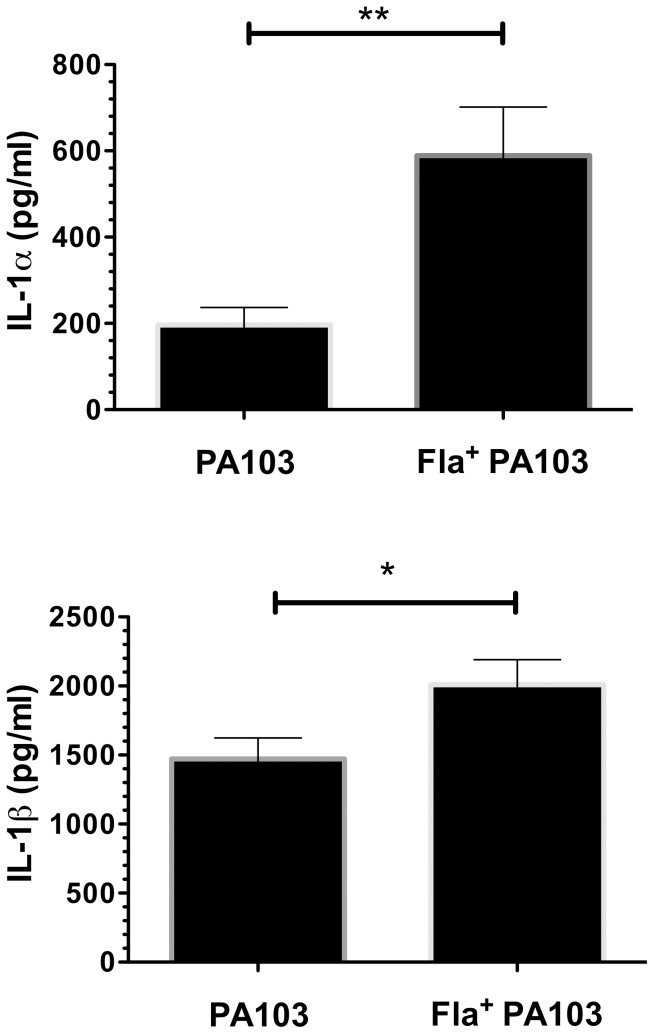
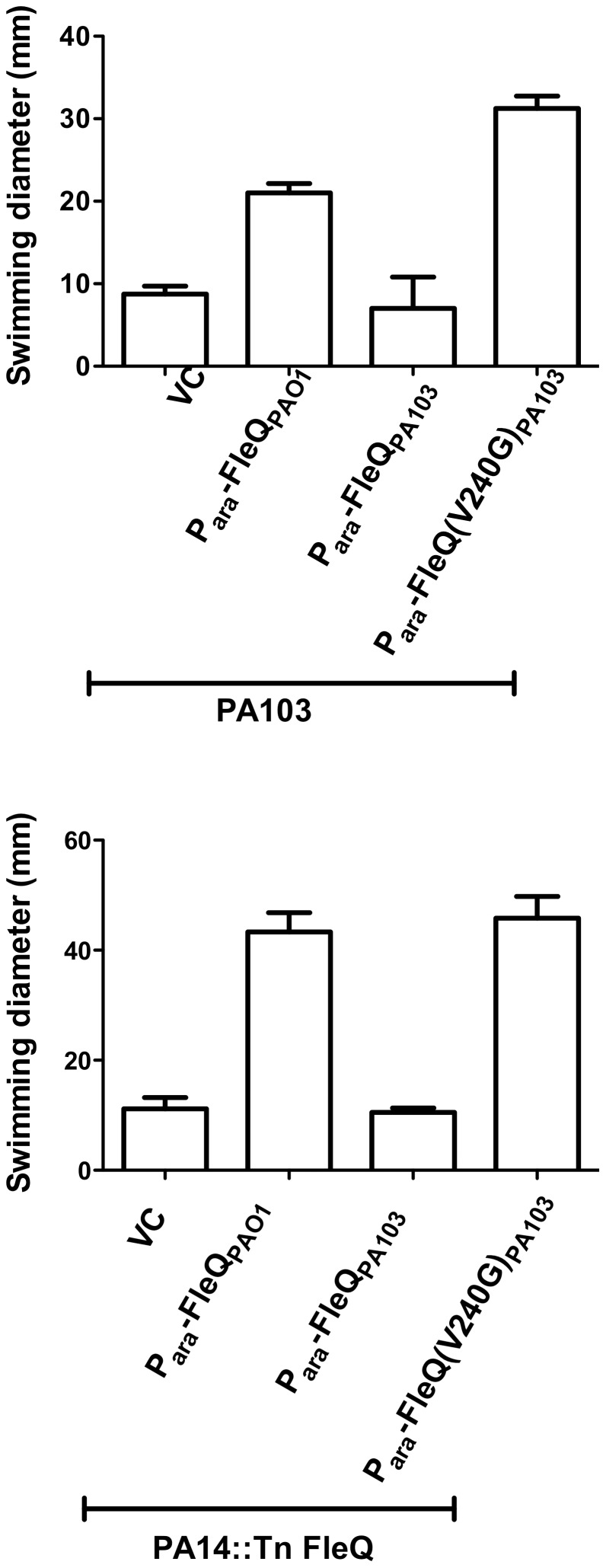
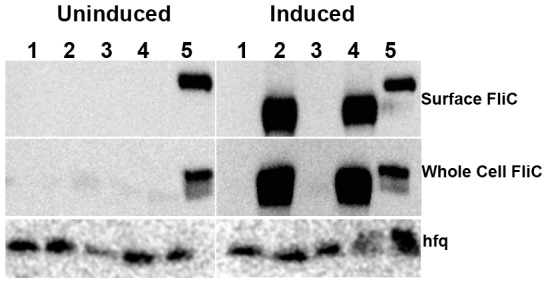
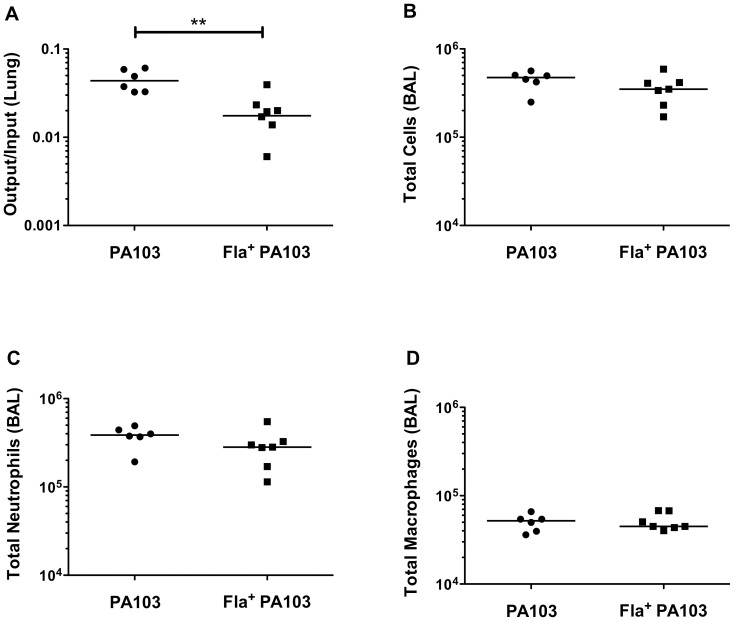
Flagellar-based motility plays a critical role in Pseudomonas aeruginosa pathogenesis, influencing both the establishment of bacterial infection and the host's response to the pathogen. Nonetheless, aflagellate clinical strains are often isolated from acutely and chronically infected patients and include the virulent laboratory strain PA103. We determined that PA103's aflagellate phenotype is the result of a single amino acid change (G240V) in the master flagellar regulator, FleQ. This mutation, which lies just outside the Walker B box of FleQ, abrogates the ability of FleQ to positively regulate flagellar gene expression. Reversal of this seemingly conservative amino acid substitution is sufficient to restore swimming motility to PA103, despite the presence of mutations in other flagellar genes of PA103. We also investigated the consequences of restoring flagellar assembly on PA103 virulence. Although a negative correlation between flagellar assembly and Type 3 secretion system (T3SS) expression has been reported previously, we did not observe downregulation of T3SS expression or function in Fla+ PA103. Restoration of flagellar assembly did, however, amplify IL-1 signals measured during murine pulmonary infection and was associated with increased bacterial clearance. These experiments suggest that loss of flagellar motility may primarily benefit PA103 by attenuating pathogen recognition and clearance during acute infection.
基于鞭毛的运动性在铜绿假单胞菌致病过程中起着关键作用,影响细菌感染的建立以及宿主对病原体的反应。尽管如此,无鞭毛的临床菌株经常从急性和慢性感染患者中分离出来,包括毒力较强的实验室菌株PA103。我们确定PA103的无鞭毛表型是主要鞭毛调节因子FleQ中单个氨基酸变化(G240V)的结果。该突变位于FleQ的沃克B框外侧,消除了FleQ正向调节鞭毛基因表达的能力。尽管PA103的其他鞭毛基因存在突变,但这种看似保守的氨基酸替代的逆转足以恢复PA103的游动能力。我们还研究了恢复鞭毛组装对PA103毒力的影响。尽管先前已报道鞭毛组装与3型分泌系统(T3SS)表达之间存在负相关,但我们在Fla+ PA103中未观察到T3SS表达或功能的下调。然而,鞭毛组装的恢复确实增强了小鼠肺部感染期间测得的IL-1信号,并与细菌清除增加有关。这些实验表明,鞭毛运动性的丧失可能主要通过减弱急性感染期间病原体的识别和清除而使PA103受益。