School of Earth and Environmental Sciences, Schmid College of Science & Technology, Chapman University, Orange, CA 92866, USA.
Geochem Trans. 2014 May 3;15:6. doi: 10.1186/1467-4866-15-6. eCollection 2014.
Iron oxyhydroxides are commonly found in natural aqueous systems as nanoscale particles, where they can act as effective sorbents for dissolved metals due to their natural surface reactivity, small size and high surface area. These properties make nanoscale iron oxyhydroxides a relevant option for the remediation of water supplies contaminated with dissolved metals. However, natural geochemical processes, such as changes in ionic strength, pH, and temperature, can cause these particles to aggregate, thus affecting their sorption capabilities and remediation potential. Other environmental parameters such as increasing salinity may also impact metal retention, e.g. when particles are transported from freshwater to seawater.
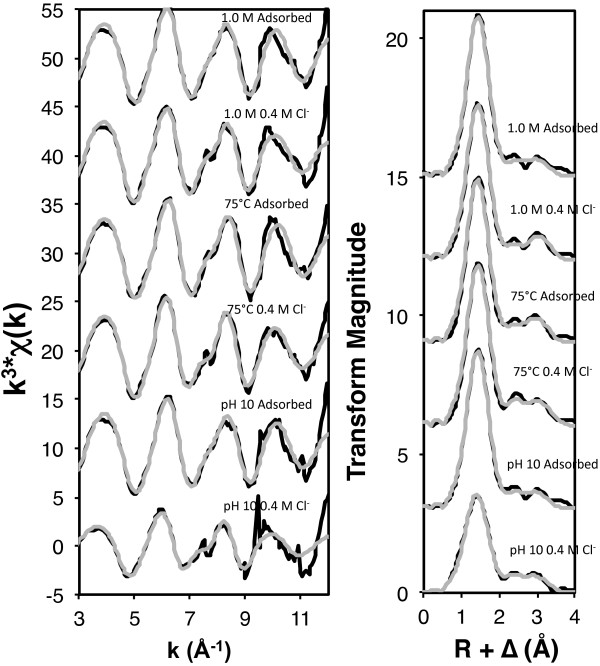
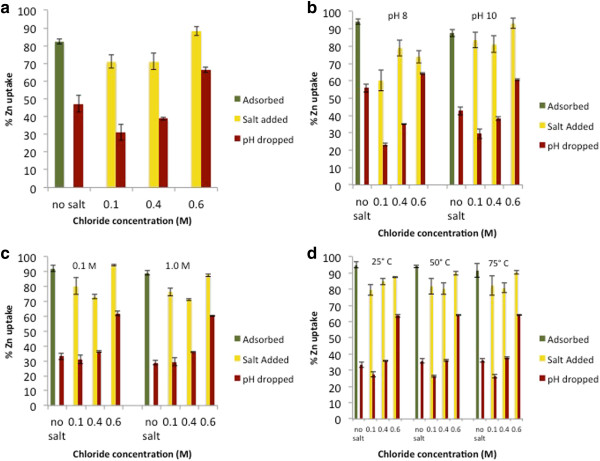
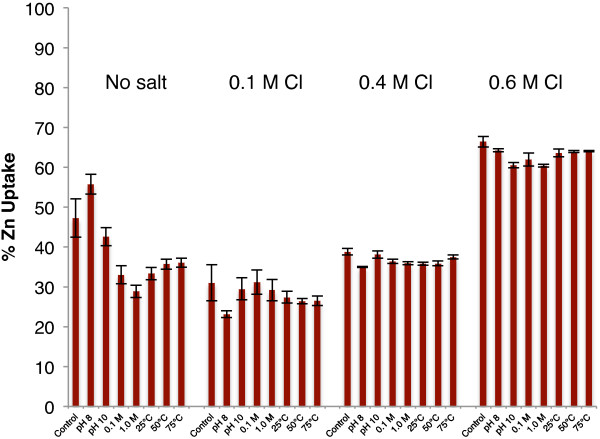
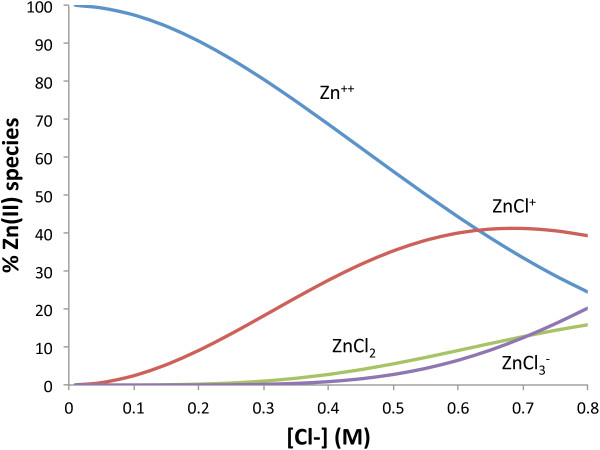
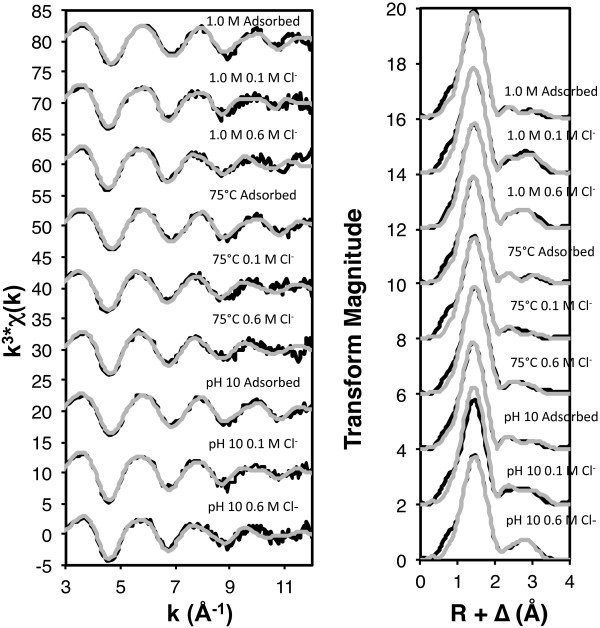
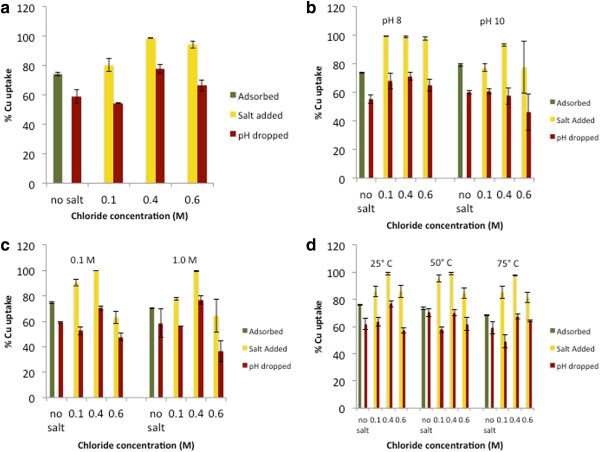
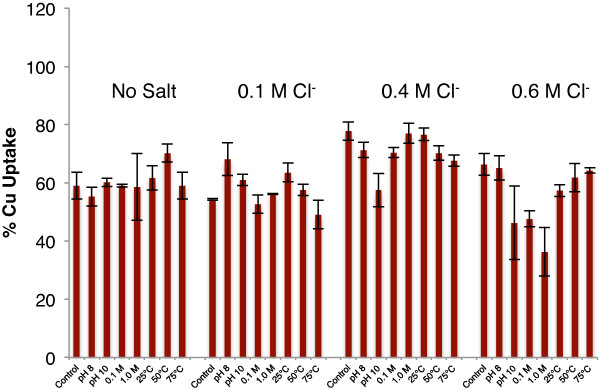
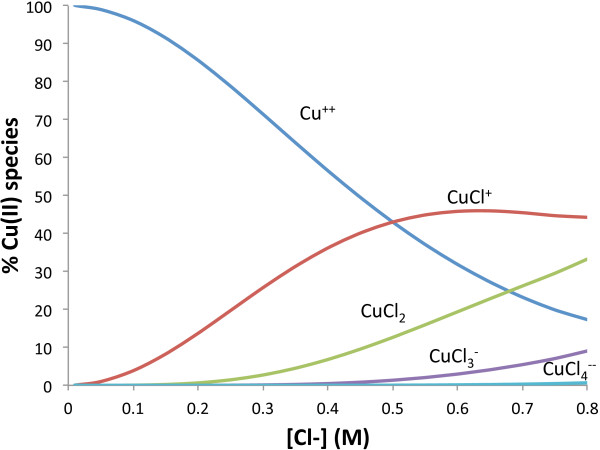
After using synthetic iron oxyhydroxide nanoparticles and nanoparticle aggregates in batch Zn(II) adsorption experiments, the addition of increasing concentrations of chloride (from 0.1 M to 0.6 M) appears to initially reduce Zn(II) retention, likely due to the desorption of outer-sphere zinc surface complexes and subsequent formation of aqueous Zn-Cl complexes, before then promoting Zn(II) retention, possibly through the formation of ternary surface complexes (supported by EXAFS spectroscopy) which stabilize zinc on the surface of the nanoparticles/aggregates. In batch Cu(II) adsorption experiments, Cu(II) retention reaches a maximum at 0.4 M chloride. Copper-chloride surface complexes are not indicated by EXAFS spectroscopy, but there is an increase in the formation of stable aqueous copper-chloride complexes as chloride concentration rises (with CuCl(+) becoming dominant in solution at ~0.5 M chloride) that would potentially inhibit further sorption or encourage desorption. Instead, the presence of bidentate edge-sharing and monodentate corner-sharing complexes is supported by EXAFS spectroscopy. Increasing chloride concentration has more of an impact on zinc retention than the mechanism of nanoparticle aggregation, whereas aggregation condition is a stronger determinant of copper retention.
Based on these model uptake/retention studies, iron oxyhydroxide nanoparticles show potential as a strategy to remediate zinc-contaminated waters that migrate towards the ocean. Copper retention, in contrast, appears to be optimized at an intermediate salinity consistent with brackish water, and therefore may release considerable fractions of retained copper at higher (e.g. seawater) salinity levels.
铁的氢氧化物在天然水系统中作为纳米颗粒普遍存在,由于其天然表面反应性、小尺寸和高表面积,它们可以作为溶解金属的有效吸附剂。这些特性使得纳米尺度的铁氢氧化物成为修复受溶解金属污染的水供应的一种相关选择。然而,自然地球化学过程,如离子强度、pH 值和温度的变化,可能导致这些颗粒聚集,从而影响它们的吸附能力和修复潜力。其他环境参数,如盐度增加,也可能影响金属的保留,例如,当颗粒从淡水输送到海水时。
在用合成的铁氢氧化物纳米颗粒和纳米颗粒聚集体进行批量 Zn(II)吸附实验后,添加浓度不断增加的氯化物(从 0.1 M 到 0.6 M)似乎最初会降低 Zn(II)的保留,这可能是由于外球锌表面络合物的解吸以及随后形成的水合 Zn-Cl 络合物,然后再促进 Zn(II)的保留,这可能是通过形成三元表面络合物(支持 EXAFS 光谱)实现的,这些络合物稳定了纳米颗粒/聚集体表面的锌。在批量 Cu(II)吸附实验中,在 0.4 M 氯化物时 Cu(II)的保留达到最大值。EXAFS 光谱不表明铜-氯表面络合物的存在,但随着氯化物浓度的升高,稳定的水合铜-氯络合物的形成增加(在约 0.5 M 氯化物时 CuCl(+)成为溶液中的主要成分),这可能会抑制进一步的吸附或促进解吸。相反,EXAFS 光谱支持双齿边缘共享和单齿角共享络合物的存在。与纳米颗粒聚集的机制相比,增加氯化物浓度对锌保留的影响更大,而聚集条件是铜保留的更强决定因素。
基于这些模型的吸收/保留研究,铁氢氧化物纳米颗粒作为一种修复向海洋迁移的锌污染水的策略具有潜力。相比之下,铜的保留似乎在与微咸水一致的中等盐度下达到优化,因此在较高(例如海水)盐度水平下可能会释放相当大比例的保留铜。