Yamashita Yasunobu, Ueyama Takashi, Nishi Toshio, Yamamoto Yuta, Kawakoshi Akatsuki, Sunami Shogo, Iguchi Mikitaka, Tamai Hideyuki, Ueda Kazuki, Ito Takao, Tsuruo Yoshihiro, Ichinose Masao
2nd Department of Internal Medicine, Wakayama Medical University Graduate School of Medicine, Wakayama, Japan.
Department of Anatomy and Cell Biology, Wakayama Medical University Graduate School of Medicine, Wakayama, Japan.
PLoS One. 2014 May 20;9(5):e97419. doi: 10.1371/journal.pone.0097419. eCollection 2014.
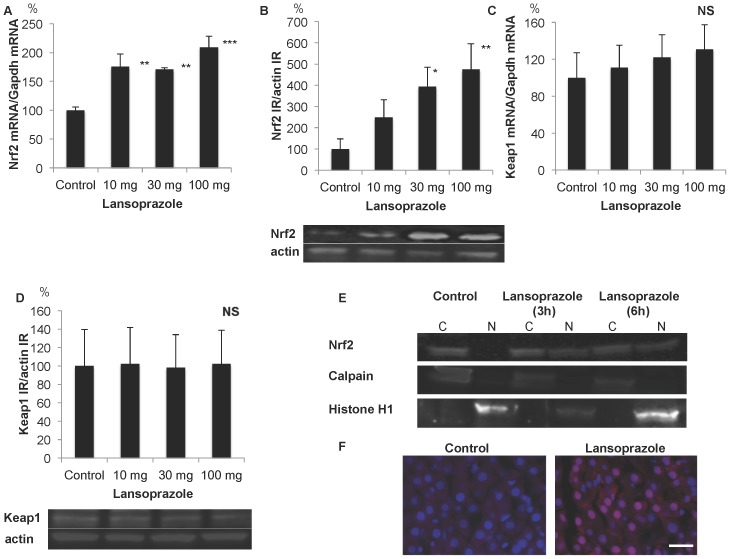
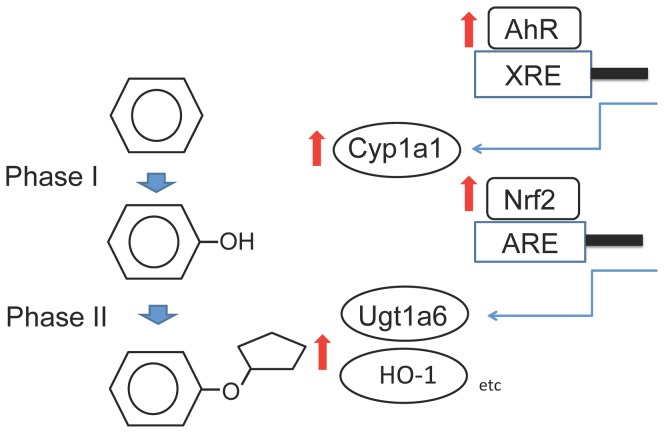
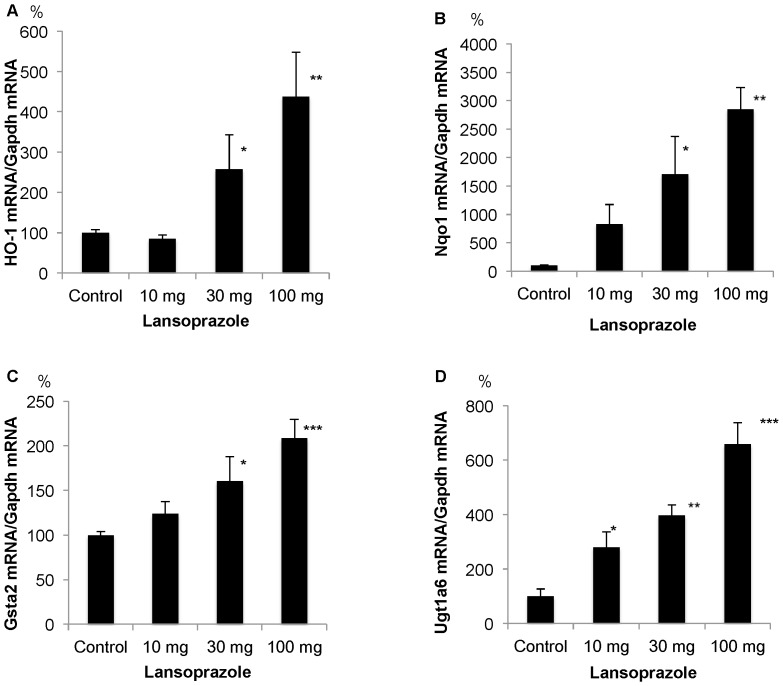
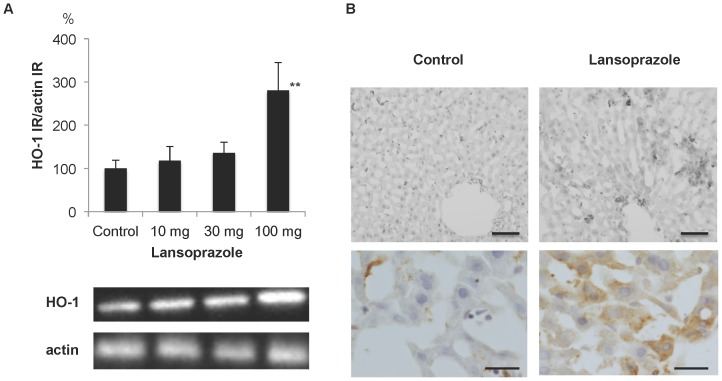
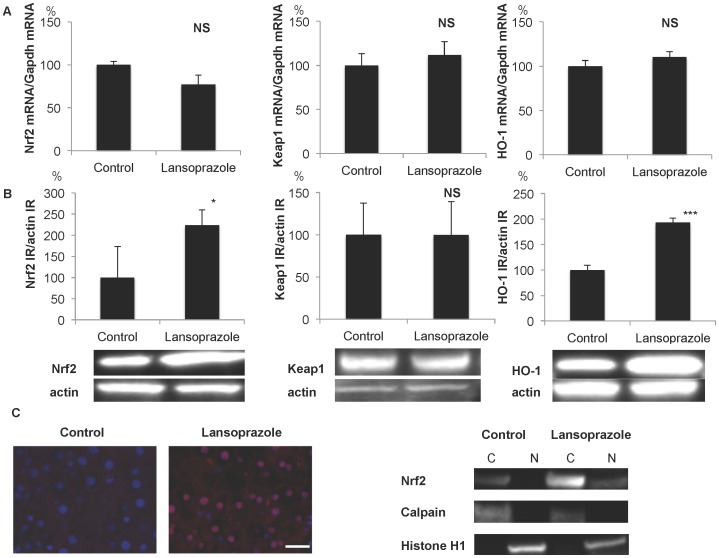
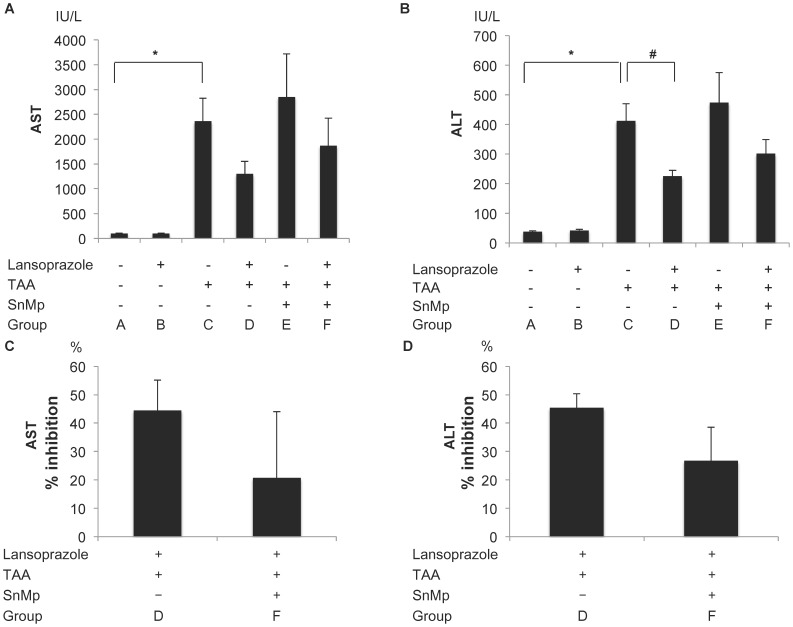
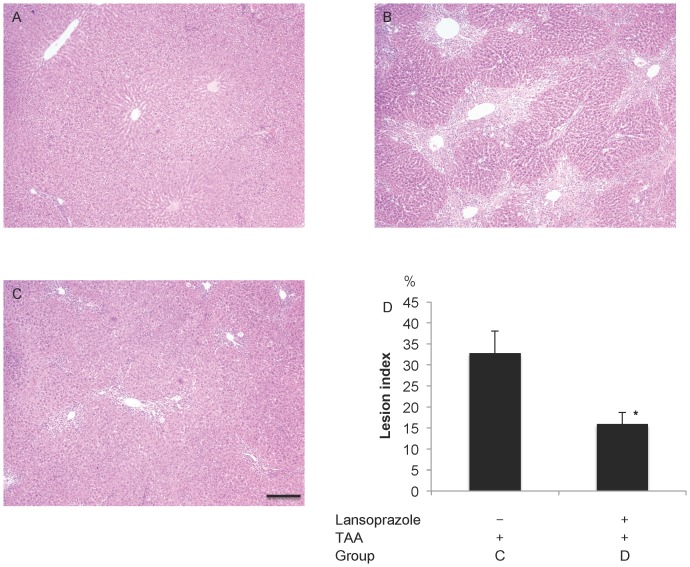
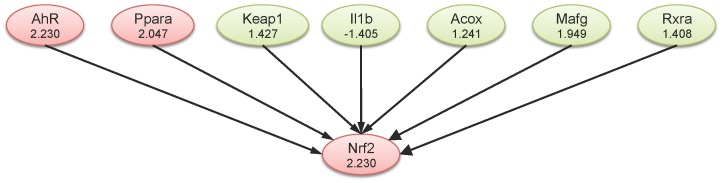
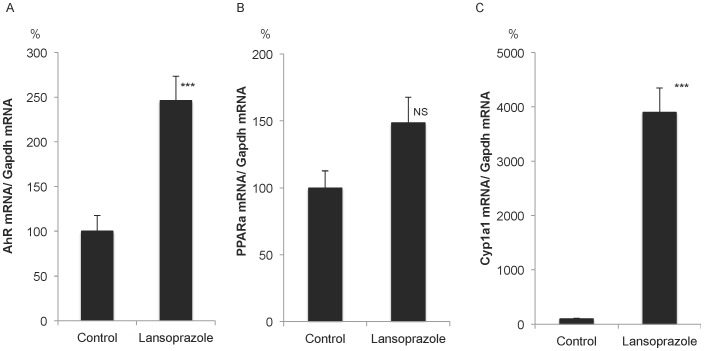
Lansoprazole is a potent anti-gastric ulcer drug that inhibits gastric proton pump activity. We identified a novel function for lansoprazole, as an inducer of anti-oxidative stress responses in the liver. Gastric administration of lansoprazole (10-100 mg/kg) to male Wistar rats produced a dose-dependent increase in hepatic mRNA levels of nuclear factor, erythroid-derived 2, -like 2 (Nrf2), a redox-sensitive transcription factor, at 3 h and Nrf2 immunoreactivity (IR) in whole hepatic lysates at 6 h. Conversely, the levels of Kelch-like ECH-associated protein (Keap1), which sequesters Nrf2 in the cytoplasm under un-stimulated conditions, were unchanged. Translocation of Nrf2 into the nuclei of hepatocytes was observed using western blotting and immunohistochemistry. Expression of mRNAs for Nrf2-dependent antioxidant and phase II enzymes, such as heme oxygenase 1 (HO-1), NAD (P) H dehydrogenase, quinone 1 (Nqo1), glutathione S-transferase A2 (Gsta2), UDP glucuronosyltransferase 1 family polypeptide A6 (Ugt1a6), were dose-dependently up-regulated at 3 h. Furthermore, the levels of HO-1 IR were dose-dependently increased in hepatocytes at 6 h. Subcutaneous administration of lansoprazole (30 mg/kg/day) for 7 successive days resulted in up-regulation and nuclear translocation of Nrf2 IR in hepatocytes and up-regulation of HO-1 IR in the liver. Pretreatment with lansoprazole attenuated thioacetamide (500 mg/kg)-induced acute hepatic damage via both HO-1-dependent and -independent pathways. Up-stream networks related to Nrf2 expression were investigated using microarray analysis, followed by data mining with Ingenuity Pathway Analysis. Up-regulation of the aryl hydrocarbon receptor (AhR)-cytochrome P450, family 1, subfamily a, polypeptide 1 (Cyp1a1) pathway was associated with up-regulation of Nrf2 mRNA. In conclusion, lansoprazole might have an alternative indication in the prevention and treatment of oxidative hepatic damage through the induction of both phase I and phase II drug-metabolizing systems, i.e. the AhR/Cyp1a1/Nrf2 pathway in hepatocytes.
兰索拉唑是一种强效抗胃溃疡药物,可抑制胃质子泵活性。我们发现了兰索拉唑的一种新功能,即作为肝脏中抗氧化应激反应的诱导剂。给雄性Wistar大鼠胃内给予兰索拉唑(10 - 100 mg/kg),3小时时肝脏中核因子红系衍生2样2(Nrf2,一种氧化还原敏感转录因子)的mRNA水平呈剂量依赖性增加,6小时时全肝裂解物中的Nrf2免疫反应性(IR)增加。相反,在未刺激条件下将Nrf2隔离在细胞质中的Kelch样ECH相关蛋白(Keap1)水平未发生变化。使用蛋白质印迹法和免疫组织化学观察到Nrf2向肝细胞细胞核的转位。Nrf2依赖性抗氧化酶和II期酶的mRNA表达,如血红素加氧酶1(HO-1)、NAD(P)H脱氢酶醌1(Nqo1)、谷胱甘肽S-转移酶A2(Gsta2)、UDP葡糖醛酸基转移酶1家族多肽A6(Ugt1a6),在3小时时呈剂量依赖性上调。此外,6小时时肝细胞中HO-1 IR水平呈剂量依赖性增加。连续7天皮下给予兰索拉唑(30 mg/kg/天)导致肝细胞中Nrf2 IR上调并发生核转位,肝脏中HO-1 IR上调。兰索拉唑预处理通过HO-1依赖性和非依赖性途径减轻硫代乙酰胺(500 mg/kg)诱导的急性肝损伤。使用微阵列分析研究与Nrf2表达相关的上游网络,随后用Ingenuity Pathway Analysis进行数据挖掘。芳烃受体(AhR)-细胞色素P450 1A1(Cyp1a1)途径的上调与Nrf2 mRNA的上调相关。总之,兰索拉唑可能通过诱导I期和II期药物代谢系统,即肝细胞中的AhR/Cyp1a1/Nrf2途径,在预防和治疗氧化性肝损伤方面有新的应用前景。