Department of Animal and Plant Sciences, The University of Sheffield Sheffield, UK.
Department of Animal and Plant Sciences, The University of Sheffield Sheffield, UK ; Department of Biology, Utrecht University Utrecht, Netherlands.
Front Plant Sci. 2014 May 8;5:184. doi: 10.3389/fpls.2014.00184. eCollection 2014.
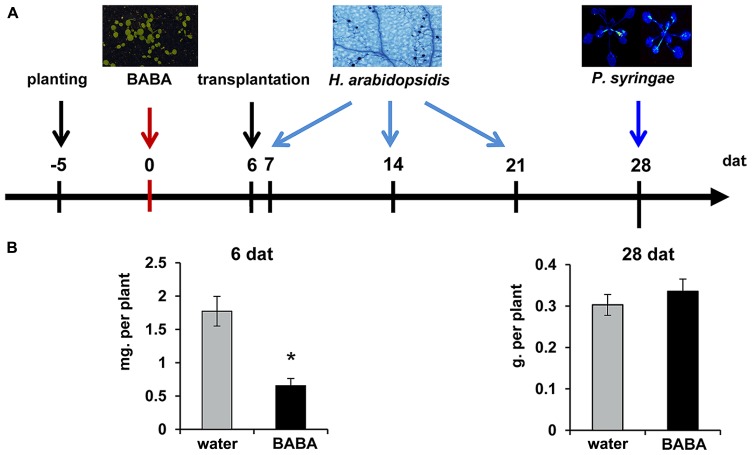
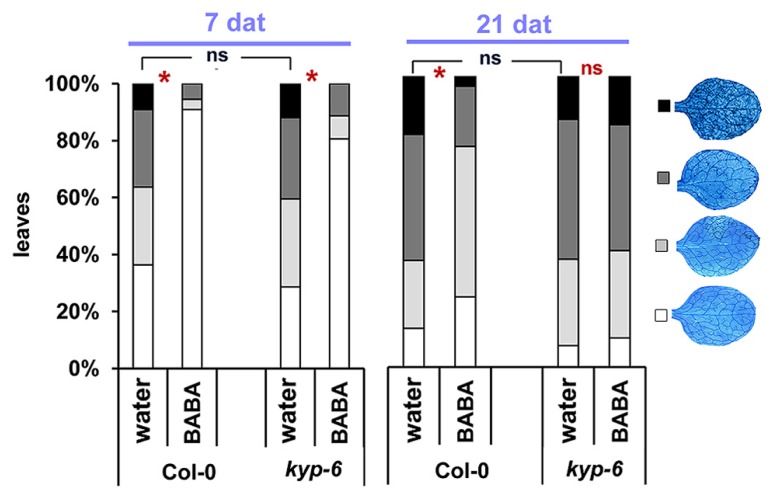
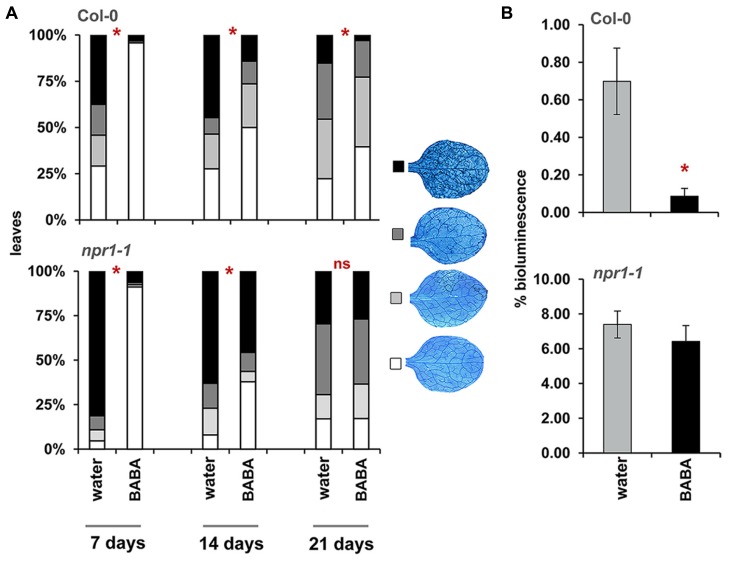
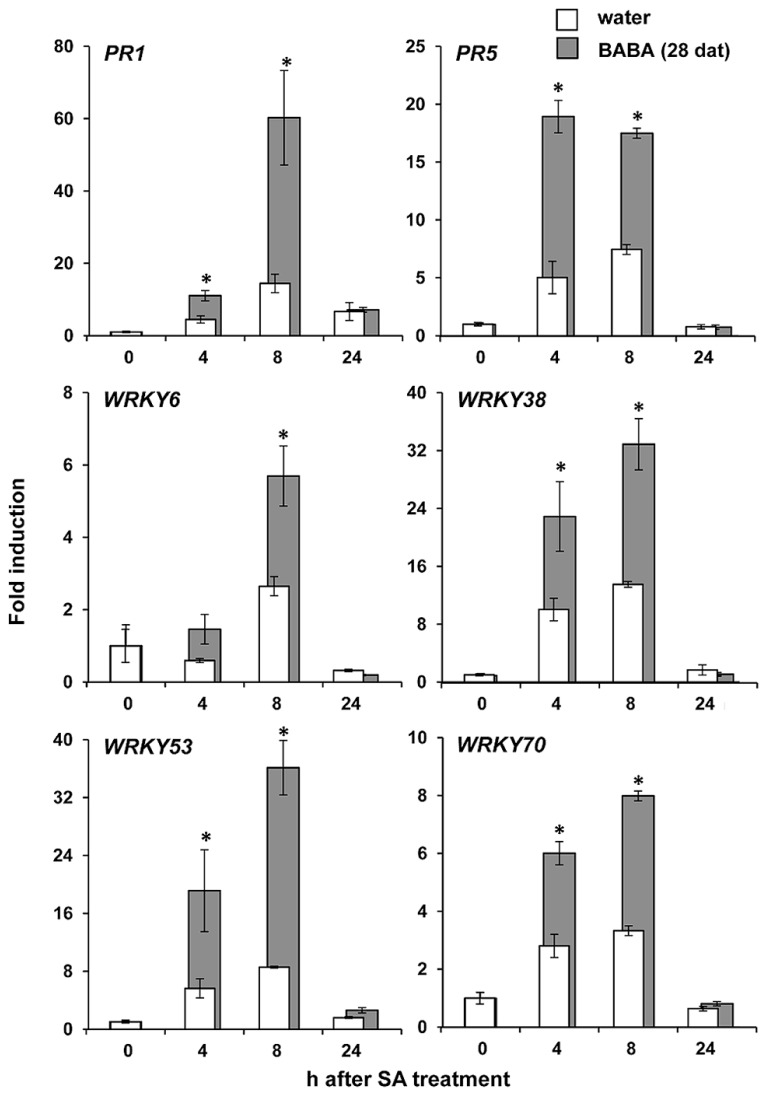
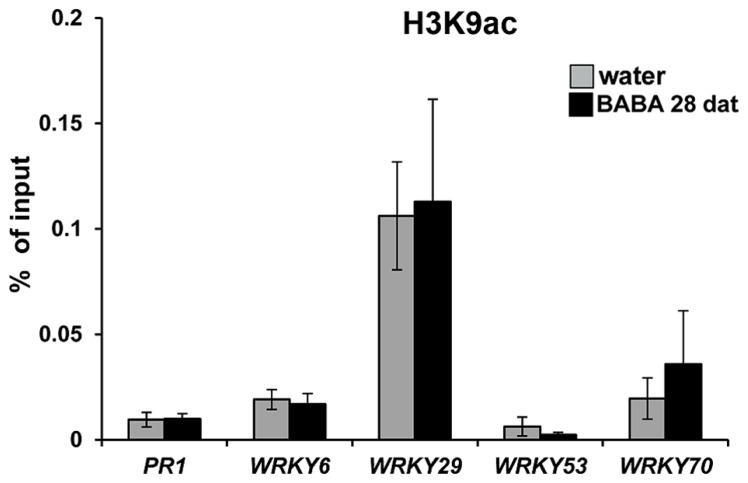
Priming of defense increases the responsiveness of the plant immune system and can provide broad-spectrum protection against disease. Recent evidence suggests that priming of defense can be inherited epigenetically to following generations. However, the mechanisms of long-lasting defense priming within one generation remains poorly understood. Here, we have investigated the mechanistic basis of long-lasting induced resistance after treatment with β -aminobutyric acid (BABA), an agent that mimics biologically induced resistance phenomena. BABA-induced resistance (BABA-IR) is based on priming of salicylic acid (SA)-dependent and SA-independent defenses. BABA-IR could be detected up to 28 days after treatment of wild-type Arabidopsis. This long-lasting component of the induced resistance response requires the regulatory protein NPR1 and is associated with priming of SA-inducible genes. In contrast, NPR1-independent resistance by BABA was transient and had disappeared by 14 days after treatment. Chromatin immunoprecipitation (ChIP) assays revealed no increased acetylation of histone H3K9 at promoters regions of priming-responsive genes, indicating that this post-translational histone modification is not critical for long-term transcriptional priming. Interestingly, the kyp-6 mutant, which is affected in methyltransferase activity of H3K9, was blocked in long-lasting BABA-IR, indicating a critical requirement of this post-translational histone modification in long-lasting BABA-IR. Considering that KYP suppresses gene transcription through methylation of H3K9 and CpHpG DNA methylation, we propose that KYP enables long-term defense gene priming by silencing suppressor genes of SA/NPR1-dependent genes.
防御激发提高了植物免疫系统的反应性,并能提供针对疾病的广谱保护。最近的证据表明,防御激发可以通过表观遗传传递给后代。然而,在同一代内持久的防御激发的机制仍知之甚少。在这里,我们研究了用β-氨基丁酸(BABA)处理后持久诱导抗性的机制基础,BABA 模拟了生物诱导抗性现象。BABA 诱导的抗性(BABA-IR)基于水杨酸(SA)依赖和 SA 不依赖防御的激发。在野生型拟南芥处理后 28 天仍能检测到 BABA-IR。这种诱导抗性反应的持久成分需要调节蛋白 NPR1,并且与 SA 诱导基因的激发有关。相比之下,NPR1 不依赖 BABA 的抗性是短暂的,在处理后 14 天就消失了。染色质免疫沉淀(ChIP)试验显示,在激发响应基因的启动子区域,组蛋白 H3K9 的乙酰化没有增加,这表明这种翻译后组蛋白修饰对长期转录激发不是关键的。有趣的是,kyp-6 突变体,其在 H3K9 甲基转移酶活性中受到影响,在持久的 BABA-IR 中被阻断,表明这种翻译后组蛋白修饰在持久的 BABA-IR 中是关键的。考虑到 KYP 通过 H3K9 和 CpHpG DNA 甲基化抑制基因转录,我们提出 KYP 通过沉默 SA/NPR1 依赖基因的抑制基因来实现长期防御基因激发。