Jia Yi, Domenico Joanne, Swasey Christina, Wang Meiqin, Gelfand Erwin W, Lucas Joseph J
Division of Cell Biology, Department of Pediatrics, National Jewish Health, Denver, Colorado, United States of America.
PLoS One. 2014 May 21;9(5):e97448. doi: 10.1371/journal.pone.0097448. eCollection 2014.
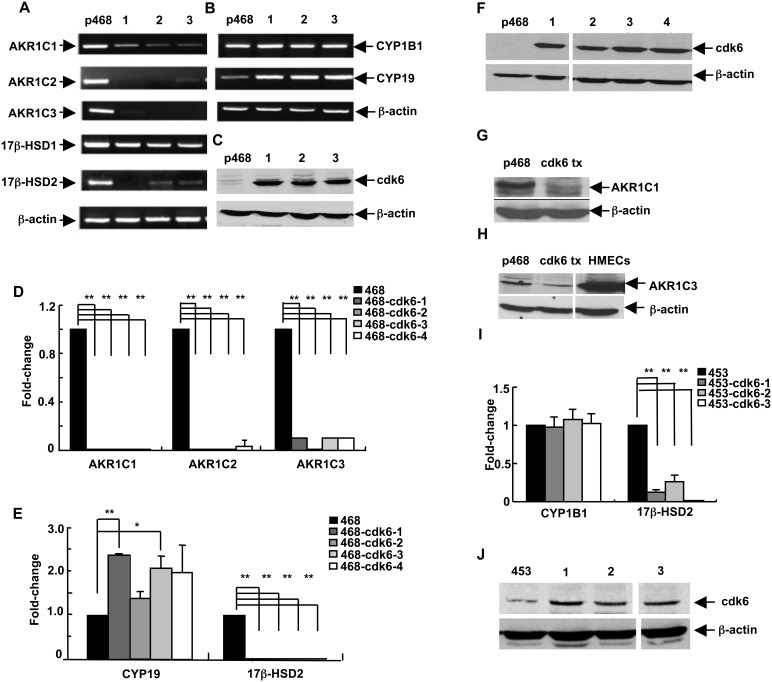
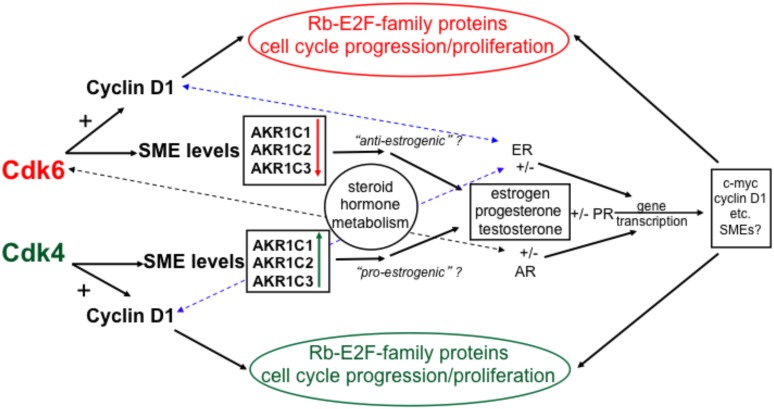
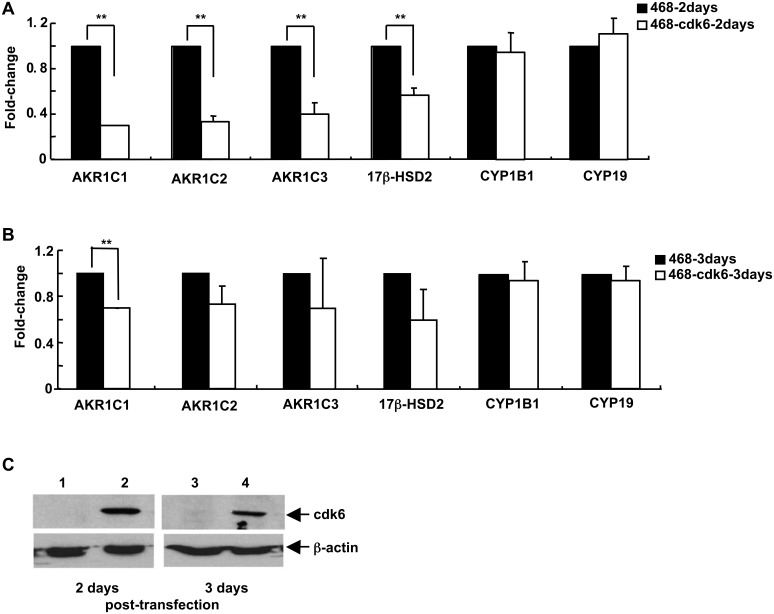
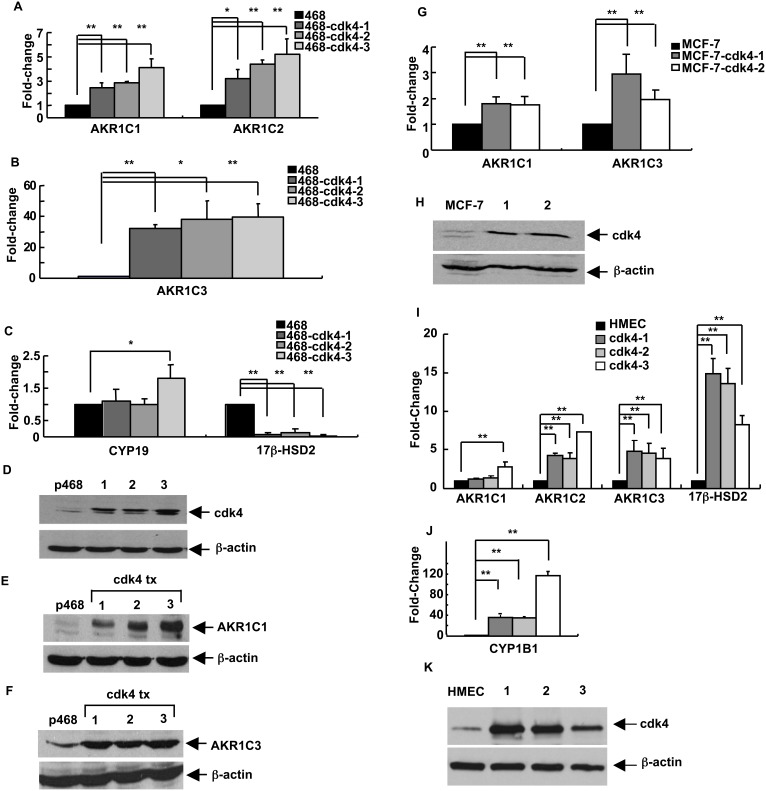
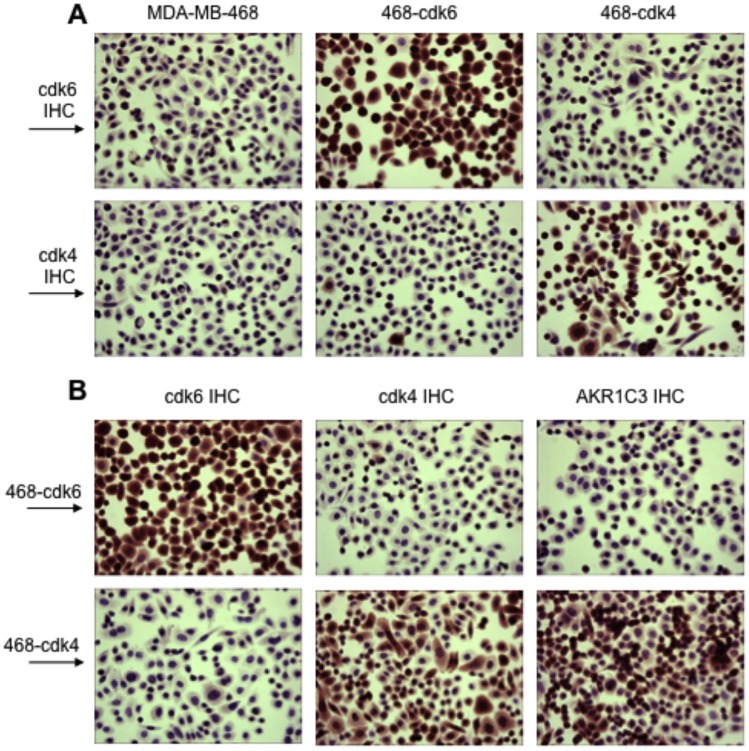
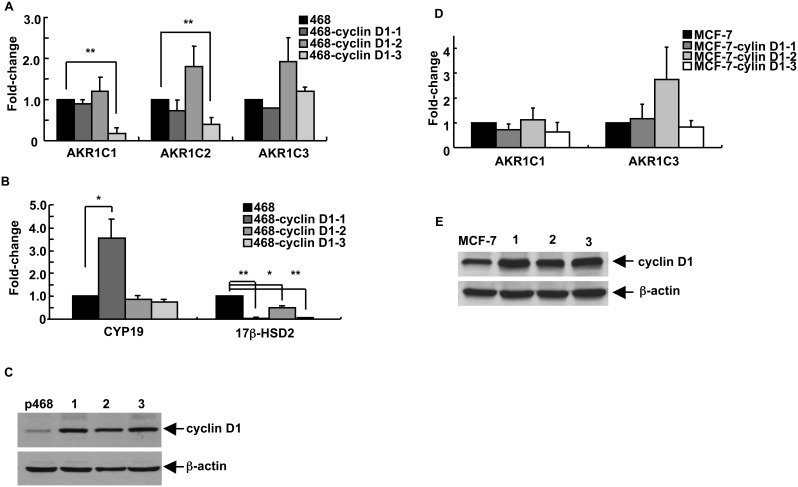
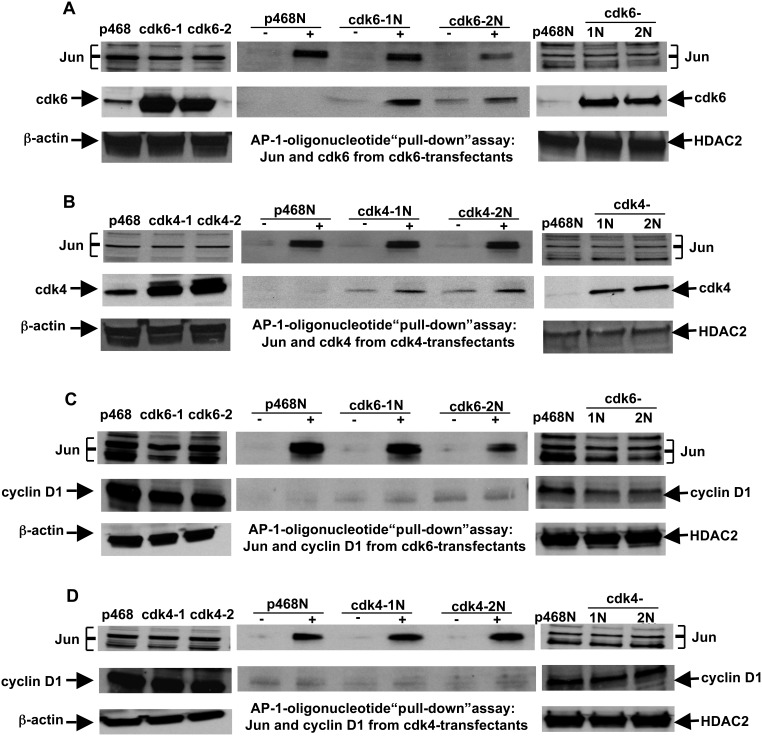
G1-phase cell cycle defects, such as alterations in cyclin D1 or cyclin-dependent kinase (cdk) levels, are seen in most tumors. For example, increased cyclin D1 and decreased cdk6 levels are seen in many human breast tumors. Overexpression of cdk6 in breast tumor cells in culture has been shown to suppress proliferation, unlike the growth stimulating effects of its close homolog, cdk4. In addition to directly affecting proliferation, alterations in cdk6 or cdk4 levels in breast tumor cells also differentially influence levels of numerous steroid metabolic enzymes (SMEs), including those involved in estrogen metabolism. Overexpression of cdk6 in tumor cell lines having low cdk6 resulted in decreased levels of mRNAs encoding aldo-keto reductase (AKR)1C1, AKR1C2 and AKR1C3, which are hydroxysteroid dehydrogenases (HSDs) involved in steroid hormone metabolism. In contrast, increasing cdk4 dramatically increased these transcript levels, especially those encoding AKR1C3, an enzyme that converts estrone to 17β-estradiol, a change that could result in a pro-estrogenic state favoring tumor growth. Effects on other estrogen metabolizing enzymes, including cytochrome P450 (CYP) 19 aromatase, 17β-HSD2, and CYP1B1 transcripts, were also observed. Interactions of cdk6 and cdk4, but not cyclin D1, with the promoter region of a cdk-regulated gene, 17β-HSD2, were detected. The results uncover a previously unsuspected link between the cell cycle and hormone metabolism and differential roles for cdk6 and cdk4 in a novel mechanism for pre-receptor control of steroid hormone action, with important implications for the origin and treatment of steroid hormone-dependent cancers.
G1期细胞周期缺陷,如细胞周期蛋白D1或细胞周期蛋白依赖性激酶(cdk)水平的改变,在大多数肿瘤中都可见。例如,在许多人类乳腺肿瘤中可见细胞周期蛋白D1增加和cdk6水平降低。与它的近亲cdk4的生长刺激作用不同,在培养的乳腺肿瘤细胞中过表达cdk6已被证明可抑制增殖。除了直接影响增殖外,乳腺肿瘤细胞中cdk6或cdk4水平的改变还会不同程度地影响多种类固醇代谢酶(SME)的水平,包括参与雌激素代谢的酶。在cdk6水平低的肿瘤细胞系中过表达cdk6会导致编码醛糖酮还原酶(AKR)1C1、AKR1C2和AKR1C3的mRNA水平降低,这些酶是参与类固醇激素代谢的羟类固醇脱氢酶(HSD)。相反,增加cdk4会显著增加这些转录本水平,尤其是编码AKR1C3的转录本水平,AKR1C3是一种将雌酮转化为17β-雌二醇的酶,这种变化可能导致有利于肿瘤生长的促雌激素状态。还观察到对其他雌激素代谢酶的影响,包括细胞色素P450(CYP)19芳香化酶、17β-HSD2和CYP1B1转录本。检测到cdk6和cdk4而非细胞周期蛋白D1与cdk调节基因17β-HSD2的启动子区域有相互作用。这些结果揭示了细胞周期与激素代谢之间以前未被怀疑的联系,以及cdk6和cdk4在类固醇激素作用的受体前控制新机制中的不同作用,这对类固醇激素依赖性癌症的起源和治疗具有重要意义。