Laboratory of Microbiology, College of Pharmacy, Ajou University, Suwon 443-749, Korea.
Mucosal Immunology Laboratory, Department of Convergence Medicine, Asan Medical Center, University of Ulsan College of Medicine, Seoul 138-736, Korea.
Immune Netw. 2014 Apr;14(2):100-6. doi: 10.4110/in.2014.14.2.100. Epub 2014 Apr 21.
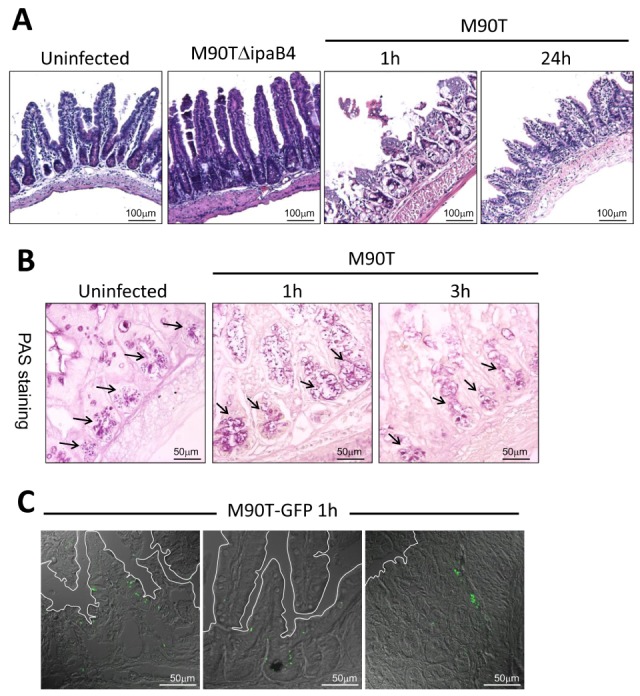
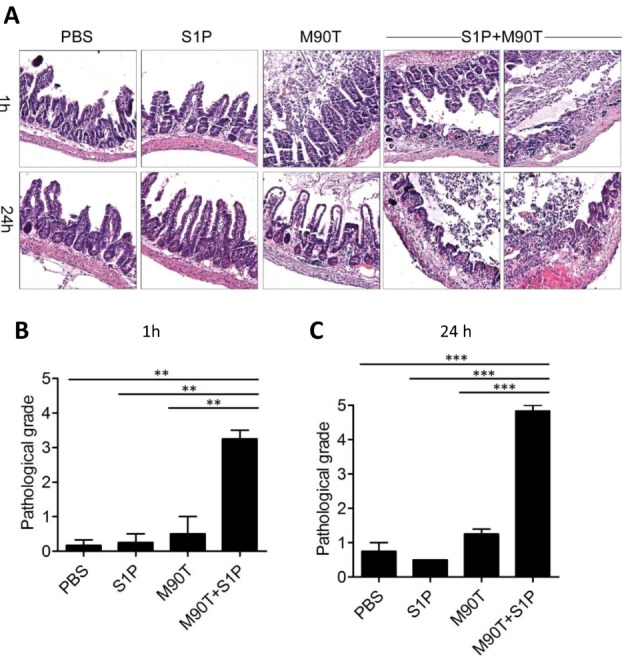
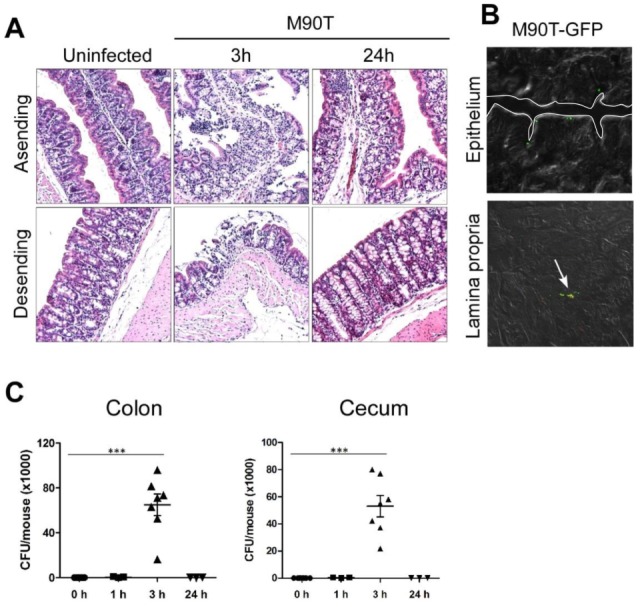
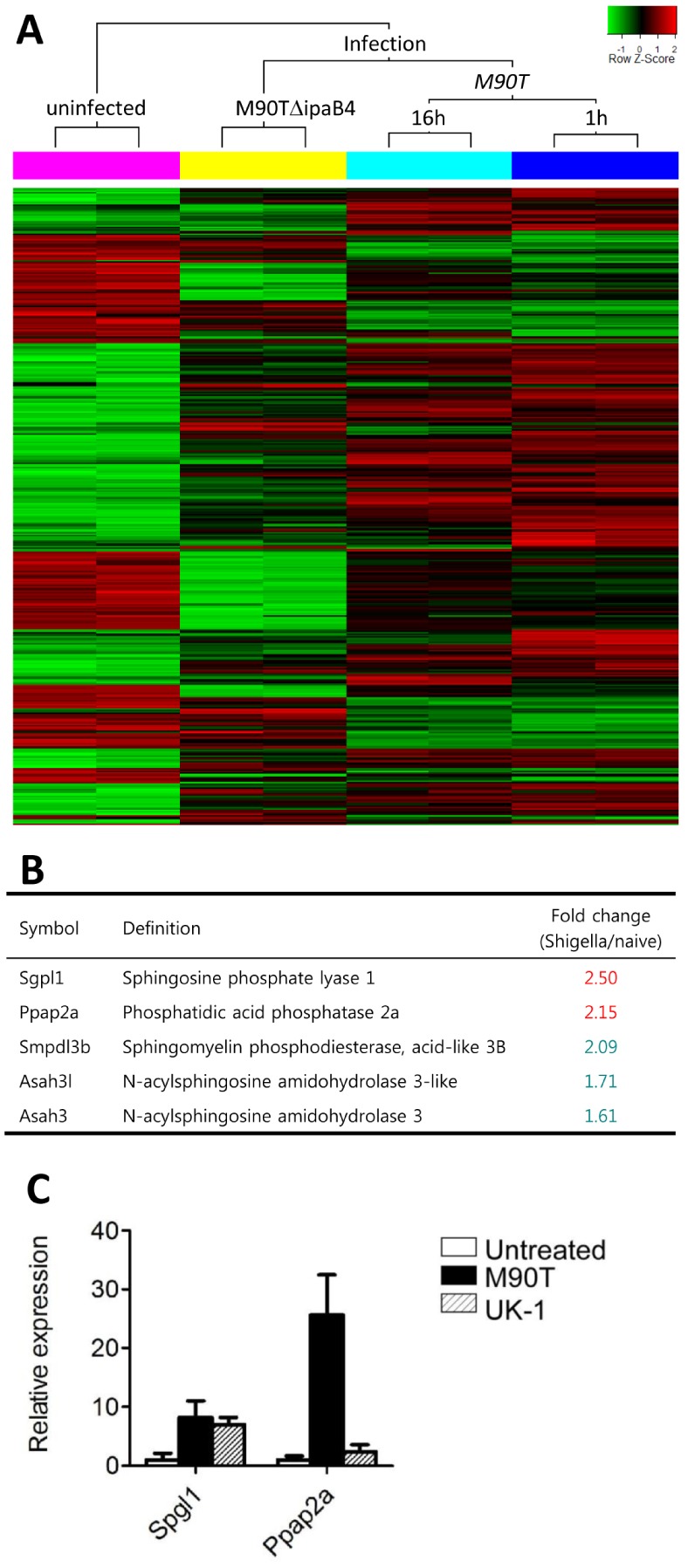
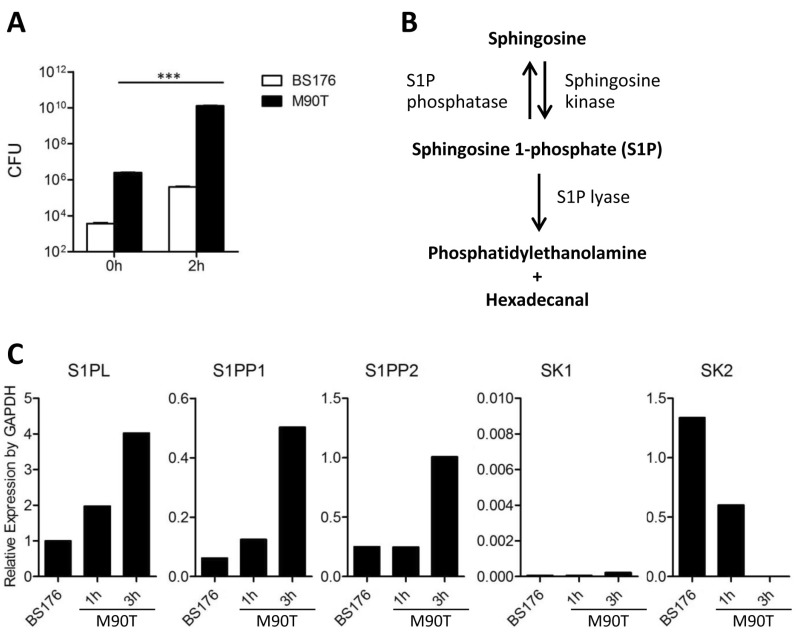
Infection with invasive Shigella species results in intestinal inflammation in humans but no symptoms in adult mice. To investigate why adult mice are resistant to invasive shigellae, 6~8-week-old mice were infected orally with S. flexneri 5a. Shigellae successfully colonized the small and large intestines. Mild cell death was seen but no inflammation. The infected bacteria were cleared 24 hours later. Microarray analysis of infected intestinal tissue showed that several genes that are involved with the sphingosine-1-phosphate (S1P) signaling pathway, a lipid mediator which mediates immune responses, were altered significantly. Shigella infection of a human intestinal cell line modulated host S1P-related genes to reduce S1P levels. In addition, co-administration of S1P with shigellae could induce inflammatory responses in the gut. Here we propose that Shigella species have evasion mechanisms that dampen host inflammatory responses by lowering host S1P levels in the gut of adult mice.
侵袭性志贺氏菌感染会导致人类肠道炎症,但成年小鼠没有症状。为了研究为什么成年小鼠对侵袭性志贺氏菌具有抗性,将 6~8 周龄的小鼠经口感染福氏志贺菌 5a。志贺氏菌成功定植于小肠和大肠。观察到轻微的细胞死亡,但没有炎症。24 小时后,感染的细菌被清除。对感染肠道组织的微阵列分析表明,几个参与鞘氨醇-1-磷酸 (S1P) 信号通路的基因发生了明显改变,S1P 是一种介导免疫反应的脂质介质。志贺氏菌感染人肠细胞系可调节宿主 S1P 相关基因,降低 S1P 水平。此外,S1P 与志贺氏菌共同给药可诱导肠道的炎症反应。在这里,我们提出志贺氏菌属通过降低成年小鼠肠道中的 S1P 水平来抑制宿主的炎症反应,从而具有逃避机制。