Neueder Andreas, Achilli Francesca, Moussaoui Saliha, Bates Gillian P
From the Department of Medical and Molecular Genetics, King's College London, London SE1 9RT, United Kingdom and.
Neuroscience Discovery, Novartis Institute for Biomedical Research, CH-4002 Basel, Switzerland.
J Biol Chem. 2014 Jul 18;289(29):19894-906. doi: 10.1074/jbc.M114.570739. Epub 2014 May 22.
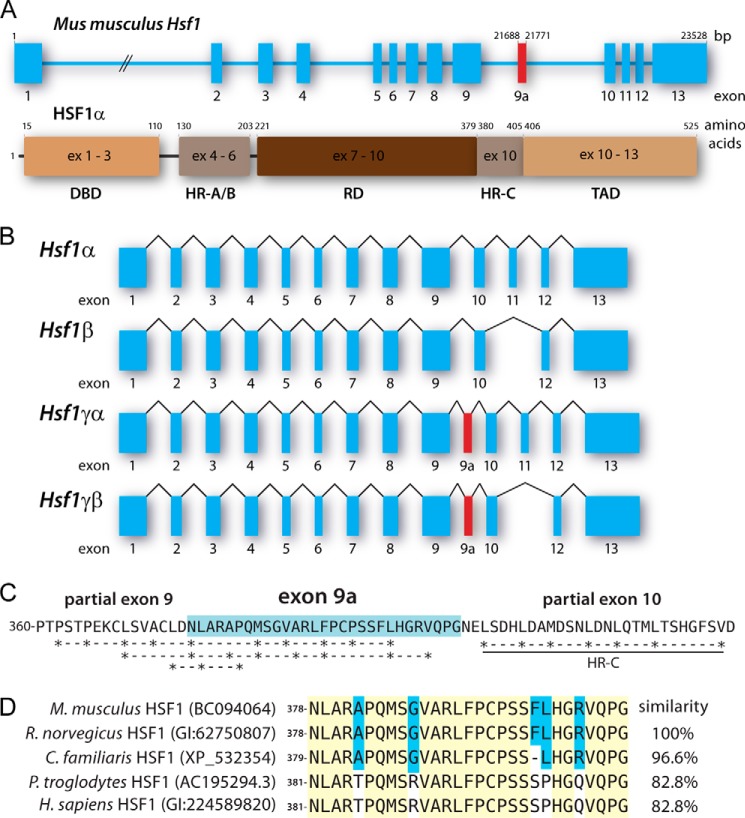
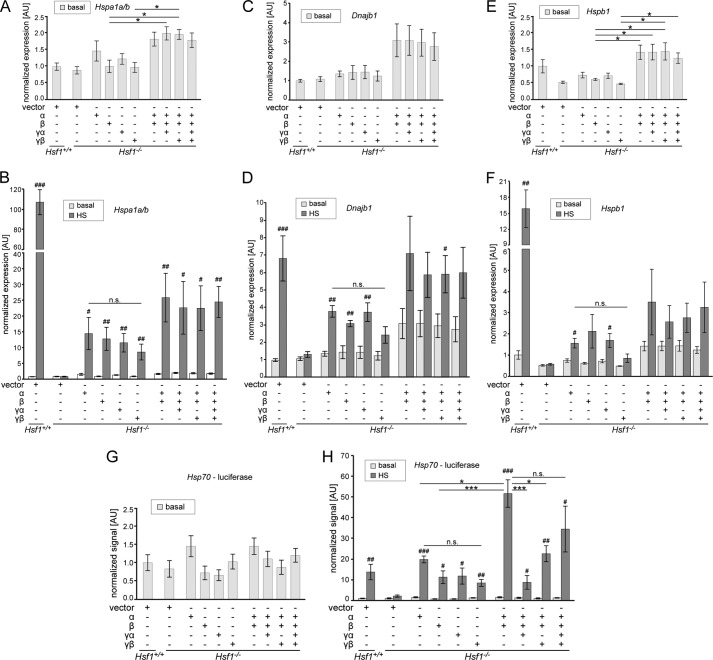
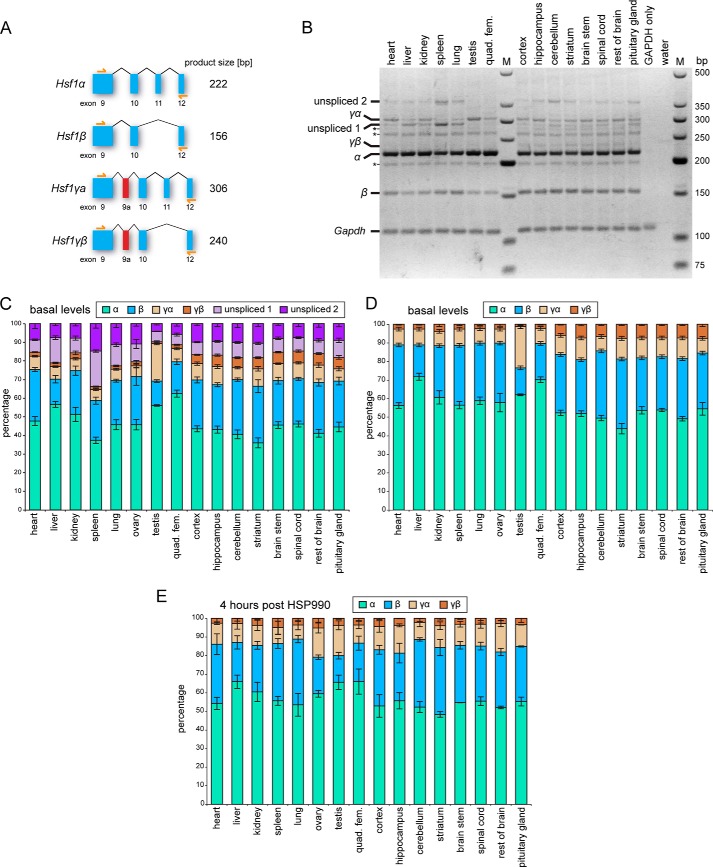
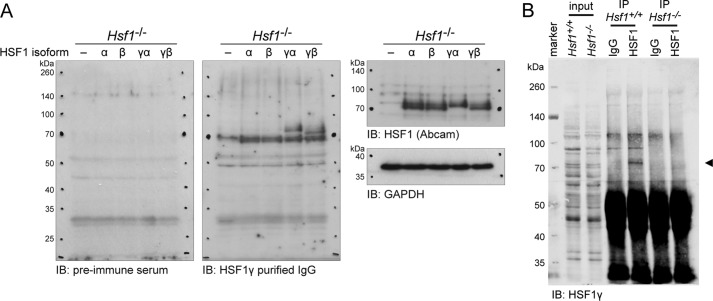
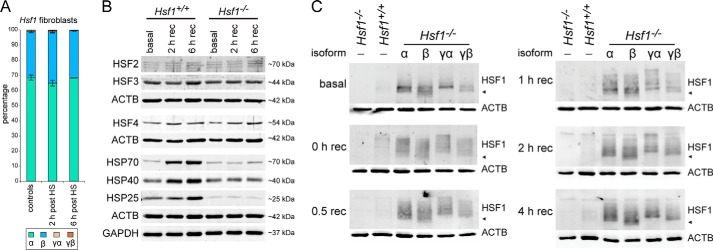
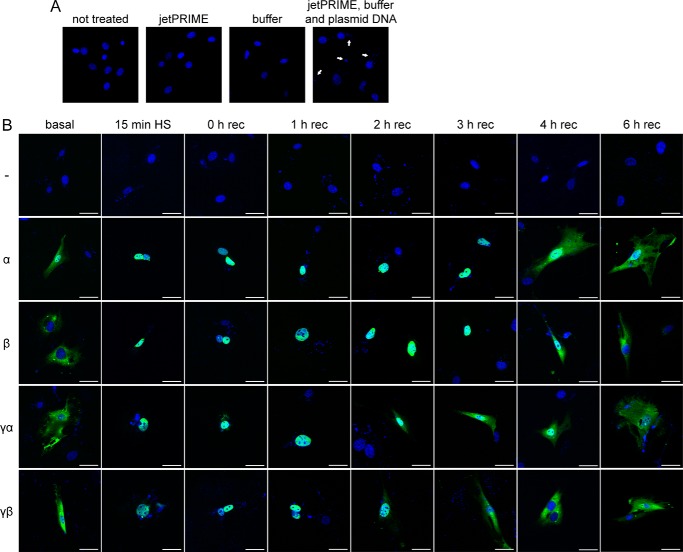
The heat shock response, resulting in the production of heat shock proteins or molecular chaperones, is triggered by elevated temperature and a variety of other stressors. Its master regulator is heat shock transcription factor 1 (HSF1). Heat shock factors generally exist in multiple isoforms. The two known isoforms of HSF1 differ in the inclusion (HSF1α) or exclusion (HSF1β) of exon 11. Although there are some data concerning the differential expression patterns and transcriptional activities of HSF2 isoforms during development, little is known about the distinct properties of the HSF1 isoforms. Here we present evidence for two novel HSF1 isoforms termed HSF1γα and HSF1γβ, and we show that the HSF1 isoform ratio differentially regulates heat shock protein gene transcription. Hsf1γ isoforms are expressed in various mouse tissues and are translated into protein. Furthermore, after heat shock, HSF1γ isoforms are exported from the nucleus more rapidly or degraded more quickly than HSF1α or HSF1β. We also show that each individual HSF1 isoform is sufficient to induce the heat shock response and that expression of combinations of HSF1 isoforms, in particular HSF1α and HSF1β, results in a synergistic enhancement of the transcriptional response. In addition, HSF1γ isoforms potentially suppress the synergistic effect of HSF1α and HSF1β co-expression. Collectively, our observations suggest that the expression of HSF1 isoforms in a specific ratio provides an additional layer in the regulation of heat shock protein gene transcription.
热休克反应会导致热休克蛋白或分子伴侣的产生,它由温度升高和多种其他应激源触发。其主要调节因子是热休克转录因子1(HSF1)。热休克因子通常以多种异构体形式存在。HSF1的两种已知异构体在是否包含外显子11方面存在差异(包含的为HSF1α,不包含的为HSF1β)。尽管有一些关于HSF2异构体在发育过程中的差异表达模式和转录活性的数据,但对于HSF1异构体的独特特性却知之甚少。在此,我们提供了两种名为HSF1γα和HSF1γβ的新型HSF1异构体的证据,并表明HSF1异构体比例差异调节热休克蛋白基因转录。Hsf1γ异构体在多种小鼠组织中表达并被翻译为蛋白质。此外,热休克后,HSF1γ异构体从细胞核中输出的速度比HSF1α或HSF1β更快,或者降解得更快。我们还表明,每种单独的HSF1异构体都足以诱导热休克反应,并且HSF1异构体组合的表达,特别是HSF1α和HSF1β的组合,会导致转录反应的协同增强。此外,HSF1γ异构体可能会抑制HSF1α和HSF1β共表达的协同效应。总的来说,我们的观察结果表明,以特定比例表达HSF1异构体为热休克蛋白基因转录的调节提供了额外的一层调控机制。