Department of Pharmacology and Toxicology, Karl-Franzens-Universität Graz, A-8010 Graz, Austria.
Department of Pharmacology and Toxicology, Karl-Franzens-Universität Graz, A-8010 Graz, Austria.
Biochem Pharmacol. 2014 Aug 1;90(3):246-53. doi: 10.1016/j.bcp.2014.05.010. Epub 2014 May 24.
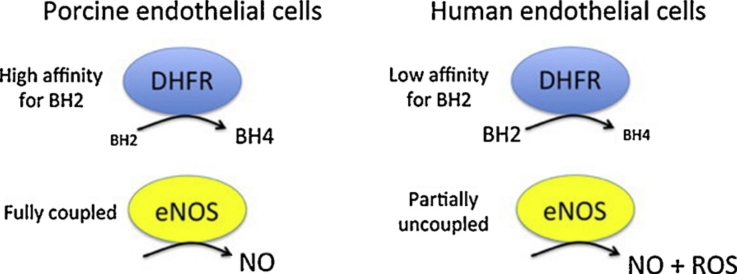
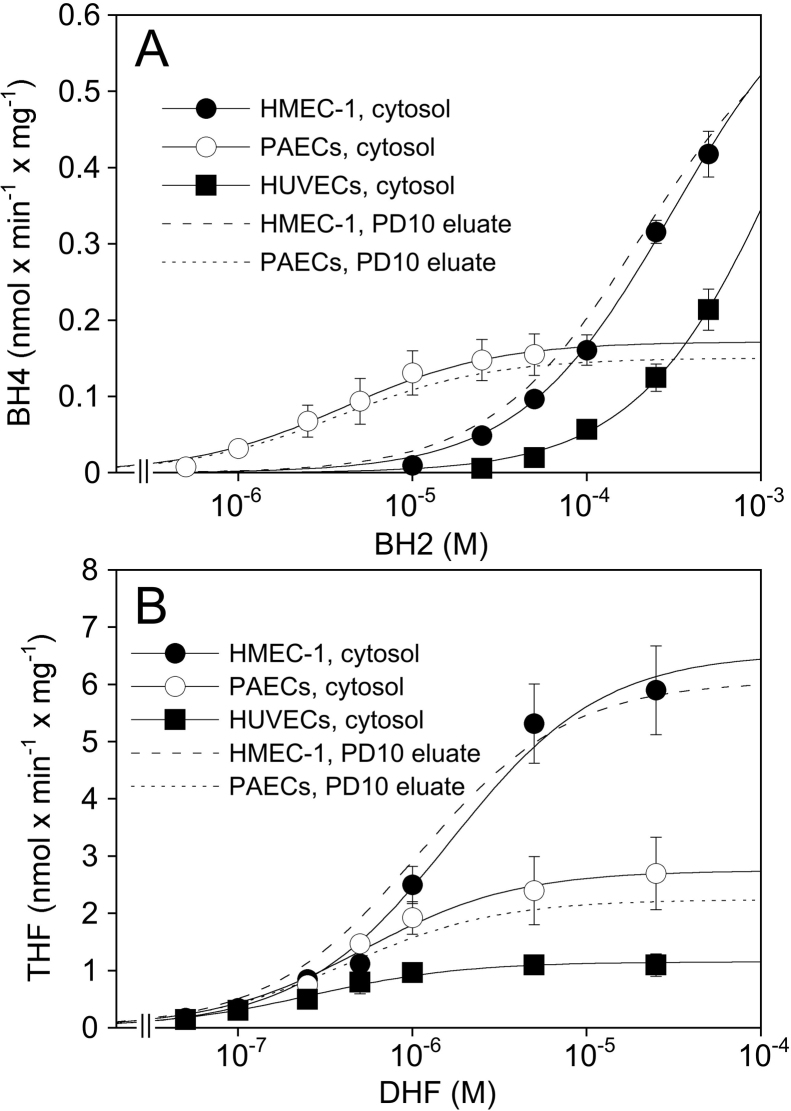
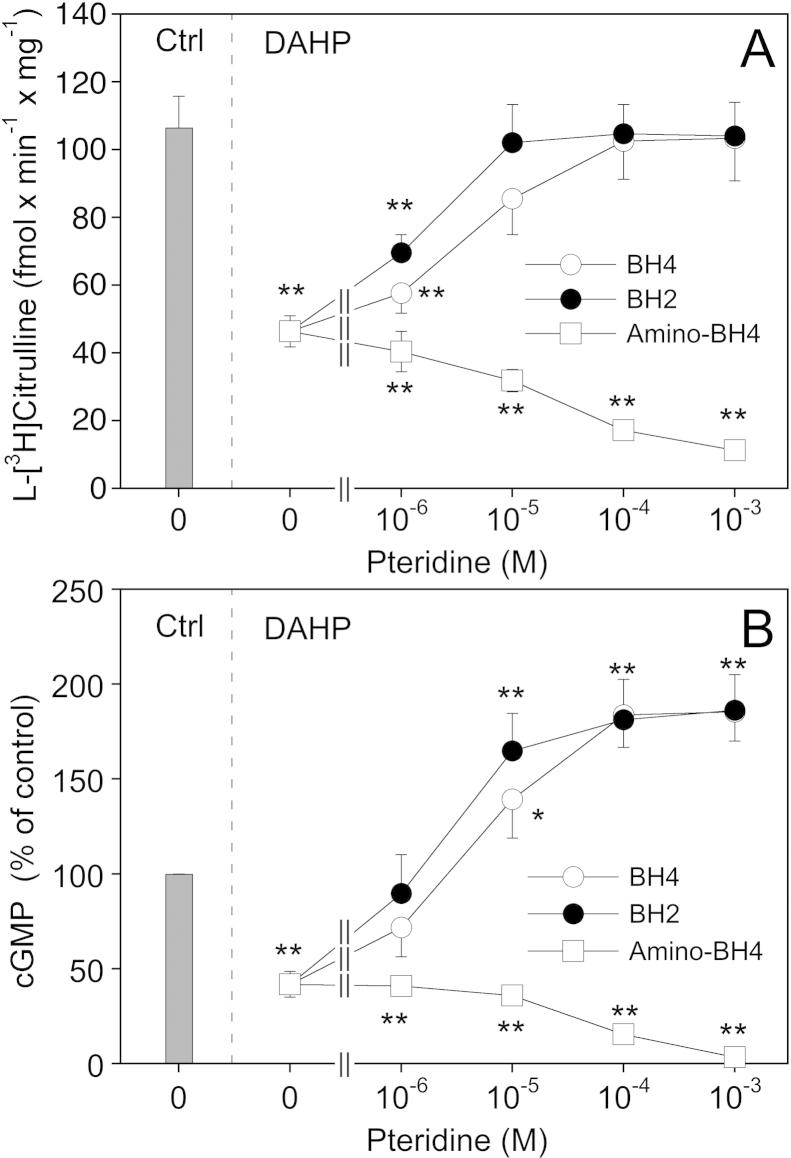
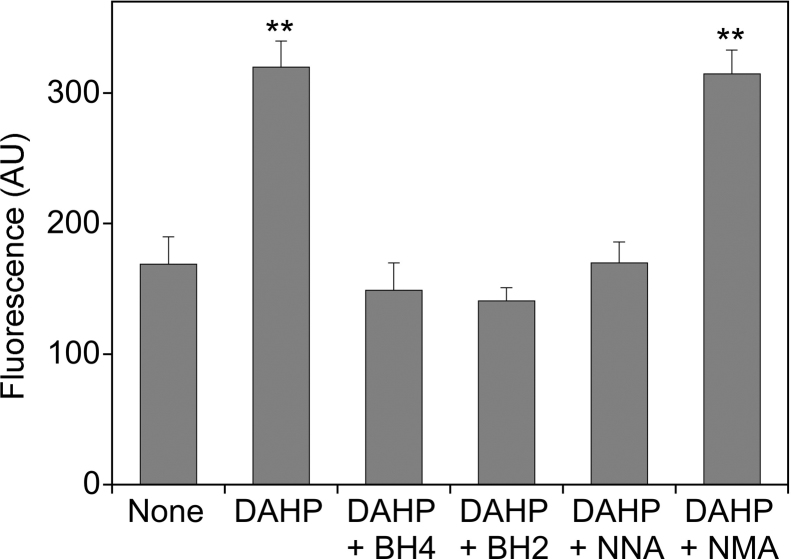
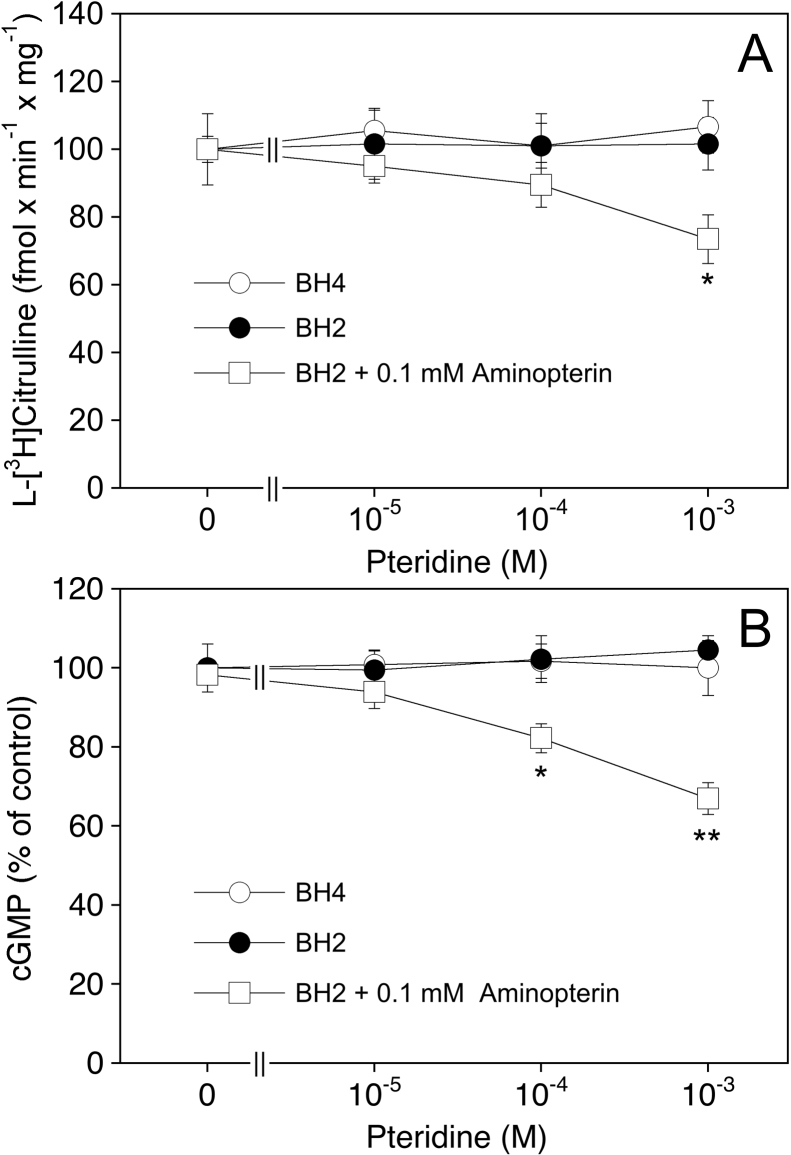
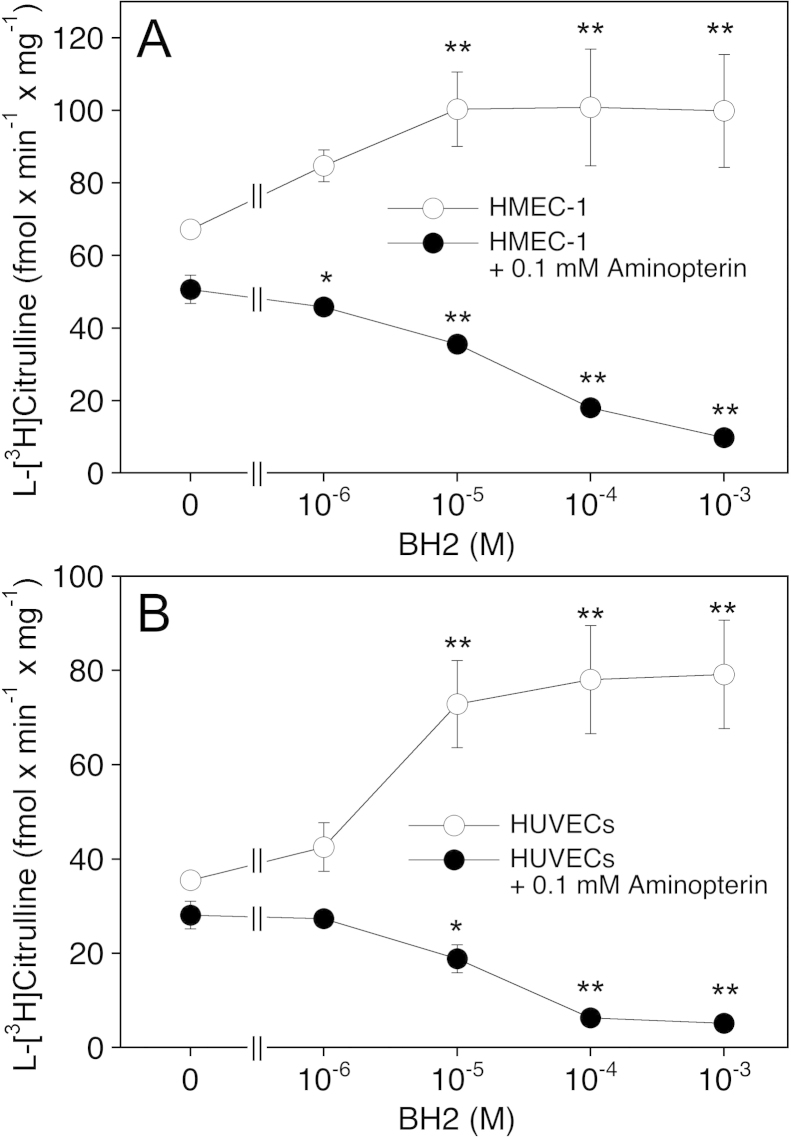
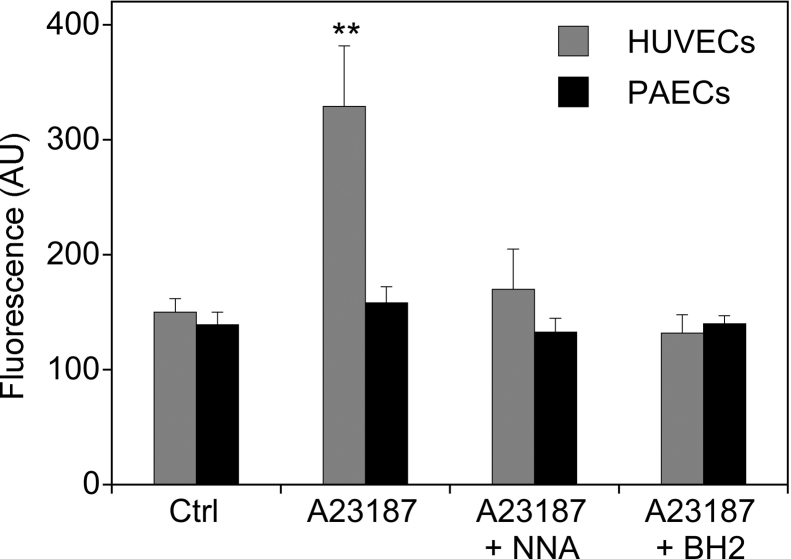
(6R)-5,6,7,8-Tetrahydro-L-biopterin (BH4) availability regulates nitric oxide and superoxide formation by endothelial nitric oxide synthase (eNOS). At low BH4 or low BH4 to 7,8-dihydrobiopterin (BH2) ratios the enzyme becomes uncoupled and generates superoxide at the expense of NO. We studied the effects of exogenously added BH2 on intracellular BH4/BH2 ratios and eNOS activity in different types of endothelial cells. Incubation of porcine aortic endothelial cells with BH2 increased BH4/BH2 ratios from 8.4 (controls) and 0.5 (BH4-depleted cells) up to ~20, demonstrating efficient reduction of BH2. Uncoupled eNOS activity observed in BH4-depleted cells was prevented by preincubation with BH2. Recycling of BH4 was much less efficient in human endothelial cells isolated from umbilical veins or derived from dermal microvessels (HMEC-1 cells), which exhibited eNOS uncoupling and low BH4/BH2 ratios under basal conditions and responded to exogenous BH2 with only moderate increases in BH4/BH2 ratios. The kinetics of dihydrofolate reductase-catalyzed BH4 recycling in endothelial cytosols showed that the apparent BH2 affinity of the enzyme was 50- to 300-fold higher in porcine than in human cell preparations. Thus, the differential regulation of eNOS uncoupling in different types of endothelial cells may be explained by striking differences in the apparent BH2 affinity of dihydrofolate reductase.
(6R)-5,6,7,8-四氢-L-生物蝶呤 (BH4) 的可用性调节内皮型一氧化氮合酶 (eNOS) 生成的一氧化氮和超氧化物。在 BH4 或 BH4 与 7,8-二氢生物蝶呤 (BH2) 比值低的情况下,该酶解偶联并生成超氧化物,牺牲了 NO。我们研究了外源性添加 BH2 对不同类型内皮细胞中细胞内 BH4/BH2 比值和 eNOS 活性的影响。用 BH2 孵育猪主动脉内皮细胞,将 BH4/BH2 比值从 8.4(对照)和 0.5(BH4 耗竭细胞)提高到约 20,表明 BH2 的还原效率很高。BH4 耗竭细胞中观察到的解偶联 eNOS 活性可通过预孵育 BH2 来预防。从脐静脉分离或来源于皮肤微血管(HMEC-1 细胞)的人内皮细胞的 BH4 循环效率要低得多,这些细胞在基础条件下表现出 eNOS 解偶联和低 BH4/BH2 比值,并对外源性 BH2 仅表现出 BH4/BH2 比值的适度增加。内皮细胞胞质中二氢叶酸还原酶催化的 BH4 循环的动力学表明,酶对 BH2 的表观亲和力在猪细胞制剂中比在人细胞制剂中高 50-300 倍。因此,不同类型内皮细胞中 eNOS 解偶联的差异调节可能归因于二氢叶酸还原酶对 BH2 的表观亲和力存在显著差异。