INRAe, Nutrition and Integrated Neurobiology, UMR 1286, Bordeaux, France.
Faculty of Pharmacy, Universite Laval, Quebec City, QC, Canada.
Curr Neuropharmacol. 2021;19(5):591-609. doi: 10.2174/1570159X18666200729103529.
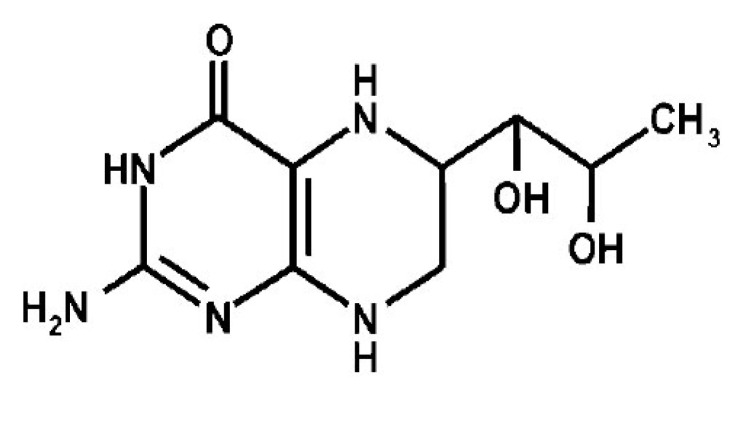
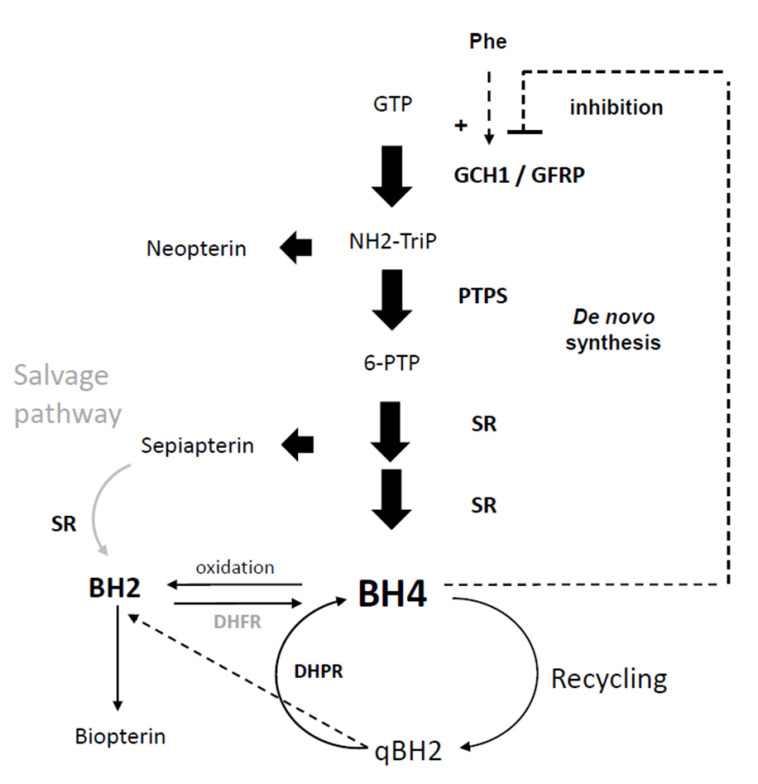
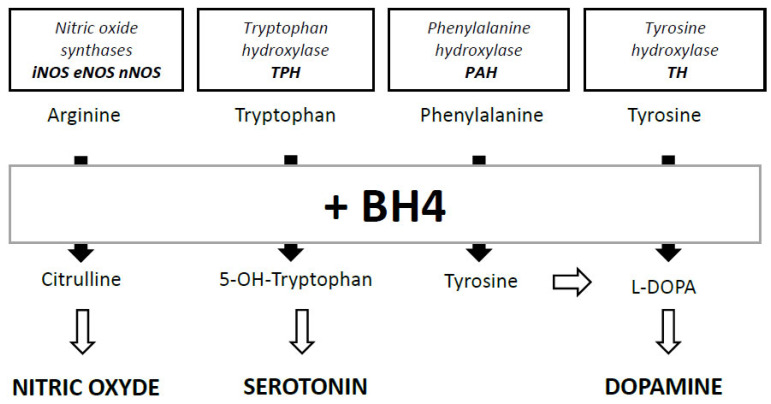
Tetrahydrobipterin (BH4) is a pivotal enzymatic cofactor required for the synthesis of serotonin, dopamine and nitric oxide. BH4 is essential for numerous physiological processes at periphery and central levels, such as vascularization, inflammation, glucose homeostasis, regulation of oxidative stress and neurotransmission. BH4 de novo synthesis involves the sequential activation of three enzymes, the major controlling point being GTP cyclohydrolase I (GCH1). Complementary salvage and recycling pathways ensure that BH4 levels are tightly kept within a physiological range in the body. Even if the way of transport of BH4 and its ability to enter the brain after peripheral administration is still controversial, data showed increased levels in the brain after BH4 treatment. Available evidence shows that GCH1 expression and BH4 synthesis are stimulated by immunological factors, notably pro-inflammatory cytokines. Once produced, BH4 can act as an anti- inflammatory molecule and scavenger of free radicals protecting against oxidative stress. At the same time, BH4 is prone to autoxidation, leading to the release of superoxide radicals contributing to inflammatory processes, and to the production of BH2, an inactive form of BH4, reducing its bioavailability. Alterations in BH4 levels have been documented in many pathological situations, including Alzheimer's disease, Parkinson's disease and depression, in which increased oxidative stress, inflammation and alterations in monoaminergic function are described. This review aims at providing an update of the knowledge about metabolism and the role of BH4 in brain function, from preclinical to clinical studies, addressing some therapeutic implications.
四氢生物蝶呤(BH4)是合成 5-羟色胺、多巴胺和一氧化氮所必需的关键酶辅因子。BH4 对于外周和中枢水平的许多生理过程至关重要,如血管生成、炎症、葡萄糖稳态、氧化应激调节和神经递质传递。BH4 的从头合成涉及三个酶的顺序激活,主要控制点是 GTP 环水解酶 I(GCH1)。互补的补救和再循环途径确保 BH4 水平在体内保持在生理范围内。即使 BH4 的运输方式及其在外周给药后进入大脑的能力仍存在争议,但数据显示 BH4 治疗后大脑中的水平增加。现有证据表明,GCH1 表达和 BH4 合成受到免疫因素的刺激,特别是促炎细胞因子。一旦产生,BH4 可以作为抗炎分子和自由基清除剂,防止氧化应激。同时,BH4 容易自动氧化,导致释放超氧自由基,促进炎症过程,并产生 BH2,一种 BH4 的无活性形式,降低其生物利用度。在许多病理情况下,包括阿尔茨海默病、帕金森病和抑郁症,都记录到 BH4 水平的改变,其中描述了氧化应激增加、炎症和单胺能功能改变。本综述旨在提供从临床前到临床研究,对 BH4 在大脑功能中的代谢和作用的最新认识,探讨一些治疗意义。