Gnosa S, Zhang H, Brodin V P, Carstensen J, Adell G, Sun X-F
Division of Oncology, Department of Clinical and Experimental Medicine, Faculty of Health Sciences, County Council of Östergötland, University of Linköping, SE-58185 Linköping, Sweden.
School of Medicine, Örebro University, SE-70128 Örebro, Sweden.
Br J Cancer. 2014 Jul 8;111(1):166-73. doi: 10.1038/bjc.2014.250. Epub 2014 May 29.
Preoperative radiotherapy (RT) is widely used to downstage rectal tumours, but the rate of recurrence varies significantly. Therefore, new biomarkers are needed for better treatment and prognosis. It has been shown that astrocyte elevated gene-1 (AEG-1) is a key mediator of migration, invasion, and treatment resistance. Our aim was to analyse the AEG-1 expression in relation to RT in rectal cancer patients and to test its radiosensitising properties.
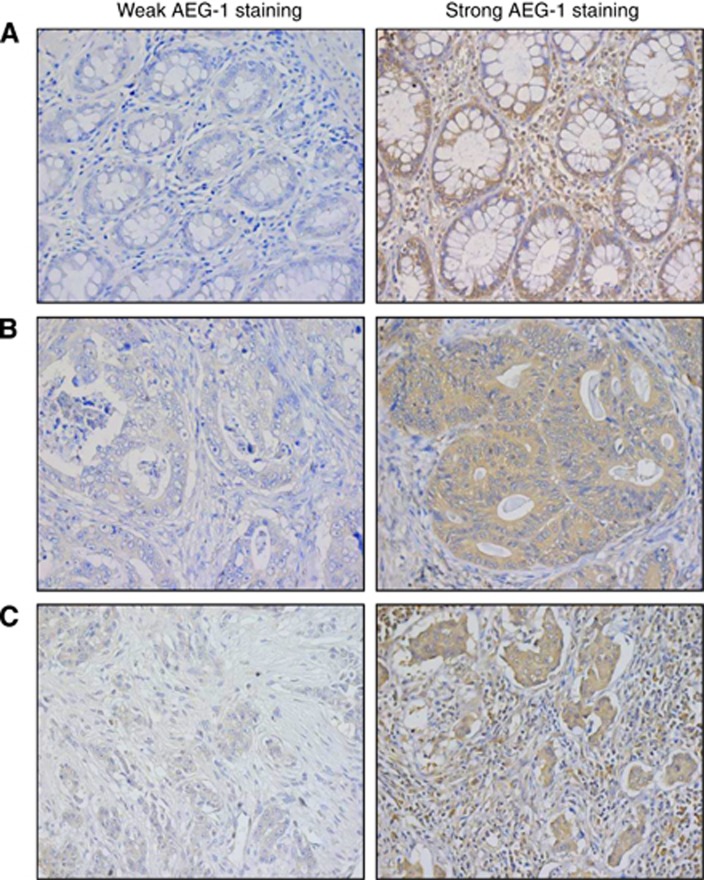
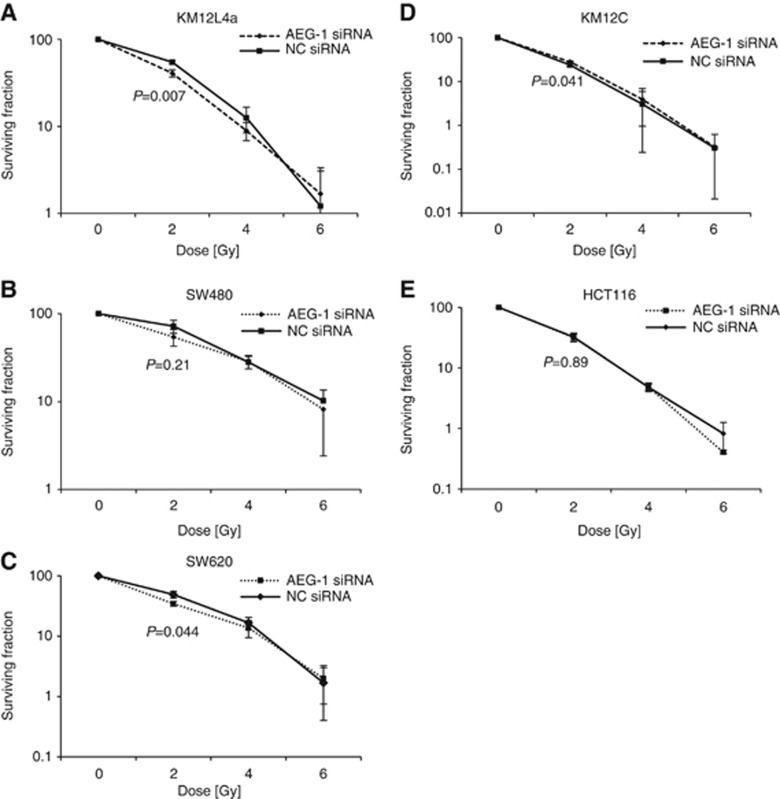
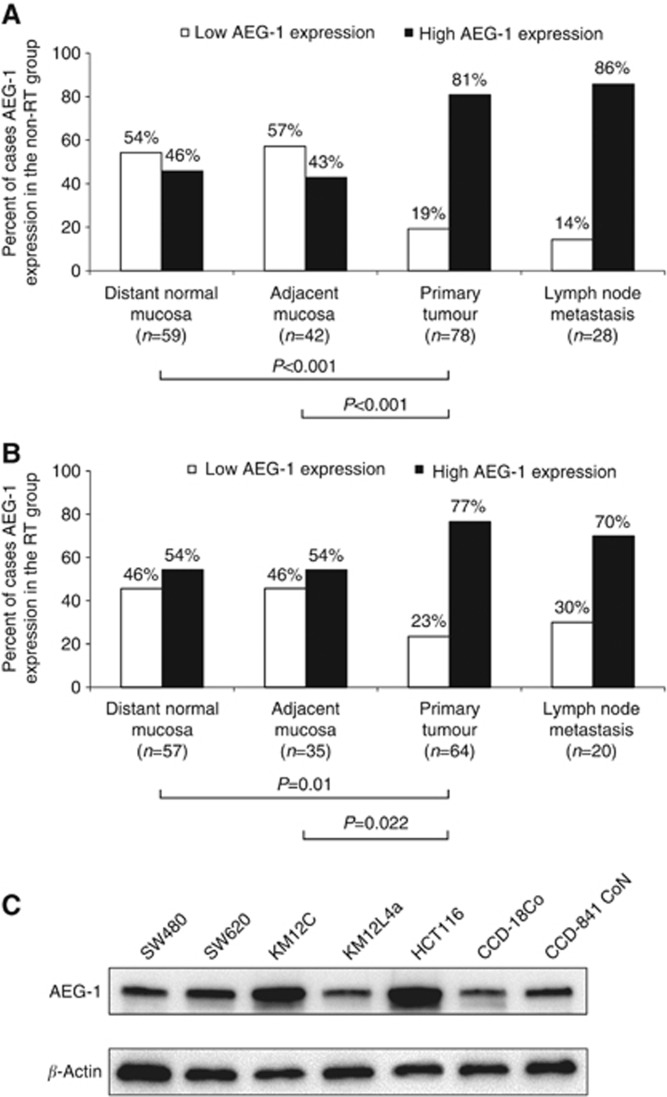
The AEG-1 expression was examined by immunohistochemistry in 158 patients from the Swedish clinical trial of RT. Furthermore, we inhibited the AEG-1 expression by siRNA in five colon cancer cell lines and measured the survival after irradiation by colony-forming assay.
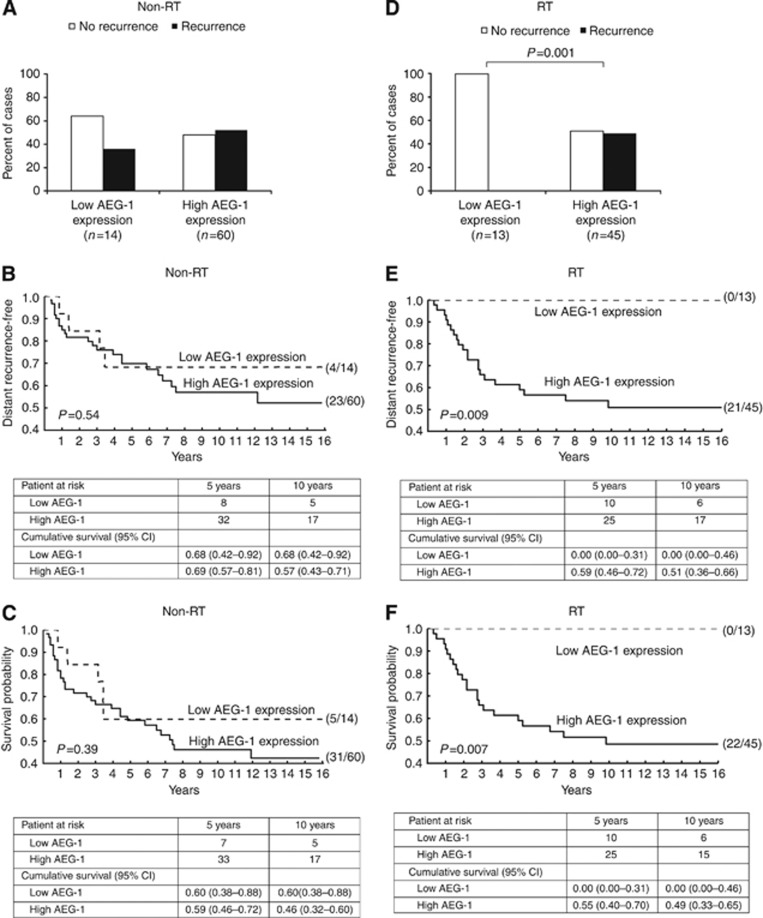
The AEG-1 expression was increased in the primary tumours compared with the normal mucosa independently of the RT (P<0.01). High AEG-1 expression in the primary tumour of the patients treated with RT correlated independently with higher risk of distant recurrence (P=0.009) and worse disease-free survival (P=0.007). Downregulation of AEG-1 revealed a decreased survival after radiation in radioresistant colon cancer cell lines.
The AEG-1 expression was independently related to distant recurrence and disease-free survival in rectal cancer patients with RT and could therefore be a marker to discriminate patients for distant relapse.
术前放疗(RT)被广泛用于降低直肠癌分期,但复发率差异显著。因此,需要新的生物标志物来改善治疗和预后。研究表明,星形胶质细胞上调基因-1(AEG-1)是迁移、侵袭和治疗抵抗的关键介质。我们的目的是分析直肠癌患者中AEG-1表达与放疗的关系,并测试其放射增敏特性。
在瑞典放疗临床试验的158例患者中,通过免疫组织化学检测AEG-1表达。此外,我们在五种结肠癌细胞系中用小干扰RNA(siRNA)抑制AEG-1表达,并通过集落形成试验测量照射后的存活率。
与正常黏膜相比,原发性肿瘤中AEG-1表达增加,与放疗无关(P<0.01)。接受放疗患者原发性肿瘤中高AEG-1表达独立地与远处复发风险较高(P=0.009)和无病生存期较差(P=0.007)相关。AEG-1下调显示放射抗性结肠癌细胞系放疗后存活率降低。
AEG-1表达与接受放疗的直肠癌患者远处复发和无病生存期独立相关,因此可能是区分远处复发患者的标志物。