Bird Lynne M
Department of Pediatrics, University of California, Division of Genetics, Rady Children's Hospital, San Diego, California, USA.
Appl Clin Genet. 2014 May 16;7:93-104. doi: 10.2147/TACG.S57386. eCollection 2014.
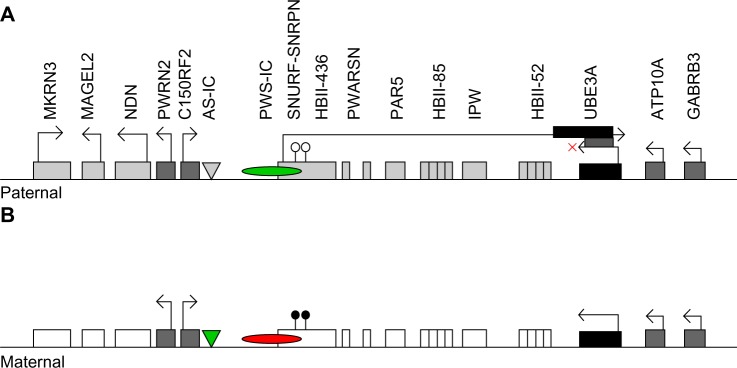
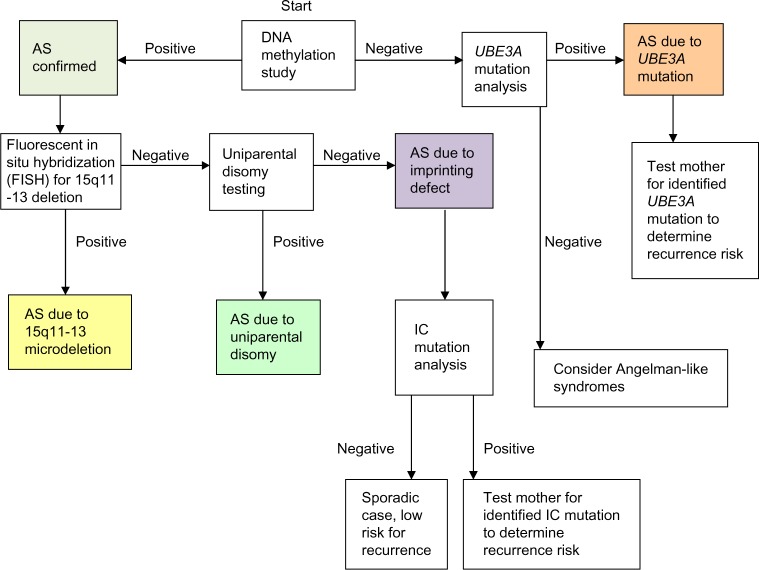
"Angelman syndrome" (AS) is a neurodevelopmental disorder whose main features are intellectual disability, lack of speech, seizures, and a characteristic behavioral profile. The behavioral features of AS include a happy demeanor, easily provoked laughter, short attention span, hypermotoric behavior, mouthing of objects, sleep disturbance, and an affinity for water. Microcephaly and subtle dysmorphic features, as well as ataxia and other movement disturbances, are additional features seen in most affected individuals. AS is due to deficient expression of the ubiquitin protein ligase E3A (UBE3A) gene, which displays paternal imprinting. There are four molecular classes of AS, and some genotype-phenotype correlations have emerged. Much remains to be understood regarding how insufficiency of E6-AP, the protein product of UBE3A, results in the observed neurodevelopmental deficits. Studies of mouse models of AS have implicated UBE3A in experience-dependent synaptic remodeling.
“天使综合征”(AS)是一种神经发育障碍,其主要特征为智力残疾、言语缺失、癫痫发作以及特定的行为表现。AS的行为特征包括愉快的神情、容易引发的笑声、注意力持续时间短、多动行为、用嘴咬物品、睡眠障碍以及对水的喜爱。小头畸形和细微的畸形特征,以及共济失调和其他运动障碍,是大多数受影响个体中出现的额外特征。AS是由于泛素蛋白连接酶E3A(UBE3A)基因表达不足所致,该基因表现出父系印记。AS有四种分子类型,并且已经出现了一些基因型与表型的相关性。关于UBE3A的蛋白质产物E6-AP功能不足如何导致所观察到的神经发育缺陷,仍有许多有待了解的地方。对AS小鼠模型的研究表明UBE3A参与了经验依赖性突触重塑。