Abdelmegeed Mohamed A, Song Byoung-Joon
Section of Molecular Pharmacology and Toxicology, Laboratory of Membrane Biochemistry and Biophysics, National Institute on Alcohol Abuse and Alcoholism, 9000 Rockville Pike, Bethesda, MD 20892-9410, USA.
Oxid Med Cell Longev. 2014;2014:149627. doi: 10.1155/2014/149627. Epub 2014 Apr 30.
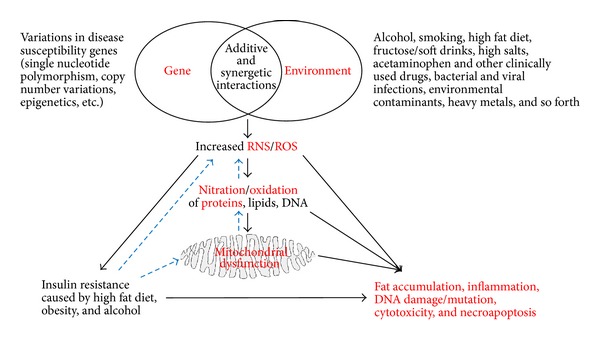
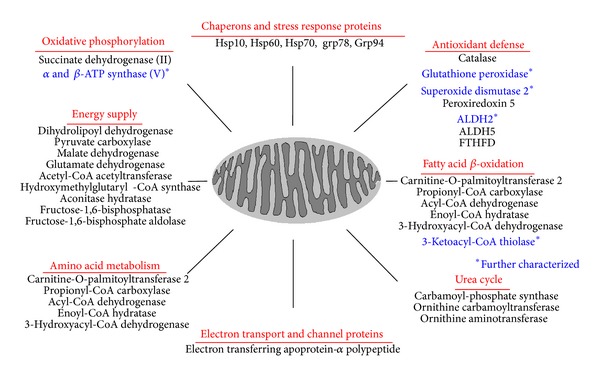
Nitric oxide, when combined with superoxide, produces peroxynitrite, which is known to be an important mediator for a number of diseases including various liver diseases. Peroxynitrite can modify tyrosine residue(s) of many proteins resulting in protein nitration, which may alter structure and function of each target protein. Various proteomics and immunological methods including mass spectrometry combined with both high pressure liquid chromatography and 2D PAGE have been employed to identify and characterize nitrated proteins from pathological tissue samples to determine their roles. However, these methods contain a few technical problems such as low efficiencies with the detection of a limited number of nitrated proteins and labor intensiveness. Therefore, a systematic approach to efficiently identify nitrated proteins and characterize their functional roles is likely to shed new insights into understanding of the mechanisms of hepatic disease pathophysiology and subsequent development of new therapeutics. The aims of this review are to briefly describe the mechanisms of hepatic diseases. In addition, we specifically describe a systematic approach to efficiently identify nitrated proteins to study their causal roles or functional consequences in promoting acute and chronic liver diseases including alcoholic and nonalcoholic fatty liver diseases. We finally discuss translational research applications by analyzing nitrated proteins in evaluating the efficacies of potentially beneficial agents to prevent or treat various diseases in the liver and other tissues.
一氧化氮与超氧化物结合时会产生过氧亚硝酸盐,已知它是包括各种肝脏疾病在内的多种疾病的重要介质。过氧亚硝酸盐可修饰许多蛋白质的酪氨酸残基,导致蛋白质硝化,这可能会改变每个靶蛋白的结构和功能。包括质谱联用高压液相色谱和二维聚丙烯酰胺凝胶电泳在内的各种蛋白质组学和免疫学方法已被用于从病理组织样本中鉴定和表征硝化蛋白质,以确定它们的作用。然而,这些方法存在一些技术问题,如检测有限数量的硝化蛋白质效率低且劳动强度大。因此,一种系统的方法来有效鉴定硝化蛋白质并表征其功能作用,可能会为理解肝脏疾病病理生理学机制和后续开发新疗法提供新的见解。本综述的目的是简要描述肝脏疾病的机制。此外,我们特别描述了一种系统的方法来有效鉴定硝化蛋白质,以研究它们在促进急性和慢性肝脏疾病(包括酒精性和非酒精性脂肪性肝病)中的因果作用或功能后果。我们最后通过分析硝化蛋白质在评估预防或治疗肝脏和其他组织中各种疾病的潜在有益药物疗效方面的转化研究应用进行讨论。