Department of Medicinal Chemistry, University of Washington, Seattle, WA 98195, USA.
Biochem Biophys Res Commun. 2012 Mar 30;420(1):54-60. doi: 10.1016/j.bbrc.2012.02.114. Epub 2012 Feb 28.
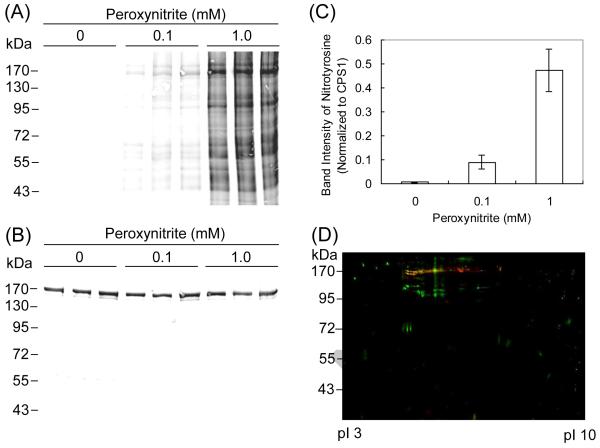
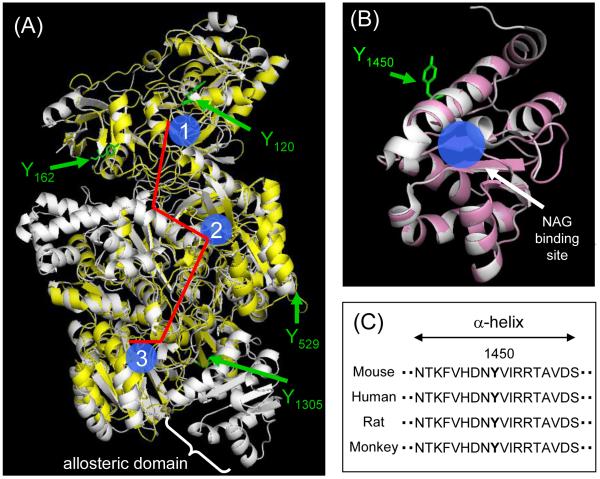
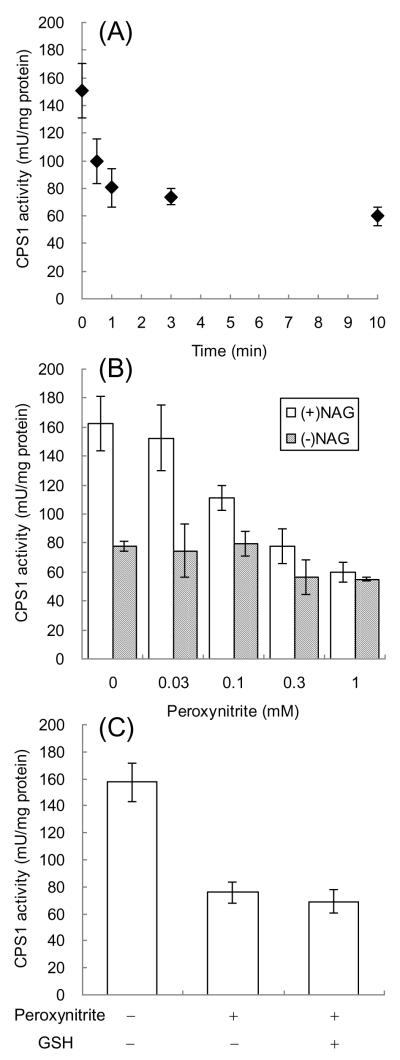
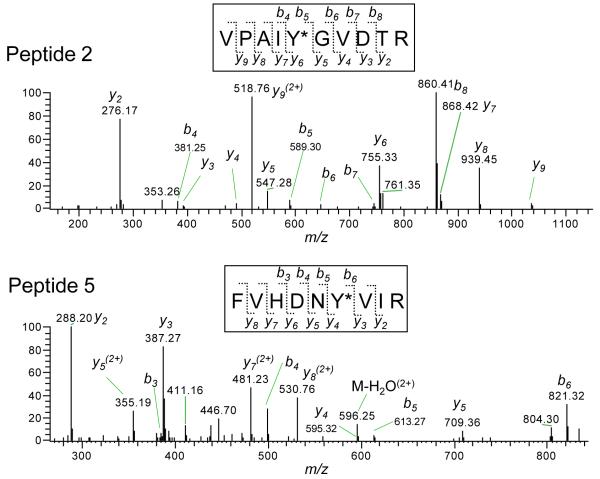
Mitochondria are the primary locus for the generation of reactive nitrogen species including peroxynitrite and subsequent protein tyrosine nitration. Protein tyrosine nitration may have important functional and biological consequences such as alteration of enzyme catalytic activity. In the present study, mouse liver mitochondria were incubated with peroxynitrite, and the mitochondrial proteins were separated by 1D and 2D gel electrophoresis. Nitrotyrosinylated proteins were detected with an anti-nitrotyrosine antibody. One of the major proteins nitrated by peroxynitrite was carbamoyl phosphate synthetase 1 (CPS1) as identified by LC-MS protein analysis and Western blotting. The band intensity of nitration normalized to CPS1 was increased in a peroxynitrite concentration-dependent manner. In addition, CPS1 activity was decreased by treatment with peroxynitrite in a peroxynitrite concentration- and time-dependent manner. The decreased CPS1 activity was not recovered by treatment with reduced glutathione, suggesting that the decrease of the CPS1 activity is due to tyrosine nitration rather than cysteine oxidation. LC-MS analysis of in-gel digested samples, and a Popitam-based modification search located 5 out of 36 tyrosine residues in CPS1 that were nitrated. Taken together with previous findings regarding CPS1 structure and function, homology modeling of mouse CPS1 suggested that nitration at Y1450 in an α-helix of allosteric domain prevents activation of CPS1 by its activator, N-acetyl-l-glutamate. In conclusion, this study demonstrated the tyrosine nitration of CPS1 by peroxynitrite and its functional consequence. Since CPS1 is responsible for ammonia removal in the urea cycle, nitration of CPS1 with attenuated function might be involved in some diseases and drug-induced toxicities associated with mitochondrial dysfunction.
线粒体是活性氮物种(包括过氧亚硝酸盐)生成的主要场所,随后发生蛋白质酪氨酸硝化。蛋白质酪氨酸硝化可能具有重要的功能和生物学后果,例如改变酶的催化活性。在本研究中,用过氧亚硝酸盐孵育鼠肝线粒体,并用 1D 和 2D 凝胶电泳分离线粒体蛋白。用抗硝基酪氨酸抗体检测硝化的蛋白质。通过 LC-MS 蛋白质分析和 Western 印迹鉴定,过氧亚硝酸盐硝化的主要蛋白质之一是氨基甲酰磷酸合成酶 1(CPS1)。过氧亚硝酸盐浓度依赖性地增加硝化归一化的 CPS1 条带强度。此外,CPS1 活性随过氧亚硝酸盐处理呈浓度和时间依赖性下降。用还原型谷胱甘肽处理不能恢复 CPS1 活性,表明 CPS1 活性下降是由于酪氨酸硝化而不是半胱氨酸氧化。对胶内消化样品的 LC-MS 分析和基于 Popitam 的修饰搜索,发现 CPS1 中的 36 个酪氨酸残基中的 5 个被硝化。结合先前关于 CPS1 结构和功能的发现,鼠 CPS1 的同源建模表明,别构域α-螺旋中 Y1450 的硝化阻止了其激活剂 N-乙酰-l-谷氨酸对 CPS1 的激活。总之,本研究证明了过氧亚硝酸盐对 CPS1 的酪氨酸硝化及其功能后果。由于 CPS1 负责尿素循环中氨的去除,功能减弱的 CPS1 硝化可能与某些疾病和与线粒体功能障碍相关的药物毒性有关。