Thamilarasan Senthil Kumar, Park Jong-In, Jung Hee-Jeong, Nou Ill-Sup
Department of Horticulture, Sunchon National University, 413 Jungangno, Suncheon, Jeonnam 540-950, Republic of Korea.
BMC Genomics. 2014 Jun 3;15:422. doi: 10.1186/1471-2164-15-422.
Cabbage (Brassica oleracea) is one of the most important leaf vegetables grown worldwide. The entire cabbage genome sequence and more than fifty thousand proteins have been obtained to date. However a high degree of sequence similarity and conserved genome structure remain between cabbage and Arabidopsis; therefore, Arabidopsis is a viable reference species for comparative genomics studies. Transcription factors (TFs) are important regulators involved in plant development and physiological processes and the AP2/ERF protein family contains transcriptional factors that play a crucial role in plant growth and development, as well as response to biotic and abiotic stress conditions in plants. However, no detailed expression profile of AP2/ERF-like genes is available for B. oleracea.
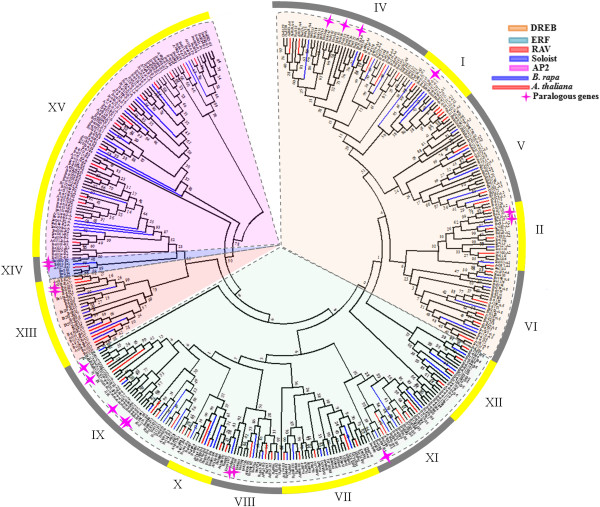
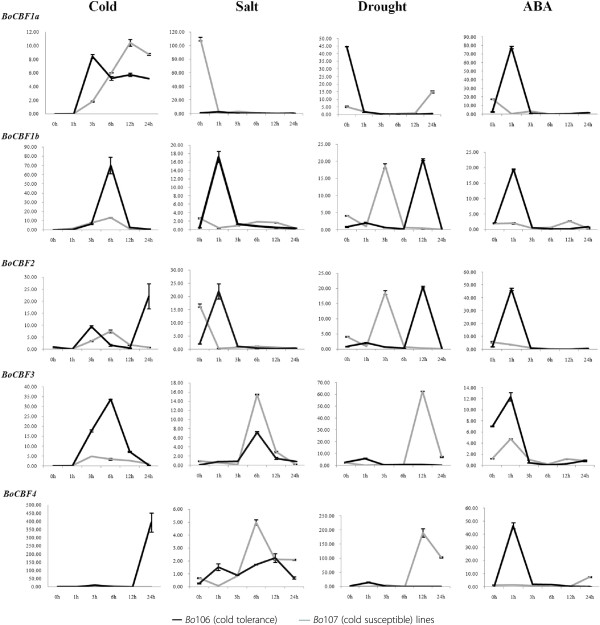
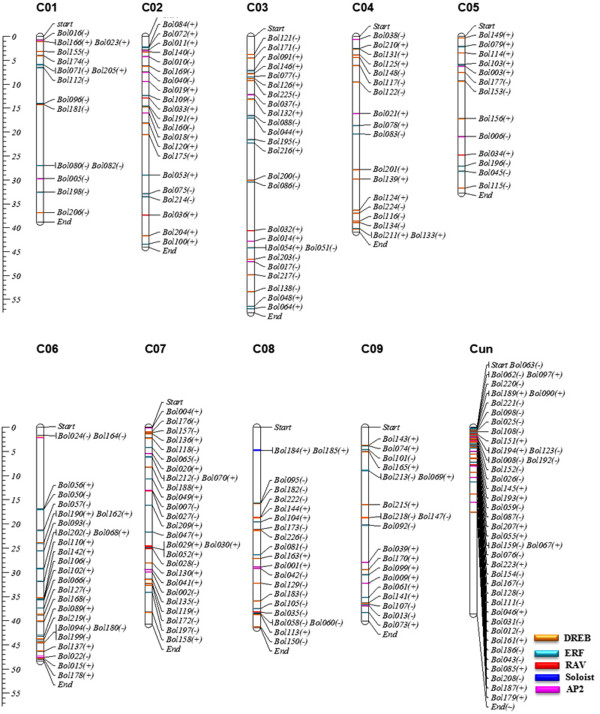
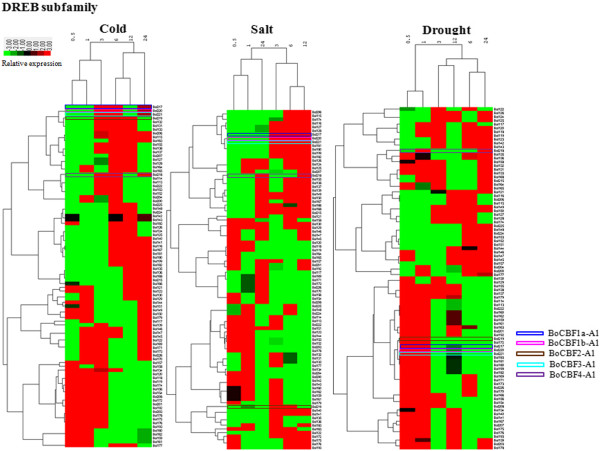
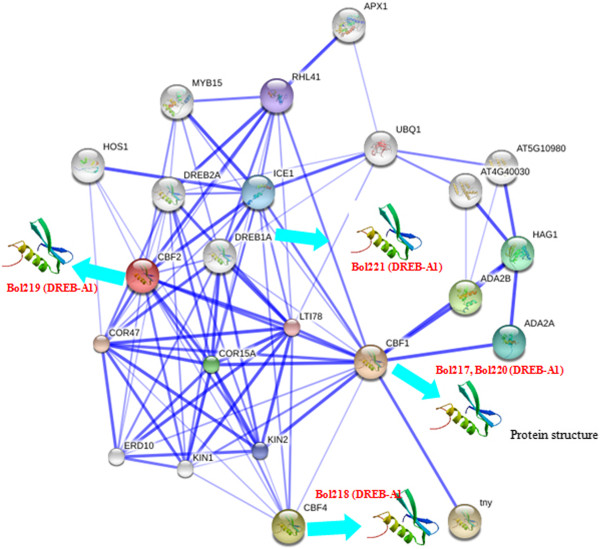
In the present study, 226 AP2/ERF TFs were identified from B. oleracea based on the available genome sequence. Based on sequence similarity, the AP2/ERF superfamily was classified into five groups (DREB, ERF, AP2, RAV and Soloist) and 15 subgroups. The identification, classification, phylogenetic construction, conserved motifs, chromosome distribution, functional annotation, expression patterns and interaction network were then predicted and analyzed. AP2/ERF transcription factor expression levels exhibited differences in response to varying abiotic stresses based on expressed sequence tags (ESTs). BoCBF1a, 1b, 2, 3 and 4, which were highly conserved in Arabidopsis and B. rapa CBF/DREB genes families were well characterized. Expression analysis enabled elucidation of the molecular and genetic level expression patterns of cold tolerance (CT) and susceptible lines (CS) of cabbage and indicated that all BoCBF genes responded to abiotic stresses.
Comprehensive analysis of the physiological functions and biological roles of AP2/ERF superfamily genes and BoCBF family genes in B. oleracea is required to fully elucidate AP2/ERF, which will provide rich resources and opportunities to understand abiotic stress tolerance in crops.
甘蓝(Brassica oleracea)是全球种植的最重要的叶菜类蔬菜之一。迄今为止,已获得了完整的甘蓝基因组序列和五万多种蛋白质。然而,甘蓝与拟南芥之间仍存在高度的序列相似性和保守的基因组结构;因此,拟南芥是比较基因组学研究的一个可行的参考物种。转录因子(TFs)是参与植物发育和生理过程的重要调节因子,AP2/ERF蛋白家族包含在植物生长发育以及植物对生物和非生物胁迫条件的响应中起关键作用的转录因子。然而,关于甘蓝中AP2/ERF类基因的详细表达谱尚无报道。
在本研究中,基于现有的基因组序列从甘蓝中鉴定出226个AP2/ERF转录因子。根据序列相似性,AP2/ERF超家族被分为五组(DREB、ERF、AP2、RAV和Soloist)和15个亚组。然后对其进行了鉴定、分类、系统发育构建、保守基序、染色体分布、功能注释、表达模式和相互作用网络的预测与分析。基于表达序列标签(ESTs),AP2/ERF转录因子的表达水平在对不同非生物胁迫的响应中表现出差异。在拟南芥和白菜CBF/DREB基因家族中高度保守的BoCBF1a、1b、2、3和4得到了很好的表征。表达分析有助于阐明甘蓝耐寒(CT)和感病品系(CS)在分子和遗传水平上的表达模式,并表明所有BoCBF基因都对非生物胁迫有响应。
需要对甘蓝中AP2/ERF超家族基因和BoCBF家族基因的生理功能和生物学作用进行全面分析,以充分阐明AP2/ERF,这将为理解作物的非生物胁迫耐受性提供丰富的资源和机会。