Division of Endocrinology, Metabolism, and Diabetes, First Department of Pediatrics, University of Athens Medical School, "Aghia Sophia" Children's Hospital, Athens, Greece; Division of Endocrinology and Metabolism, Clinical Research Center, Biomedical Research Foundation of the Academy of Athens, Athens, Greece.
Ann N Y Acad Sci. 2014 May;1318:71-80. doi: 10.1111/nyas.12464.
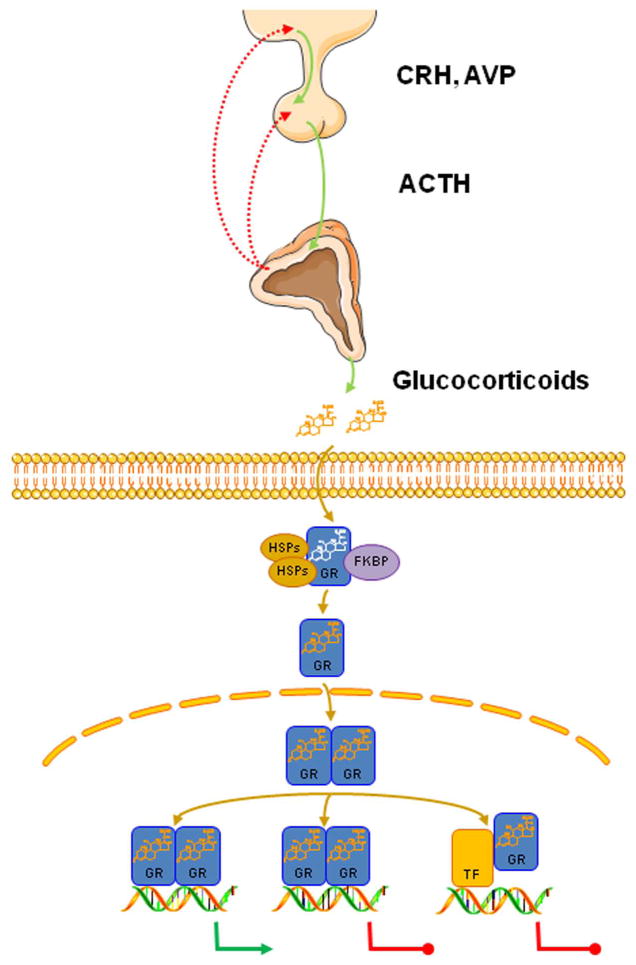
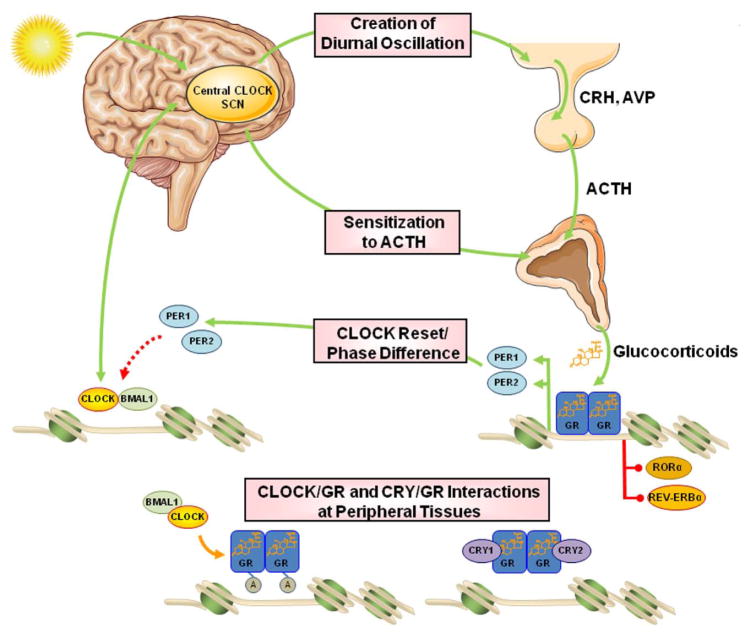
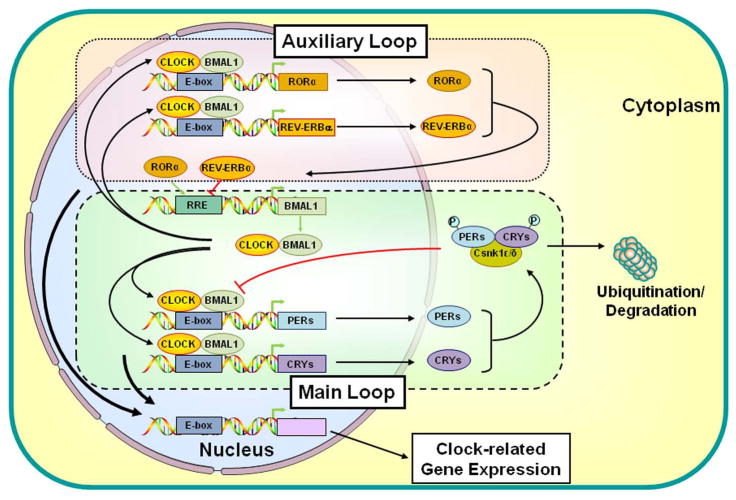
The stress system effectively restores the internal balance--or homeostasis--of living organisms in the face of random external or internal changes, the stressors. This highly complex system helps organisms to provide a series of neuroendocrine responses to stressors--the stress response--through coordinated activation of the hypothalamic-pituitary-adrenal (HPA) axis and the locus coeruleus/norepinephrine autonomic nervous systems. In addition to stressors, life is influenced by daily light/dark changes due to the 24-h rotation of Earth. To adjust to these recurrent day/night cycles, the biological clock system employs the heterodimer of transcription factors circadian locomotor output cycle kaput/brain-muscle-arnt-like protein 1 (CLOCK/BMAL1), along with a set of other transcription factors, to regulate the circadian pattern of gene expression. Interestingly, the stress system, through the HPA axis, communicates with the clock system; therefore, any uncoupling or dysregulation could potentially cause several disorders, such as metabolic, autoimmune, and mood disorders. In this review, we discuss the biological function of the two systems, their interactions, and the clinical implications of their dysregulation or uncoupling.
压力系统可有效恢复生物体内在平衡(即稳态),使其免受随机的外部或内部变化(即应激原)的影响。这一高度复杂的系统通过下丘脑-垂体-肾上腺(HPA)轴和蓝斑/去甲肾上腺素自主神经系统的协调激活,帮助生物对应激原做出一系列神经内分泌反应(即应激反应)。除了应激原,日常生活还会受到昼夜节律变化的影响,这是由于地球每 24 小时自转一周。为了适应这种周期性的日夜循环,生物钟系统利用转录因子 circadian locomotor output cycle kaput/brain-muscle-arnt-like protein 1(CLOCK/BMAL1)的异二聚体以及其他一组转录因子,来调节基因表达的昼夜节律模式。有趣的是,压力系统通过 HPA 轴与生物钟系统进行交流;因此,任何解偶联或失调都可能导致多种疾病,如代谢、自身免疫和情绪障碍。在这篇综述中,我们讨论了这两个系统的生物学功能、它们之间的相互作用,以及它们失调或解偶联的临床意义。