Beaty Brian T, Wang Yarong, Bravo-Cordero Jose Javier, Sharma Ved P, Miskolci Veronika, Hodgson Louis, Condeelis John
Department of Anatomy and Structural Biology and Gruss Lipper Biophotonics Center, Albert Einstein College of Medicine of Yeshiva University, Bronx, NY 10461
Department of Anatomy and Structural Biology and Gruss Lipper Biophotonics Center, Albert Einstein College of Medicine of Yeshiva University, Bronx, NY 10461.
J Cell Biol. 2014 Jun 9;205(5):737-51. doi: 10.1083/jcb.201312046. Epub 2014 Jun 2.
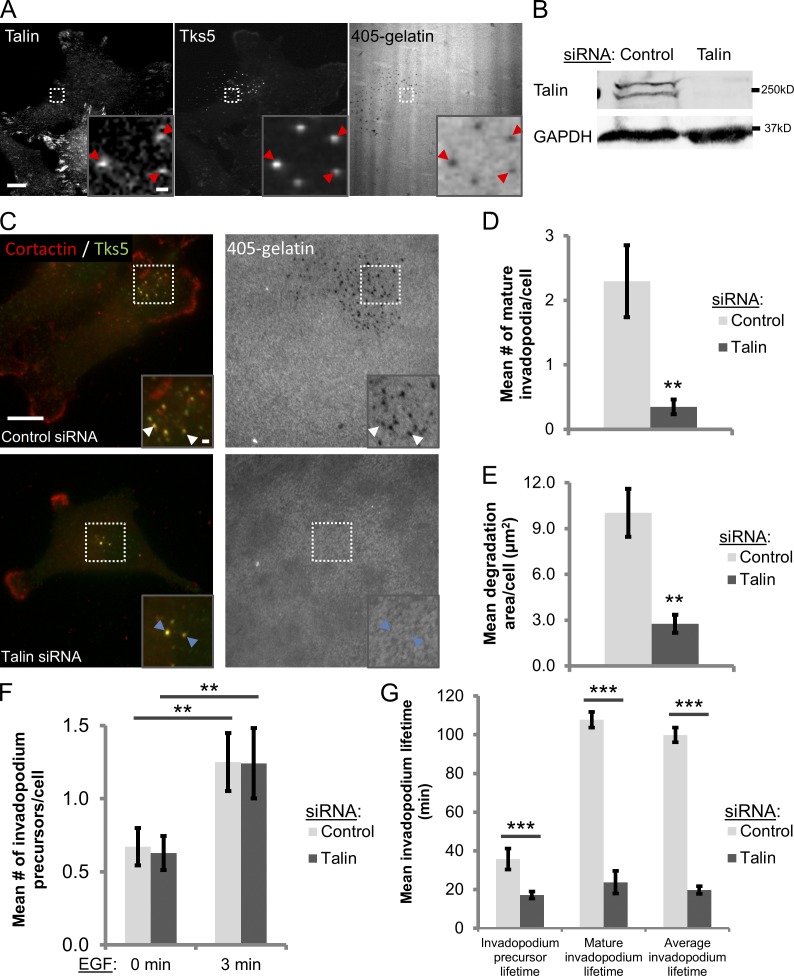
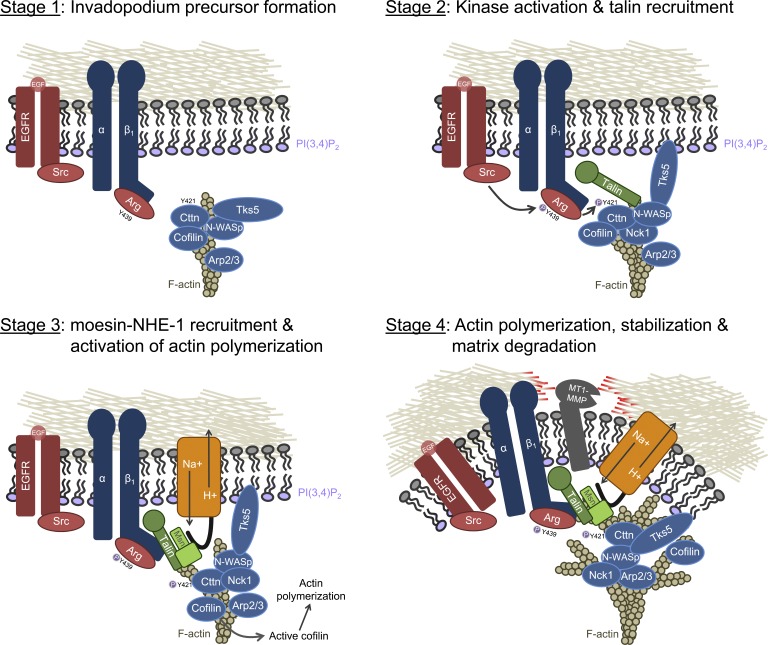
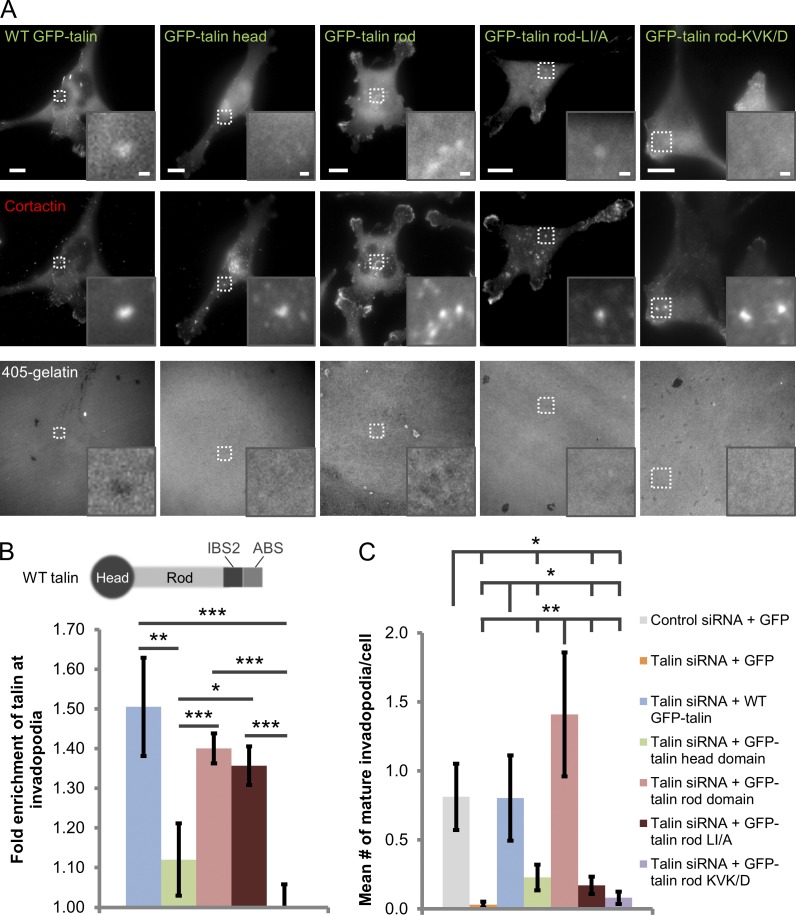
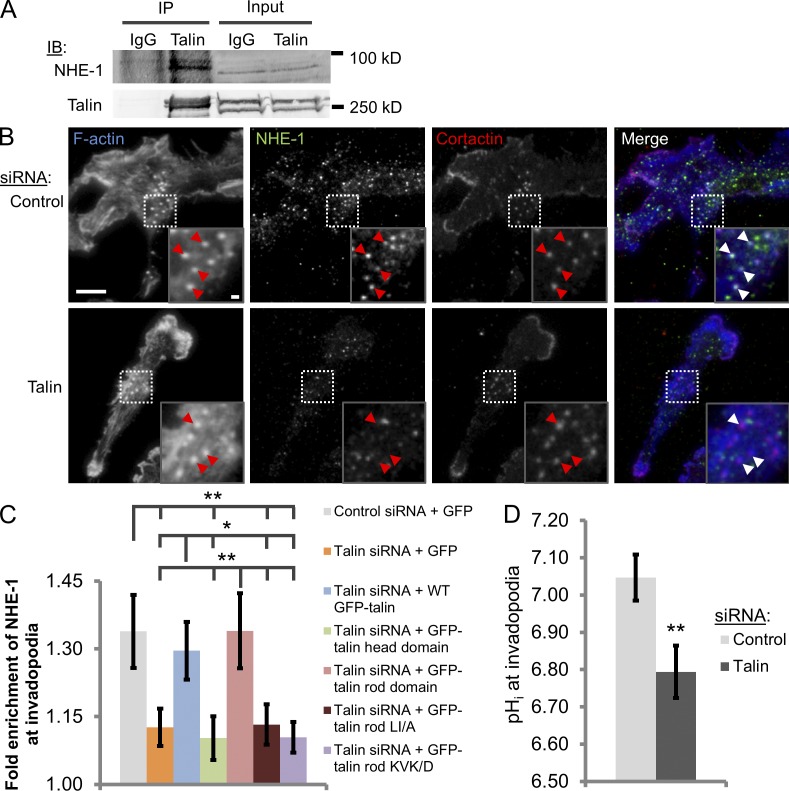
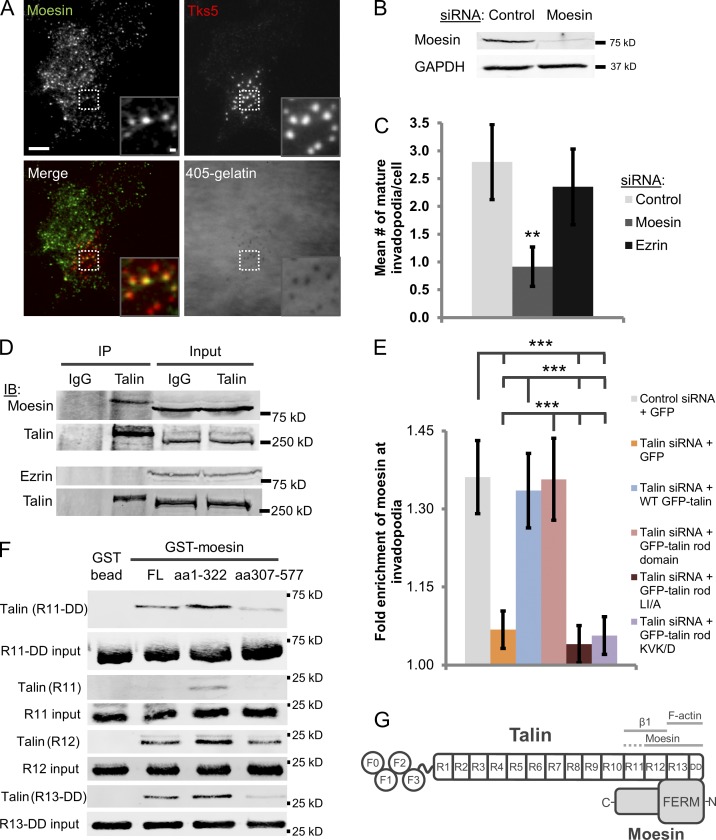
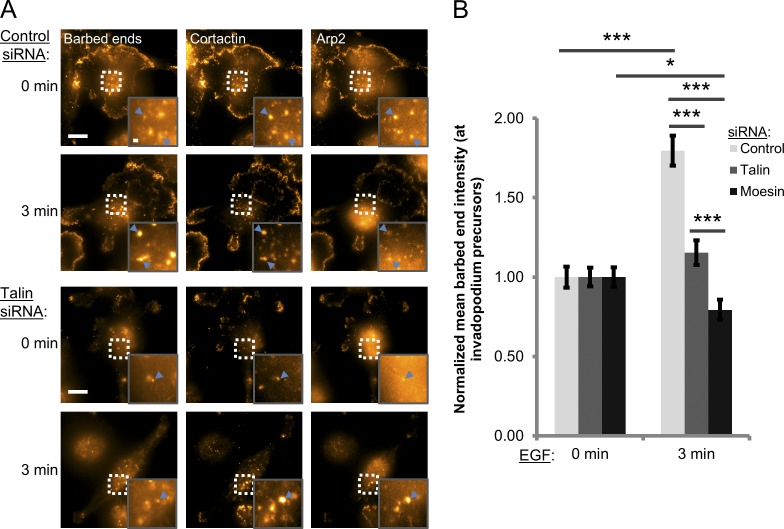
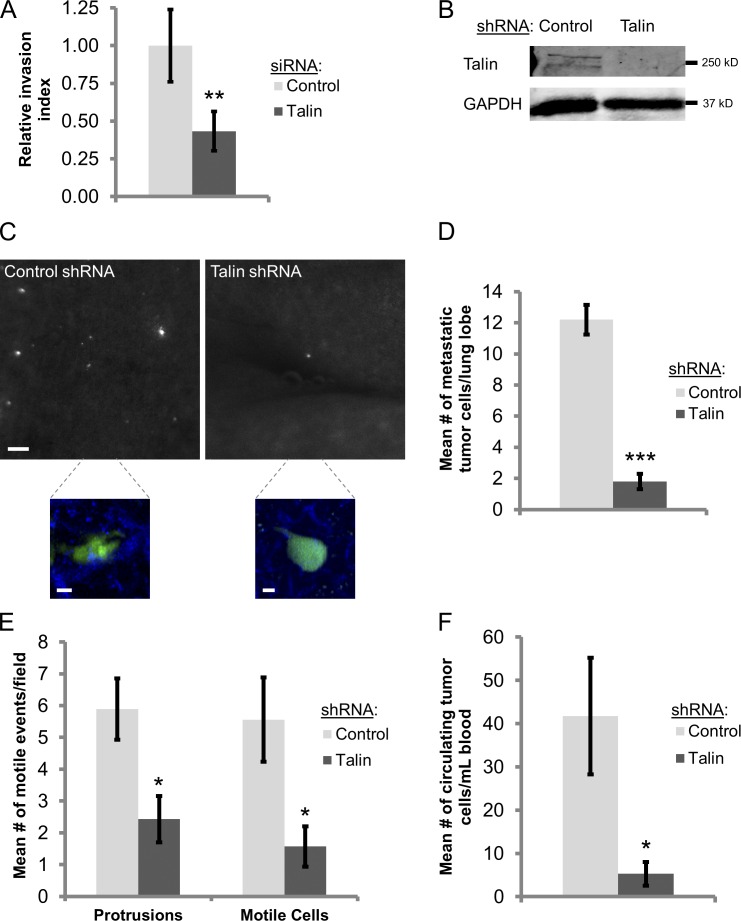
Invadopodia are actin-rich protrusions that degrade the extracellular matrix and are required for stromal invasion, intravasation, and metastasis. The role of the focal adhesion protein talin in regulating these structures is not known. Here, we demonstrate that talin is required for invadopodial matrix degradation and three-dimensional extracellular matrix invasion in metastatic breast cancer cells. The sodium/hydrogen exchanger 1 (NHE-1) is linked to the cytoskeleton by ezrin/radixin/moesin family proteins and is known to regulate invadopodium-mediated matrix degradation. We show that the talin C terminus binds directly to the moesin band 4.1 ERM (FERM) domain to recruit a moesin-NHE-1 complex to invadopodia. Silencing talin resulted in a decrease in cytosolic pH at invadopodia and blocked cofilin-dependent actin polymerization, leading to impaired invadopodium stability and matrix degradation. Furthermore, talin is required for mammary tumor cell motility, intravasation, and spontaneous lung metastasis in vivo. Thus, our findings provide a novel understanding of how intracellular pH is regulated and a molecular mechanism by which talin enhances tumor cell invasion and metastasis.
侵袭性伪足是富含肌动蛋白的突起,可降解细胞外基质,是基质侵袭、血管内渗和转移所必需的。粘着斑蛋白踝蛋白在调节这些结构中的作用尚不清楚。在这里,我们证明踝蛋白是转移性乳腺癌细胞中侵袭性伪足基质降解和三维细胞外基质侵袭所必需的。钠/氢交换体1(NHE-1)通过埃兹蛋白/根蛋白/膜突蛋白家族蛋白与细胞骨架相连,并且已知其可调节侵袭性伪足介导的基质降解。我们发现踝蛋白C末端直接与膜突蛋白带4.1 ERM(FERM)结构域结合,以将膜突蛋白-NHE-1复合物募集到侵袭性伪足。沉默踝蛋白导致侵袭性伪足处的胞质pH降低,并阻断了丝切蛋白依赖性肌动蛋白聚合,导致侵袭性伪足稳定性受损和基质降解。此外,踝蛋白是体内乳腺肿瘤细胞运动、血管内渗和自发性肺转移所必需的。因此,我们的研究结果为细胞内pH的调节方式以及踝蛋白增强肿瘤细胞侵袭和转移的分子机制提供了新的认识。