Sung Chang Ohk, Sohn Insuk
Department of Pathology, Asan Medical Center, University of Ulsan College of Medicine, Seoul, Korea.
Biostatistics and Clinical Epidemiology Center, Research Institute for Future Medicine, Samsung Medical Center, Seoul, Korea.
Sci Rep. 2014 Jun 4;4:5174. doi: 10.1038/srep05174.
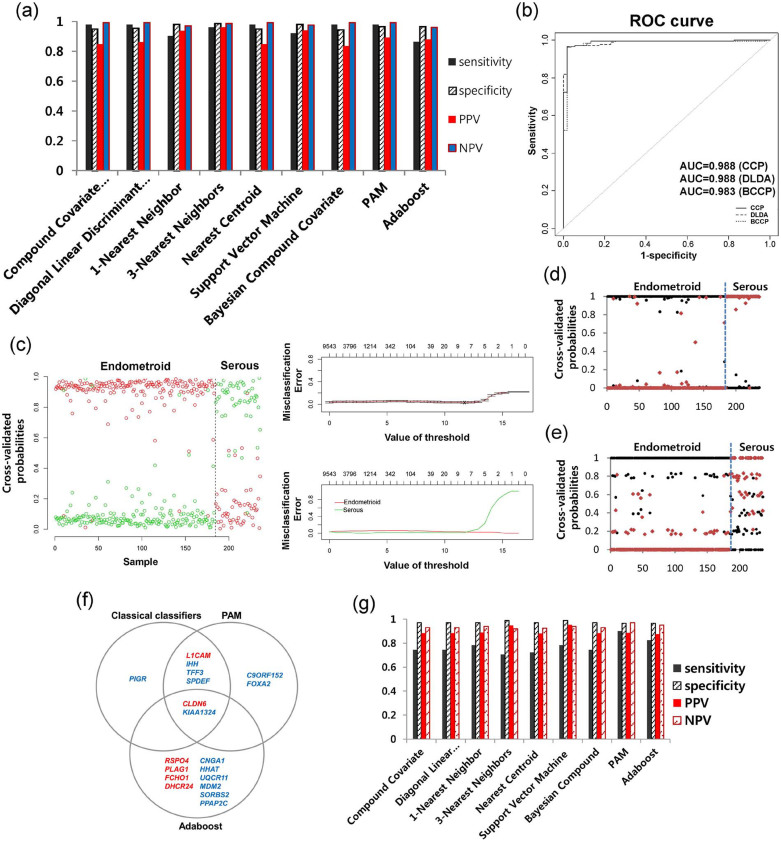
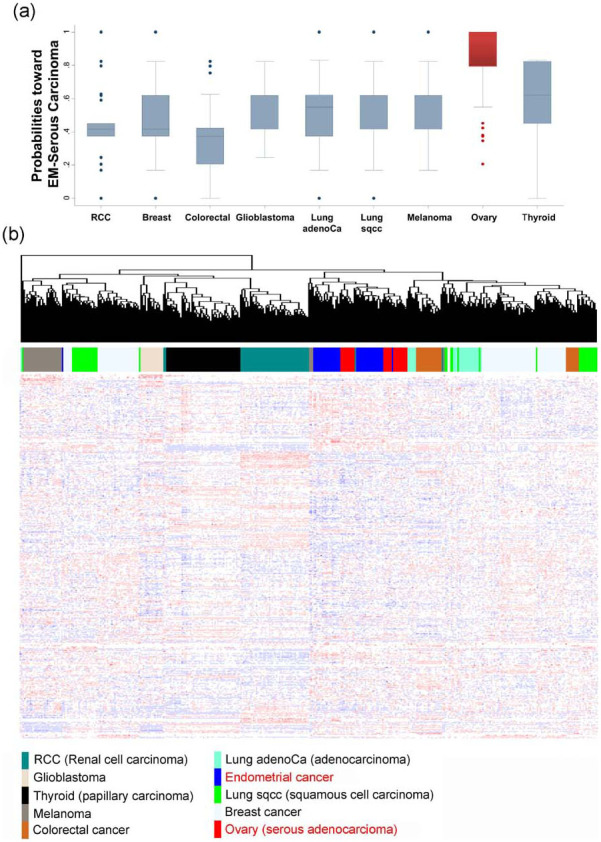
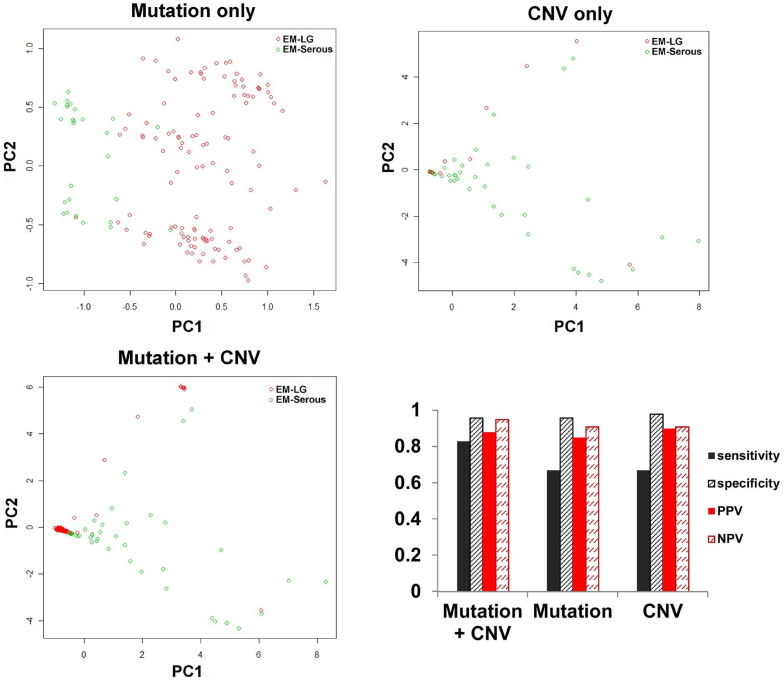
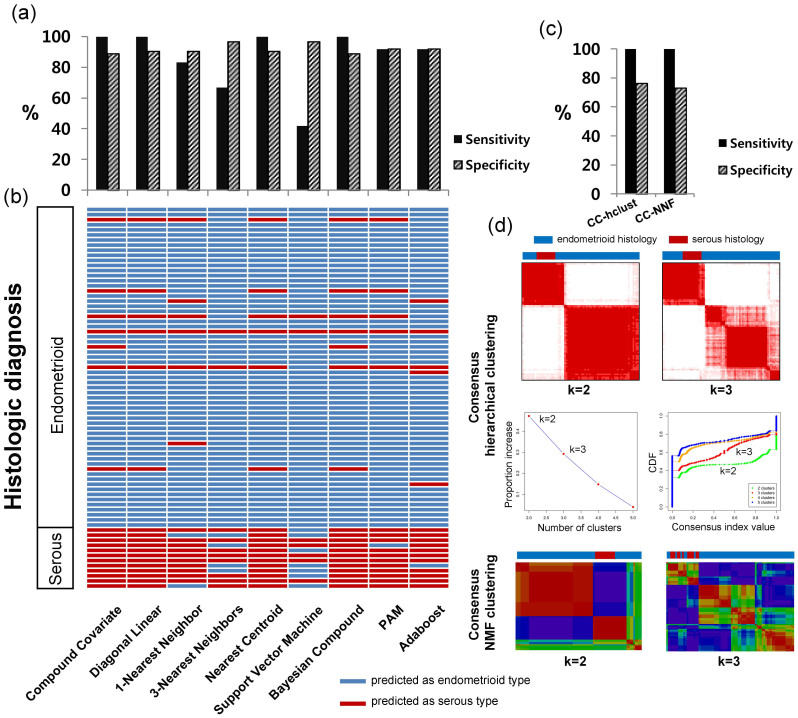
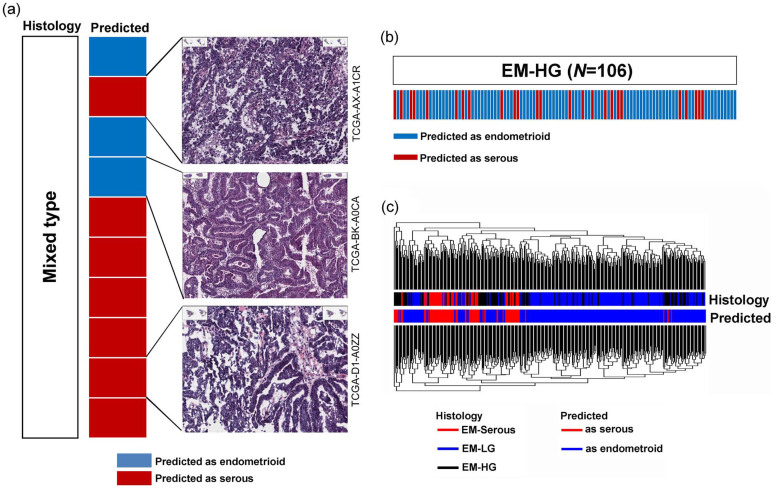
Cancer diagnosis and classification have traditionally been based on the assessment of morphology by microscopy. However, the histological classification system is challenging and demand for genetic information is increasing in the era of targeted and personalized molecular therapy. Recently accumulated comprehensive genomic data could be used to provide a molecular cancer classification alongside the histological classification. This study identified a 19 gene signature able to classify endometrial cancers into the two major histological subtypes, endometrioid and serous. In addition, when the genomic classifier was applied to endometrioid adenocarcinoma of high grade (EM-HG), a subset (23.6%, 25/106) was predicted to be similar to serous tumors at the molecular level. In analyses of multiple cancers, the classification model may also be applicable to ovarian cancers.
传统上,癌症的诊断和分类是基于显微镜下的形态学评估。然而,组织学分类系统具有挑战性,并且在靶向和个性化分子治疗时代,对基因信息的需求日益增加。最近积累的全面基因组数据可用于在组织学分类的同时提供分子癌症分类。本研究确定了一个19基因特征,能够将子宫内膜癌分为两种主要的组织学亚型,即子宫内膜样癌和浆液性癌。此外,当将基因组分类器应用于高级别子宫内膜样腺癌(EM-HG)时,预测有一部分(23.6%,25/106)在分子水平上与浆液性肿瘤相似。在多种癌症的分析中,该分类模型也可能适用于卵巢癌。