Vallur Raghavan, Kalbacher Hubert, Feil Robert
Interfakultäres Institut für Biochemie, University of Tübingen, Tübingen, Germany; German Center for Neurodegenerative Diseases (DZNE), Tübingen, Germany; Graduate School of Cellular & Molecular Neuroscience, University of Tübingen, Tübingen, Germany.
Interfakultäres Institut für Biochemie, University of Tübingen, Tübingen, Germany.
PLoS One. 2014 Jun 4;9(6):e98946. doi: 10.1371/journal.pone.0098946. eCollection 2014.
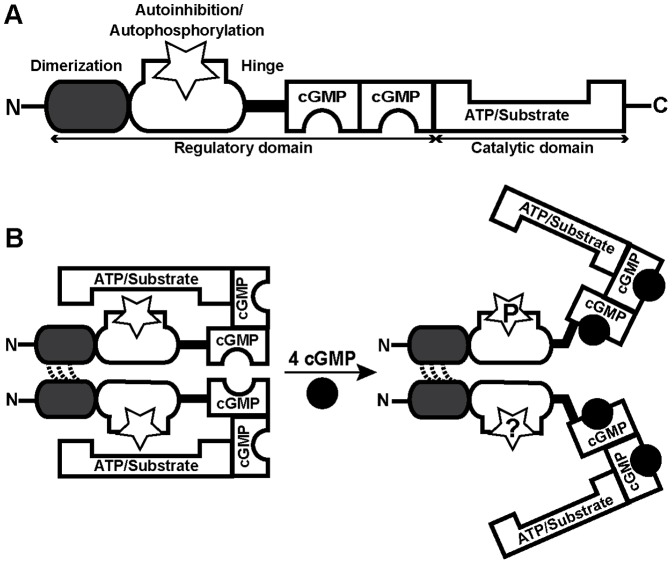
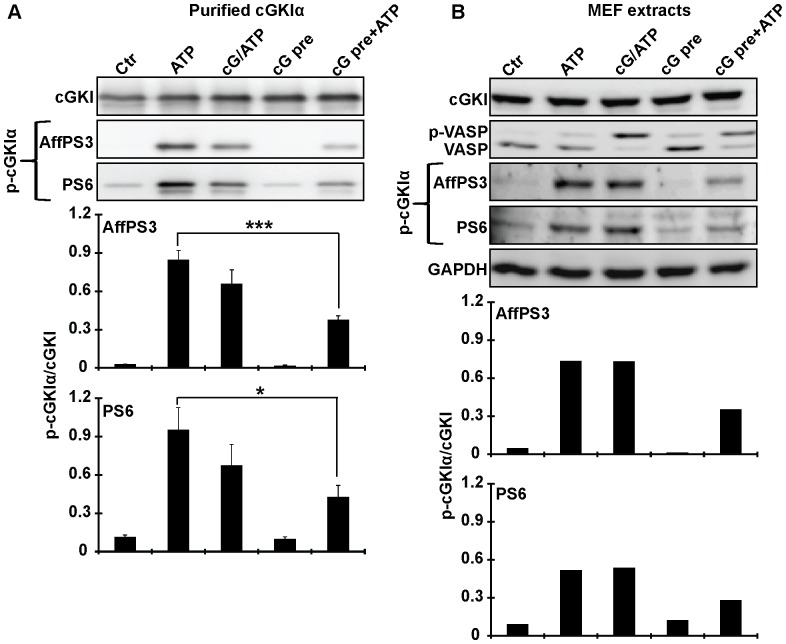
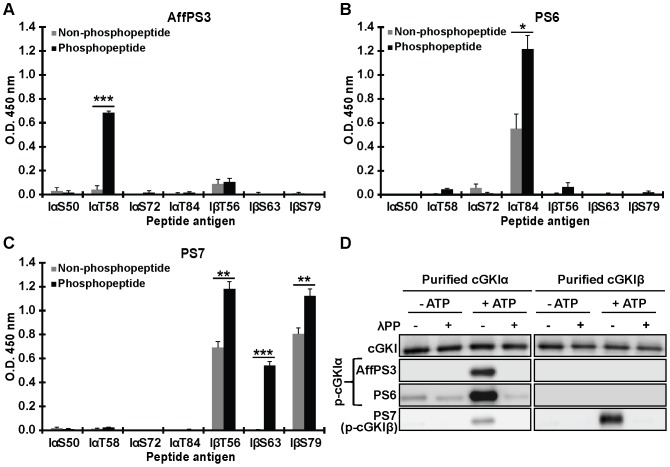
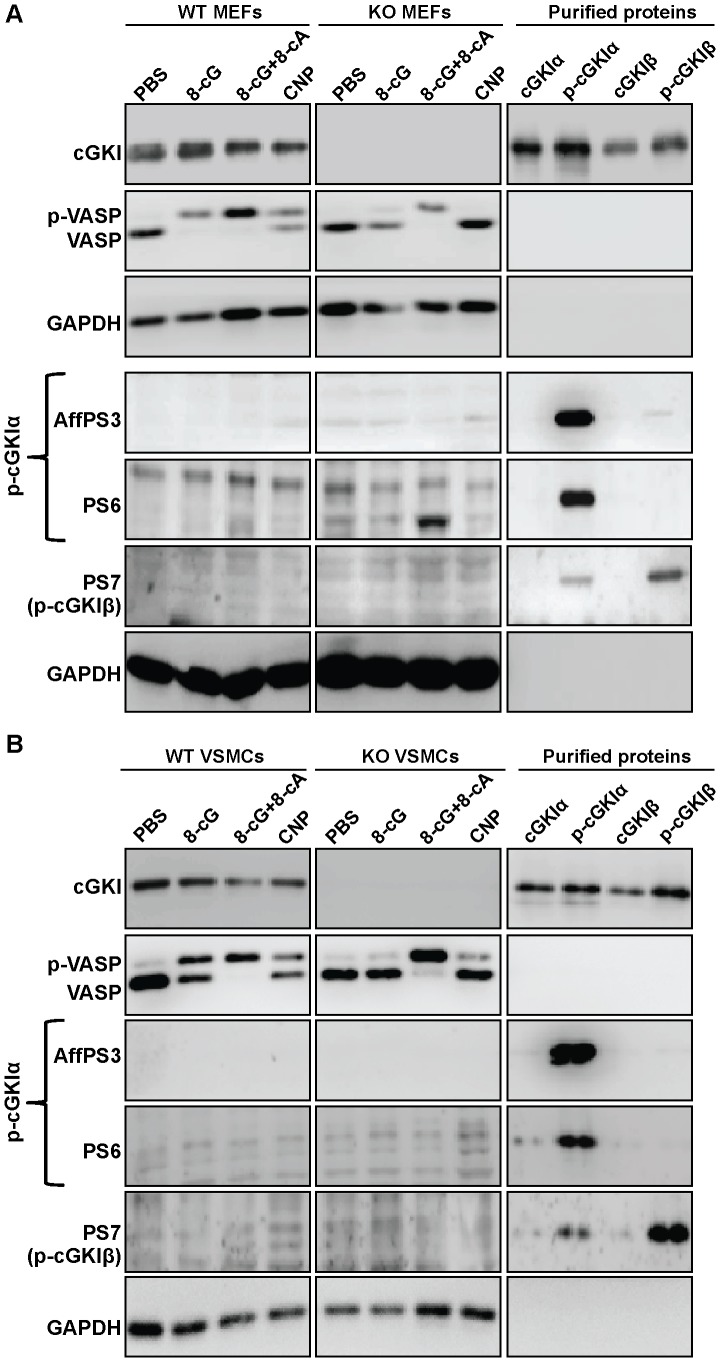
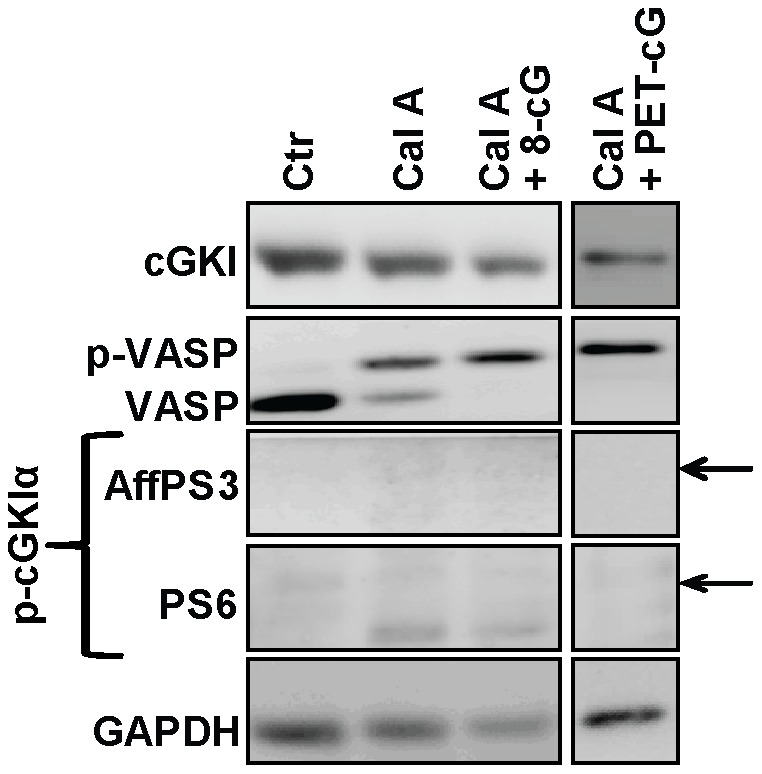
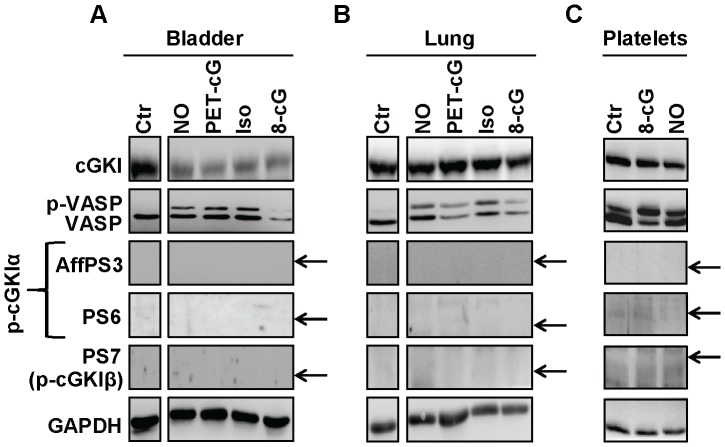
Although cGMP-dependent protein kinase type I (cGKI) is an important mediator of cGMP signaling and upcoming drug target, its in vivo-biochemistry is not well understood. Many studies showed that purified cGKI autophosphorylates multiple sites at its N-terminus. Autophosphorylation might be involved in kinase activation, but it is unclear whether this happens also in intact cells. To study cGKI autophosphorylation in vitro and in vivo, we have generated phospho-specific antisera against major in vitro-autophosphorylation sites of the cGKI isoforms, cGKIα and cGKIβ. These antisera detected specifically and with high sensitivity phospho-cGKIα (Thr58), phospho-cGKIα (Thr84), or phospho-cGKIβ (Thr56/Ser63/Ser79). Using these antisera, we show that ATP-induced autophosphorylation of cGKI in purified preparations and cell extracts did neither require nor induce an enzyme conformation capable of substrate heterophosphorylation; it was even inhibited by pre-incubation with cGMP. Interestingly, phospho-cGKI species were not detectable in intact murine cells and tissues, both under basal conditions and after induction of cGKI catalytic activity. We conclude that N-terminal phosphorylation, although readily induced in vitro, is not required for the catalytic activity of cGKIα and cGKIβ in vivo. These results will also inform screening strategies to identify novel cGKI modulators.
尽管I型环磷酸鸟苷依赖性蛋白激酶(cGKI)是环磷酸鸟苷信号传导的重要介质以及未来的药物靶点,但其体内生物化学过程尚未得到充分了解。许多研究表明,纯化的cGKI会在其N端的多个位点进行自身磷酸化。自身磷酸化可能参与激酶激活,但尚不清楚在完整细胞中是否也会发生这种情况。为了研究cGKI在体外和体内的自身磷酸化,我们针对cGKI亚型cGKIα和cGKIβ的主要体外自身磷酸化位点产生了磷酸特异性抗血清。这些抗血清能够特异性且高灵敏度地检测到磷酸化的cGKIα(苏氨酸58)、磷酸化的cGKIα(苏氨酸84)或磷酸化的cGKIβ(苏氨酸56/丝氨酸63/丝氨酸79)。使用这些抗血清,我们发现,在纯化制剂和细胞提取物中,ATP诱导的cGKI自身磷酸化既不需要也不会诱导能够进行底物异源磷酸化的酶构象;甚至与环磷酸鸟苷预孵育会抑制这种自身磷酸化。有趣的是,在基础条件下以及诱导cGKI催化活性后,在完整的小鼠细胞和组织中均未检测到磷酸化的cGKI。我们得出结论,尽管在体外很容易诱导N端磷酸化,但在体内它并非cGKIα和cGKIβ催化活性所必需。这些结果也将为鉴定新型cGKI调节剂的筛选策略提供参考。