Yue X, Yang X, Lin X, Yang T, Yi X, Dai Y, Guo J, Li T, Shi J, Wei L, Fan G-C, Chen C, Chang J
Texas A&M University Health Science Center, Institute of Biosciences and Technology, Houston, TX, USA.
Department of Cardiology, Renmin Hospital of Wuhan University, Wuhan, Hubei, China.
Cell Death Dis. 2014 Jun 5;5(6):e1284. doi: 10.1038/cddis.2014.235.
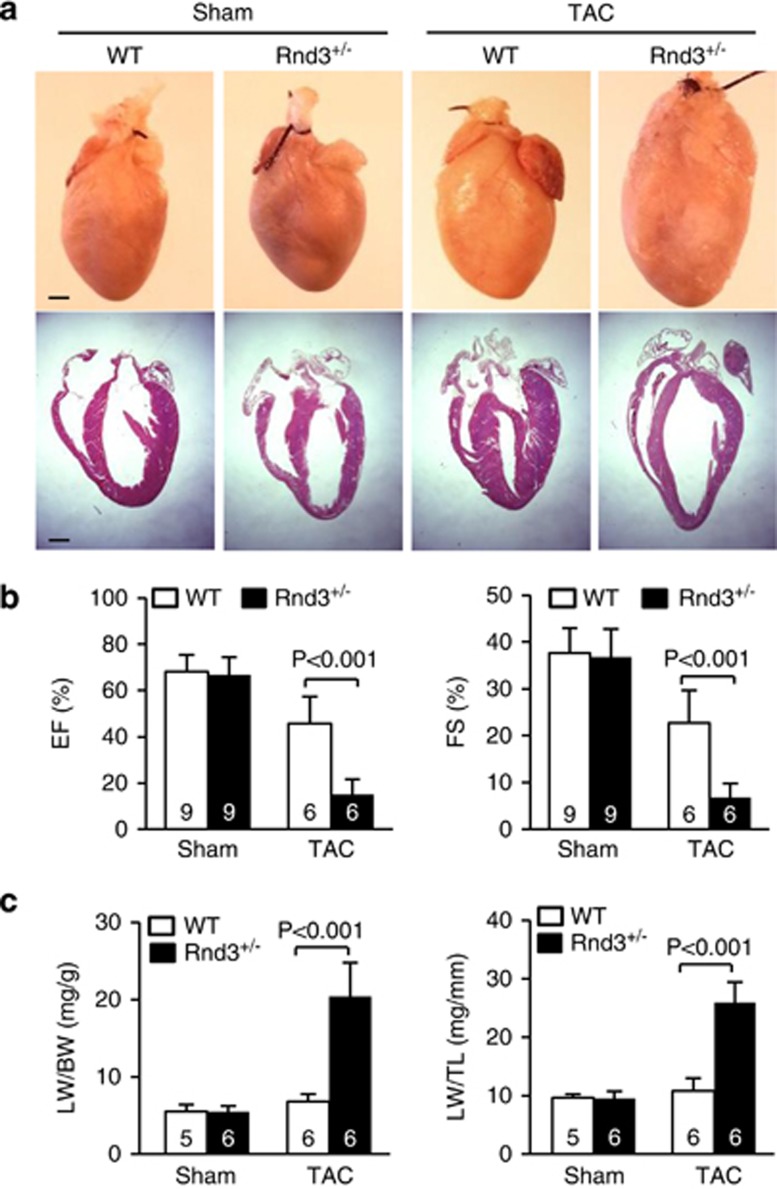
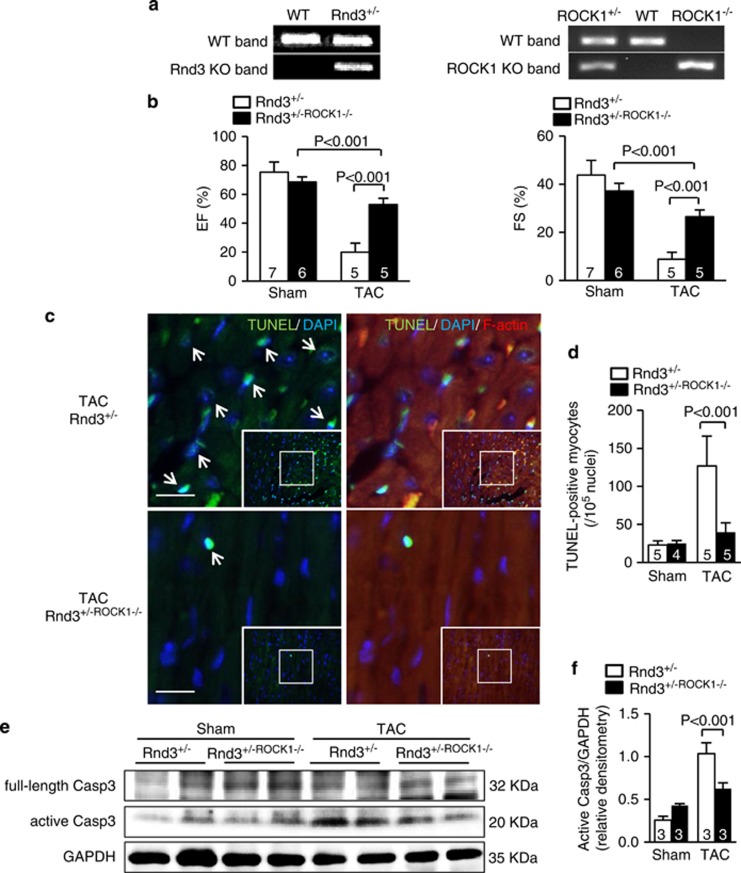
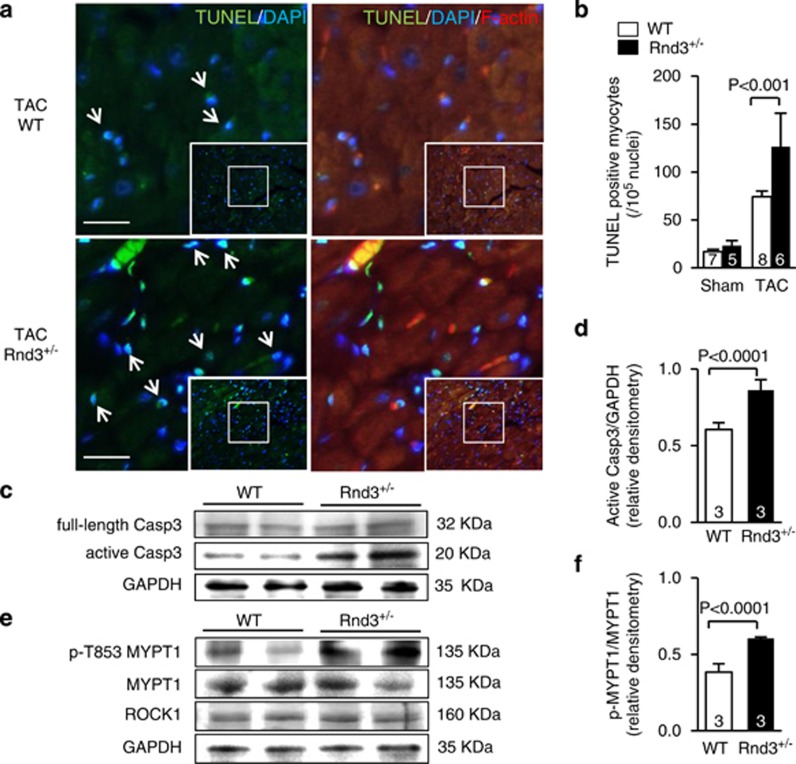
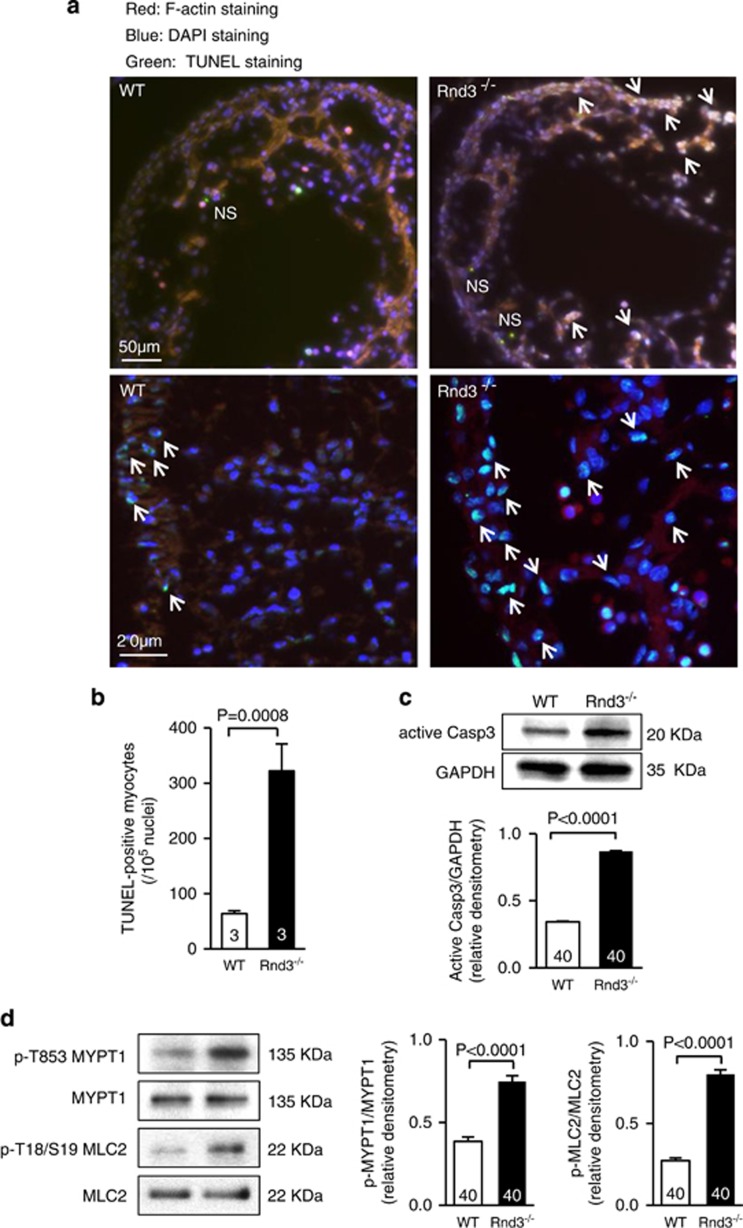
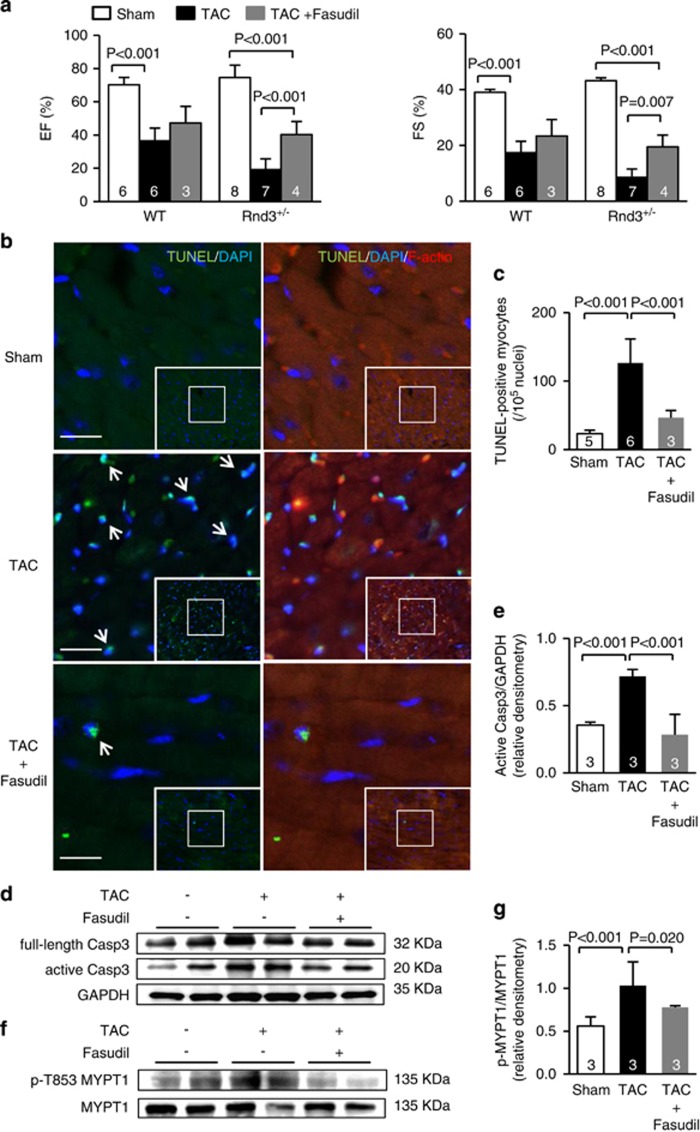
Rho family guanosine triphosphatase (GTPase) 3 (Rnd3), a member of the small Rho GTPase family, has been suggested to regulate cell actin cytoskeleton dynamics, cell migration, and apoptosis through the Rho kinase-dependent signaling pathway. The biological function of Rnd3 in the heart is unknown. The downregulation of small GTPase Rnd3 transcripts was found in patients with end-stage heart failure. The pathological significance of Rnd3 loss in the transition to heart failure remains unexplored. To investigate the functional consequence of Rnd3 downregulation and the associated molecular mechanism, we generated Rnd3(+/-) haploinsufficient mice to mimic the downregulation of Rnd3 observed in the failing human heart. Rnd3(+/-) mice were viable; however, the mice developed heart failure after pressure overload by transverse aortic constriction (TAC). Remarkable apoptosis, increased caspase-3 activity, and elevated Rho kinase activity were detected in the Rnd3(+/-) haploinsufficient animal hearts. Pharmacological inhibition of Rho kinase by fasudil treatment partially improved Rnd3(+/-) mouse cardiac functions and attenuated myocardial apoptosis. To determine if Rho-associated coiled-coil kinase 1 (ROCK1) was responsible for Rnd3 deficiency-mediated apoptotic cardiomyopathy, we established a double-knockout mouse line, the Rnd3 haploinsufficient mice with ROCK1-null background (Rnd3(+/-/ROCK1-/-)). Again, genetic deletion of ROCK1 partially but not completely rescued Rnd3 deficiency-mediated heart failure phenotype. These data suggest that downregulation of Rnd3 correlates with cardiac loss of function as in heart failure patients. Animals with Rnd3 haploinsufficiency are predisposed to hemodynamic stress. Hyperactivation of Rho kinase activity is responsible in part for the apoptotic cardiomyopathy development. Further investigation of ROCK1-independent mechanisms in Rnd3-mediated cardiac remodeling should be the focus for future study.
Rho家族鸟苷三磷酸酶(GTP酶)3(Rnd3)是小Rho GTP酶家族的成员之一,有人提出它可通过Rho激酶依赖性信号通路调节细胞肌动蛋白细胞骨架动力学、细胞迁移和细胞凋亡。Rnd3在心脏中的生物学功能尚不清楚。在终末期心力衰竭患者中发现小GTP酶Rnd3转录本下调。Rnd3缺失在向心力衰竭转变过程中的病理意义仍未得到探索。为了研究Rnd3下调的功能后果及相关分子机制,我们构建了Rnd3(+/-)单倍体不足小鼠,以模拟在衰竭人类心脏中观察到的Rnd3下调情况。Rnd3(+/-)小鼠能够存活;然而,在经主动脉缩窄(TAC)造成压力过载后,这些小鼠出现了心力衰竭。在Rnd3(+/-)单倍体不足动物的心脏中检测到明显的细胞凋亡、半胱天冬酶-3活性增加以及Rho激酶活性升高。用法舒地尔治疗对Rho激酶进行药理抑制可部分改善Rnd3(+/-)小鼠的心功能,并减轻心肌细胞凋亡。为了确定Rho相关卷曲螺旋激酶1(ROCK1)是否是Rnd3缺乏介导的凋亡性心肌病的原因,我们建立了一个双敲除小鼠品系,即具有ROCK1基因敲除背景的Rnd3单倍体不足小鼠(Rnd3(+/-/ROCK1-/-))。同样,ROCK1的基因缺失部分但未完全挽救Rnd3缺乏介导的心力衰竭表型。这些数据表明,Rnd3下调与心力衰竭患者心脏功能丧失相关。Rnd3单倍体不足的动物易受血流动力学应激影响。Rho激酶活性的过度激活部分导致了凋亡性心肌病的发展。未来研究的重点应该是进一步研究Rnd3介导的心脏重塑中与ROCK1无关的机制。