Department of Molecular Virology, Immunology and Medical Genetics, The Ohio State University Wexner Medical Center, Columbus, OH 43210, USA.
Cancers (Basel). 2014 Jun 4;6(2):1208-19. doi: 10.3390/cancers6021208.
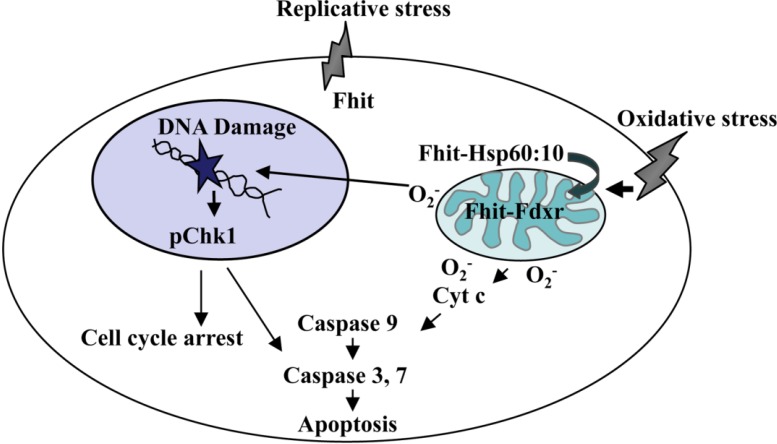
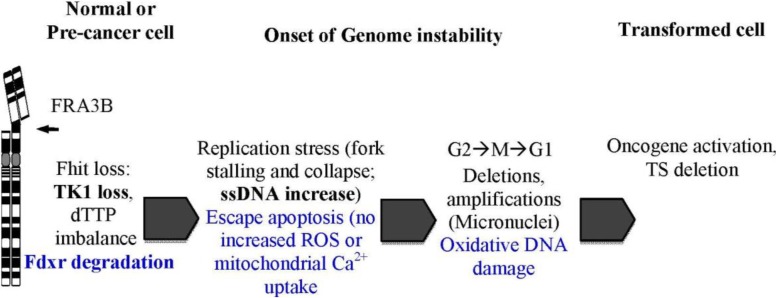
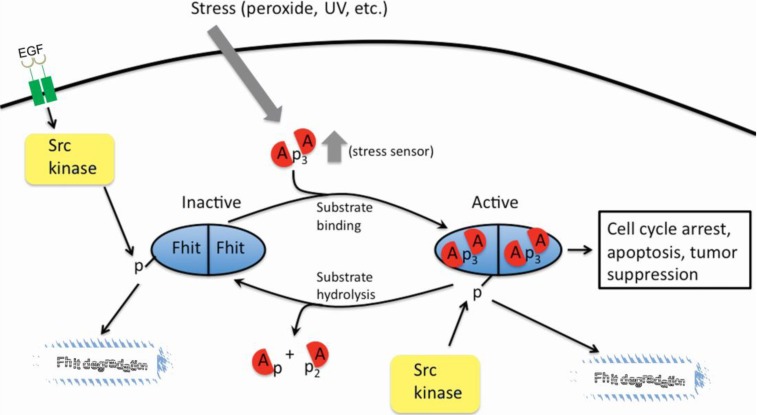
The fragile FHIT gene, encompassing the chromosomal fragile site FRA3B, is an early target of DNA damage in precancerous cells. While vulnerable to DNA damage itself, FHIT protein expression is essential to protect from DNA damage-induced cancer initiation and progression by modulating genome stability, oxidative stress and levels of accumulating DNA damage. Thus, FHIT, whose expression is lost or reduced in many human cancers, is a tumor suppressor and genome caretaker whose loss initiates genome instability in preneoplastic lesions. Ongoing studies are seeking more detailed understanding of the role of FHIT in the cellular response to oxidative damage. This review discusses the relationship between FHIT, reactive oxygen species production, and DNA damage in the context of cancer initiation and progression.
脆性 FHIT 基因包含染色体脆性位点 FRA3B,是癌前细胞中 DNA 损伤的早期靶点。FHIT 蛋白表达对于保护细胞免受 DNA 损伤诱导的癌症发生和进展至关重要,因为它可以调节基因组稳定性、氧化应激和积累的 DNA 损伤水平。因此,FHIT 的表达在许多人类癌症中丢失或减少,它是一种肿瘤抑制因子和基因组守护者,其缺失会导致癌前病变中的基因组不稳定。目前正在进行的研究旨在更详细地了解 FHIT 在细胞对氧化损伤的反应中的作用。本综述讨论了 FHIT、活性氧产生和 DNA 损伤在癌症发生和进展中的关系。