Xing Hai, Wang Deyou, Han Fenglu, Sullivan Corwin, Ma Qingyu, He Yiming, Hone David W E, Yan Ronghao, Du Fuming, Xu Xing
College of Earth Sciences and Resources, China University of Geosciences, Beijing, China; Key Laboratory of Vertebrate Evolution and Human Origins of Chinese Academy of Sciences, Institute of Vertebrate Paleontology and Paleoanthropology, Chinese Academy of Sciences, Beijing, China; Paleobiology, Canadian Museum of Nature, Ottawa, Ontario, Canada.
Henan Academy of Land and Resources Sciences, Zhengzhou, Henan, China.
PLoS One. 2014 Jun 5;9(6):e98821. doi: 10.1371/journal.pone.0098821. eCollection 2014.
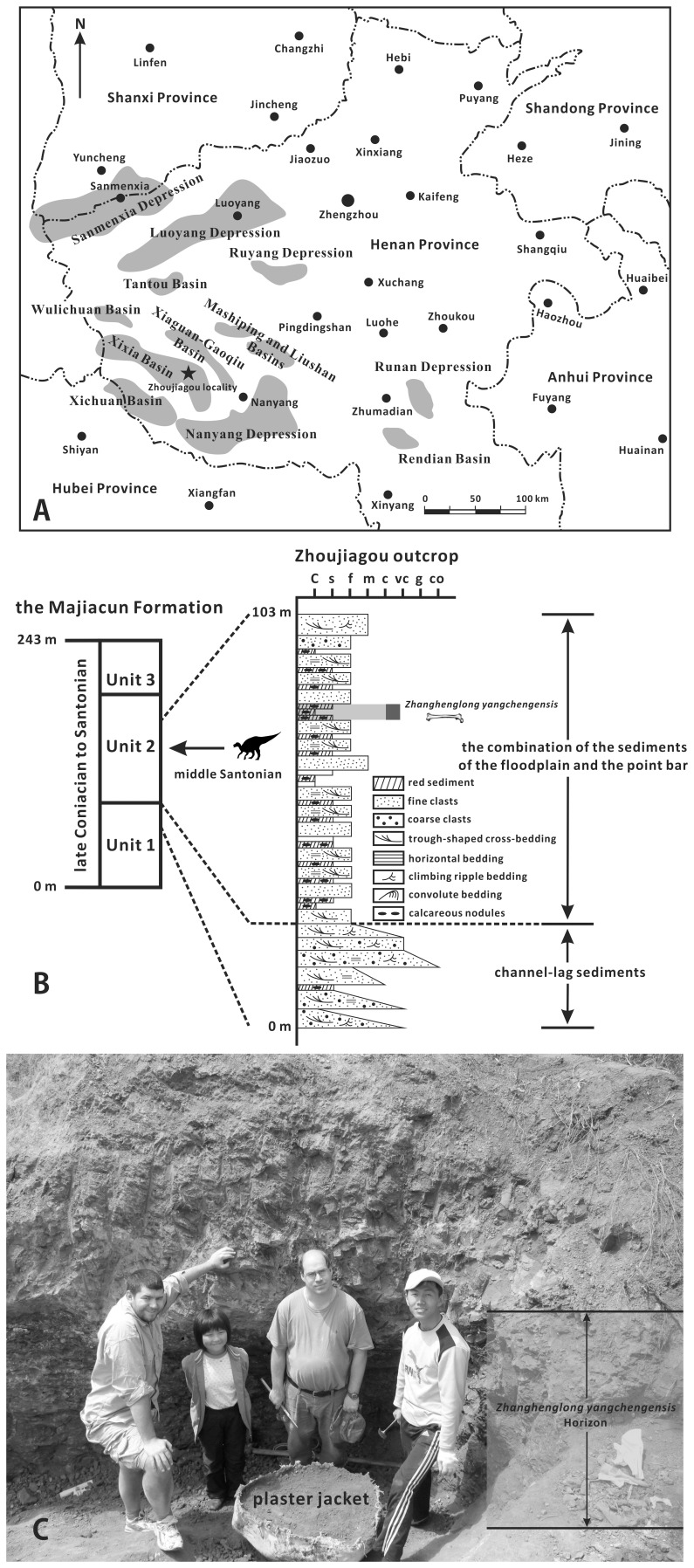
Southwestern Henan Province in central China contains many down-faulted basins, including the Xixia Basin where the Upper Cretaceous continental sediments are well exposed. The Majiacun Formation is a major dinosaur-bearing stratigraphic unit that occurs in this basin.
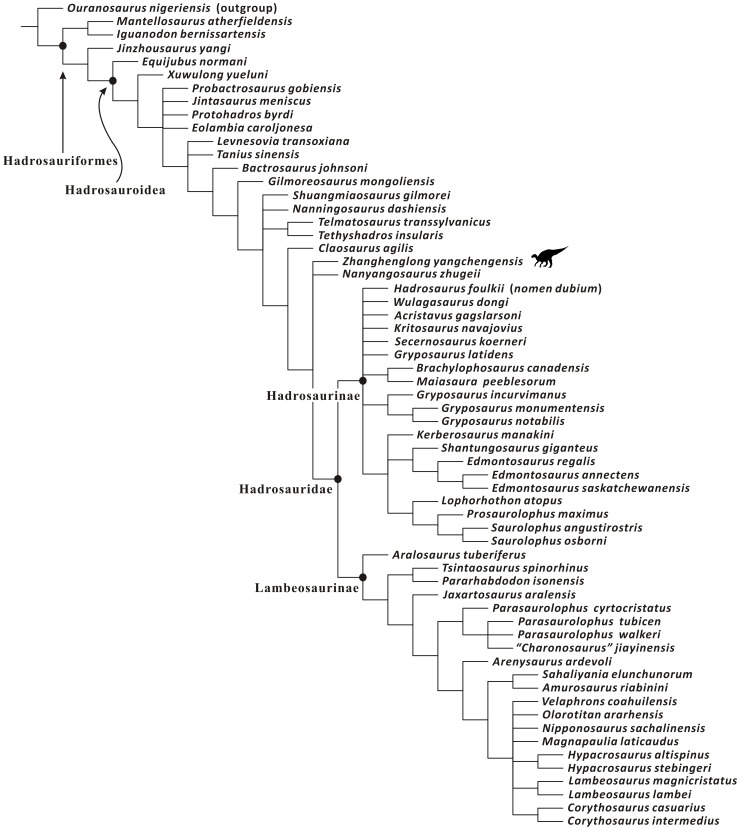
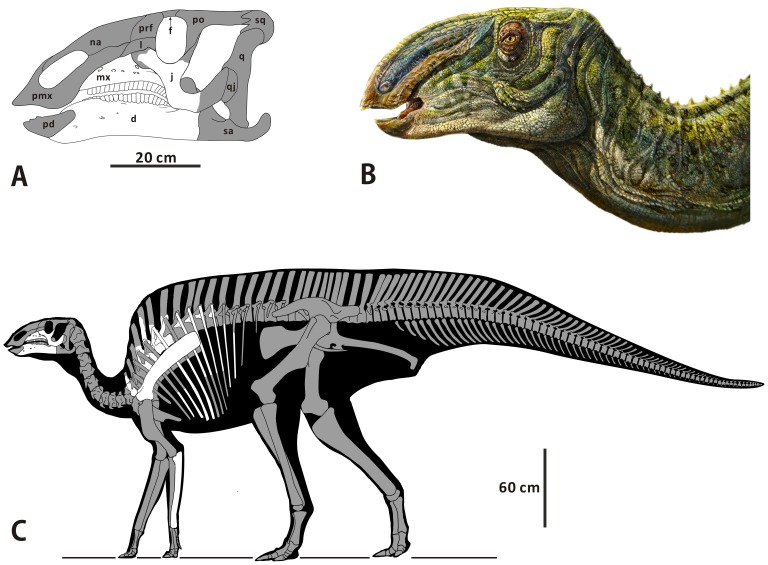
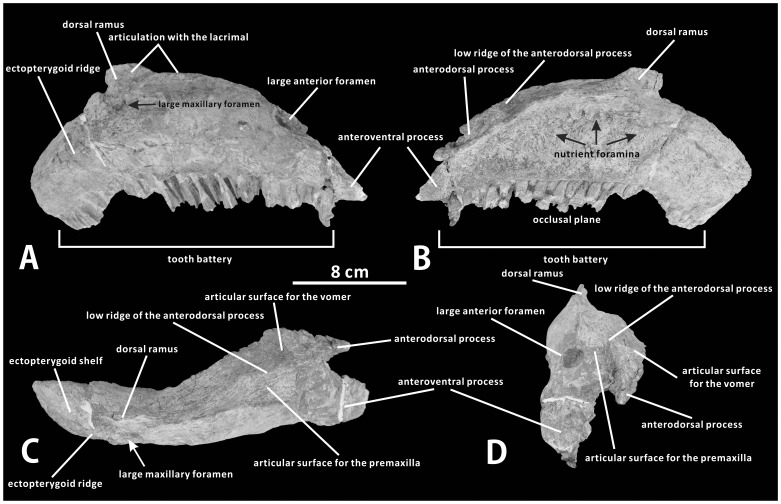
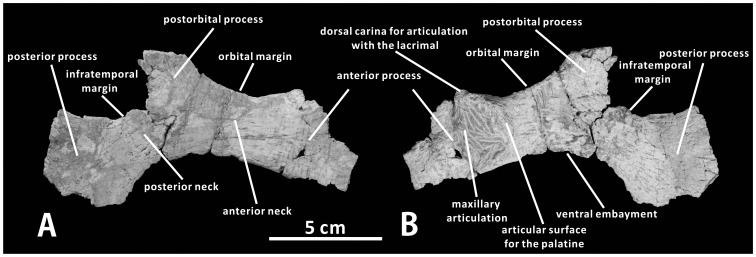
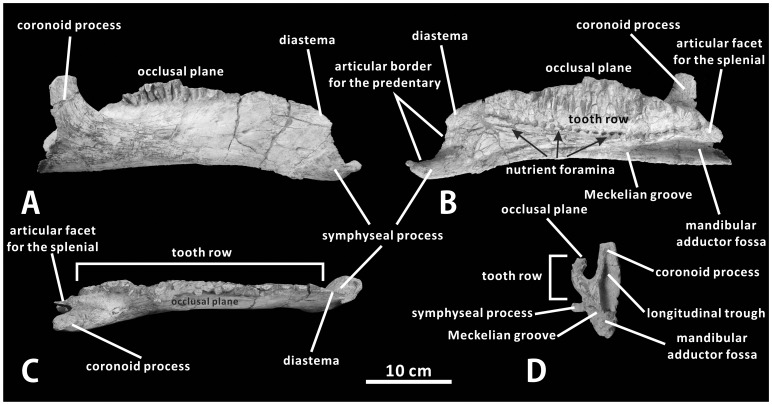
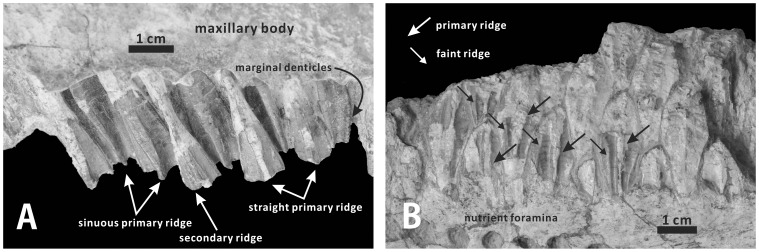
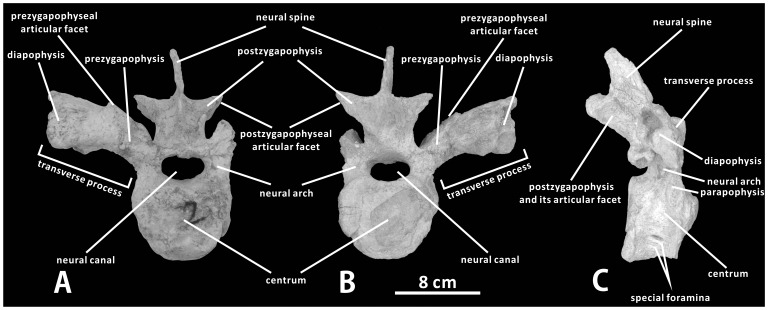
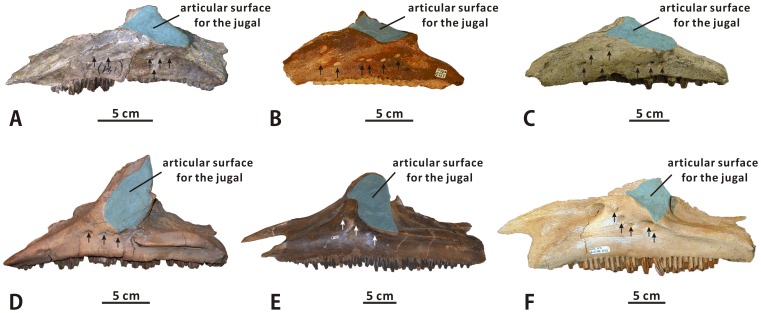
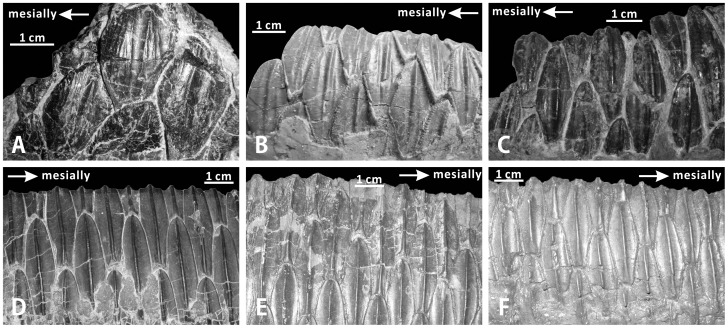
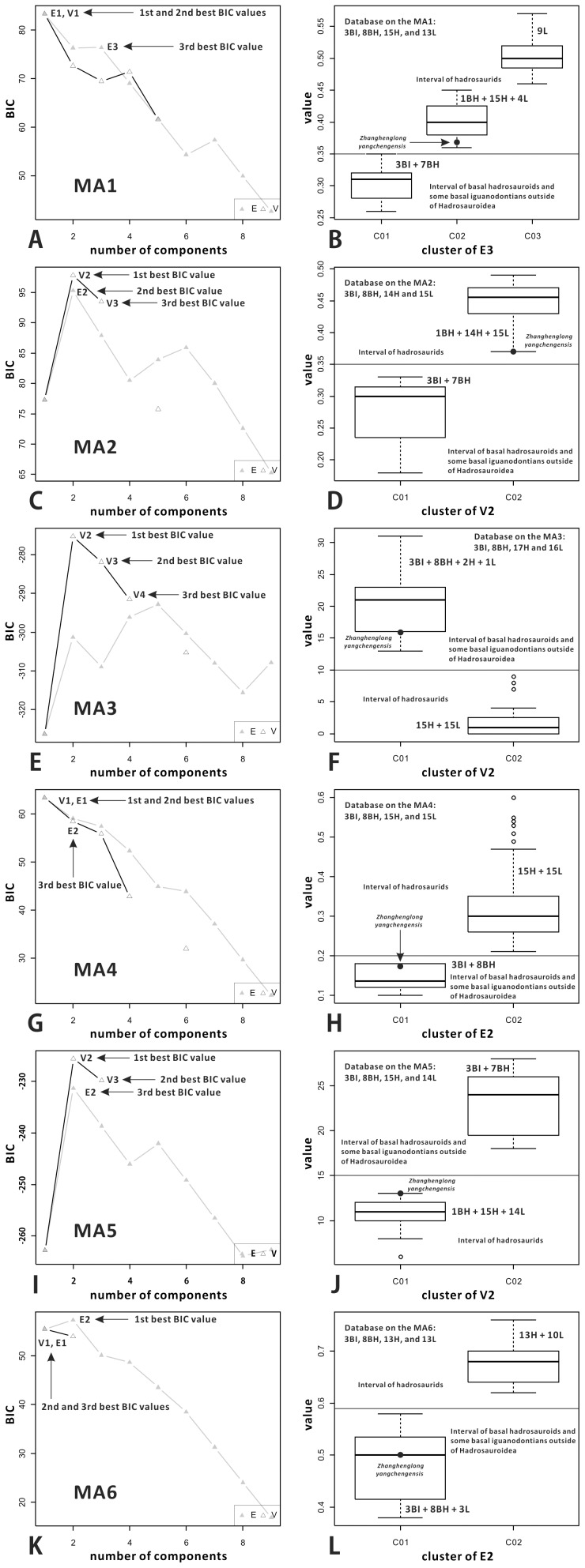
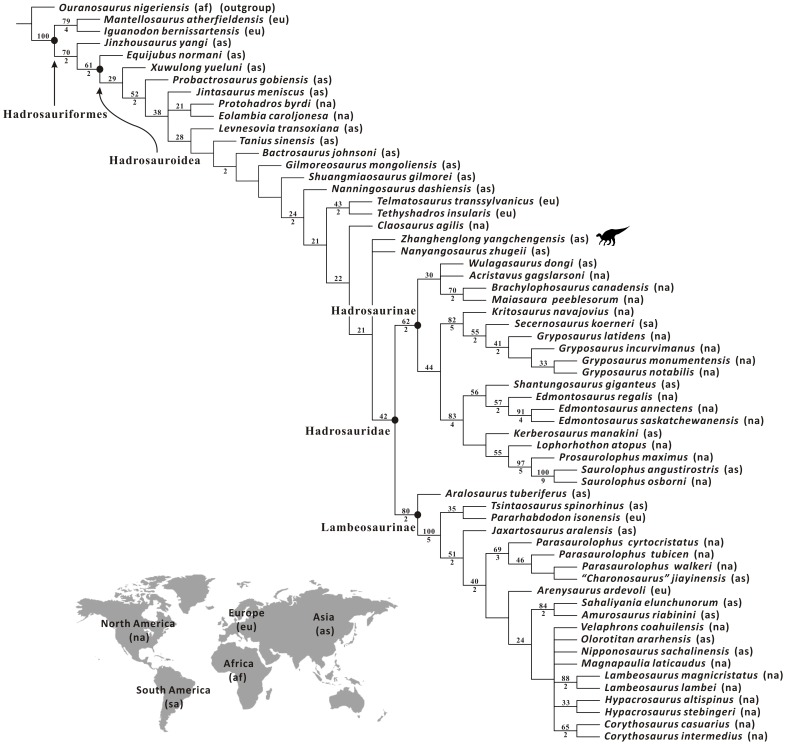
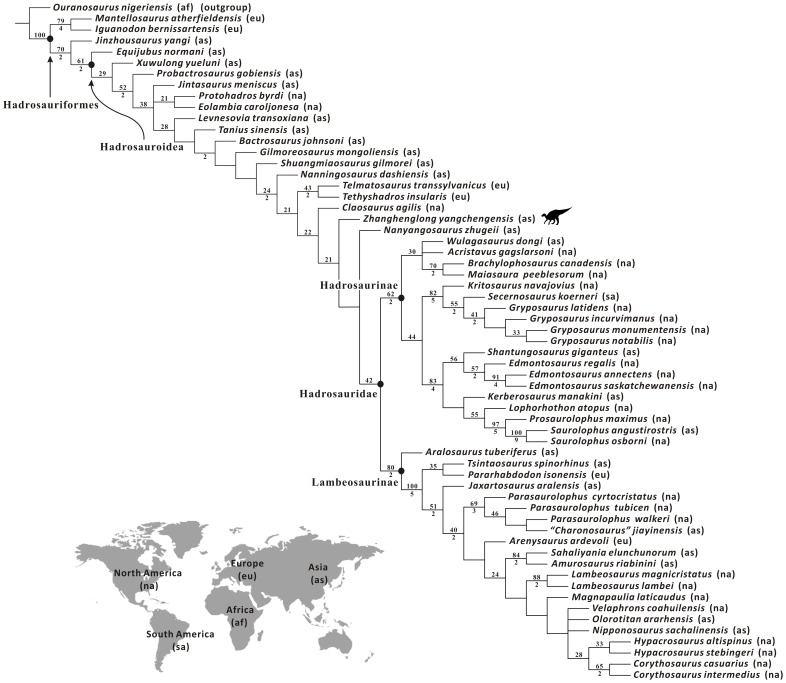
METHODOLOGY/PRINCIPAL FINDINGS: A new basal hadrosauroid dinosaur, Zhanghenglong yangchengensis gen. et sp. nov., is named based on newly collected specimens from the middle Santonian Majiacun Formation of Zhoujiagou Village, Xixia Basin. Two transitional features between basal hadrosauroids and hadrosaurids are attached to the diagnosis of the new taxon, namely five maxillary foramina consisting of four small scattered ones anteroposteriorly arranged in a row and a large one adjacent to the articular facet for the jugal, and dentary tooth crowns bearing both median and distally offset primary ridges. Zhanghenglong also displays a unique combination of plesiomorphic and derived features of hadrosauroids, and is clearly morphologically transitional between basal hadrosauroids and hadrosaurids. Furthermore, some measurement attributes in osteology are applied to the quantitative analysis of Zhanghenglong. For these attributes, the partition of the dataset on most hadrosauroid species resulting from model-based cluster analysis almost matches taxonomic separation between basal hadrosauroids and hadrosaurids. Data of Zhanghenglong on selected measurement attributes straddle the two combinations of intervals of partitioned datasets respectively related to basal hadrosauroids and hadrosaurids. This condition is similar to mosaic evolution of morphological characters present in the specimens of the taxon. The phylogenetic analysis of Hadrosauroidea recovers a clade composed of Zhanghenglong, Nanyangosaurus, and Hadrosauridae with an unresolved polytomy.
CONCLUSIONS/SIGNIFICANCE: Zhanghenglong is probably a relatively derived non-hadrosaurid hadrosauroid, based on the inferences made from the morphological comparisons, quantitative evaluation of measurements, and cladistic analysis. In combination with information on the stratigraphy, phylogeny and biogeography, the material of Zhanghenglong provides direct evidence for the hypothesis that hadrosaurids might have originated in Asia.
中国中部的豫西南地区有许多断陷盆地,包括上白垩统陆相沉积物出露良好的西峡盆地。马家村组是该盆地中一个主要的含恐龙地层单元。
方法/主要发现:基于从西峡盆地周家沟村晚桑托阶马家村组新采集的标本,命名了一种新的基干鸭嘴龙超科恐龙,即杨氏张衡龙(Zhanghenglong yangchengensis)。新分类单元的诊断依据两个基干鸭嘴龙超科与鸭嘴龙科之间的过渡特征,即上颌骨有五个孔,其中四个小的孔前后排成一排且分散分布,一个大孔与颧骨的关节面相邻,以及齿骨齿冠上既有中央脊又有向远端偏移的初级脊。张衡龙还展现出基干鸭嘴龙超科的原始特征与衍生特征的独特组合,在形态上明显是基干鸭嘴龙超科与鸭嘴龙科之间的过渡类型。此外,一些骨骼学测量属性被应用于对张衡龙的定量分析。对于这些属性,基于模型的聚类分析对大多数鸭嘴龙超科物种的数据集划分几乎与基干鸭嘴龙超科和鸭嘴龙科之间的分类学划分相匹配。张衡龙在选定测量属性上的数据分别跨越了与基干鸭嘴龙超科和鸭嘴龙科相关的划分数据集区间的两种组合。这种情况类似于该分类单元标本中形态特征的镶嵌进化。鸭嘴龙超科的系统发育分析恢复了一个由张衡龙、南阳龙和鸭嘴龙科组成的分支,其中存在一个未解决的多歧分支。
结论/意义:基于形态比较、测量的定量评估和分支系统分析得出的推论,张衡龙可能是一种相对衍生的非鸭嘴龙科鸭嘴龙超科恐龙。结合地层学、系统发育和生物地理学信息,张衡龙的材料为鸭嘴龙科可能起源于亚洲这一假说提供了直接证据。