Wang Hua, Zhang Huaidong, Zou Yi, Mi Yanling, Lin Shuangjun, Xie Zhixiong, Yan Yunjun, Zhang Houjin
Key Laboratory of Molecular Biophysics, Ministry of Education, Wuhan, Hubei, China; Department of Biotechnology, College of Life Science and Technology, Huazhong University of Science and Technology, Wuhan, Hubei, China.
State Key Laboratory of Microbial Metabolism, School of Life Sciences & Biotechnology, Shanghai Jiao Tong University, Shanghai, China.
PLoS One. 2014 Jun 5;9(6):e97996. doi: 10.1371/journal.pone.0097996. eCollection 2014.
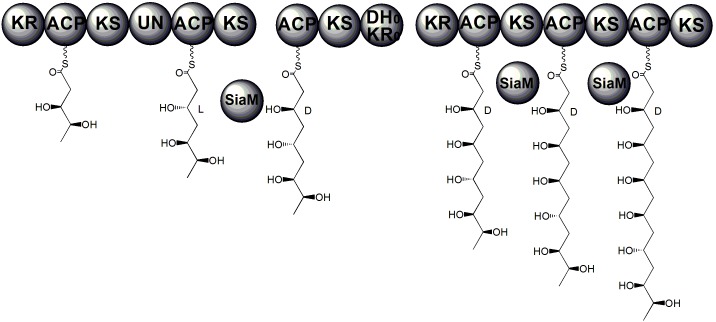
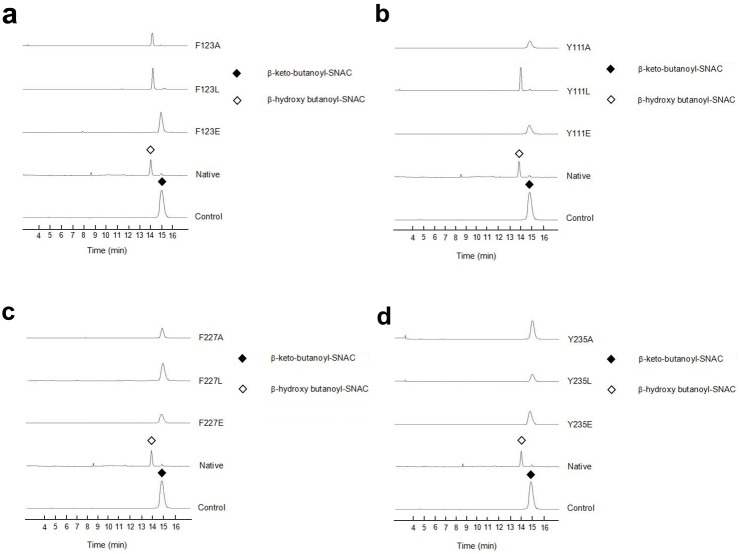
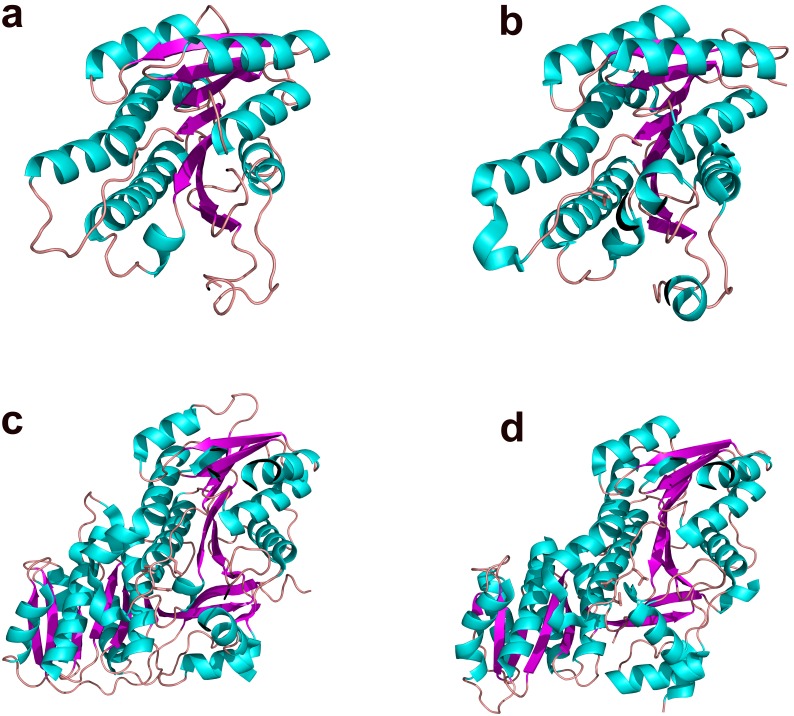
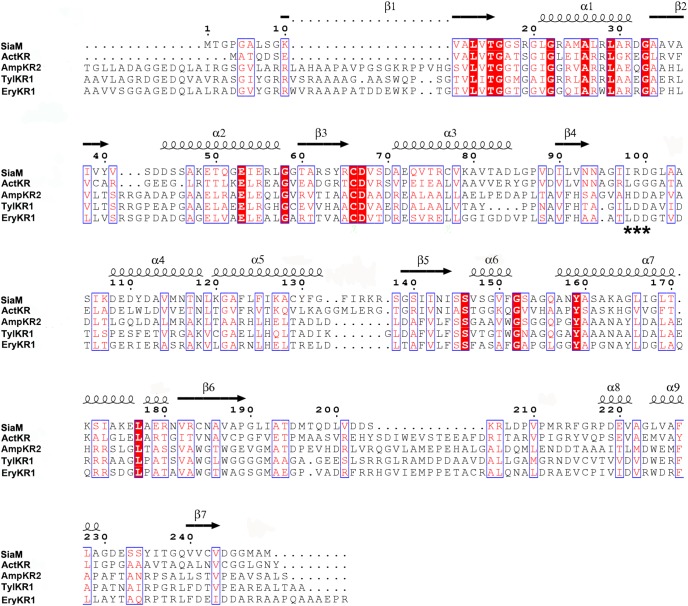
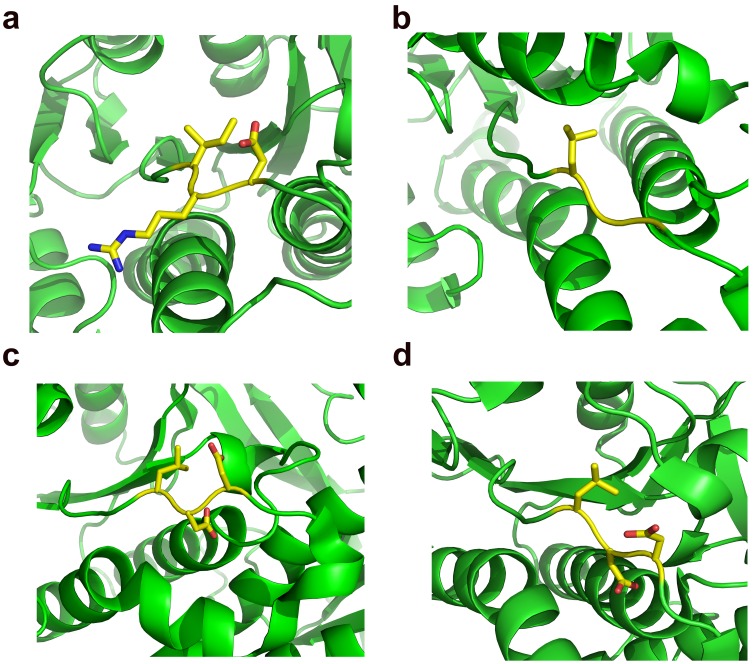
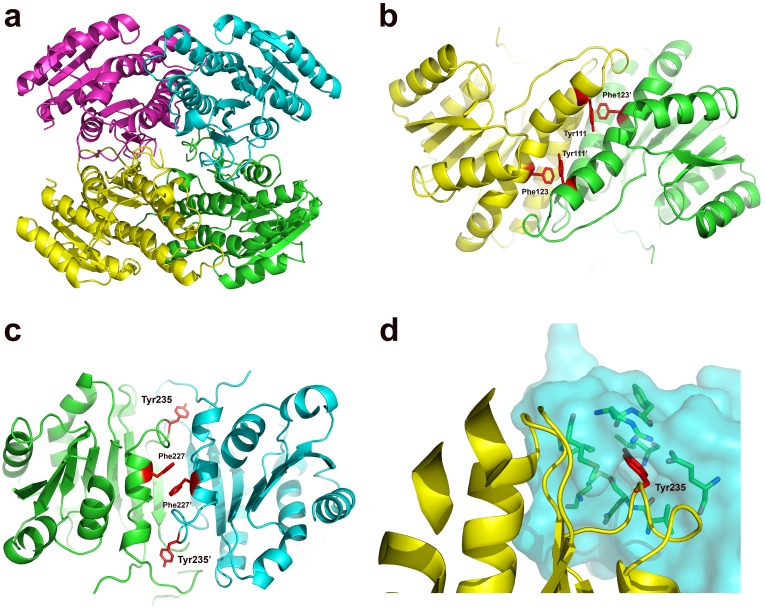
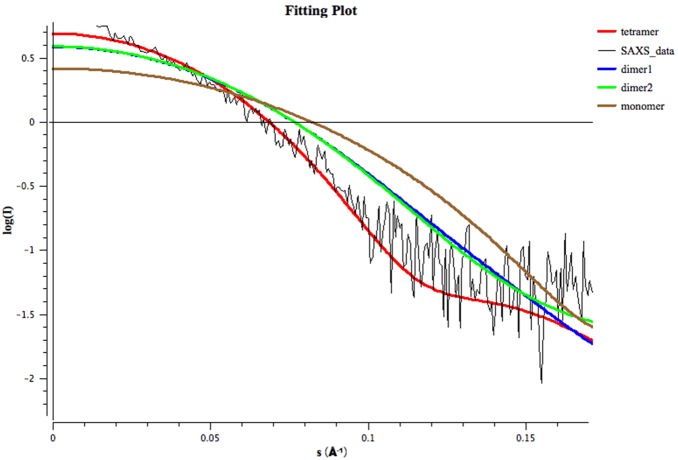
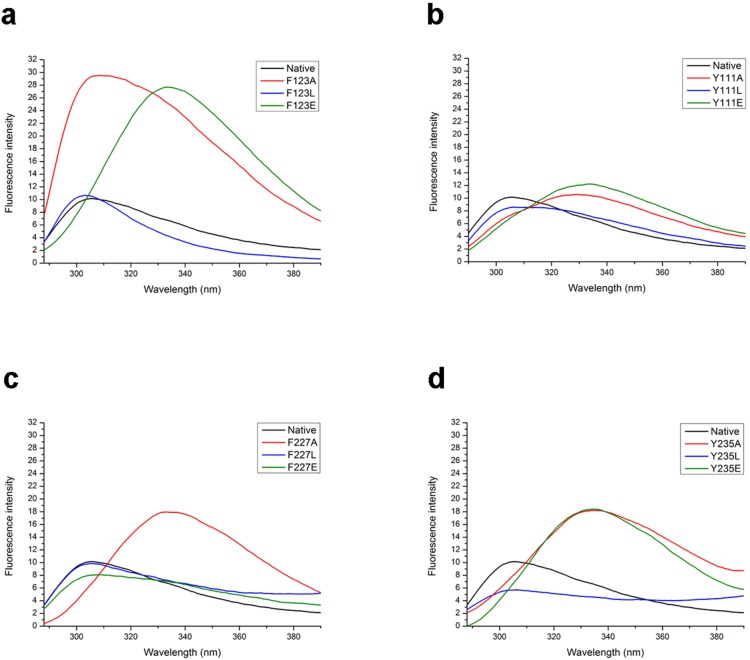
In the biosynthesis of polyketides, ketoreductases (KRs) are an important group of enzymes that determine the chiralities of the carbon backbones. SiaM is a special member of this group that can recognize substrates with different lengths and can be used iteratively. Here we report the crystal structure of SiaM. Structural analysis indicates that the overall structure resembles those of other KRs. However, significant disparity can be found in the conserved LDD motif that is replaced with IRD motif in SiaM. The isoleucine and aspartic acid residues take similar orientations as leucine and aspartic acid in the conserved LDD motif, while the arginine residue points out towards the solvent. PISA analysis shows that SiaM forms a tetramer. Several aromatic residues are found in the interfaces, which have aromatic stacking interactions with the aromatic residues in the neighboring protomers. Mutagenesis studies performed on the aromatic residues show that these sites are important for maintaining the structural integrity of SiaM. However, the aromatic residues contribute differently to the enzymatic activity. In the N-terminal interface, the aromatic residues can be replaced with leucine without affecting the enzymatic activity while, in the other interface, such mutations abolish the enzymatic activity.
在聚酮化合物的生物合成中,酮还原酶(KRs)是决定碳骨架手性的重要酶类。SiaM是该酶类中的一个特殊成员,它能够识别不同长度的底物并且可以迭代使用。在此,我们报道了SiaM的晶体结构。结构分析表明,其整体结构与其他KRs相似。然而,在保守的LDD基序中发现了显著差异,在SiaM中该基序被IRD基序取代。异亮氨酸和天冬氨酸残基在保守的LDD基序中与亮氨酸和天冬氨酸具有相似的取向,而精氨酸残基则指向溶剂。PISA分析表明SiaM形成四聚体。在界面处发现了几个芳香族残基,它们与相邻原体中的芳香族残基存在芳香堆积相互作用。对芳香族残基进行的诱变研究表明,这些位点对于维持SiaM的结构完整性很重要。然而,芳香族残基对酶活性的贡献不同。在N端界面,芳香族残基可以被亮氨酸取代而不影响酶活性,而在另一个界面,此类突变会消除酶活性。