Steinbrunn Torsten, Chatterjee Manik, Bargou Ralf C, Stühmer Thorsten
Department of Internal Medicine II, Division of Hematology and Oncology, University Hospital of Würzburg, Würzburg, Germany.
Comprehensive Cancer Center Mainfranken, University Hospital of Würzburg, Würzburg, Germany.
PLoS One. 2014 Jun 5;9(6):e97443. doi: 10.1371/journal.pone.0097443. eCollection 2014.
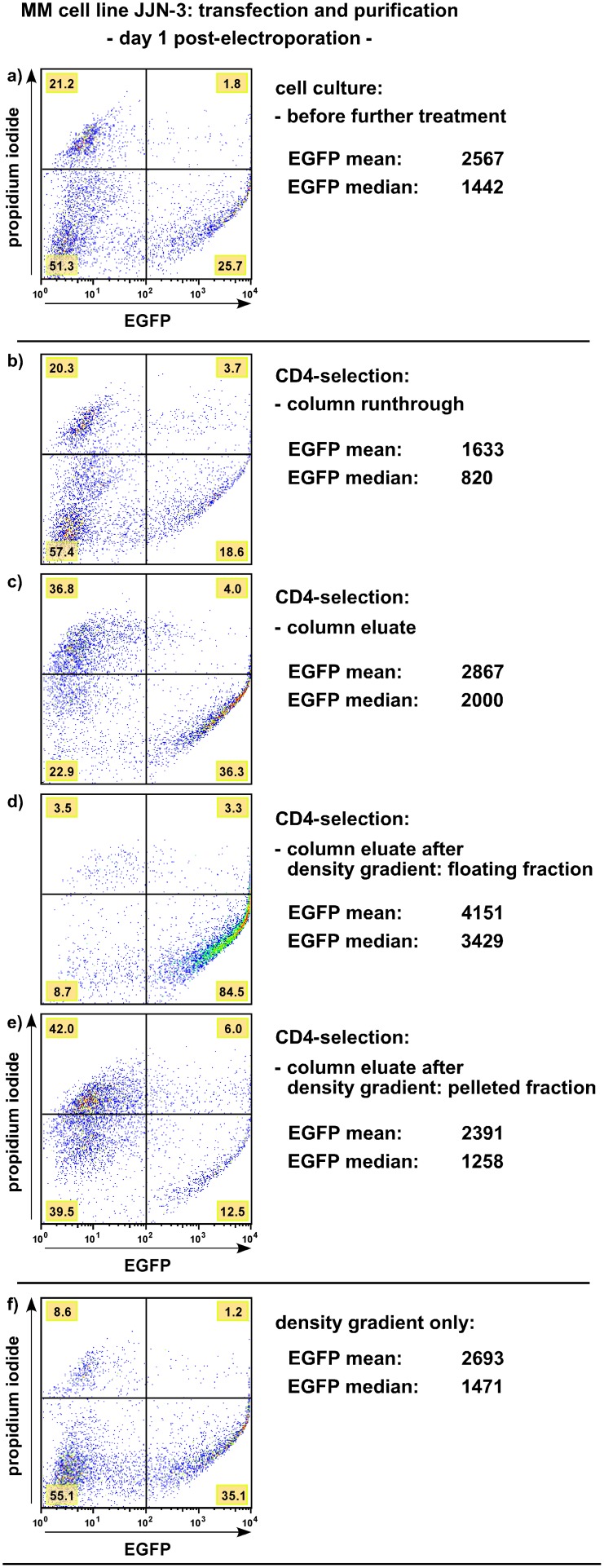
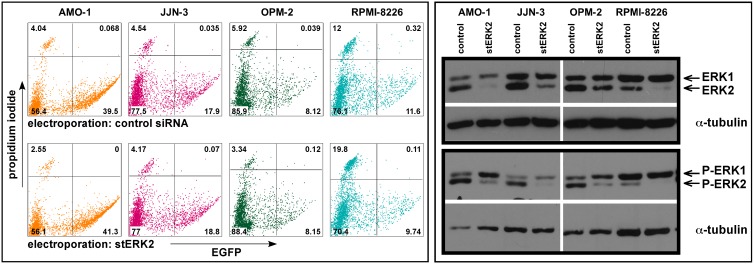
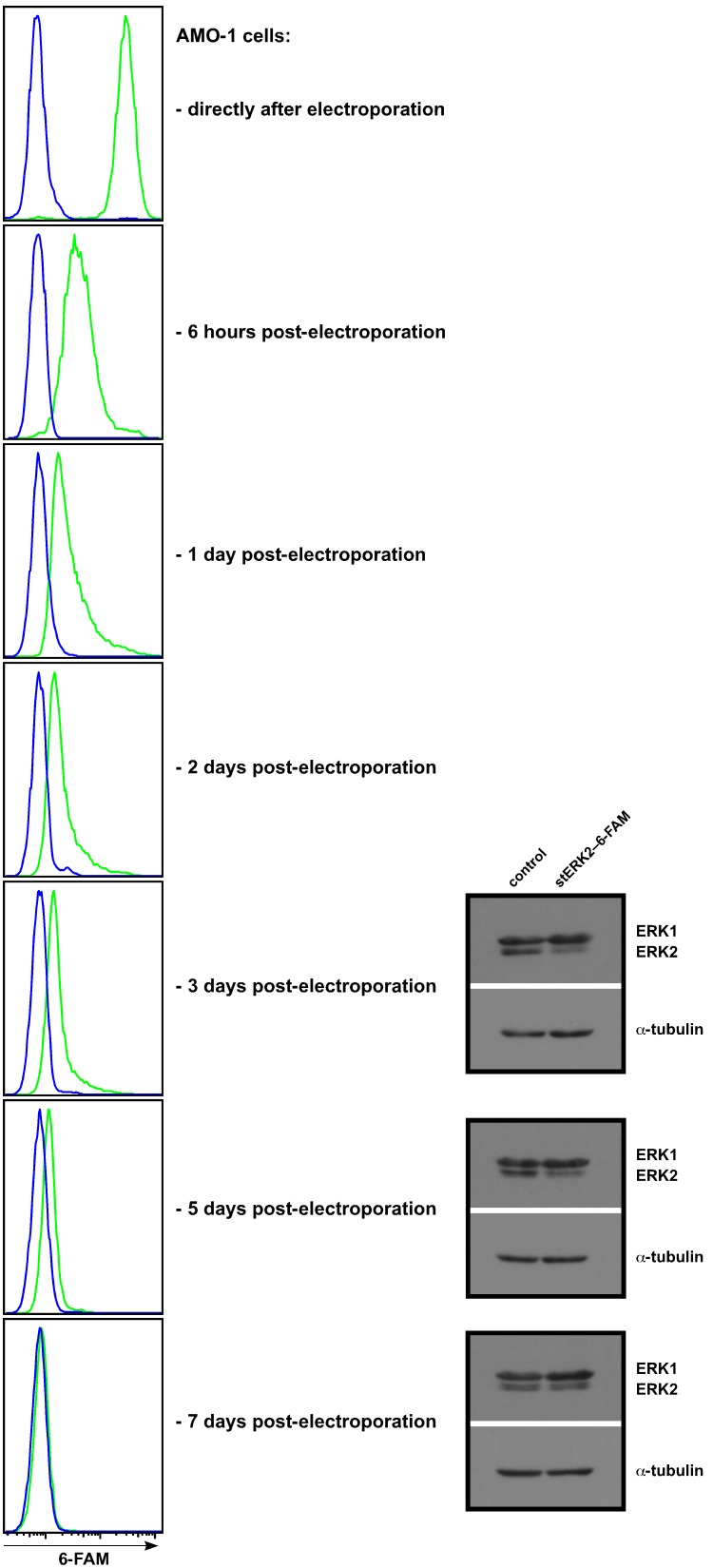
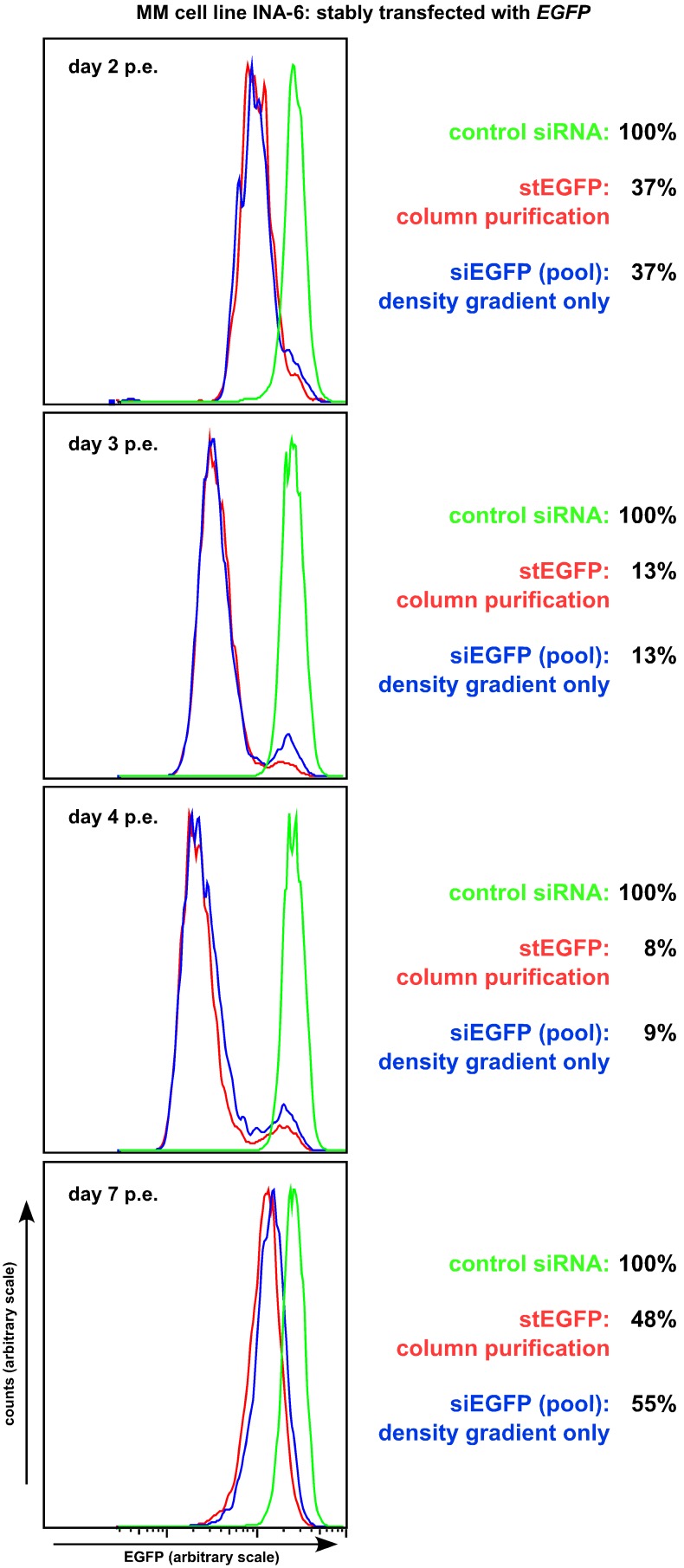
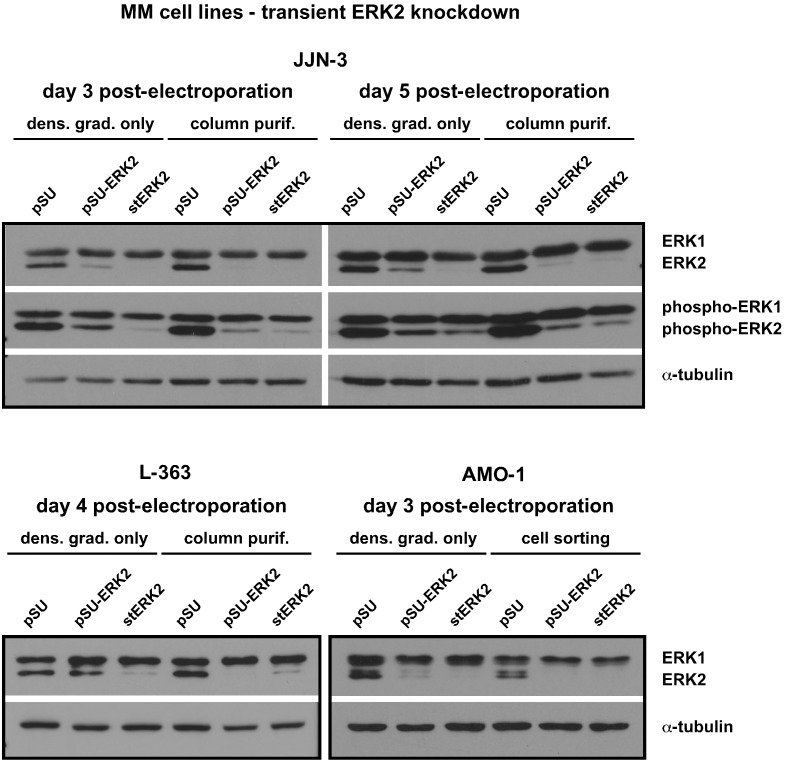
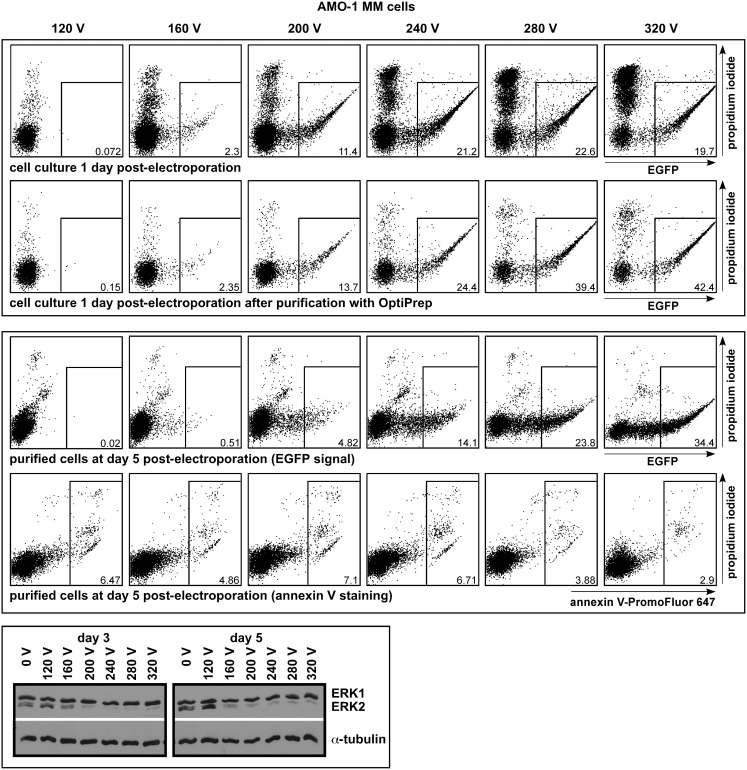
Cell lines represent the everyday workhorses for in vitro research on multiple myeloma (MM) and are regularly employed in all aspects of molecular and pharmacological investigations. Although loss-of-function studies using RNA interference in MM cell lines depend on successful knockdown, no well-established and widely applied protocol for efficient transient transfection has so far emerged. Here, we provide an appraisal of electroporation as a means to introduce either short-hairpin RNA expression vectors or synthesised siRNAs into MM cells. We found that electroporation using siRNAs was much more efficient than previously anticipated on the basis of transfection efficiencies deduced from EGFP-expression off protein expression vectors. Such knowledge can even confidently be exploited in "hard-to-transfect" MM cell lines to generate large numbers of transient knockdown phenotype MM cells. In addition, special attention was given to developing a protocol that provides easy implementation, good reproducibility and manageable experimental costs.
细胞系是多发性骨髓瘤(MM)体外研究的常用工具,常用于分子和药理学研究的各个方面。尽管在MM细胞系中使用RNA干扰进行功能丧失研究依赖于成功的敲低,但目前尚未出现成熟且广泛应用的高效瞬时转染方案。在此,我们评估了电穿孔作为将短发夹RNA表达载体或合成的小干扰RNA(siRNA)导入MM细胞的一种方法。我们发现,基于从蛋白质表达载体的EGFP表达推导的转染效率,使用siRNA进行电穿孔比之前预期的效率要高得多。这些知识甚至可以可靠地应用于“难转染”的MM细胞系,以产生大量具有瞬时敲低表型的MM细胞。此外,我们特别关注开发一种易于实施、具有良好可重复性且实验成本可控的方案。