Department of Neurology, Neuroregeneration Research Center, University of São Paulo School of Medicine São Paulo, Brazil.
Front Cell Neurosci. 2014 May 26;8:148. doi: 10.3389/fncel.2014.00148. eCollection 2014.
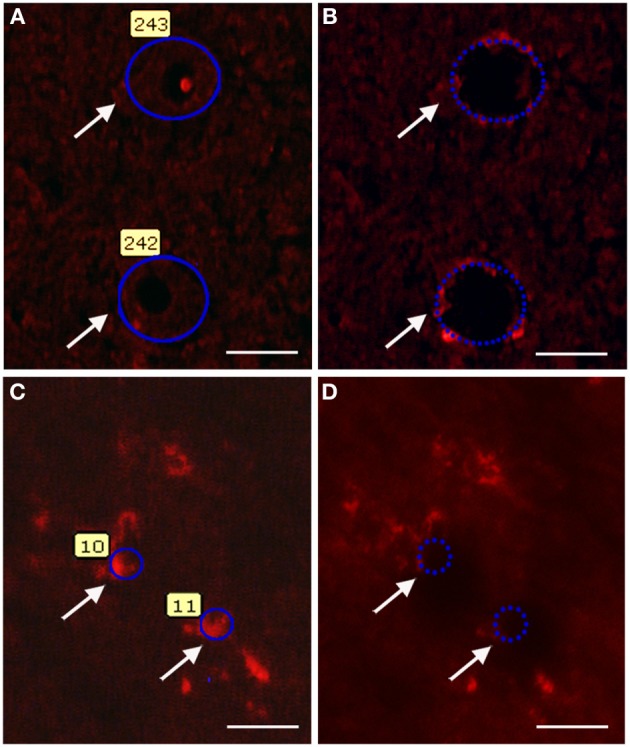
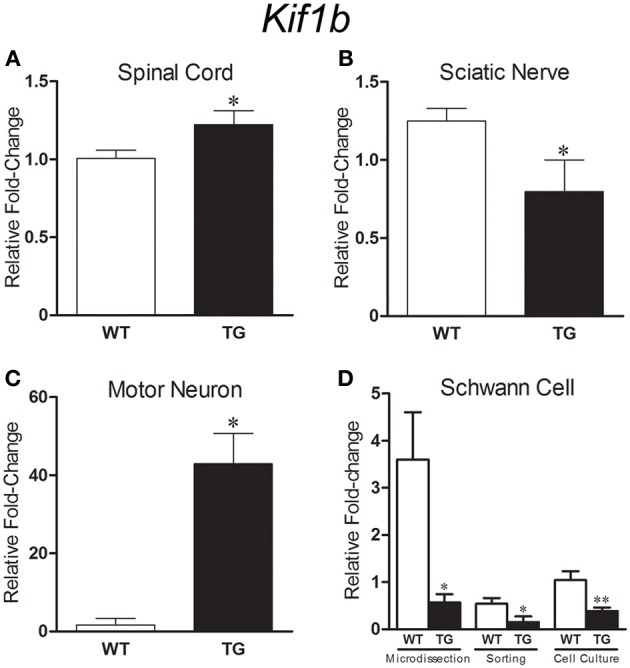
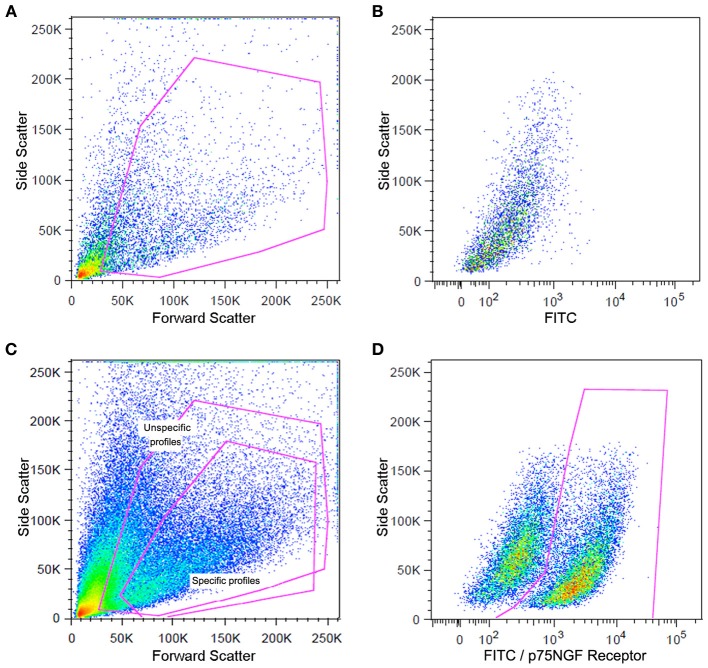
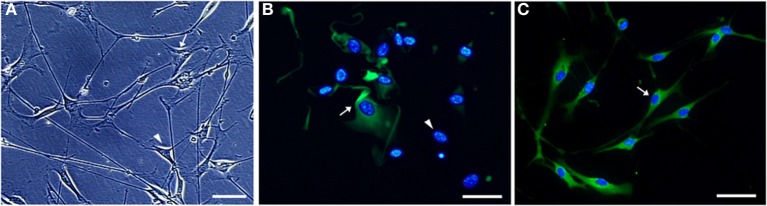
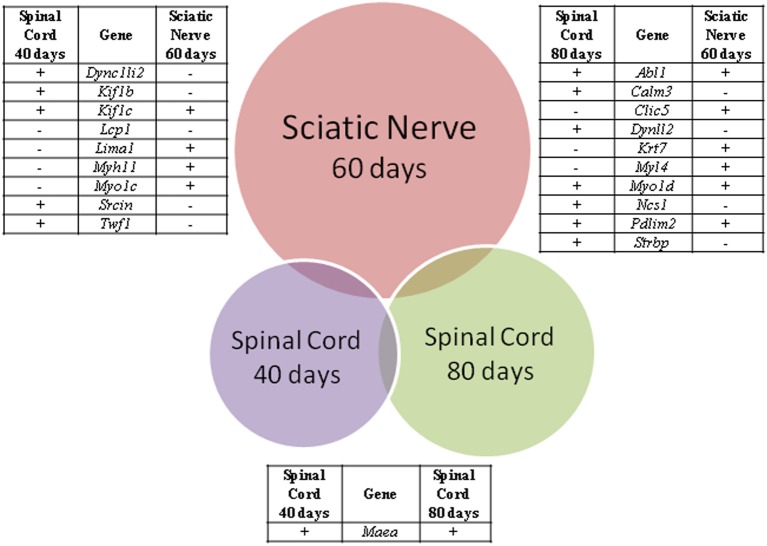
Early molecular events related to cytoskeleton are poorly described in Amyotrophic Lateral Sclerosis (ALS), especially in the Schwann cell (SC), which offers strong trophic support to motor neurons. Database for Annotation, Visualization and Integrated Discovery (DAVID) tool identified cytoskeleton-related genes by employing the Cellular Component Ontology (CCO) in a large gene profiling of lumbar spinal cord and sciatic nerve of presymptomatic SOD1(G93A) mice. One and five CCO terms related to cytoskeleton were described from the spinal cord deregulated genes of 40 days (actin cytoskeleton) and 80 days (microtubule cytoskeleton, cytoskeleton part, actin cytoskeleton, neurofilament cytoskeleton, and cytoskeleton) old transgene mice, respectively. Also, four terms were depicted from the deregulated genes of sciatic nerve of 60 days old transgenes (actin cytoskeleton, cytoskeleton part, microtubule cytoskeleton and cytoskeleton). Kif1b was the unique deregulated gene in more than one studied region or presymptomatic age. The expression of Kif1b [quantitative polymerase chain reaction (qPCR)] elevated in the lumbar spinal cord (40 days old) and decreased in the sciatic nerve (60 days old) of presymptomatic ALS mice, results that were in line to microarray findings. Upregulation (24.8 fold) of Kif1b was seen in laser microdissected enriched immunolabeled motor neurons from the spinal cord of 40 days old presymptomatic SOD1(G93A) mice. Furthermore, Kif1b was dowregulated in the sciatic nerve Schwann cells of presymptomatic ALS mice (60 days old) that were enriched by means of cell microdissection (6.35 fold), cell sorting (3.53 fold), and primary culture (2.70 fold) technologies. The gene regulation of cytoskeleton molecules is an important occurrence in motor neurons and Schwann cells in presymptomatic stages of ALS and may be relevant in the dying back mechanisms of neuronal death. Furthermore, a differential regulation of Kif1b in the spinal cord and sciatic nerve cells emerged as key event in ALS.
在肌萎缩侧索硬化症(ALS)中,与细胞骨架相关的早期分子事件描述甚少,尤其是雪旺细胞(Schwann cell,SC),其为运动神经元提供了强大的营养支持。数据库注释、可视化和综合发现(Database for Annotation, Visualization and Integrated Discovery, DAVID)工具使用细胞组成论(Cellular Component Ontology,CCO)在 SOD1(G93A) 小鼠的腰椎脊髓和坐骨神经的大型基因分析中确定了与细胞骨架相关的基因。从 40 天(肌动蛋白细胞骨架)和 80 天(微管细胞骨架、细胞骨架部分、肌动蛋白细胞骨架、神经丝细胞骨架和细胞骨架)龄转基因小鼠的脊髓失调基因中描述了 1 个和 5 个与细胞骨架相关的 CCO 术语。此外,从 60 天龄转基因动物的坐骨神经失调基因中描述了 4 个术语(肌动蛋白细胞骨架、细胞骨架部分、微管细胞骨架和细胞骨架)。在多个研究区域或亚临床前年龄中,Kif1b 是唯一失调的基因。在亚临床前 ALS 小鼠的腰椎脊髓(40 天龄)中,Kif1b 的表达升高[定量聚合酶链反应(qPCR)],而在坐骨神经(60 天龄)中降低,这与微阵列结果一致。在 40 天龄亚临床前 SOD1(G93A) 小鼠的脊髓中用激光微切割富集免疫标记的运动神经元中,Kif1b 的上调(24.8 倍)。此外,在亚临床前 ALS 小鼠的坐骨神经 Schwann 细胞中下调 Kif1b(60 天龄),通过细胞微切割(6.35 倍)、细胞分选(3.53 倍)和原代培养(2.70 倍)技术富集。在 ALS 的亚临床前阶段,运动神经元和 Schwann 细胞中细胞骨架分子的基因调节是一个重要事件,可能与神经元死亡的退行性机制有关。此外,Kif1b 在脊髓和坐骨神经细胞中的差异调节成为 ALS 的关键事件。