Dang Shipeng, Xu Huanbai, Xu Congfeng, Cai Wei, Li Qian, Cheng Yiji, Jin Min, Wang Ru-Xing, Peng Yongde, Zhang Yi, Wu Changping, He Xiaozhou, Wan Bing, Zhang Yanyun
Key Laboratory of Stem Cell Biology; Institute of Health Sciences; Shanghai Institutes for Biological Sciences; Chinese Academy of Sciences and Shanghai Jiao Tong University School of Medicine (SJTUSM); and Shanghai Institute of Immunology; Institutes of Medical Sciences; SJTUSM; Shanghai, China.
Department of Endocrinology and Metabolism; Shanghai Jiao Tong University Affiliated First People's Hospital; Shanghai, China.
Autophagy. 2014 Jul;10(7):1301-15. doi: 10.4161/auto.28771. Epub 2014 May 14.
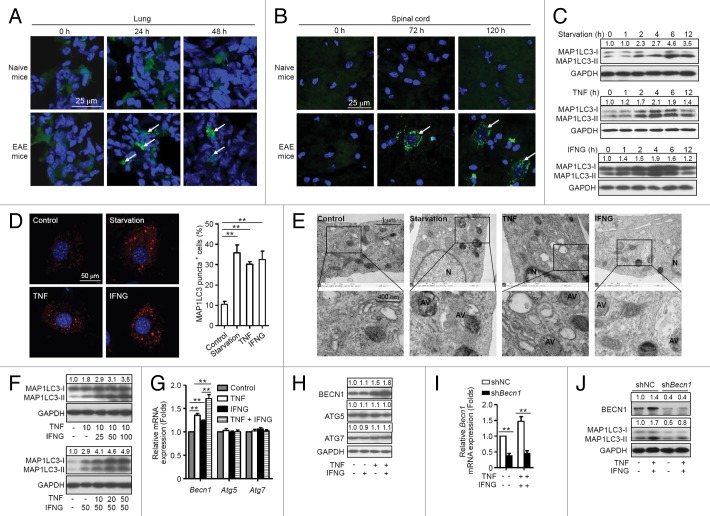
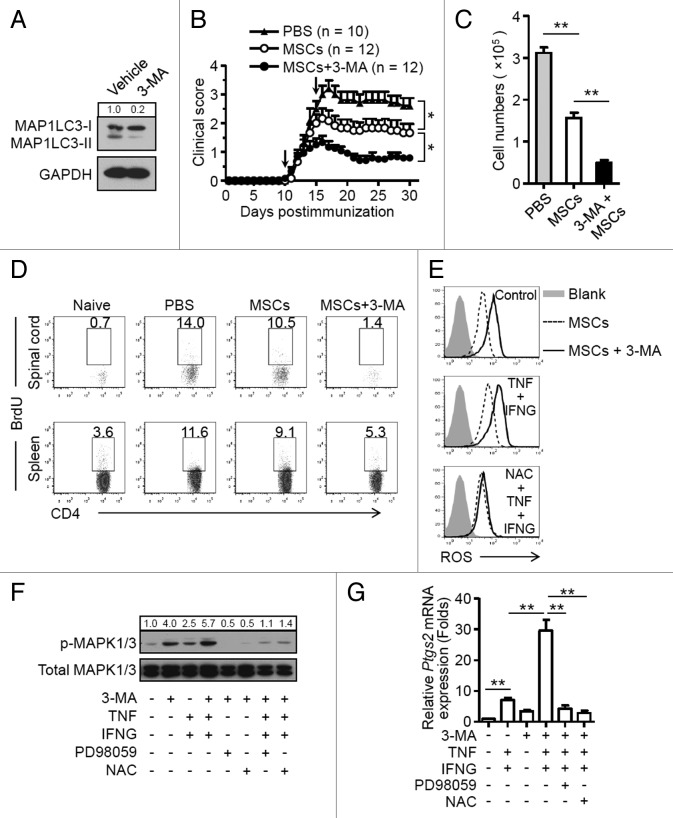
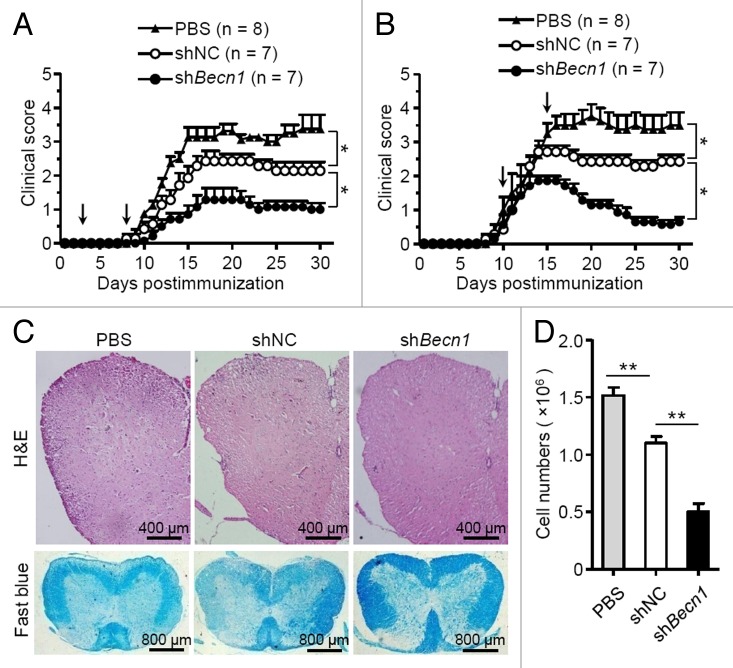
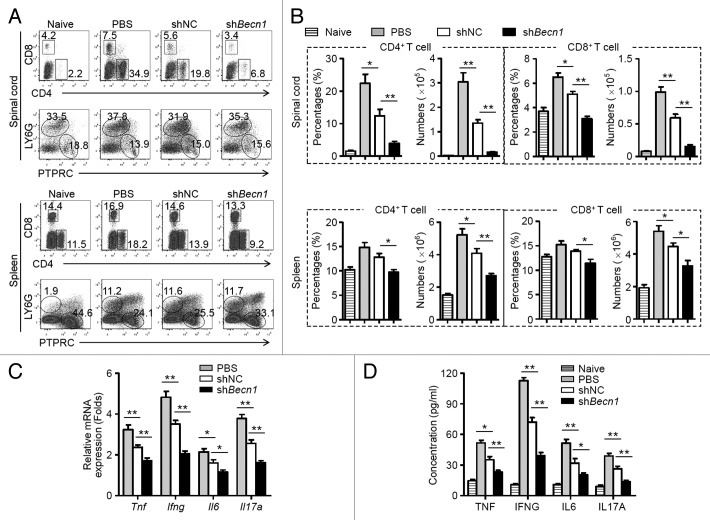
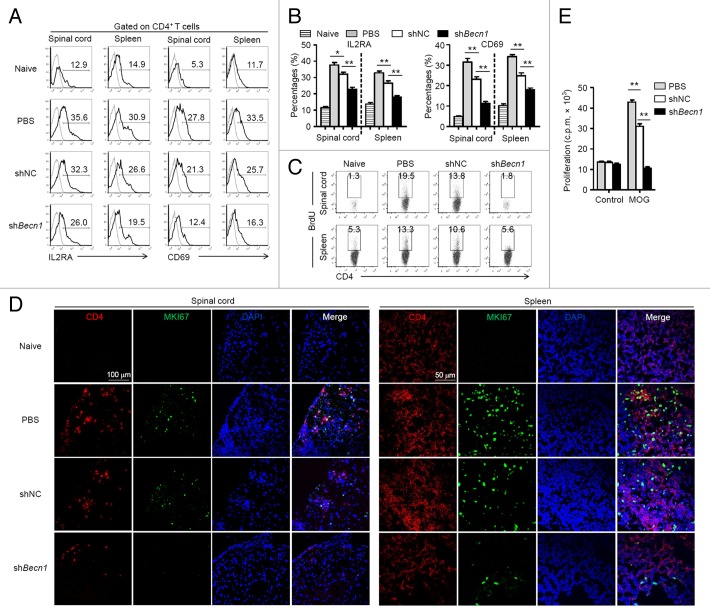
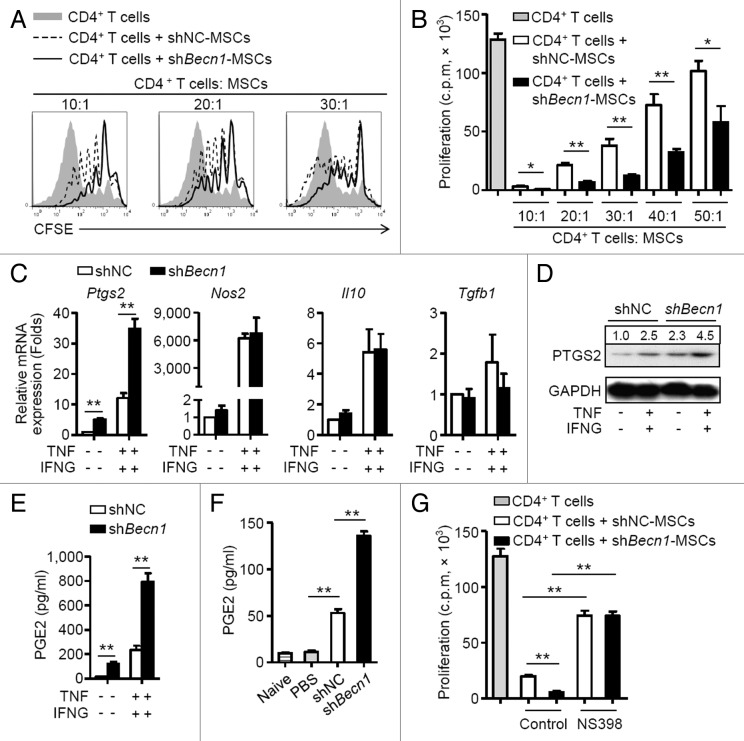
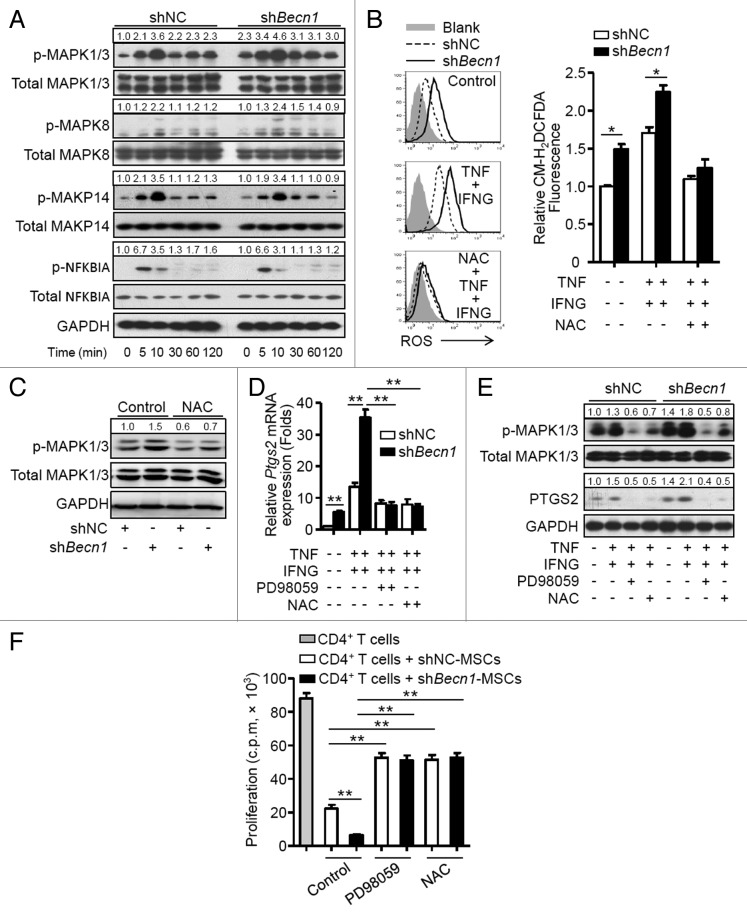
Mesenchymal stem cell (MSC)-based therapy is a promising approach to treat various inflammatory disorders including multiple sclerosis. However, the fate of MSCs in the inflammatory microenvironment is largely unknown. Experimental autoimmune encephalomyelitis (EAE) is a well-studied animal model of multiple sclerosis. We demonstrated that autophagy occurred in MSCs during their application for EAE treatment. Inflammatory cytokines, e.g., interferon gamma and tumor necrosis factor, induced autophagy in MSCs synergistically by inducing expression of BECN1/Beclin 1. Inhibition of autophagy by knockdown of Becn1 significantly improved the therapeutic effects of MSCs on EAE, which was mainly attributable to enhanced suppression upon activation and expansion of CD4(+) T cells. Mechanistically, inhibition of autophagy increased reactive oxygen species generation and mitogen-activated protein kinase 1/3 activation in MSCs, which were essential for PTGS2 (prostaglandin-endoperoxide synthase 2 [prostaglandin G/H synthase and cyclooxygenase]) and downstream prostaglandin E2 expression to exert immunoregulatory function. Furthermore, pharmacological treatment of MSCs to inhibit autophagy increased their immunosuppressive effects on T cell-mediated EAE. Our findings indicate that inflammatory microenvironment-induced autophagy downregulates the immunosuppressive function of MSCs. Therefore, modulation of autophagy in MSCs would provide a novel strategy to improve MSC-based immunotherapy.
基于间充质干细胞(MSC)的疗法是治疗包括多发性硬化症在内的各种炎症性疾病的一种有前景的方法。然而,MSC在炎症微环境中的命运在很大程度上尚不清楚。实验性自身免疫性脑脊髓炎(EAE)是一种经过充分研究的多发性硬化症动物模型。我们证明,在将MSC应用于EAE治疗期间,自噬发生在MSC中。炎性细胞因子,例如干扰素γ和肿瘤坏死因子,通过诱导BECN1/Beclin 1的表达协同诱导MSC中的自噬。通过敲低Becn1抑制自噬显著改善了MSC对EAE的治疗效果,这主要归因于对CD4(+) T细胞活化和扩增的抑制增强。从机制上讲,抑制自噬增加了MSC中活性氧的产生和丝裂原活化蛋白激酶1/3的活化,这对于PTGS2(前列腺素内过氧化物合酶2 [前列腺素G/H合酶和环氧化酶])和下游前列腺素E2的表达发挥免疫调节功能至关重要。此外,对MSC进行药物治疗以抑制自噬增加了它们对T细胞介导的EAE的免疫抑制作用。我们的研究结果表明,炎症微环境诱导的自噬下调了MSC的免疫抑制功能。因此,调节MSC中的自噬将为改善基于MSC的免疫疗法提供一种新策略。