Apschner Alexander, Huitema Leonie F A, Ponsioen Bas, Peterson-Maduro Josi, Schulte-Merker Stefan
Hubrecht Institute - KNAW & UMC Utrecht, 3548CT Utrecht, The Netherlands.
Hubrecht Institute - KNAW & UMC Utrecht, 3548CT Utrecht, The Netherlands. WUR, Experimental Zoology, 3700AH Wageningen, The Netherlands. Institute of Cardiovascular Organogenesis and Regeneration, Faculty of Medicine, University of Münster, 48149 Münster, Germany.
Dis Model Mech. 2014 Jul;7(7):811-22. doi: 10.1242/dmm.015693. Epub 2014 Jun 6.
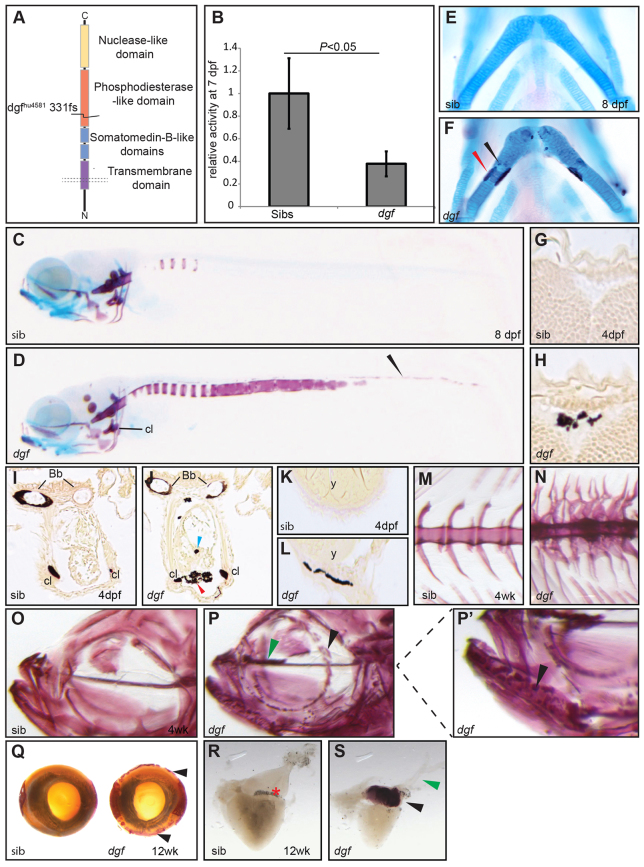
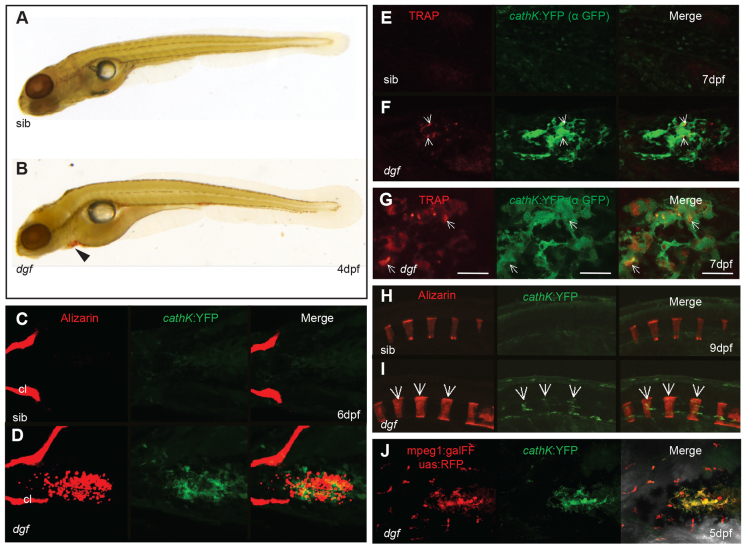
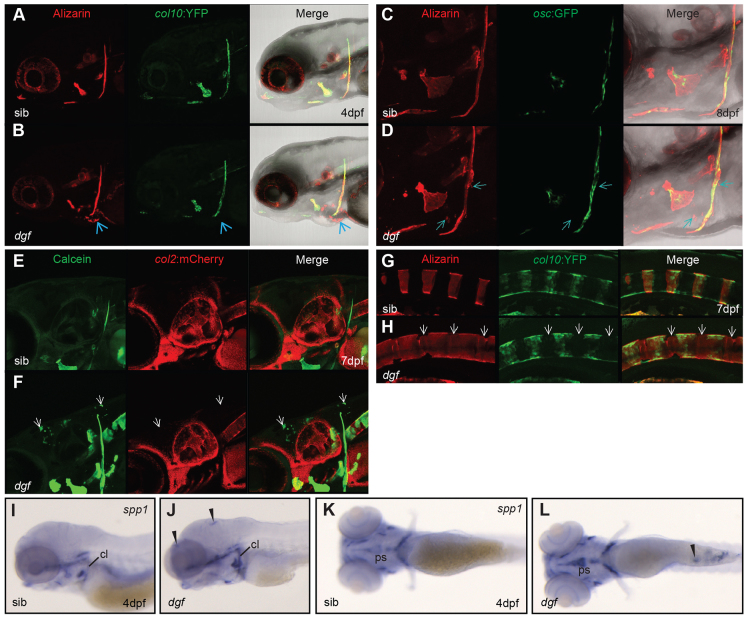
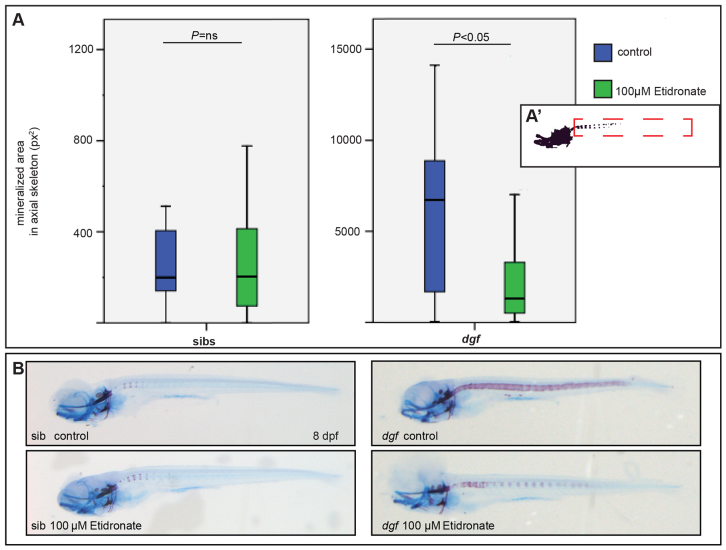
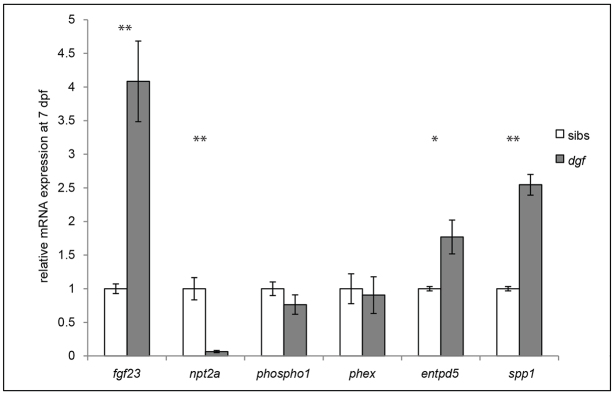
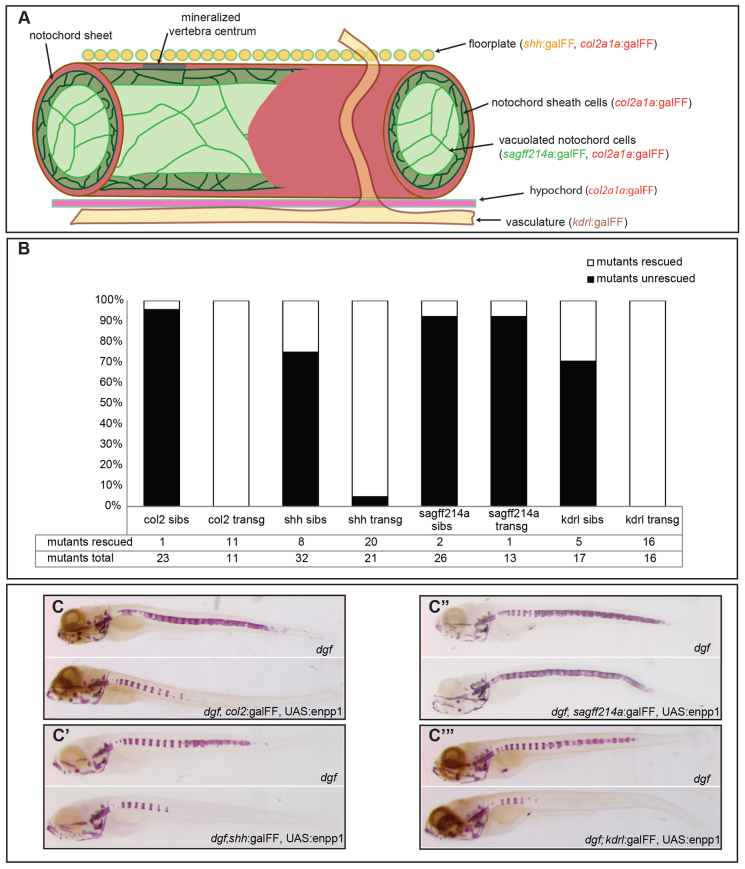
In recent years it has become clear that, mechanistically, biomineralization is a process that has to be actively inhibited as a default state. This inhibition must be released in a rigidly controlled manner in order for mineralization to occur in skeletal elements and teeth. A central aspect of this concept is the tightly controlled balance between phosphate, a constituent of the biomineral hydroxyapatite, and pyrophosphate, a physiochemical inhibitor of mineralization. Here, we provide a detailed analysis of a zebrafish mutant, dragonfish (dgf), which is mutant for ectonucleoside pyrophosphatase/phosphodiesterase 1 (Enpp1), a protein that is crucial for supplying extracellular pyrophosphate. Generalized arterial calcification of infancy (GACI) is a fatal human disease, and the majority of cases are thought to be caused by mutations in ENPP1. Furthermore, some cases of pseudoxanthoma elasticum (PXE) have recently been linked to ENPP1. Similar to humans, we show here that zebrafish enpp1 mutants can develop ectopic calcifications in a variety of soft tissues - most notably in the skin, cartilage elements, the heart, intracranial space and the notochord sheet. Using transgenic reporter lines, we demonstrate that ectopic mineralizations in these tissues occur independently of the expression of typical osteoblast or cartilage markers. Intriguingly, we detect cells expressing the osteoclast markers Trap and CathepsinK at sites of ectopic calcification at time points when osteoclasts are not yet present in wild-type siblings. Treatment with the bisphosphonate etidronate rescues aspects of the dgf phenotype, and we detected deregulated expression of genes that are involved in phosphate homeostasis and mineralization, such as fgf23, npt2a, entpd5 and spp1 (also known as osteopontin). Employing a UAS-GalFF approach, we show that forced expression of enpp1 in blood vessels or the floorplate of mutant embryos is sufficient to rescue the notochord mineralization phenotype. This indicates that enpp1 can exert its function in tissues that are remote from its site of expression.
近年来,从机制上来说,生物矿化显然是一个默认状态下必须被主动抑制的过程。为了使矿化在骨骼和牙齿中发生,这种抑制必须以严格可控的方式解除。这一概念的核心方面是生物矿化羟基磷灰石的组成成分磷酸盐与矿化的物理化学抑制剂焦磷酸盐之间严格控制的平衡。在此,我们对斑马鱼突变体“龙鱼”(dgf)进行了详细分析,它是胞外核苷焦磷酸酶/磷酸二酯酶1(Enpp1)的突变体,Enpp1是一种对提供细胞外焦磷酸盐至关重要的蛋白质。婴儿期全身性动脉钙化(GACI)是一种致命的人类疾病,大多数病例被认为是由ENPP1突变引起的。此外,一些弹性假黄瘤(PXE)病例最近也与ENPP1有关。与人类相似,我们在此表明斑马鱼enpp1突变体可在多种软组织中形成异位钙化——最显著的是在皮肤、软骨成分、心脏、颅内空间和脊索板中。使用转基因报告系,我们证明这些组织中的异位矿化独立于典型成骨细胞或软骨标志物的表达而发生。有趣的是,在野生型同胞中破骨细胞尚未出现的时间点,我们在异位钙化部位检测到表达破骨细胞标志物抗酒石酸酸性磷酸酶(Trap)和组织蛋白酶K(CathepsinK)的细胞。用双膦酸盐依替膦酸治疗可挽救dgf表型的某些方面,并且我们检测到参与磷酸盐稳态和矿化的基因(如fgf23、npt2a、entpd5和spp1,后者也称为骨桥蛋白)的表达失调。采用UAS - GalFF方法,我们表明在突变胚胎的血管或底板中强制表达enpp1足以挽救脊索矿化表型。这表明enpp1可以在远离其表达位点的组织中发挥其功能。