Foster James J, Sharkey Camilla R, Gaworska Alicia V A, Roberts Nicholas W, Whitney Heather M, Partridge Julian C
School of Biological Sciences, University of Bristol, Woodland Road, Bristol, BS8 1UG, UK.
School of Biological Sciences, University of Bristol, Woodland Road, Bristol, BS8 1UG, UK; School of Animal Biology, University of Western Australia, 35 Stirling Highway, Crawley, WA 6009, Australia.
Curr Biol. 2014 Jun 16;24(12):1415-1420. doi: 10.1016/j.cub.2014.05.007. Epub 2014 Jun 5.
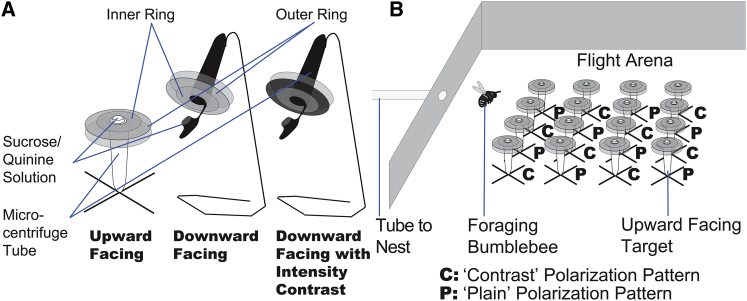
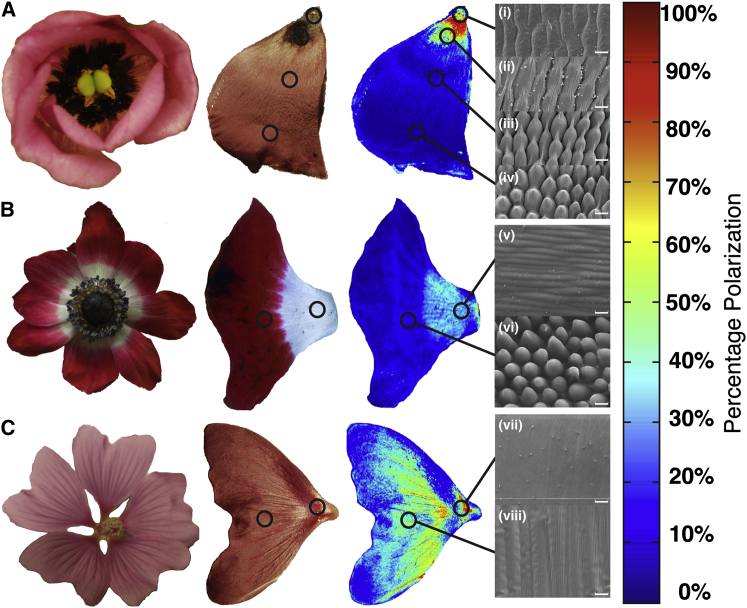
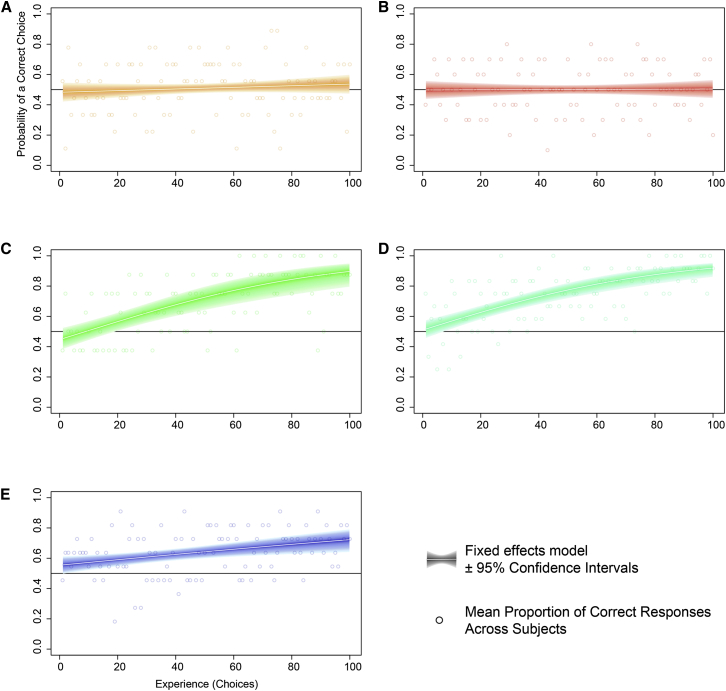
Foraging insect pollinators such as bees must find and identify flowers in a complex visual environment. Bees use skylight polarization patterns for navigation, a capacity mediated by the polarization-sensitive dorsal rim area (DRA) of their eye. While other insects use polarization sensitivity to identify appropriate habitats, oviposition sites, and food sources, to date no nonnavigational functions of polarization vision have been identified in bees. Here we investigated the ability of bumblebees (Bombus terrestris) to learn polarization patterns on artificial "flowers" in order to obtain a food reward. We show that foraging bumblebees can learn to discriminate between two differently polarized targets, but only when the target artificial "flower" is viewed from below. A context for these results is provided by polarization imaging of bee-pollinated flowers, revealing the potential for polarization patterns in real flowers. Bees may therefore have the ability to use polarization vision, possibly mediated by their polarization-sensitive DRA, both for navigation and to learn polarization patterns on flowers, the latter being the first nonnavigational function for bee polarization vision to be identified.
像蜜蜂这样的觅食昆虫传粉者必须在复杂的视觉环境中找到并识别花朵。蜜蜂利用天空光偏振模式进行导航,这种能力由其眼睛中对偏振敏感的背缘区域(DRA)介导。虽然其他昆虫利用偏振敏感性来识别合适的栖息地、产卵地点和食物来源,但迄今为止,尚未在蜜蜂中发现偏振视觉的非导航功能。在这里,我们研究了熊蜂(Bombus terrestris)学习人工“花朵”上偏振模式以获取食物奖励的能力。我们发现,觅食的熊蜂能够学会区分两种不同偏振的目标,但前提是从下方观察目标人工“花朵”。对蜜蜂授粉花朵的偏振成像为这些结果提供了背景,揭示了真实花朵中存在偏振模式的可能性。因此,蜜蜂可能有能力利用偏振视觉,可能由其对偏振敏感的DRA介导,既用于导航,也用于学习花朵上的偏振模式,后者是首次被识别出的蜜蜂偏振视觉的非导航功能。