Department of Experimental Immunohaematology, Sanquin Research, Amsterdam and Landsteiner Laboratory, Academic Medical Centre, University of Amsterdam, Amsterdam, The Netherlands.
Br J Haematol. 2014 Sep;166(6):936-45. doi: 10.1111/bjh.12965. Epub 2014 Jun 7.
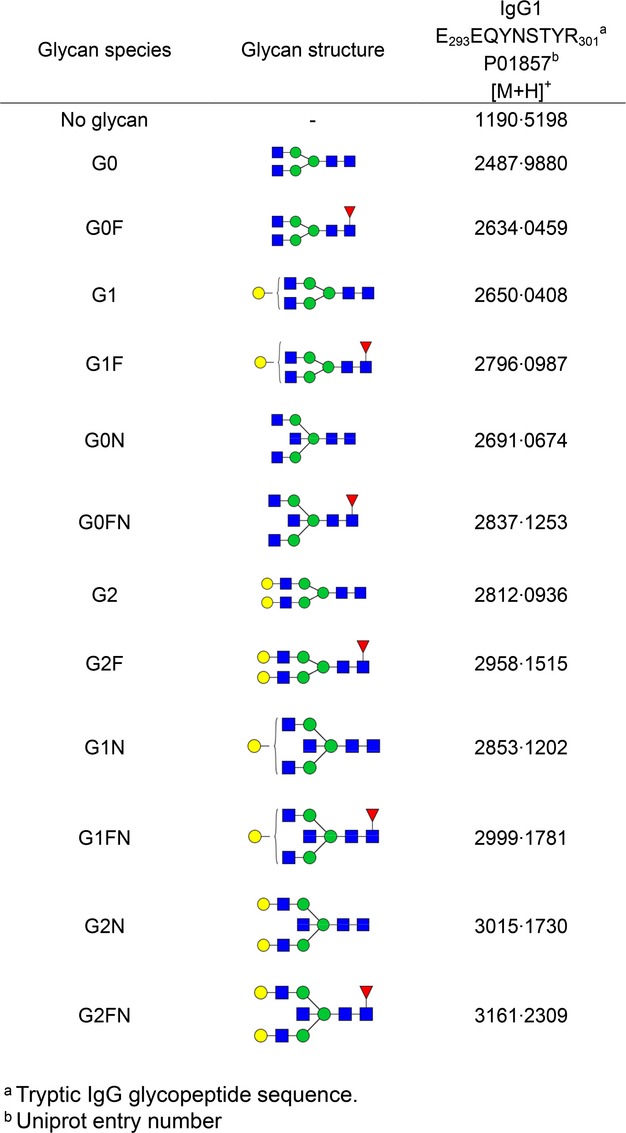
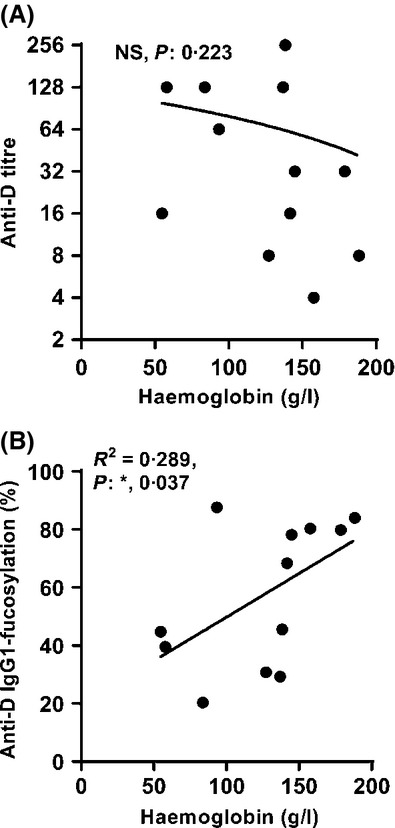
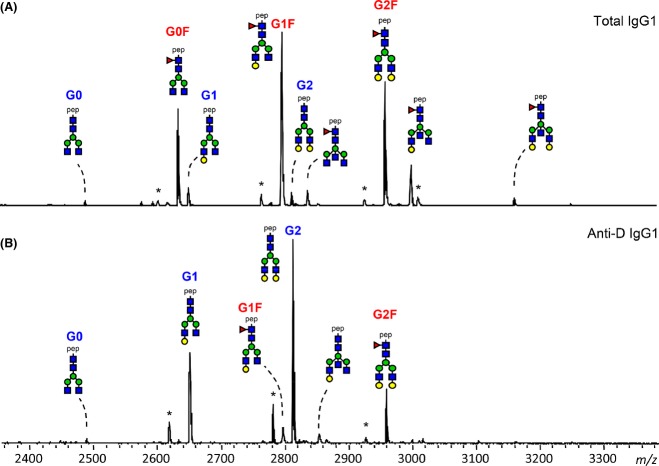
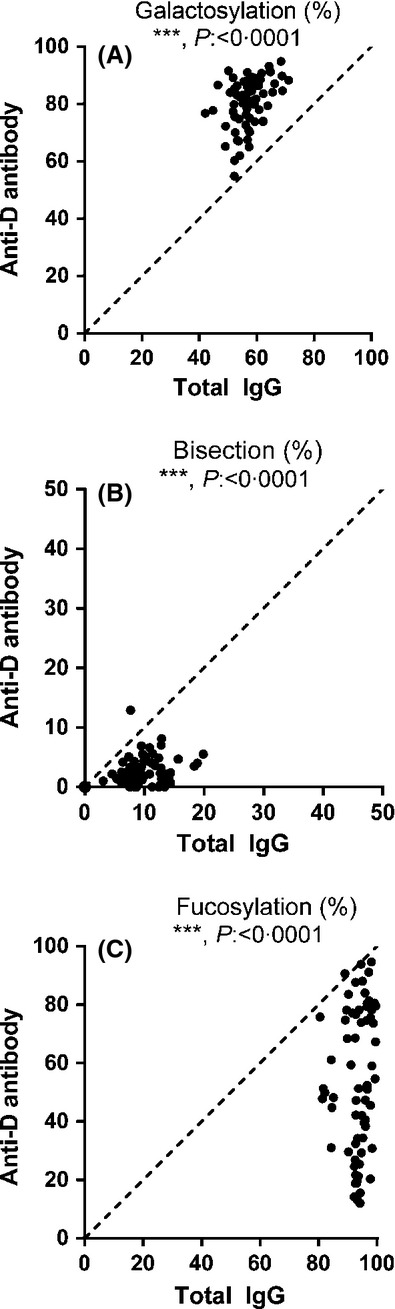
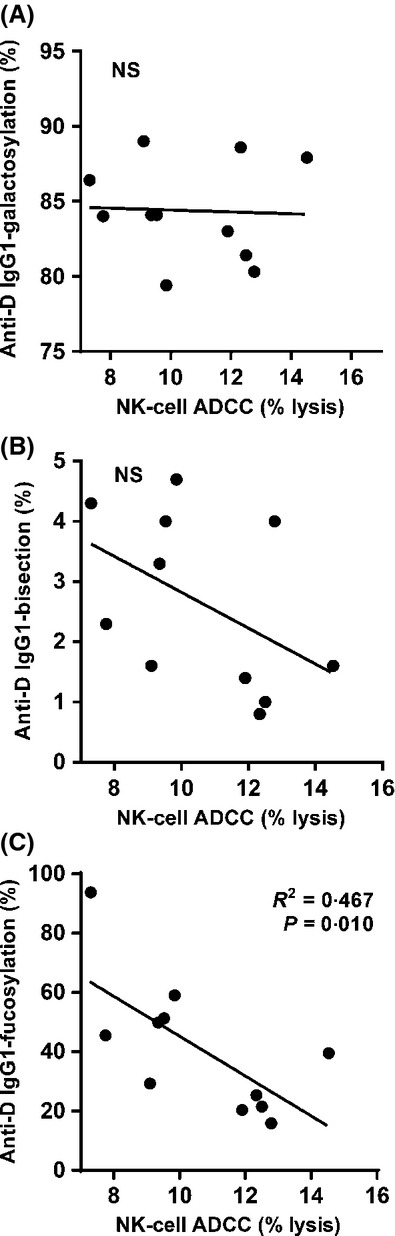
Haemolytic disease of the fetus and newborn (HDFN) may occur when maternal IgG antibodies against red blood cells (RBCs), often anti-RhD (anti-D) antibodies, cross the placenta and mediate the destruction of RBCs via phagocytic IgG-Fc-receptors (FcγR). Clinical severity is not strictly related to titre and is more accurately predicted by the diagnostically-applied monocyte-based antibody-dependent cellular cytotoxicity (ADCC), a sensitive test with relatively low specificity. This suggests that other factors are involved in the pathogenesis of HDFN. Binding of IgG to FcγR requires the N-linked glycan at position 297 in the IgG-Fc-region, consisting of several different glycoforms. We therefore systematically analysed IgG-derived glycopeptides by mass spectrometry from 70 anti-D IgG1 antibodies purified from the plasma of alloimmunized pregnant women. This revealed a variable decrease in Fc-fucosylation in the majority of anti-D IgG1 (even down to 12%), whereas the total IgG of these patients remained highly fucosylated, like in healthy individuals (>90%). The degree of anti-D fucosylation correlated significantly with CD16 (FcγRIIIa)-mediated ADCC, in agreement with increased affinity of defucosylated IgG to human FcγRIIIa. Additionally, low anti-D fucosylation correlated significantly with low fetal-neonatal haemoglobin levels, thus with increased haemolysis, suggesting IgG-fucosylation to be an important pathological feature in HDFN with diagnostic potential.
胎儿和新生儿溶血病 (HDFN) 可能发生在母体 IgG 抗体针对红细胞 (RBC) 时,通常是抗 RhD(抗-D)抗体,通过吞噬 IgG-Fc-受体 (FcγR) 穿过胎盘并介导 RBC 破坏。临床严重程度与效价不严格相关,通过应用于诊断的基于单核细胞的抗体依赖性细胞毒性 (ADCC) 更准确地预测,这是一种具有相对低特异性的敏感测试。这表明 HDFN 的发病机制还涉及其他因素。IgG 与 FcγR 的结合需要 IgG-Fc 区中位置 297 的 N-连接聚糖,由几种不同的糖型组成。因此,我们通过质谱法从 70 种从同种免疫孕妇血浆中纯化的抗-D IgG1 抗体中系统地分析了 IgG 衍生的糖肽。这表明大多数抗-D IgG1 的 Fc 岩藻糖基化程度可变下降(甚至下降到 12%),而这些患者的总 IgG 仍高度岩藻糖基化,与健康个体相似(>90%)。抗-D 岩藻糖基化的程度与 CD16(FcγRIIIa)介导的 ADCC 显著相关,这与去岩藻糖基化 IgG 与人 FcγRIIIa 的亲和力增加一致。此外,低抗-D 岩藻糖基化与胎儿新生儿血红蛋白水平低显著相关,从而与溶血增加相关,表明 IgG 岩藻糖基化为 HDFN 的重要病理特征并具有诊断潜力。