Chiang Hsueh-Sheng, Mudar Raksha A, Spence Jeffrey S, Pudhiyidath Athula, Eroh Justin, DeLaRosa Bambi, Kraut Michael A, Hart John
Center for BrainHealth, The University of Texas at Dallas, 2200 West Mockingbird Lane, Dallas, TX 75235, USA.
Center for BrainHealth, The University of Texas at Dallas, 2200 West Mockingbird Lane, Dallas, TX 75235, USA; Department of Speech and Hearing Science, University of Illinois at Urbana-Champaign, 901 South Sixth Street, Champaign, IL 61820, USA.
Biol Psychol. 2014 Jul;100:106-14. doi: 10.1016/j.biopsycho.2014.05.010. Epub 2014 Jun 6.
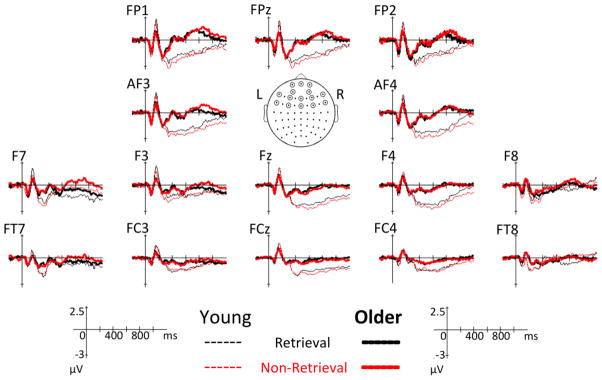
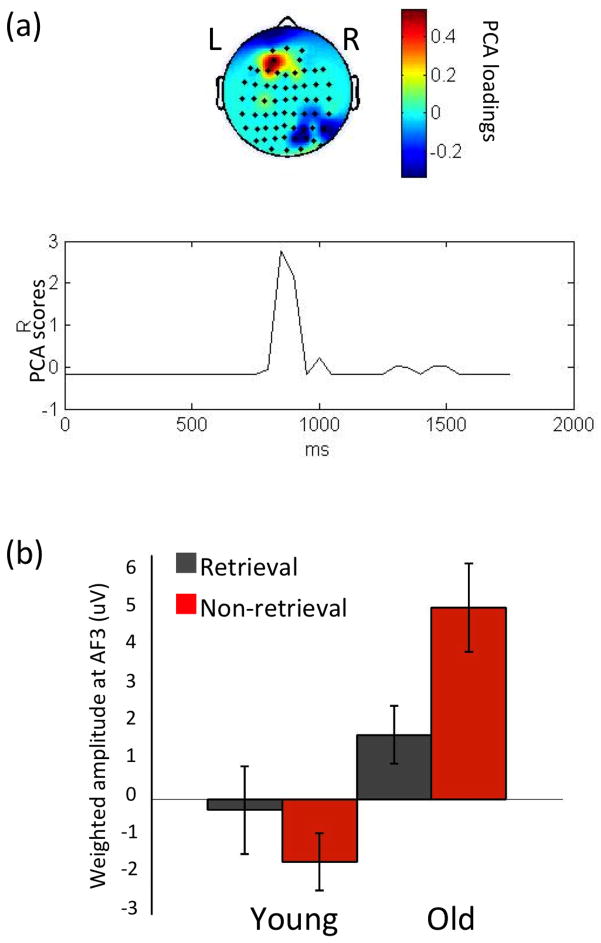
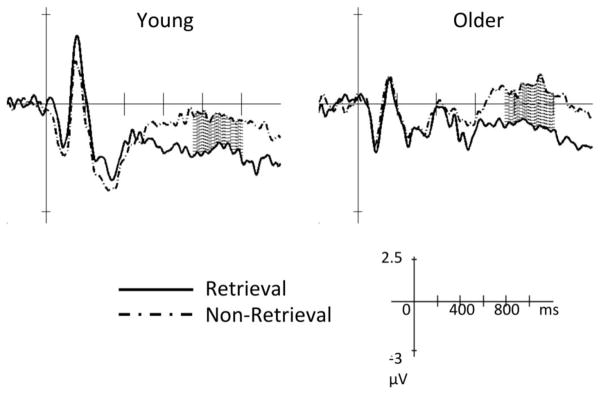
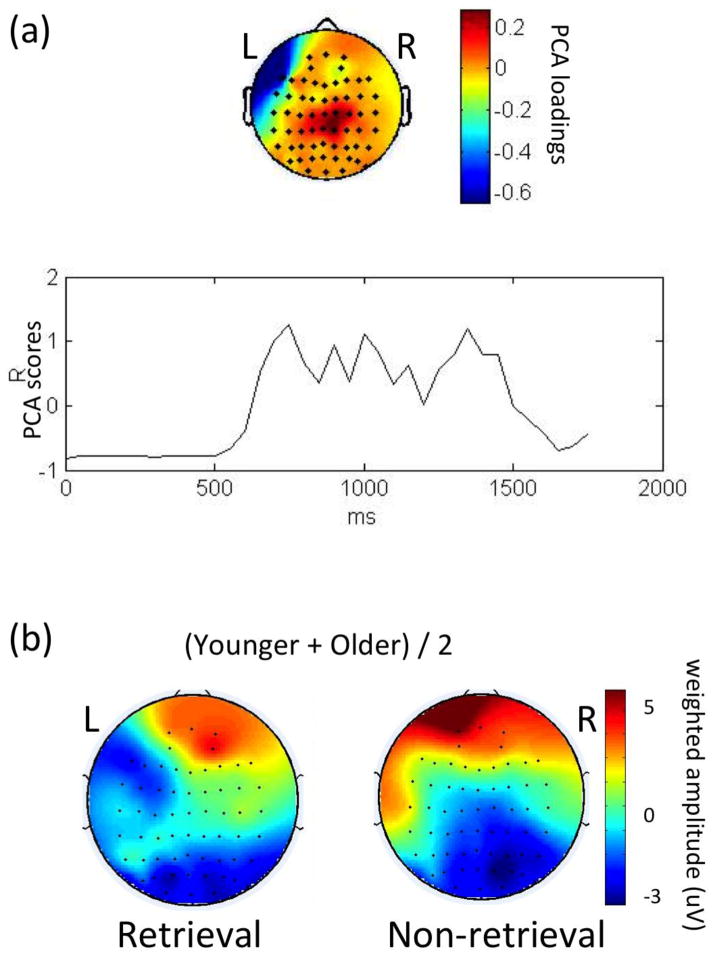
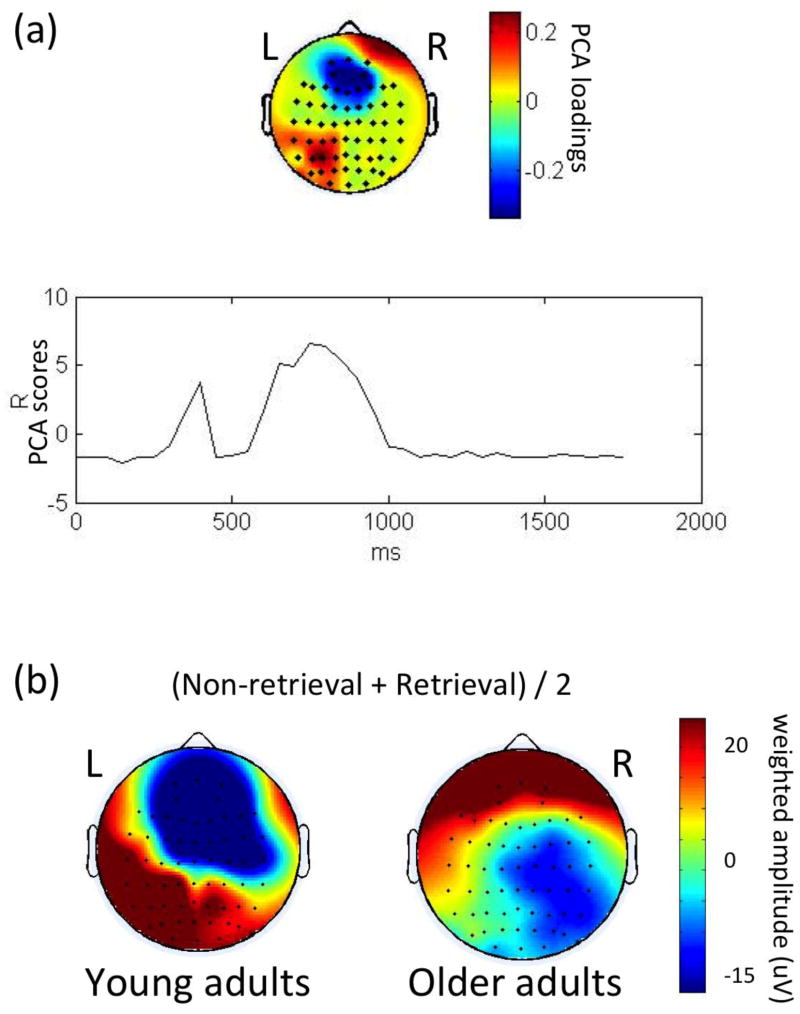
To investigate neural mechanisms that support semantic functions in aging, we recorded scalp EEG during an object retrieval task in 22 younger and 22 older adults. The task required determining if a particular object could be retrieved when two visual words representing object features were presented. Both age groups had comparable accuracy although response times were longer in older adults. In both groups a left fronto-temporal negative potential occurred at around 750ms during object retrieval, consistent with previous findings (Brier, Maguire, Tillman, Hart, & Kraut, 2008). In only older adults, a later positive frontal potential was found peaking between 800 and 1000ms during no retrieval. These findings suggest younger and older adults employ comparable neural mechanisms when features clearly facilitate retrieval of an object memory, but when features yield no retrieval, older adults use additional neural resources to engage in a more effortful and exhaustive search prior to making a decision.
为了研究支持衰老过程中语义功能的神经机制,我们在22名年轻成年人和22名年长者执行物体检索任务时记录了头皮脑电图。该任务要求在呈现代表物体特征的两个视觉单词时,判断是否可以检索到特定物体。尽管年长者的反应时间更长,但两个年龄组的准确率相当。在物体检索过程中,两组在大约750毫秒时均出现左额颞负电位,这与之前的研究结果一致(Brier、Maguire、Tillman、Hart和Kraut,2008年)。仅在年长者中,发现在未检索时,后期额叶正电位在800至1000毫秒之间达到峰值。这些发现表明,当特征明显有助于检索物体记忆时,年轻成年人和年长者采用类似的神经机制,但当特征无法检索到物体时,年长者会使用额外的神经资源,在做出决定之前进行更费力、更彻底的搜索。