International Crops Research Institute for the Semi-Arid Tropics (ICRISAT), Patancheru PO 502324, Andhra Pradesh, India.
BMC Genomics. 2014 Jun 10;15(1):454. doi: 10.1186/1471-2164-15-454.
Fusarium oxysporum f. sp. ciceris (Foc), the causal agent of Fusarium wilt of chickpea is highly variable and frequent recurrence of virulent forms have affected chickpea production and exhausted valuable genetic resources. The severity and yield losses of Fusarium wilt differ from place to place owing to existence of physiological races among isolates. Diversity study of fungal population associated with a disease plays a major role in understanding and devising better disease control strategies. The advantages of using molecular markers to understand the distribution of genetic diversity in Foc populations is well understood. The recent development of Diversity Arrays Technology (DArT) offers new possibilities to study the diversity in pathogen population. In this study, we developed DArT markers for Foc population, analysed the genetic diversity existing within and among Foc isolates, compared the genotypic and phenotypic diversity and infer the race scenario of Foc in India.
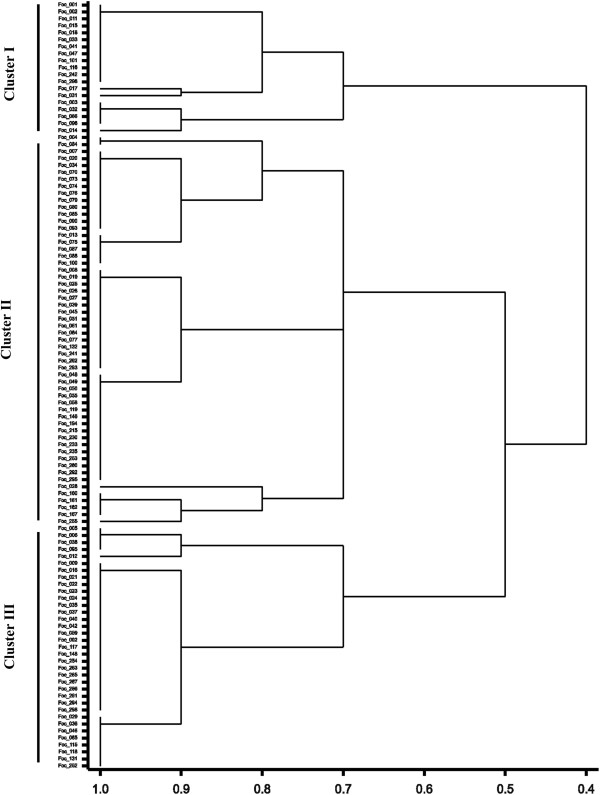
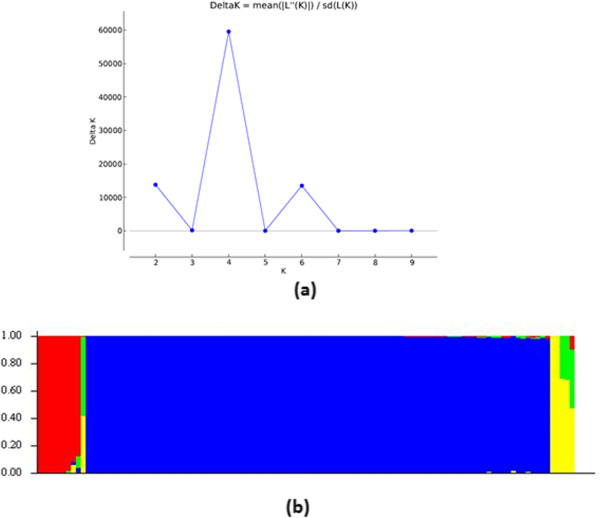
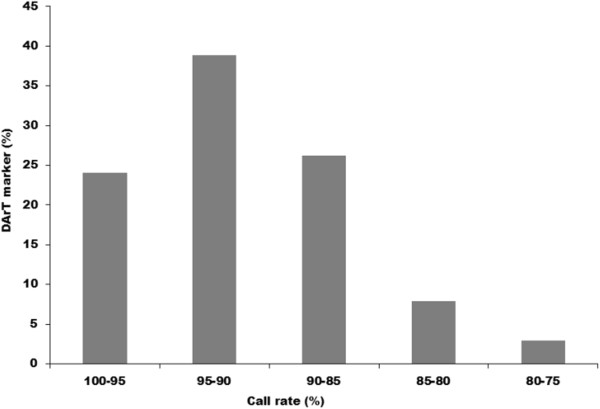
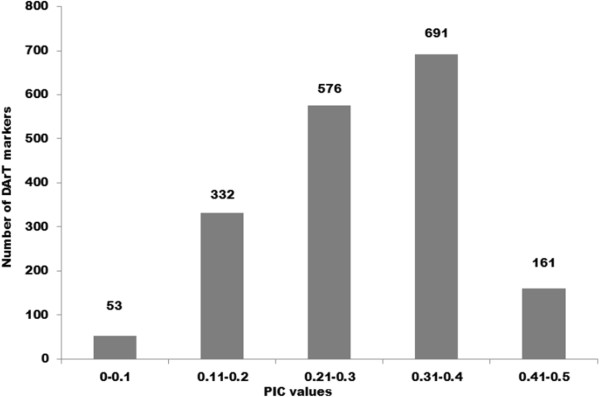
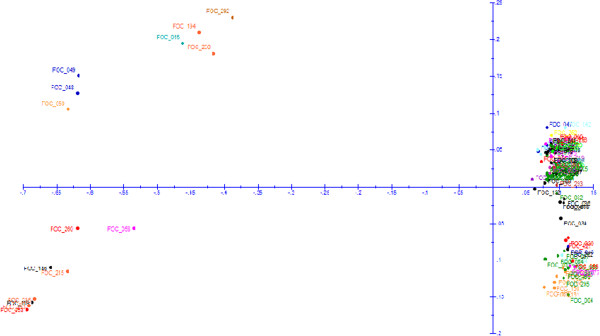
We report the successful development of DArT markers for Foc and their utility in genotyping of Foc collections representing five chickpea growing agro-ecological zones of India. The DArT arrays revealed a total 1,813 polymorphic markers with an average genotyping call rate of 91.16% and a scoring reproducibility of 100%. Cluster analysis, principal coordinate analysis and population structure indicated that the different isolates of Foc were partially classified based on geographical source. Diversity in Foc population was compared with the phenotypic variability and it was found that DArT markers were able to group the isolates consistent with its virulence group. A number of race-specific unique and rare alleles were also detected.
The present study generated significant information in terms of pathogenic and genetic diversity of Foc which could be used further for development and deployment of region-specific resistant cultivars of chickpea. The DArT markers were proved to be a powerful diagnostic tool to study the genotypic diversity in Foc. The high number of DArT markers allowed a greater resolution of genetic differences among isolates and enabled us to examine the extent of diversity in the Foc population present in India, as well as provided support to know the changing race scenario in Foc population.
尖孢镰刀菌古巴专化型(Foc)是鹰嘴豆枯萎病的致病菌,其具有高度变异性,且频繁出现毒力形式的重现,这影响了鹰嘴豆的生产并耗尽了宝贵的遗传资源。由于分离物之间存在生理小种,因此枯萎病的严重程度和产量损失因地点而异。与疾病相关的真菌种群多样性研究在了解和制定更好的疾病控制策略方面起着重要作用。利用分子标记了解 Foc 种群遗传多样性分布的优势已得到充分理解。Diversity Arrays Technology(DArT)的最新发展为研究病原体种群多样性提供了新的可能性。在这项研究中,我们为 Foc 种群开发了 DArT 标记,分析了 Foc 分离物内部和之间存在的遗传多样性,比较了基因型和表型多样性,并推断了印度 Foc 的品种情况。
我们报告了成功开发用于 Foc 的 DArT 标记及其在代表印度五个鹰嘴豆种植农业生态区的 Foc 收集物的基因分型中的应用。DArT 阵列共显示了 1813 个多态性标记,平均基因分型调用率为 91.16%,评分可重复性为 100%。聚类分析、主坐标分析和种群结构表明,不同的 Foc 分离物部分基于地理来源进行分类。与表型变异性进行比较后发现,DArT 标记能够将与毒力组一致的分离物进行分组。还检测到一些特定于品种的独特和稀有等位基因。
本研究在 Foc 的致病性和遗传多样性方面提供了重要信息,可进一步用于开发和部署鹰嘴豆的特定区域抗性品种。DArT 标记被证明是研究 Foc 基因型多样性的有力诊断工具。大量的 DArT 标记允许在分离物之间更精确地分辨遗传差异,并使我们能够检查印度存在的 Foc 种群的多样性程度,同时为了解 Foc 种群的变化品种情况提供支持。