Kahali Bhaskar, Yu Jinlong, Marquez Stefanie B, Thompson Kenneth W, Liang Shermi Y, Lu Li, Reisman David
Division of Hematology/Oncology, Department of Medicine, University of Florida, Florida, USA.
Oncotarget. 2014 May 30;5(10):3316-32. doi: 10.18632/oncotarget.1945.
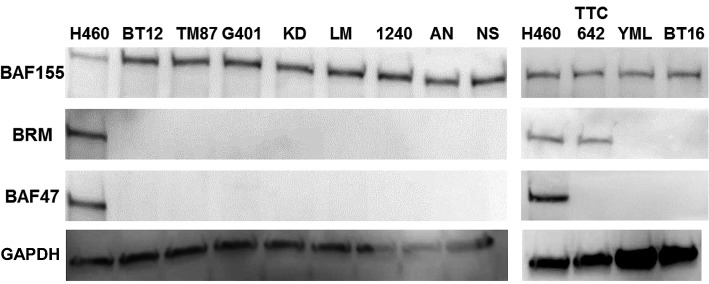
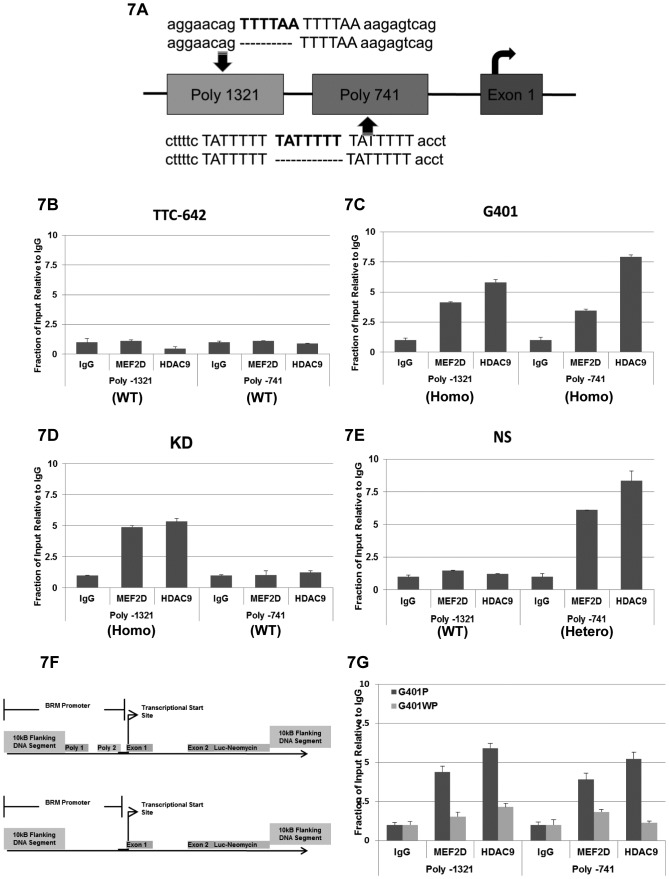
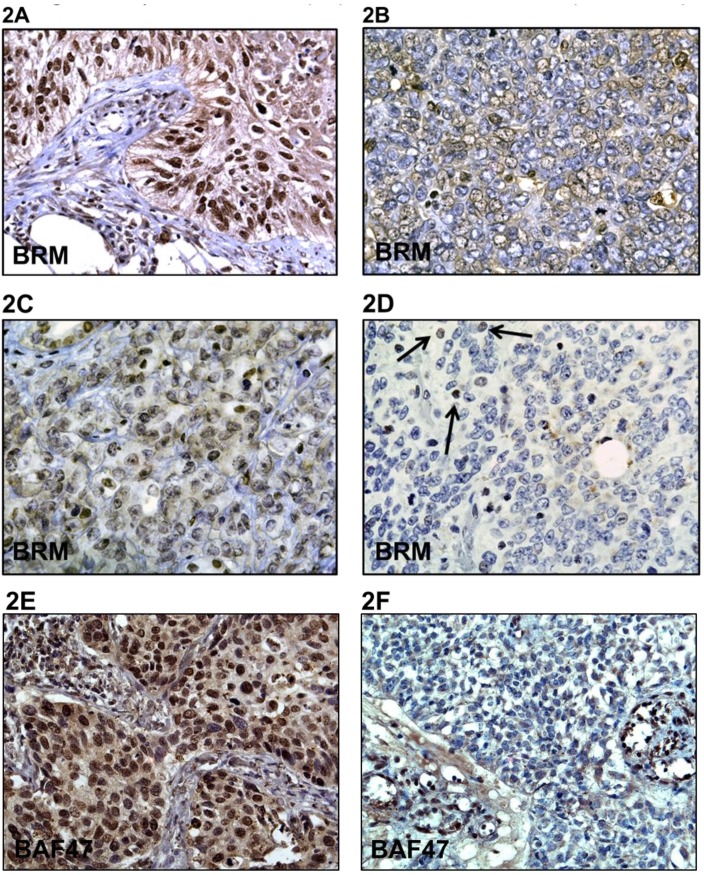
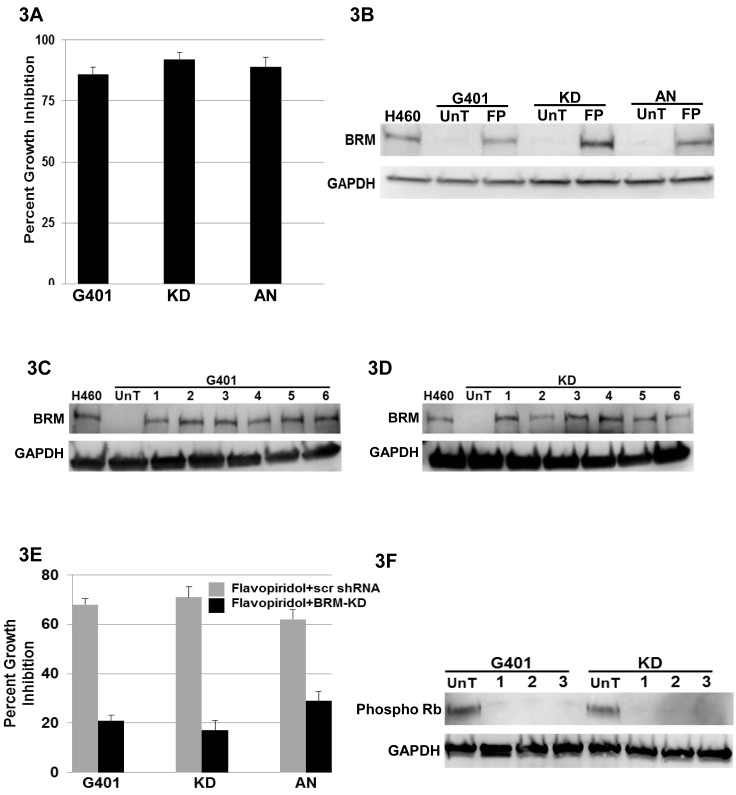
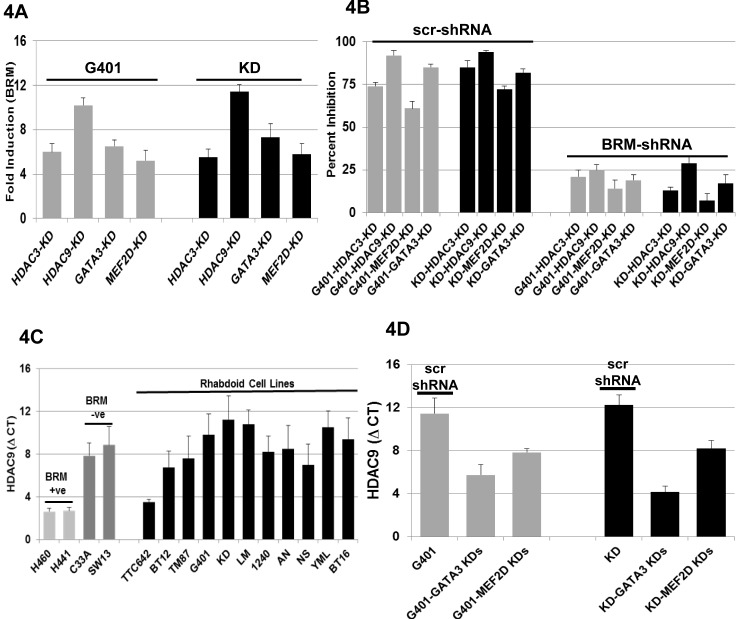
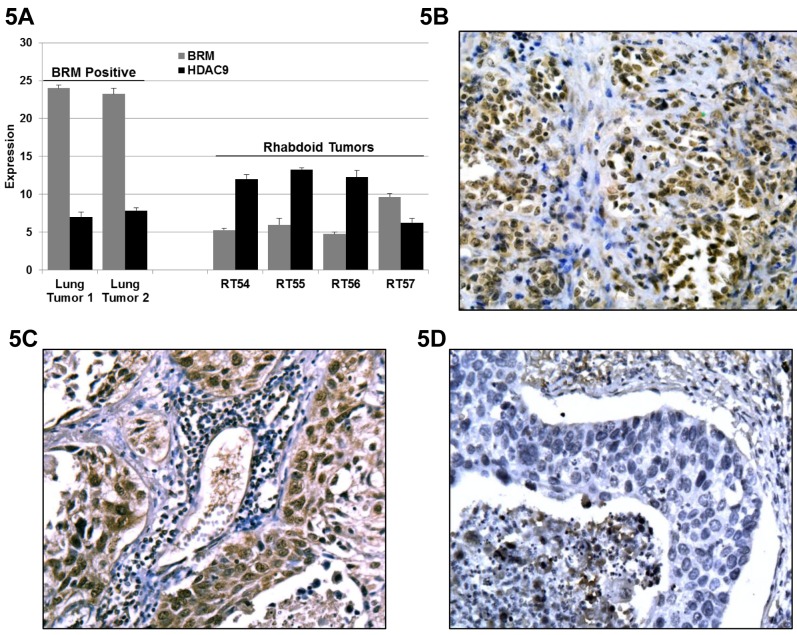
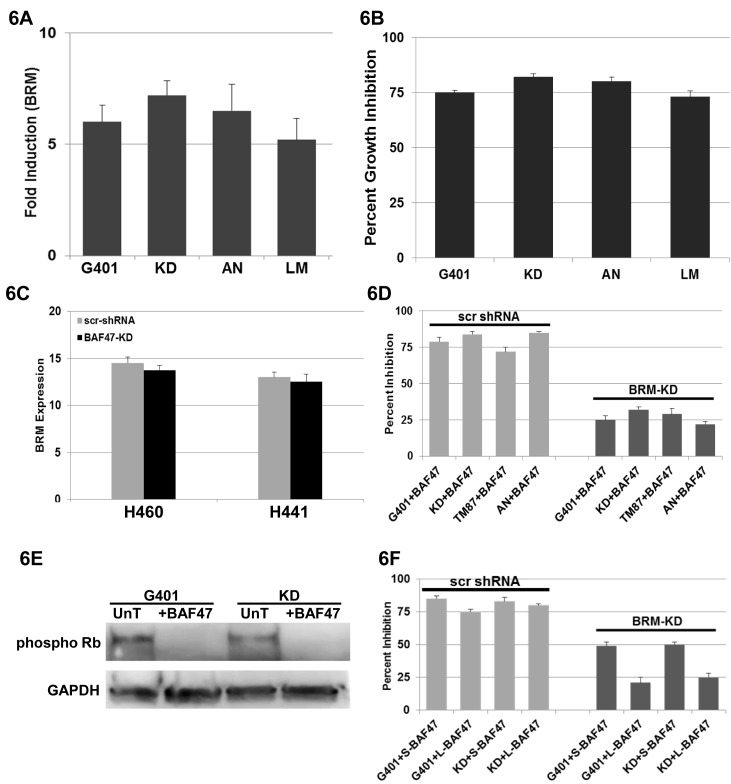
Rhabdoid sarcomas are highly malignant tumors that usually occur in young children. A key to the genesis of this tumor is the mutational loss of the BAF47 gene as well as the widespread epigenetic suppression of other key anticancer genes. The BRM gene is one such epigenetically silenced gene in Rhabdoid tumors. This gene codes for an ATPase catalytic subunit that shifts histones and opens the chromatin. We show that BRM is an epigenetically silenced gene in 10/11 Rhabdoid cell lines and in 70% of Rhabdoid tumors. Moreover, BRM can be induced by BAF47 re-expression and by Flavopiridol. By selective shRNAi knockdown of BRM, we show that BRM re-expression is necessary for growth inhibition by BAF47 re-expression or Flavopiridol application. Similar to lung cancer cell lines, we found that HDAC3, HDAC9, MEF2D and GATA3 controlled BRM silencing and that HDAC9 was overexpressed in Rhabdoid cancer cell lines. In primary BRM-deficient Rhabdoid tumors, HDAC9 was also found to be highly overexpressed. Two insertional BRM promoter polymorphisms contribute to BRM silencing, but only the -1321 polymorphism correlated with BRM silencing in Rhabdoid cell lines. To determine how these polymorphisms were tied to BRM silencing, we conducted ChIP assays and found that both HDAC9 and MEF2D bound to the BRM promoter at or near these polymorphic sites. Using BRM promoter swap experiments, we indirectly showed that both HDAC9 and MEF2D bound to these polymorphic sites. Together, these data show that the mechanism of BRM silencing contributes to the pathogenesis of Rhabdoid tumors and appears to be conserved among tumor types.
横纹肌肉瘤是一种通常发生在幼儿身上的高度恶性肿瘤。该肿瘤发生的一个关键因素是BAF47基因的突变缺失以及其他关键抗癌基因的广泛表观遗传抑制。BRM基因就是横纹肌肉瘤中一个表观遗传沉默的基因。该基因编码一种ATP酶催化亚基,可使组蛋白移位并打开染色质。我们发现,BRM在11个横纹肌肉瘤细胞系中的10个以及70%的横纹肌肉瘤肿瘤中是表观遗传沉默基因。此外,BAF47的重新表达和黄酮哌啶醇可诱导BRM表达。通过选择性shRNAi敲低BRM,我们发现BRM的重新表达对于BAF47重新表达或应用黄酮哌啶醇抑制生长是必要的。与肺癌细胞系类似,我们发现HDAC3、HDAC9、MEF2D和GATA3控制BRM的沉默,并且HDAC9在横纹肌肉瘤癌细胞系中过表达。在原发性BRM缺陷的横纹肌肉瘤肿瘤中,也发现HDAC9高度过表达。BRM启动子的两个插入多态性导致BRM沉默,但只有-1321多态性与横纹肌肉瘤细胞系中的BRM沉默相关。为了确定这些多态性与BRM沉默的关联方式,我们进行了染色质免疫沉淀(ChIP)分析,发现HDAC9和MEF2D都在这些多态性位点或其附近与BRM启动子结合。通过BRM启动子交换实验,我们间接表明HDAC9和MEF2D都与这些多态性位点结合。这些数据共同表明,BRM沉默机制促成了横纹肌肉瘤的发病机制,并且在不同肿瘤类型中似乎是保守的。