Fang Lei, Chow K Martin, Hou Shurong, Xue Liu, Chen Xiabin, Rodgers David W, Zheng Fang, Zhan Chang-Guo
Molecular Modeling and Biopharmaceutical Center and Department of Pharmaceutical Sciences, College of Pharmacy, University of Kentucky , 789 South Limestone Street, Lexington, Kentucky 40536, United States.
ACS Chem Biol. 2014 Aug 15;9(8):1764-72. doi: 10.1021/cb500257s. Epub 2014 Jun 11.
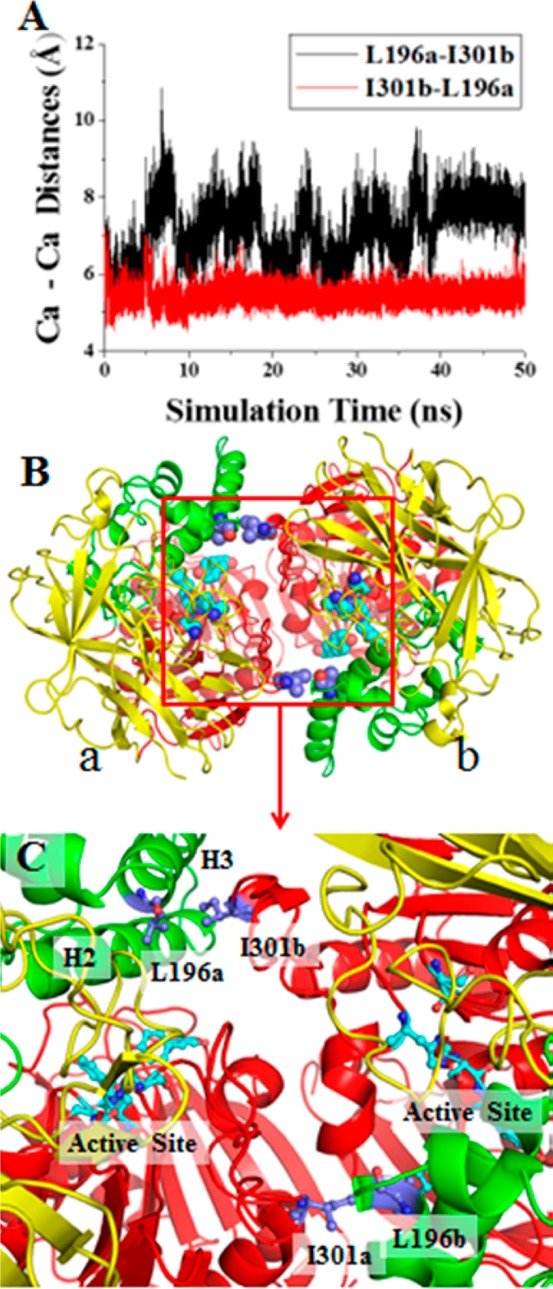
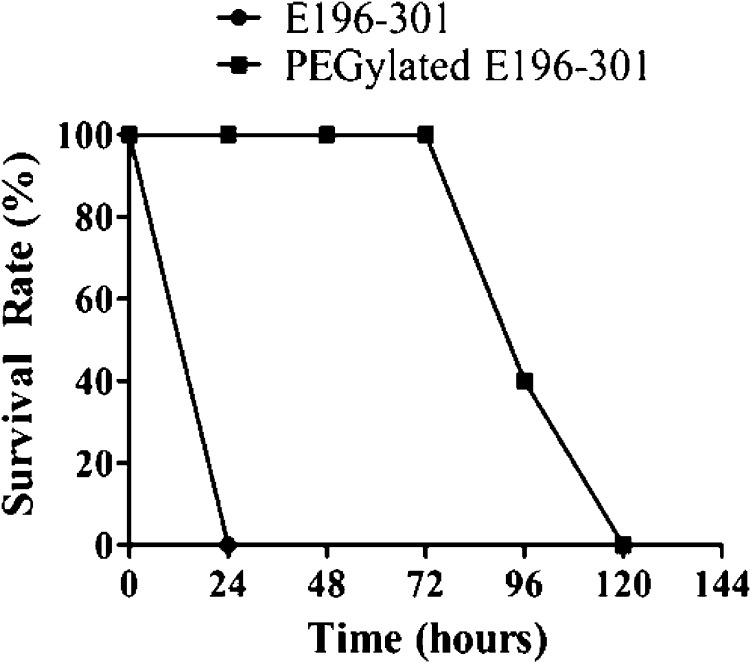
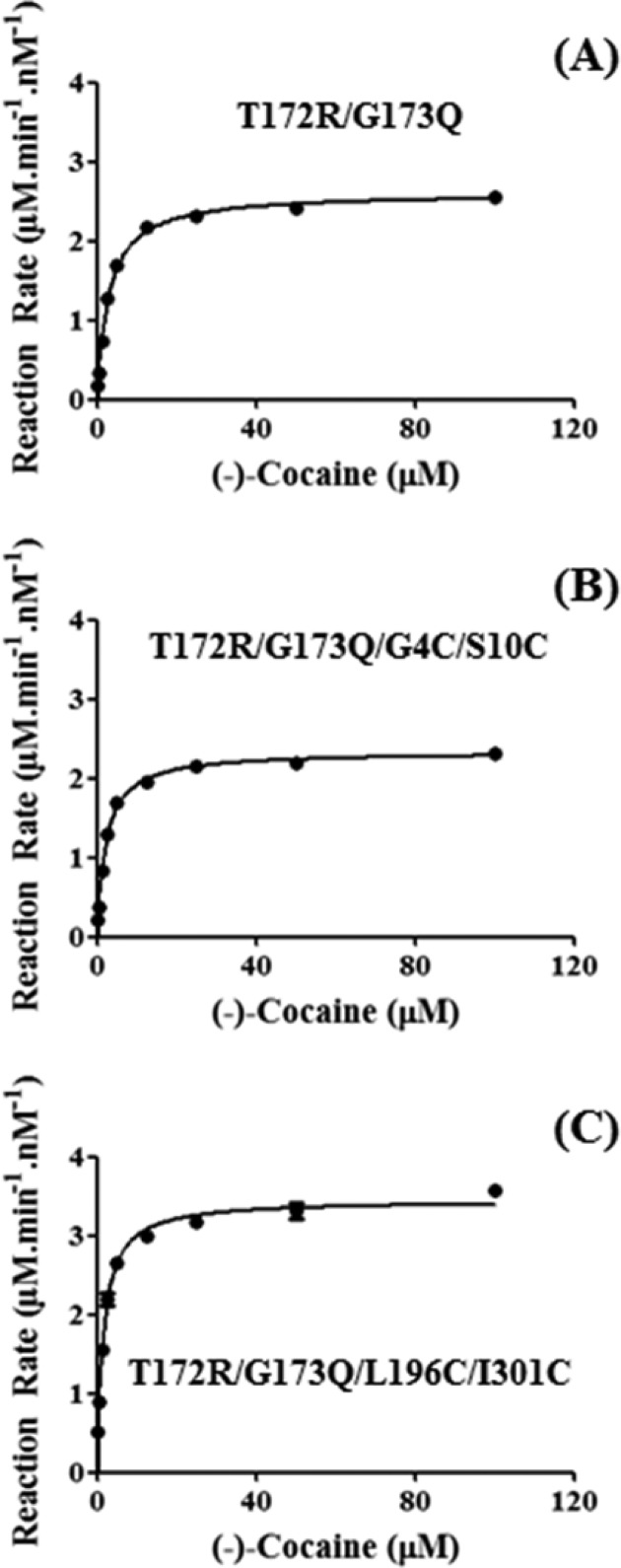
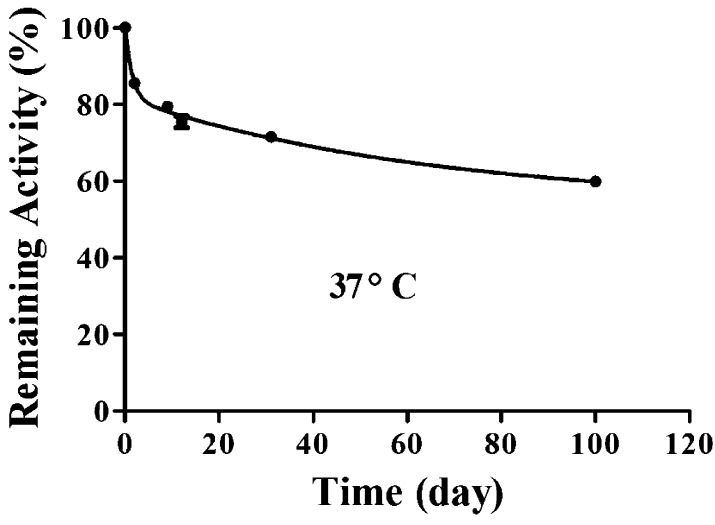
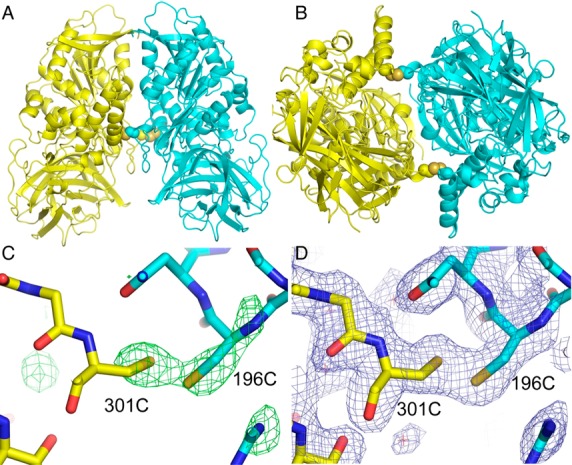
Cocaine esterase (CocE) is known as the most efficient natural enzyme for cocaine hydrolysis. The major obstacle to the clinical application of wild-type CocE is the thermoinstability with a half-life of only ∼12 min at 37 °C. The previously designed T172R/G173Q mutant (denoted as enzyme E172-173) with an improved in vitro half-life of ∼6 h at 37 °C is currently in clinical trial Phase II for cocaine overdose treatment. Through molecular modeling and dynamics simulation, we designed and characterized a promising new mutant of E172-173 with extra L196C/I301C mutations (denoted as enzyme E196-301) to produce cross-subunit disulfide bonds that stabilize the dimer structure. The cross-subunit disulfide bonds were confirmed by X-ray diffraction. The designed L196C/I301C mutations have not only considerably extended the in vitro half-life at 37 °C to >100 days, but also significantly improved the catalytic efficiency against cocaine by ∼150%. In addition, the thermostable E196-301 can be PEGylated to significantly prolong the residence time in mice. The PEGylated E196-301 can fully protect mice from a lethal dose of cocaine (180 mg/kg, LD100) for at least 3 days, with an average protection time of ∼94h. This is the longest in vivo protection of mice from the lethal dose of cocaine demonstrated within all studies using an exogenous enzyme reported so far. Hence, E196-301 may be developed to become a more valuable therapeutic enzyme for cocaine abuse treatment, and it demonstrates that a general design strategy and protocol to simultaneously improve both the stability and function are feasible for rational protein drug design.
可卡因酯酶(CocE)是已知最有效的可卡因水解天然酶。野生型CocE临床应用的主要障碍是其热不稳定性,在37℃下半衰期仅约12分钟。先前设计的T172R/G173Q突变体(称为酶E172 - 173)在37℃下体外半衰期提高至约6小时,目前正处于可卡因过量治疗的临床试验II期。通过分子建模和动力学模拟,我们设计并表征了一种有前景的E172 - 173新突变体,带有额外的L196C/I301C突变(称为酶E196 - 301),以产生稳定二聚体结构的亚基间二硫键。亚基间二硫键通过X射线衍射得到证实。设计的L196C/I301C突变不仅将37℃下的体外半衰期大幅延长至>100天,还将对可卡因的催化效率显著提高了约150%。此外,热稳定的E196 - 301可以聚乙二醇化以显著延长在小鼠体内的停留时间。聚乙二醇化的E196 - 301可以使小鼠免受致死剂量可卡因(180 mg/kg,LD100)的伤害至少3天,平均保护时间约为94小时。这是迄今为止所有使用外源性酶的研究中,小鼠对致死剂量可卡因的最长体内保护时间。因此,E196 - 301可能被开发成为一种更有价值的治疗可卡因滥用的酶,并且它表明一种同时提高稳定性和功能的通用设计策略和方案对于合理的蛋白质药物设计是可行的。