Boyko-Fabian Mariya, Niehr Franziska, Distel Luitpold, Budach Volker, Tinhofer Ingeborg
Translational Radiooncology Laboratory, Department of Radiooncology and Radiotherapy, Charité University Hospital, Berlin, Germany.
Department of Radiation Oncology, University Erlangen-Nuremberg, Erlangen, Germany.
PLoS One. 2014 Jun 13;9(6):e98867. doi: 10.1371/journal.pone.0098867. eCollection 2014.
Mutations in the p53 gene are frequently observed in squamous cell carcinoma of the head and neck region (SCCHN) and have been associated with drug resistance. The potential of arsenic trioxide (ATO) for treatment of p53-deficient tumor cells and those with acquired resistance to cisplatin and cetuximab was determined.
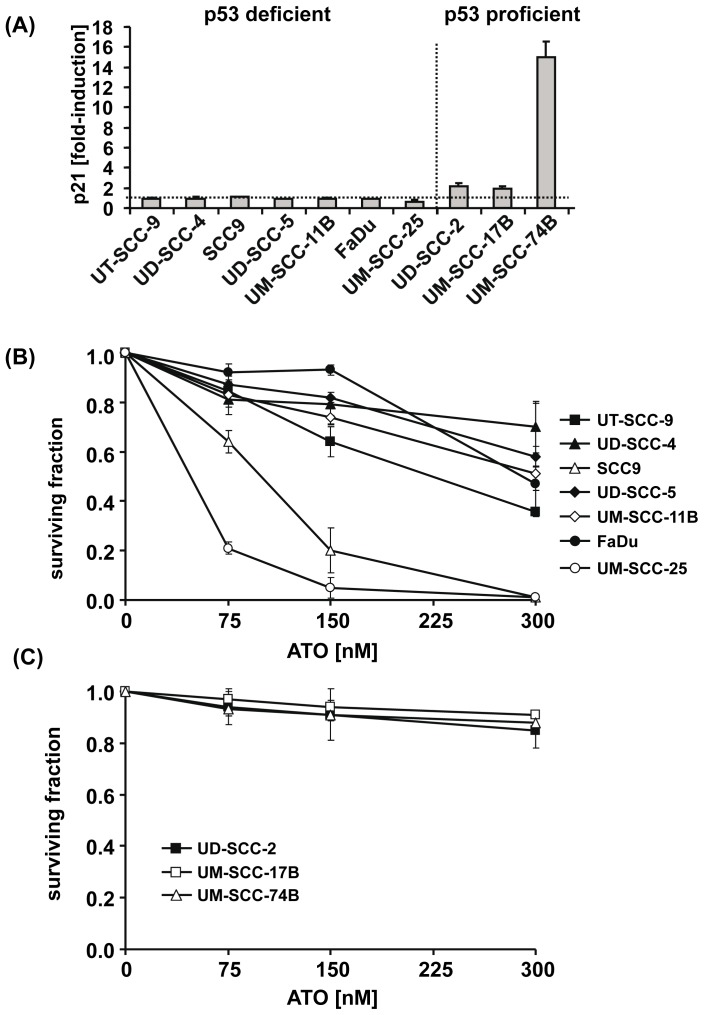
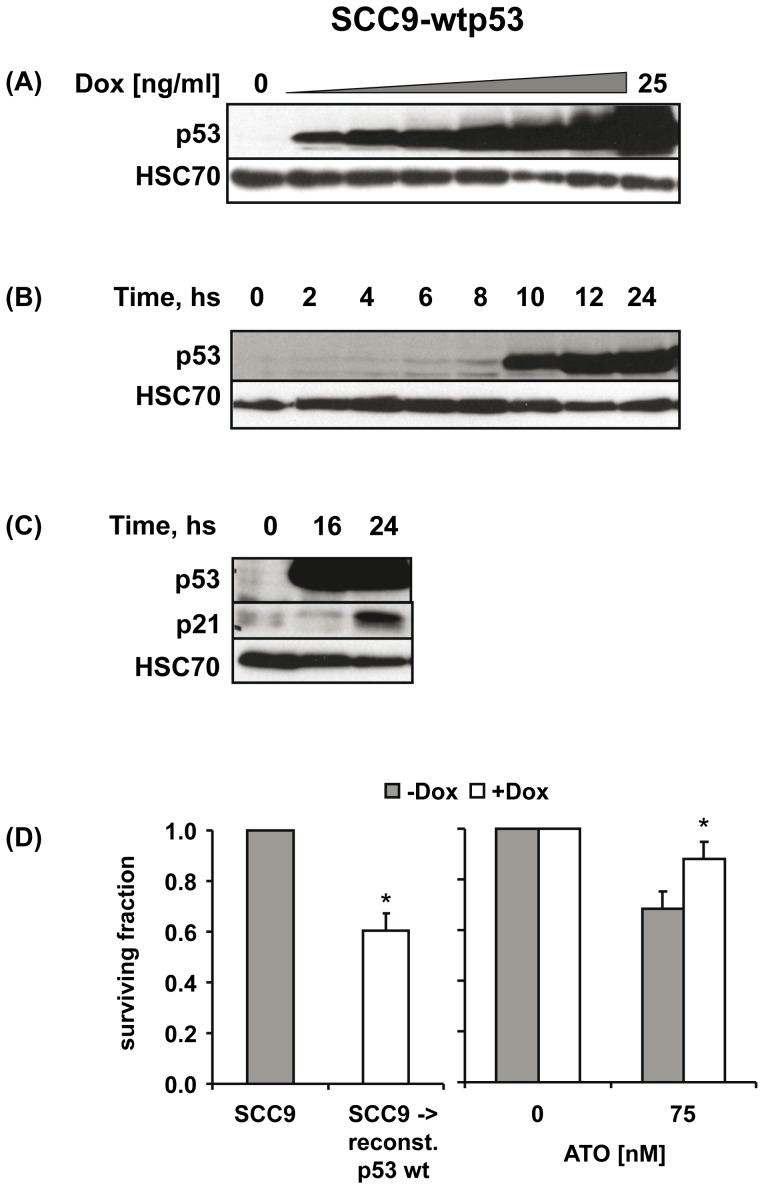
In a panel of 10 SCCHN cell lines expressing either wildtype p53, mutated p53 or which lacked p53 by deletion the interference of p53 deficiency with the growth-inhibitory and radiosensitizing potential of ATO was determined. The causal relationship between p53 deficiency and ATO sensitivity was evaluated by reconstitution of wildtype p53 in p53-deficient SCCHN cells. Interference of ATO treatment with cell cycle, DNA repair and apoptosis and its efficacy in cells with acquired resistance to cisplatin and cetuximab was evaluated.
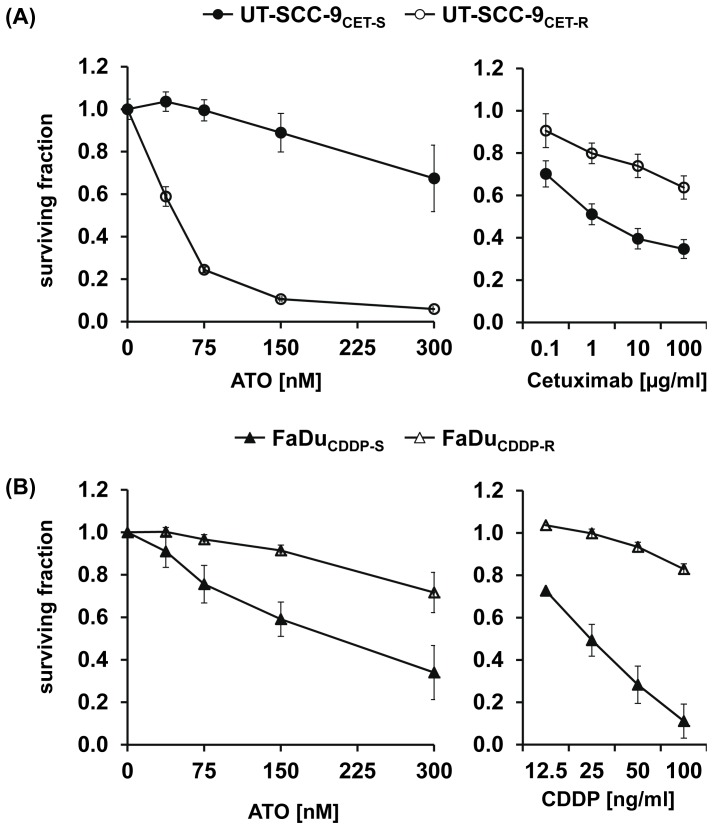
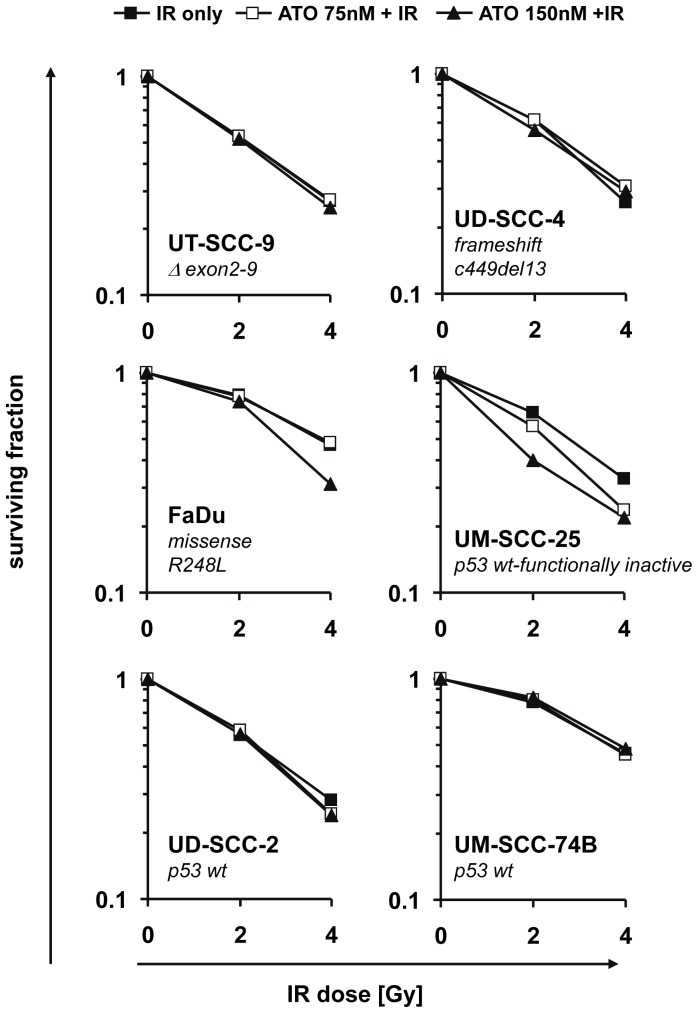
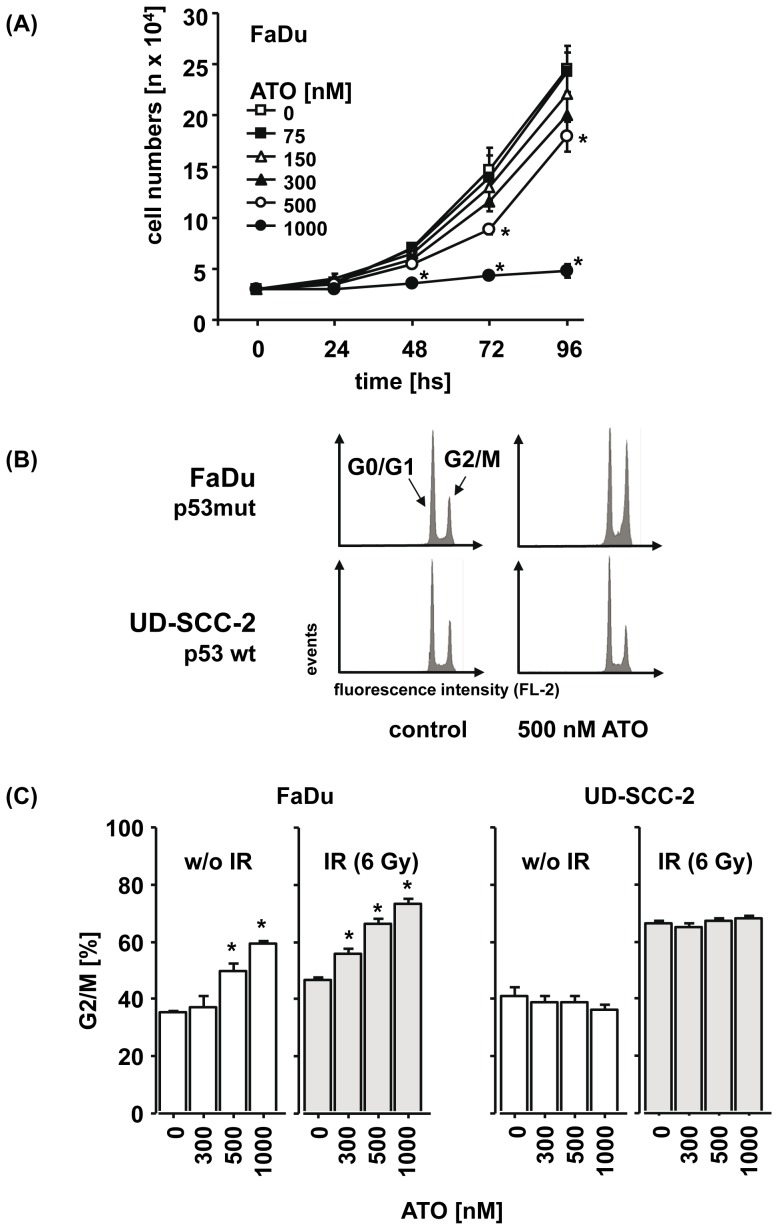
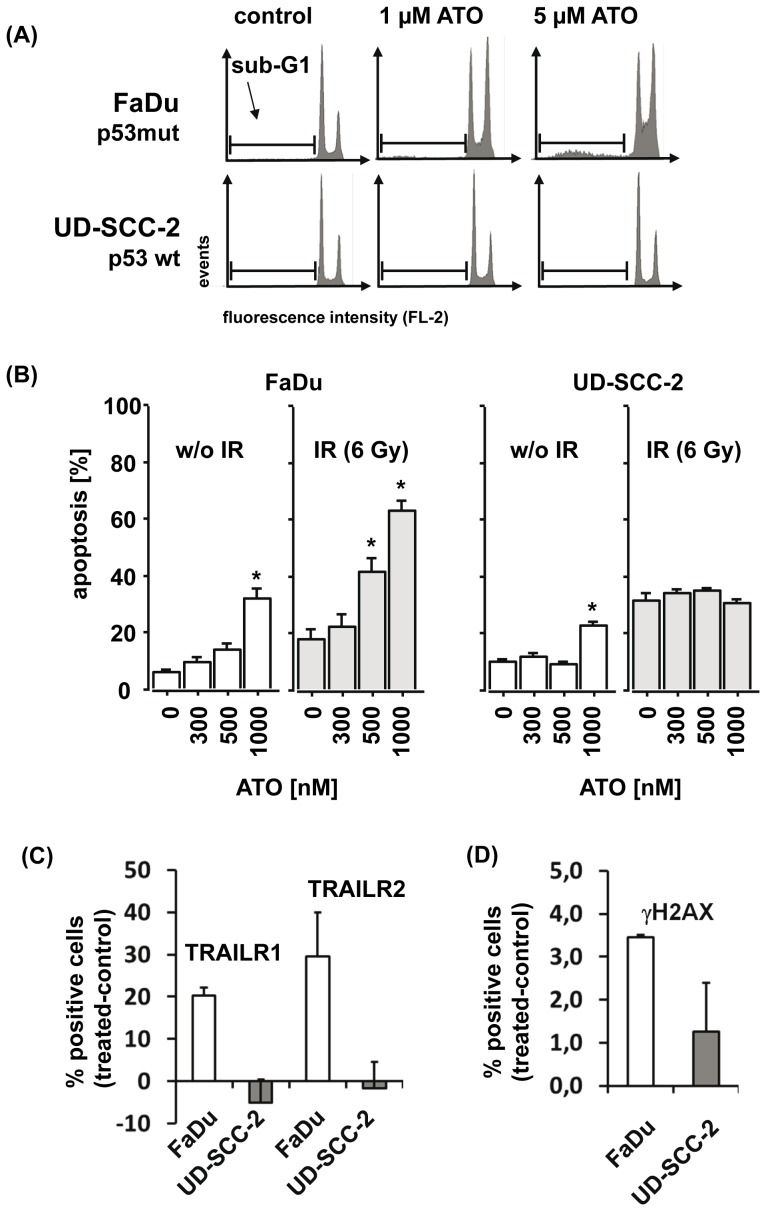
Functional rather than structural defects in the p53 gene predisposed tumor cells to increased sensitivity to ATO. Reconstitution of wt p53 in p53-deficient SCCHN cells rendered them less sensitive to ATO treatment. Combination of ATO with irradiation inhibited clonogenic growth in an additive manner. The inhibitory effect of ATO in p53-deficient tumor cells was mainly associated with DNA damage, G2/M arrest, upregulation of TRAIL (tumor necrosis factor-related apoptosis-inducing ligand) receptors and apoptosis. Increased activity of ATO was observed in cetuximab-resistant SCCHN cells whereas cisplatin resistance was associated with cross-resistance to ATO.
Addition of ATO to treatment regimens for p53-deficient SCCHN and tumor recurrence after cetuximab-containing regimens might represent an attractive strategy in SCCHN.
p53基因的突变在头颈部鳞状细胞癌(SCCHN)中经常被观察到,并且与耐药性有关。本研究确定了三氧化二砷(ATO)治疗p53缺陷肿瘤细胞以及对顺铂和西妥昔单抗获得性耐药肿瘤细胞的潜力。
在一组10种SCCHN细胞系中,这些细胞系分别表达野生型p53、突变型p53或因缺失而缺乏p53,研究了p53缺陷对ATO生长抑制和放射增敏潜力的干扰。通过在p53缺陷的SCCHN细胞中重建野生型p53,评估p53缺陷与ATO敏感性之间的因果关系。评估了ATO处理对细胞周期、DNA修复和凋亡的干扰及其在对顺铂和西妥昔单抗获得性耐药细胞中的疗效。
p53基因的功能缺陷而非结构缺陷使肿瘤细胞对ATO的敏感性增加。在p53缺陷的SCCHN细胞中重建野生型p53使它们对ATO治疗的敏感性降低。ATO与放疗联合以相加方式抑制克隆生长。ATO对p53缺陷肿瘤细胞的抑制作用主要与DNA损伤、G2/M期阻滞、TRAIL(肿瘤坏死因子相关凋亡诱导配体)受体上调和凋亡有关。在西妥昔单抗耐药的SCCHN细胞中观察到ATO活性增加,而顺铂耐药与对ATO的交叉耐药有关。
在p53缺陷的SCCHN治疗方案中添加ATO以及在含西妥昔单抗方案后的肿瘤复发治疗中,可能是SCCHN中一种有吸引力的策略。