Thakral Parul, Singla Suhas, Yadav Madhav Prasad, Vasisht Atul, Sharma Atul, Gupta Santosh Kumar, Bal C S, Malhotra Arun
Department of Nuclear Medicine, All India Institute of Medical Sciences, New Delhi, India.
Indian J Med Res. 2014 Apr;139(4):544-54.
BACKGROUND & OBJECTIVES: The prerequisite of radioimmunotherapy is stable binding of a radionuclide to monoclonal antibodies, which are specific to the tumour-associated antigen. Most B-cell lymphomas express CD20 antigen on the surface of the tumour cells, making it a suitable target for therapeutic radioactive monoclonal antibodies. In the present study, the immunoconjugate of biosimilar Rituximab (Reditux™) and macrocyclic chelator, p-SCN-Bz-DOTA, was prepared and radiolabelled with Lutetium-177 followed by quality control procedures.
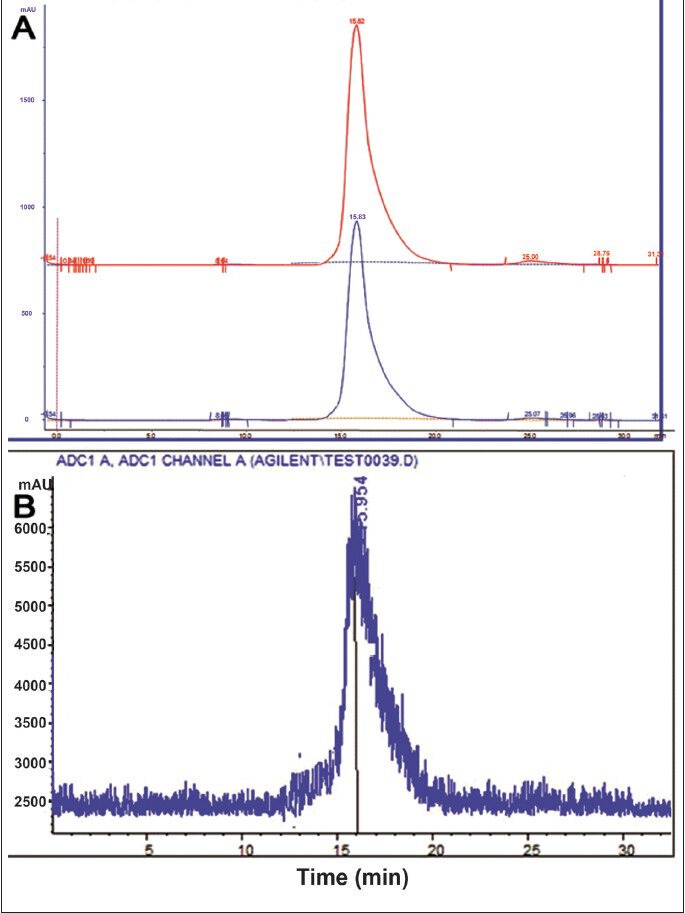
Rituximab(BioSim) was desalted with sodium bicarbonate (0.1M, pH 9.0) and incubated with DOTA-SCN (1:50). The effectiveness of the conjugation was evaluated by determining the number of chelators per antibody molecule. This conjugate was radiolabelled with Lutetium-177 and purified using PD10 column. The quality control parameters like pH, clarity, radiochemical purity, in vitro stability and sterility were studied. Immunoreactivity of 177 Lu-DOTA-Rituximab (BioSim) was assessed using RAMOS cells. The radioimmunoconjugate (RIC) after stringent quality assurance was injected in three patients and the biodistribution profile was analysed.
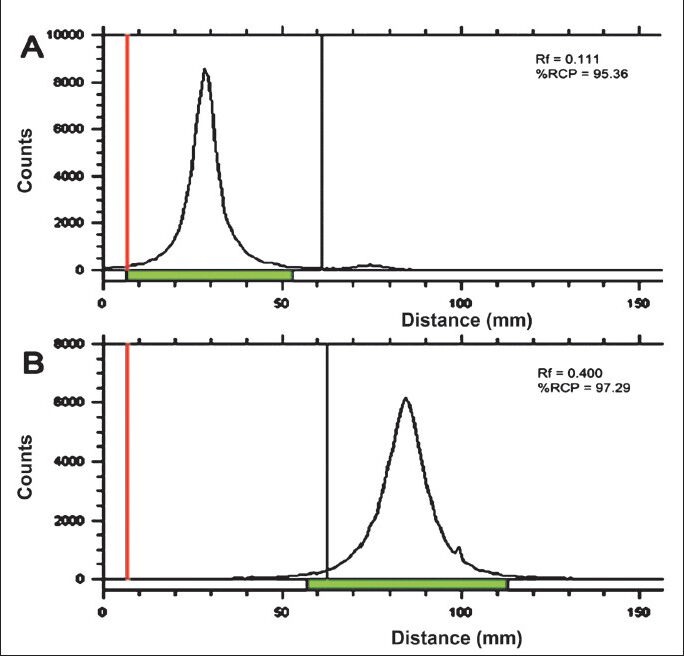
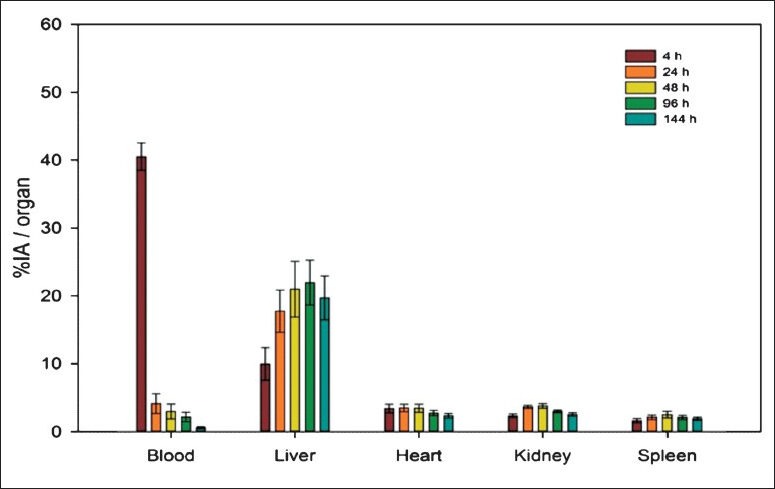
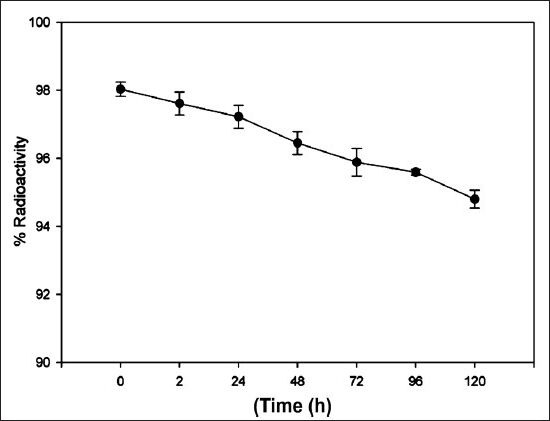
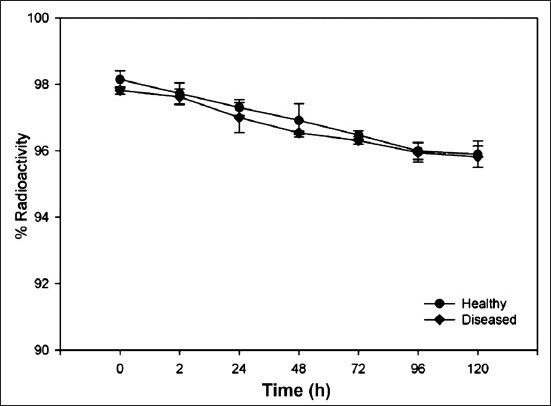
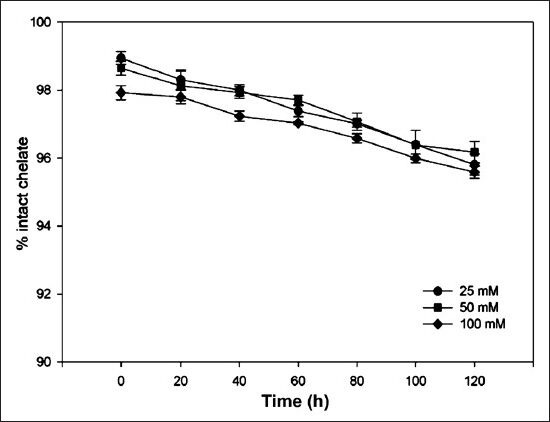
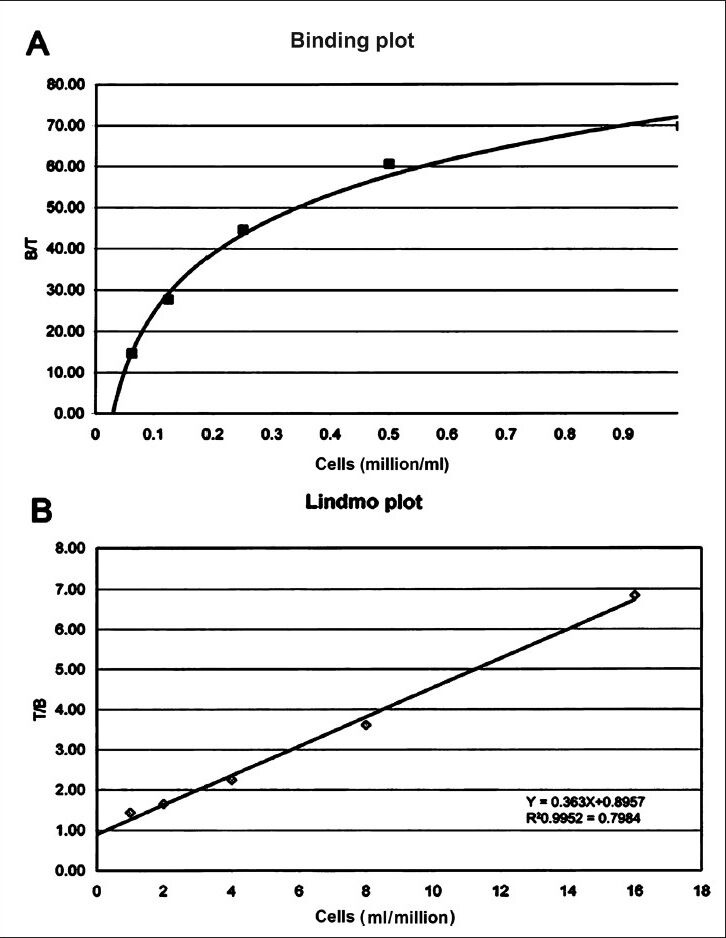
An average of 4.25 ± 1.04 p-SCN-Bz-DOTA molecules could be randomly conjugated to a single molecule of Rituximab (BioSim).The radiochemical purity of the labelled antibody was > 95 per cent with preserved affinity for CD20 antigen. The final preparation was stable up to about 120 h when tested under different conditions. A favourable biodistribution profile was observed with liver showing the maximum uptake of the RIC.
INTERPRETATION & CONCLUSIONS: A favourable radiochemical purity, stability and biodistribution of the radiolabelled immunoconjugate indicate that clinical trials for evaluation of toxicity and efficacy of 177 Lu-DOTA-antiCD20 antibody-Rituximab (BioSim) in patients of relapsed and refractory non Hodgkin's lymphoma can be considered.
放射性免疫治疗的前提是放射性核素与肿瘤相关抗原特异性单克隆抗体稳定结合。大多数B细胞淋巴瘤在肿瘤细胞表面表达CD20抗原,使其成为治疗性放射性单克隆抗体的合适靶点。在本研究中,制备了生物类似药利妥昔单抗(美罗华)与大环螯合剂对异硫氰酸苄基-四氮杂环十二烷四乙酸(p-SCN-Bz-DOTA)的免疫偶联物,并用镥-177进行放射性标记,随后进行质量控制程序。
用碳酸氢钠(0.1M,pH 9.0)对利妥昔单抗(生物类似药)进行脱盐,并与DOTA-SCN(1:50)孵育。通过测定每个抗体分子的螯合剂数量来评估偶联的有效性。该偶联物用镥-177进行放射性标记,并用PD10柱进行纯化。研究了pH值、澄清度、放射化学纯度、体外稳定性和无菌性等质量控制参数。使用拉莫斯细胞评估177Lu-DOTA-利妥昔单抗(生物类似药)的免疫反应性。在严格质量保证后,将放射性免疫偶联物(RIC)注入三名患者体内,并分析其生物分布情况。
平均4.25±1.04个对异硫氰酸苄基-四氮杂环十二烷四乙酸分子可随机偶联到单个利妥昔单抗(生物类似药)分子上。标记抗体的放射化学纯度>95%,对CD20抗原的亲和力保持不变。在不同条件下测试时,最终制剂在约120小时内保持稳定。观察到良好的生物分布情况,肝脏显示出对RIC的最大摄取。
放射性标记免疫偶联物良好的放射化学纯度、稳定性和生物分布表明,可以考虑对177Lu-DOTA-抗CD20抗体-利妥昔单抗(生物类似药)在复发和难治性非霍奇金淋巴瘤患者中的毒性和疗效进行评估的临床试验。